Flowers often carry meanings that develop from their appearance, rarity, cultural associations, and the emotions they inspire. The blue poppy symbolism is especially interesting because the flower’s unusual color has made it a symbol connected with imagination, uniqueness, peace, and emotional depth in many modern interpretations.
Unlike common garden flowers with long-established meanings, the blue poppy has a more limited historical symbolism because it is a rare mountain flower that grows in specific environments. Its unusual blue petals have encouraged people to associate it with individuality, beauty, and the search for something uncommon.
In the United States, blue poppies are often appreciated in gardens, floral design, art, and personal symbolism. Their meaning usually comes from their appearance and rarity rather than from a single traditional belief system.
Quick Answer
Blue poppy symbolism commonly represents uniqueness, imagination, peace, and emotional sensitivity in modern American culture, especially in gardens, art, and personal expression. Historically, its rare blue color and mountain origins have connected it with mystery, beauty, and the appreciation of uncommon natural wonders.
TL;DR
- Blue poppies symbolize uniqueness and rare beauty.
- Their blue color represents calm and imagination.
- Mountain origins shaped their connection with resilience.
- Americans use them in gardens and artistic designs.
- They differ from traditional red poppy meanings.
- Modern uses include decor, tattoos, and personal symbolism.
What the Blue Poppy Looks Like and Where It Appears
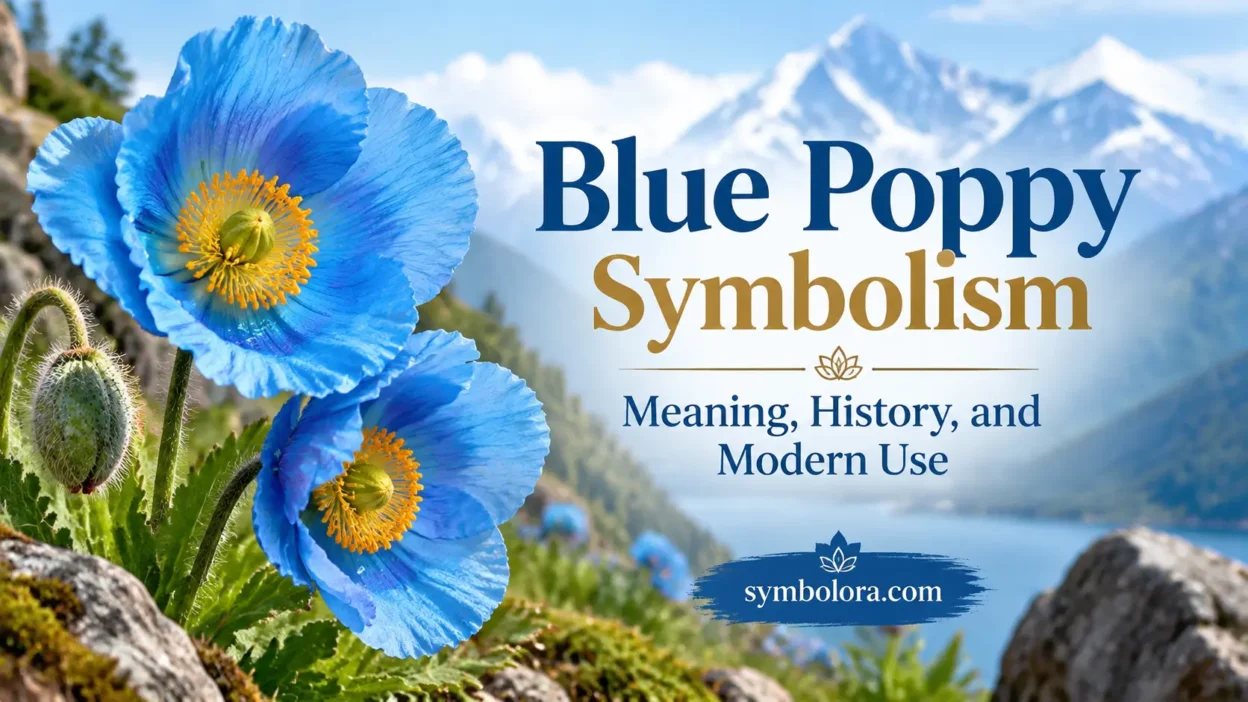
The blue poppy, commonly referring to species within the genus Meconopsis, is known for its striking blue or blue-violet petals. The flowers often have delicate, papery petals surrounding a contrasting center, creating an appearance that feels unusual compared with more familiar garden flowers.
Blue poppies are native to mountainous regions of Asia, particularly areas around the Himalayas. They prefer cool climates, moist soil, and protected environments, which makes them challenging to grow in many locations.
In the United States, blue poppies are mainly encountered in specialty gardens, botanical collections, and among flower enthusiasts who appreciate rare plants. Their limited availability contributes to their association with rarity and careful cultivation.
The flower’s physical characteristics influence much of its symbolism:
- Blue petals suggest calmness and reflection.
- Rare growth patterns suggest individuality.
- Mountain origins suggest endurance and adaptation.
- Delicate structure suggests sensitivity and beauty.
What Blue Poppy Symbolizes in the United States
In American culture, flowers often gain meaning through personal interpretation rather than fixed rules. The blue poppy does not have one official symbolic definition, but several associations appear consistently.
The most common meanings include:
| Context | Meaning in the USA | Common Associations | Notes |
|---|---|---|---|
| Gardens | Rare beauty and individuality | Specialty plants, collectors | Often valued for uniqueness |
| Art and Design | Imagination and calm | Creativity, peaceful spaces | Used for visual appeal |
| Personal Expression | Personal identity | Tattoos, artwork, decor | Represents being different |
| Emotional Symbolism | Reflection and sensitivity | Inner peace, thoughtfulness | Based on color psychology |
| Nature Appreciation | Respect for rarity | Conservation, natural beauty | Connected with unusual landscapes |
Many Americans view the blue poppy as a symbol of something uncommon but meaningful. Because it is not widely seen in everyday flower arrangements, it can represent qualities that stand apart from ordinary experiences.
Ancient Roots and Early Associations of the Blue Poppy
The blue poppy does not have the same ancient symbolic history as flowers like roses, lilies, or lotuses. Much of its meaning developed more recently as explorers, botanists, and gardeners became aware of Himalayan plant species.
The flower’s natural environment played an important role in shaping its symbolic associations. Growing in challenging mountain landscapes created connections with endurance, adaptation, and the ability to thrive in difficult conditions.
Early botanical interest focused mainly on discovery and classification rather than symbolism. However, as rare plants became popular among collectors, the blue poppy gained associations with curiosity, exploration, and appreciation for the unusual.
Its meaning developed from human reactions to the flower rather than from ancient myths or religious traditions.
Why the Color Blue Shapes Its Symbolic Meaning
Color plays an important role in how people interpret flowers. Blue is one of the rarest colors found naturally in flowers, which gives blue blooms a distinctive quality.
In American color symbolism, blue is commonly connected with:
- Peace
- Trust
- Stability
- Reflection
- Creativity
- Emotional balance
Because the blue poppy combines this color with a rare flower form, people often interpret it as a symbol of quiet individuality rather than attention-seeking beauty.
Blue flowers are frequently used in spaces designed for relaxation and reflection. A blue poppy image or decoration may create a feeling of calm while also suggesting originality.
The Difference Between Blue Poppy and Traditional Poppy Symbolism
The word “poppy” carries many meanings, especially in Western culture. Traditional poppy symbolism is often connected with remembrance, particularly because of the red poppy’s association with military memorial traditions.
The blue poppy has a different symbolic identity.
| Flower | Common Symbolism | Cultural Connection |
|---|---|---|
| Red Poppy | Remembrance and sacrifice | Memorial traditions |
| White Poppy | Peace and compassion | Peace movements |
| Orange Poppy | Energy and enthusiasm | Garden symbolism |
| Blue Poppy | Uniqueness and imagination | Rare beauty and creativity |
Confusing blue poppy meanings with red poppy meanings can create misunderstandings. The blue poppy is generally interpreted through its color, rarity, and natural character rather than remembrance ceremonies.
Emotional and Psychological Meaning of the Blue Poppy
Flowers often communicate emotions without words, and the blue poppy is frequently associated with quiet and thoughtful feelings.
People may connect the flower with:
- A desire for personal growth
- Appreciation of peaceful moments
- Acceptance of individuality
- Emotional awareness
- Creative thinking
The blue poppy’s appearance encourages a slower form of appreciation. Unlike bright flowers designed to attract immediate attention, its soft color creates a more reflective impression.
In personal spaces, blue flowers are often chosen by people who want an environment that feels calm and balanced. A blue poppy image, painting, or garden plant may represent a preference for peaceful surroundings.
Blue Poppy Symbolism in American Gardens and Design
Gardening in the United States often reflects personal taste, environmental awareness, and a connection with nature. Blue poppies attract gardeners who enjoy unusual plants and want something different from common flowers.
Because they require specific growing conditions, successfully cultivating blue poppies can represent patience and dedication.
In landscape design, blue flowers are often used to create:
- Calm garden areas
- Cool color combinations
- Natural-looking spaces
- Artistic planting arrangements
Interior designers may also use blue poppy patterns in:
- Wall art
- Fabrics
- Decorative objects
- Botanical illustrations
The flower’s appearance works well with modern design styles because it combines natural beauty with a sense of uniqueness.
Blue Poppy Meaning in Tattoos and Personal Expression
Flower tattoos often represent personal values, memories, or emotional connections. A blue poppy tattoo is usually chosen because of its unusual appearance and symbolic flexibility.
Common interpretations include:
- Being comfortable with individuality
- Appreciating rare experiences
- Personal transformation
- Love of nature
- Emotional calm
Unlike symbols with strict cultural meanings, blue poppy tattoos allow individuals to create their own interpretations.
For some people, the tattoo may represent overcoming challenges because the flower’s natural habitat suggests resilience. For others, it may simply represent a connection with beauty and creativity.
Cross-Cultural Interpretations of Blue Flowers
Blue flowers appear in different cultural traditions, although the specific meaning varies.
In some Asian artistic traditions, blue flowers are associated with harmony, refinement, and natural beauty. Because the blue poppy originates near Himalayan regions, it may be viewed as part of a broader appreciation for mountain plants and rare natural forms.
In Western cultures, blue flowers often symbolize loyalty, peace, and imagination. These meanings come largely from color associations rather than from one specific blue poppy tradition.
The important distinction is that the blue poppy itself does not carry one universal meaning across all cultures. Its symbolism changes depending on location, personal beliefs, and artistic context.
Religious and Spiritual Interpretations
The blue poppy is not strongly connected with major religious traditions in the way some flowers are. However, people sometimes use flower symbolism in spiritual or reflective contexts.
Because blue is often associated with calmness and contemplation, some individuals may interpret the flower as representing:
- Inner reflection
- Peaceful thought
- Connection with nature
- Emotional balance
These interpretations are personal rather than established religious teachings.
Modern Uses of Blue Poppy Symbolism
Today, blue poppy imagery appears in several areas of American culture.
Home Decor
Blue poppy designs are popular in:
- Artwork
- Textiles
- Ceramic designs
- Botanical prints
They often create a peaceful and natural atmosphere.
Fashion
Blue floral patterns can communicate creativity and individuality. Designers may use blue poppy-inspired designs because the flower feels distinctive and artistic.
Social Media
Images of rare flowers often perform well online because they represent discovery and appreciation of nature. Blue poppies are frequently shared by gardening communities and flower enthusiasts.
Gifts
While not as common as roses or lilies, blue poppy-inspired gifts may symbolize uniqueness, thoughtfulness, and appreciation for someone’s individuality.
Common Misunderstandings About Blue Poppy Symbolism
Because flowers often attract symbolic interpretations, some meanings become exaggerated over time.
A common misunderstanding is that every blue poppy has a fixed spiritual message. In reality, meanings are usually cultural, personal, or artistic interpretations.
Another misconception is that the blue poppy has the same meaning as every other poppy. Different poppy varieties have developed different associations based on history and cultural use.
Understanding the flower’s real background helps separate traditional meaning from modern imagination.
How Blue Poppy Meaning Has Changed Over Time
The meaning of the blue poppy has evolved as people’s relationship with rare plants has changed.
Originally, the flower was mainly valued by botanists and collectors interested in discovering unusual species. Later, gardeners began appreciating it as a symbol of dedication and natural beauty.
Today, the blue poppy represents more personal ideas such as creativity, individuality, and peaceful living.
Its symbolism continues to develop because people often create meanings based on their own experiences with nature and design.
Frequently Asked Questions About Blue Poppy Symbolism
What does a blue poppy symbolize?
A blue poppy commonly symbolizes uniqueness, imagination, peace, and appreciation for rare beauty. Its meaning comes mostly from its unusual color and limited availability rather than from ancient symbolic traditions.
Is a blue poppy a symbol of remembrance?
No, blue poppies are not traditionally associated with remembrance ceremonies. In Western culture, that association mainly belongs to red poppies connected with military memorial traditions.
What does a blue poppy tattoo mean?
A blue poppy tattoo often represents individuality, creativity, emotional balance, or a connection with nature. The meaning depends on the person wearing it.
Are blue poppies spiritually symbolic?
Some people interpret blue poppies as symbols of reflection, peace, or personal growth. However, these meanings are personal interpretations rather than established religious symbols.
Why are blue poppies considered special?
Blue poppies are considered special because their color is rare among flowers and they require specific growing conditions. Their unusual appearance contributes to their association with rarity and beauty.
What is the difference between blue and red poppy symbolism?
Red poppies are strongly connected with remembrance and sacrifice, while blue poppies are more often associated with uniqueness, creativity, and peaceful reflection.
Conclusion
The meaning of a flower often develops from its appearance, environment, and the emotions it creates. The blue poppy symbolism reflects ideas of rarity, imagination, calmness, and individuality rather than one fixed tradition.
In the United States, the blue poppy is appreciated as a unique natural symbol found in gardens, artwork, personal expression, and design. Its unusual color and mountain origins continue to inspire interpretations connected with beauty, patience, and appreciation for uncommon things.
The blue poppy reminds people that some of nature’s most meaningful symbols are not the most familiar ones, but the ones that encourage curiosity and personal connection.