Flowers often communicate ideas that words cannot easily express. A single arrangement can suggest harmony, respect, renewal, or a connection between people and nature. Ikebana symbolism explores how Japanese flower arranging transforms plants, space, and design into a visual language with cultural and emotional meaning.
Unlike ordinary floral decoration, ikebana focuses on balance, simplicity, and the relationship between natural elements. The placement of each branch, flower, and empty space carries intention. In modern American culture, ikebana is often appreciated as an art form connected with mindfulness, interior design, creativity, and personal reflection.
Quick Answer
Ikebana symbolism commonly represents harmony with nature, balance, and mindful appreciation of life in modern American culture, especially through art, home design, and personal expression. Historically, it developed from Japanese Buddhist flower offerings and came to represent discipline, spiritual awareness, and the relationship between humans, nature, and time.
TL;DR
- Ikebana symbolizes harmony between humans, nature, and space.
- The art began with Buddhist flower offerings in Japan.
- Empty space represents balance and visual breathing room.
- Americans often view ikebana as mindful floral art.
- Different schools use unique styles and meanings.
- Modern arrangements express creativity and personal identity.
What Ikebana Is and Why Its Design Carries Meaning
Ikebana is the traditional Japanese art of arranging flowers, branches, leaves, and other natural materials into carefully designed compositions. The word is often translated as “arranging flowers” or “making flowers come alive,” reflecting the idea that plants become part of an artistic expression rather than simply decorative objects.
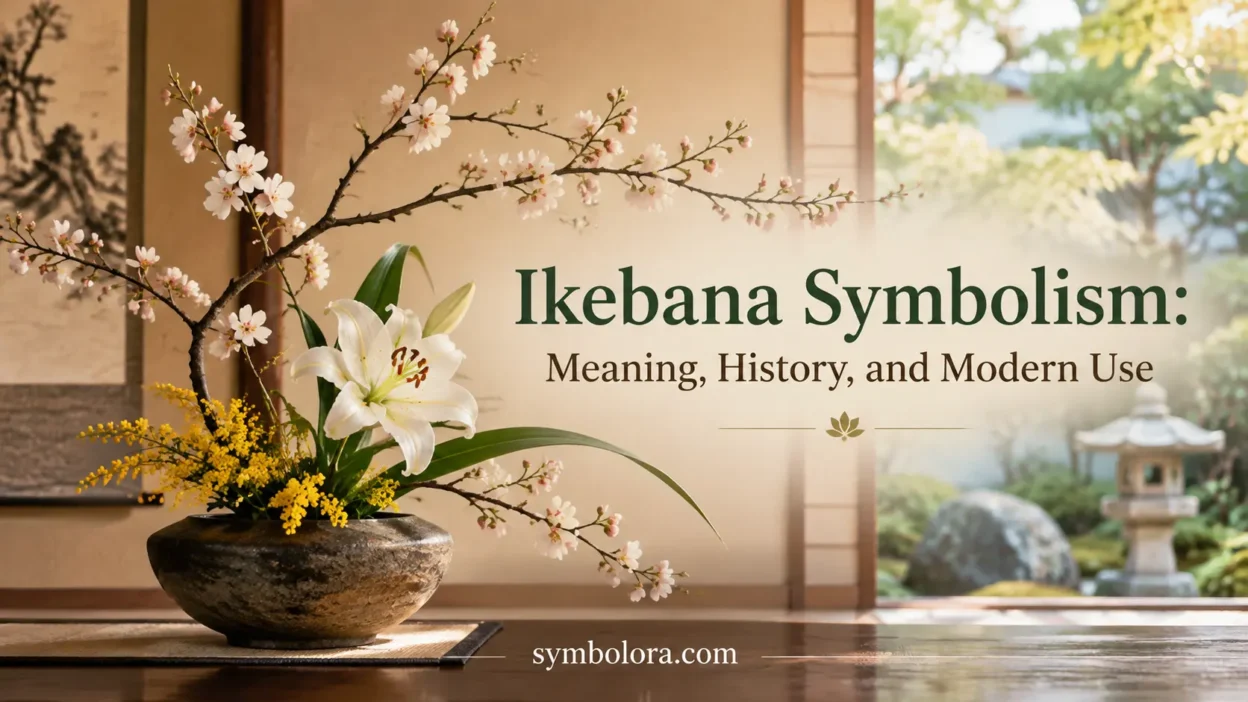
An ikebana arrangement usually includes more than colorful blooms. Artists consider line, shape, height, texture, and the empty spaces between elements. A curved branch may represent movement, while an open area may create a feeling of calm and balance.
In the United States, ikebana is commonly seen in art exhibitions, cultural programs, meditation spaces, homes, and design studios. Many people appreciate it because it offers a slower, more intentional approach to interacting with nature.
The Core Meanings Behind Ikebana Symbolism
The main symbolic ideas connected with ikebana come from the relationship between natural materials and human creativity.
Harmony With Nature
One of the strongest meanings of ikebana is the belief that humans should work with nature rather than dominate it. Arrangers do not force plants into perfect symmetry. Instead, they highlight the natural curves, imperfections, and unique qualities of each material.
A bent branch, an uneven flower, or a changing leaf can become an important part of the design. This reflects acceptance of natural change and the beauty of imperfection.
Balance and Order
Ikebana arrangements often create balance through contrast. Tall branches may be placed beside smaller flowers, or strong shapes may be softened by delicate textures.
This balance symbolizes stability and thoughtful living. The arrangement becomes a reminder that harmony does not require everything to be identical.
Awareness of Time and Change
Flowers naturally bloom and fade. Ikebana recognizes this temporary quality of life.
Instead of hiding signs of aging, many arrangements include seasonal changes such as new buds, dried branches, or falling leaves. This connects with the Japanese idea of appreciating temporary beauty.
Ancient Roots and Early Symbolism in Japan
Ikebana developed from Buddhist flower offerings introduced to Japan through cultural exchanges with China and Korea. Early arrangements were created as religious offerings placed before Buddhist images.
Over time, flower arrangement moved beyond temples and became an artistic practice among the Japanese aristocracy, warriors, and later broader society.
During different periods, ikebana styles changed as social values shifted. Some arrangements emphasized formal rules and symbolism, while later approaches allowed more personal creativity.
The connection between flowers and spiritual awareness remained an important part of ikebana’s identity. The practice encouraged patience, concentration, and respect for natural materials.
Buddhist Influences and Spiritual Interpretations
Buddhist ideas influenced early ikebana by connecting flowers with impermanence and awareness.
A flower’s short life cycle can represent the temporary nature of existence. Observing flowers change from freshness to decay encourages reflection on time and acceptance.
However, ikebana is not limited to religious practice. Many people today practice it as an artistic discipline without a spiritual purpose. Its meanings can vary depending on the individual, setting, and cultural background.
How Americans Understand Ikebana Symbolism Today
In the United States, ikebana is usually interpreted through several modern perspectives.
| Context | Meaning in the USA | Common Associations | Notes |
|---|---|---|---|
| Home Design | Calm and intentional living | Minimalism, beauty, balance | Often used as artistic decoration |
| Meditation Spaces | Awareness and reflection | Peace, focus, mindfulness | Connected with quiet practices |
| Art Exhibitions | Creative expression | Design, structure, nature | Viewed as visual art |
| Cultural Events | Appreciation of Japanese traditions | Heritage, education | Often presented through demonstrations |
| Personal Practice | Patience and creativity | Self-expression, learning | Practiced as a hobby |
Many Americans connect ikebana with minimalist design because its style often avoids excessive decoration. The focus on natural materials and open space fits with modern preferences for simple, peaceful environments.
The Meaning of Flowers, Branches, and Space in Ikebana
Every element in an ikebana arrangement can contribute to its meaning.
Flowers
Flowers often represent beauty, emotions, and seasonal change. The choice of flower may depend on availability, symbolism, or the feeling the arranger wants to express.
Cherry blossoms, for example, are strongly associated with temporary beauty in Japanese culture because they bloom briefly before falling.
Branches
Branches often provide structure and direction. They can represent strength, growth, continuity, or the connection between earth and sky.
Empty Space
One of the most important features of ikebana is the use of empty space. Unlike many Western floral arrangements that aim to fill an area, ikebana uses open areas to create balance.
This empty space is not considered missing decoration. It allows each element to stand out and gives the arrangement a sense of movement.
Different Ikebana Schools and Their Unique Approaches
Ikebana is not a single style. Several schools developed different methods and philosophies.
The Ikenobo school is one of the oldest traditions and has strong historical connections to temple flower arrangements. It often emphasizes classical forms and symbolic relationships between elements.
The Ohara school introduced more naturalistic styles that highlight seasonal landscapes and realistic plant forms.
The Sogetsu school encourages individual creativity and treats ikebana as a modern art form that can use unusual materials and contemporary designs.
These different approaches show how ikebana evolved from a traditional practice into a flexible artistic language.
Emotional and Psychological Meaning of Ikebana
Many people associate ikebana with emotional balance because the process requires attention and patience.
Creating an arrangement involves observing details, making careful choices, and accepting natural imperfections. This process can encourage concentration and relaxation.
For some practitioners, ikebana becomes a way to slow down from busy routines. The act of arranging plants creates a moment of focus and connection with the physical world.
The emotional meaning depends on the person practicing it. Some may view it as meditation, while others see it mainly as creative design.
Ikebana in Tattoos, Fashion, and Personal Expression
Although less common than other floral symbols, ikebana-inspired designs appear in tattoos, artwork, and fashion.
People who choose ikebana imagery often connect it with ideas such as:
- appreciation of nature
- simplicity
- personal growth
- creativity
- respect for Japanese culture
A tattoo inspired by ikebana may include branches, flowers, and open space rather than a traditional bouquet. The meaning usually focuses on balance and intentional living.
When using Japanese cultural symbols in personal designs, understanding their origins helps avoid reducing a complex tradition into a simple decoration.
Ikebana in Interior Design and Modern Spaces
Modern designers often use ikebana principles because they align with minimalist and natural design trends.
An arrangement placed in a home can create visual balance without overwhelming a room. The focus on natural textures and seasonal materials makes each piece feel connected to its environment.
In American homes, ikebana-inspired arrangements are often used in:
- living rooms
- offices
- restaurants
- galleries
- wellness spaces
The appeal comes from its ability to combine art, nature, and atmosphere.
Common Misunderstandings About Ikebana Symbolism
One misunderstanding is that every ikebana arrangement has a fixed universal meaning. In reality, meanings depend on the style, materials, cultural setting, and creator’s intention.
Another misconception is that ikebana is simply Japanese flower decoration. Traditional ikebana involves principles of design, philosophy, and disciplined practice.
Some people also assume ikebana is only spiritual. While spiritual ideas influenced its development, many modern practitioners approach it as art, education, or creative expression.
How Ikebana Meaning Has Changed Over Time
Ikebana has moved through several stages, from religious offerings to elite artistic practice and finally to a global creative discipline.
Originally connected with Buddhist rituals, it later became associated with cultural education and social traditions in Japan. Today, it is practiced internationally by people with different backgrounds.
In the United States, ikebana is often understood as a combination of Japanese heritage, artistic design, and personal mindfulness. Its meaning continues to adapt while maintaining its connection to nature.
Controversies and Cultural Misuse
As Japanese art forms become popular worldwide, ikebana can sometimes be simplified or separated from its cultural background.
Using ikebana-inspired designs without understanding the tradition may overlook the discipline and history behind the practice. Appreciation becomes stronger when people learn about the principles and cultural context.
At the same time, cultural exchange has allowed ikebana to reach new audiences. Many international practitioners study traditional methods while creating their own interpretations.
Frequently Asked Questions
What does ikebana symbolize?
Ikebana symbolizes harmony, balance, awareness of nature, and appreciation for temporary beauty. Its meaning comes from Japanese traditions that value careful observation and respect for natural materials.
Is ikebana a religious practice?
Ikebana has historical connections to Buddhist flower offerings, but it is not limited to religion today. Many people practice it as an art form, hobby, or creative discipline.
What does an ikebana tattoo symbolize?
An ikebana tattoo often represents balance, simplicity, creativity, and a connection with nature. The exact meaning depends on the design and the person wearing it.
Why is empty space important in ikebana?
Empty space creates balance and allows individual elements to stand out. It reflects the idea that absence can contribute to beauty and harmony.
How is ikebana different from Western flower arranging?
Western arrangements often focus on fullness and color combinations, while ikebana emphasizes line, structure, natural form, and the relationship between elements.
Can anyone practice ikebana?
Yes. While traditional schools have formal teachings, beginners can learn ikebana principles through classes, books, and personal practice.
Does ikebana have the same meaning in Japan and America?
Not exactly. In Japan it remains connected to cultural traditions and artistic discipline, while many Americans view it through themes of creativity, mindfulness, and design.
Conclusion
Ikebana represents a thoughtful relationship between humans and the natural world. Its arrangements show that beauty can come from balance, simplicity, seasonal change, and careful attention.
Ikebana symbolism continues to interest people in modern American culture because it combines artistic expression with ideas of harmony and reflection. Whether practiced traditionally or appreciated as design, it offers a way to see nature with greater awareness and respect.


