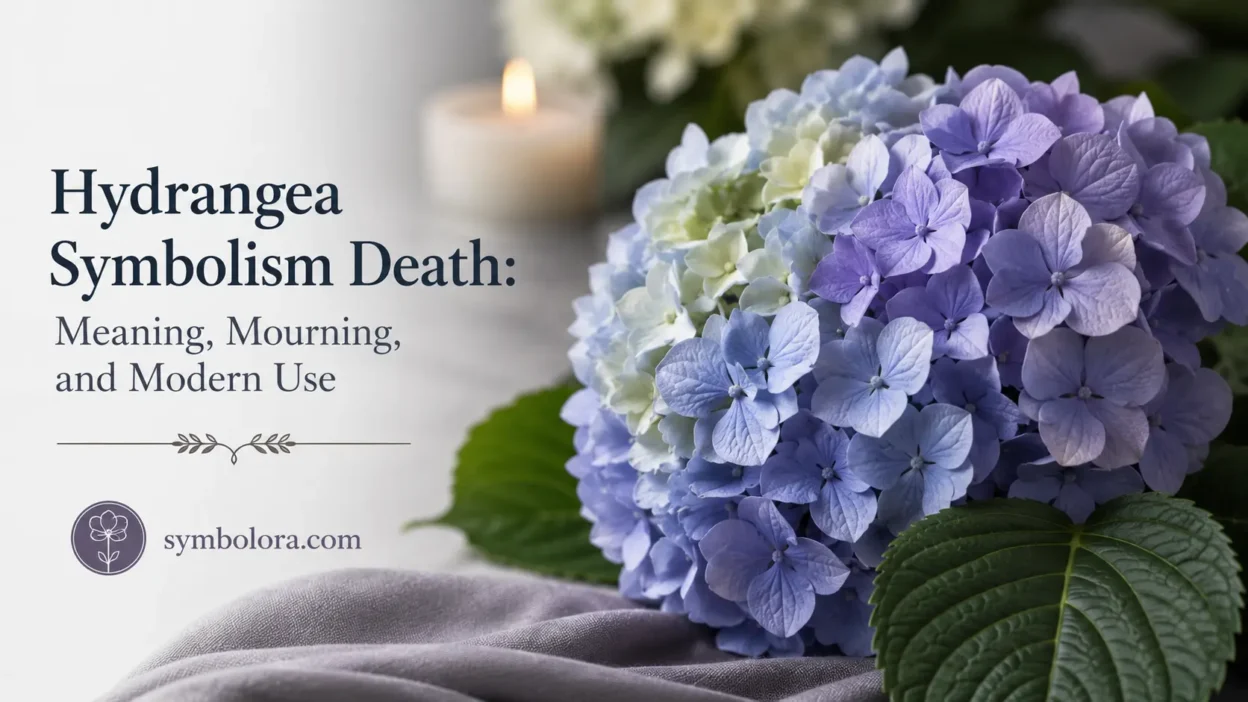
The phrase hydrangea symbolism death can be misleading if taken literally. Hydrangeas do appear in funeral arrangements, sympathy gifts, memorial gardens, and remembrance displays in the United States, but they are not traditionally defined as a universal flower of death. Their connection to loss comes more from the emotions they can express: gratitude, remembrance, understanding, change, and enduring affection.
That distinction matters because hydrangeas have carried very different meanings across time and place. A Victorian flower dictionary could treat them as symbols of heartlessness or boastfulness, while modern funeral floristry may use the same blossoms to communicate compassion and appreciation for a life remembered. In Japan, hydrangeas are especially associated with the rainy season and changeability, rather than serving primarily as emblems of death.
Their large clusters, shifting colors, and ability to return year after year make hydrangeas particularly suited to memorial settings. They can acknowledge grief without making death the flower’s only message.
Quick Answer
In modern American culture, hydrangea symbolism death most commonly relates to remembrance, heartfelt emotion, gratitude, sympathy, and the changing nature of grief, especially when hydrangeas are used at funerals or in memorial gardens. Historically, however, hydrangeas were also associated with heartlessness and boastfulness in Victorian flower language, while Japanese traditions more strongly connect them with seasonal change and impermanence.
TL;DR
- Hydrangeas are not universally traditional symbols of death.
- Funeral use emphasizes remembrance, gratitude, emotion, and sympathy.
- Victorian floriography linked hydrangeas with heartlessness and boastfulness.
- Japanese hydrangeas often represent rainy-season change and impermanence.
- Different colors can alter the emotional tone of memorial arrangements.
- Living hydrangeas can represent memory continuing after loss.
What Hydrangeas Look Like and Why Their Form Matters
Hydrangeas are woody flowering plants known for large clusters of blossoms that may appear rounded, flattened, or cone-shaped, depending on the species and cultivar. The genus contains species native to both Asia and the Americas, and familiar garden forms include bigleaf, smooth, oakleaf, and panicle hydrangeas.
Their visual structure contributes strongly to their modern symbolism. A single hydrangea flower head appears to be one substantial bloom, but it is actually made from many individual flowers gathered together. That naturally lends itself to interpretations involving community, family, collected memories, and many emotions held at once.
This quality becomes especially relevant after a death. Grief is rarely a single feeling. Someone may experience sadness, gratitude, anger, relief, affection, regret, and nostalgia at the same time. A hydrangea’s many-flowered form provides an intuitive visual metaphor for that emotional complexity.
Hydrangeas can also remain attractive as they age and dry. Instead of disappearing immediately after peak bloom, many flower heads shift into muted greens, browns, pinks, and parchment-like shades. That gradual transformation makes them visually compatible with ideas of transition, aging, memory, and acceptance.
What Hydrangeas Commonly Mean Around Death in the United States
When Americans use hydrangeas in connection with death, the most common meanings are sympathy, remembrance, gratitude, emotional understanding, and lasting affection.
The flower generally does not announce, “This represents death.” Its message is more personal:
I remember this person.
I appreciate what they gave us.
I recognize your grief.
Their memory remains part of our lives.
This is one reason hydrangeas work in memorial arrangements even though they lack the stronger traditional death associations attached to certain other flowers.
Modern U.S. funeral floristry uses hydrangeas in bouquets and sympathy designs, particularly in white, pale blue, lavender, and soft pink palettes. Potted hydrangeas are also given to grieving families because the plant may later be kept or planted as a living reminder.
The American meaning is therefore better understood as mourning through remembrance, rather than death itself.
Why Hydrangea Is Not a Traditional “Death Flower”
Online lists sometimes place hydrangeas among “flowers that symbolize death,” but that description simplifies a much more complicated history.
There is no single traditional floral language shared by every culture. Flowers gain meaning through religion, folklore, literature, funeral customs, local gardening traditions, commercial floristry, and personal experience. A plant associated with mourning in one country may symbolize romance, prosperity, gratitude, or seasonal beauty somewhere else.
Hydrangeas illustrate this problem especially well.
In surviving Victorian flower-language material, hydrangeas were not primarily assigned the meaning “death.” Kate Greenaway’s Language of Flowers, one of the well-known late nineteenth-century flower dictionaries, lists the hydrangea with “a boaster” and “heartlessness.”
Modern sympathy traditions have moved in a very different direction. Hydrangeas are now regularly used to communicate emotion, understanding, remembrance, and support.
So when someone says hydrangeas “mean death,” the more accurate interpretation is that they can function as memorial flowers without being inherently symbols of dying.
Victorian Floriography Gave Hydrangeas a Darker Meaning
The nineteenth-century “language of flowers,” commonly called floriography, encouraged people to associate particular plants with emotions, personal qualities, or messages.
Hydrangeas acquired an unexpectedly negative reputation in some of these dictionaries.
Their enormous, conspicuous flower heads were interpreted as signs of boasting or excessive display, while “heartlessness” also became attached to the plant. Kate Greenaway’s flower dictionary preserves both associations.
These meanings help explain why hydrangeas sometimes appear on modern websites as “negative” flowers. Yet heartlessness is not the same thing as death, and it should not be presented as evidence that Victorians considered hydrangeas standard funeral flowers.
Floriography itself was never a perfectly fixed system. Different books could assign different meanings to the same plant, and the fashion declined substantially by the early twentieth century. Cornell University’s historical material on flower language notes that serious popular interest had largely faded by the period around World War I.
That makes modern hydrangea symbolism more flexible than a Victorian dictionary entry might suggest.
Funeral and Sympathy Meaning in Modern America
Hydrangeas fit contemporary American mourning traditions because they communicate emotion without forcing a single interpretation.
At a funeral, memorial service, or grieving family’s home, they may express:
| Context | Meaning in the USA | Common Associations | Notes |
|---|---|---|---|
| Funeral arrangement | Heartfelt sympathy | Compassion, dignity, remembrance | Often mixed with other flowers |
| Sympathy gift | Emotional support | Understanding, care, gratitude | Potted plants can become keepsakes |
| Memorial garden | Continuing memory | Reflection, family, remembrance | Returns through future growing seasons |
| White hydrangeas | Quiet remembrance | Peace, respect, simplicity | Common in restrained arrangements |
| Blue hydrangeas | Reflection and sincerity | Regret, understanding, calm | Useful when remembrance feels contemplative |
| Pink hydrangeas | Affectionate memory | Love, tenderness, appreciation | Often feels warmer and more personal |
A florist may choose hydrangeas because their large flower heads create visual fullness, but symbolism often develops through how grieving people experience them.
A plant sent after a death may eventually become connected to a specific person. Years later, its blooms can recall the funeral, the giver, or the person who died. At that point, personal memory becomes more important than any traditional flower dictionary.
Hydrangeas in Memorial Gardens and Living Tributes
A memorial garden changes the symbolism of a flower because the plant continues living after the ceremony has ended.
Hydrangeas are particularly effective in these spaces because many varieties return each year as established shrubs. A plant can therefore mark continuity rather than finality.
Someone who plants a hydrangea after losing a parent might interpret each flowering season as a reminder of shared summers. Another family might grow one because hydrangeas were the deceased person’s favorite flowers. Neither meaning requires a historical tradition to be valid.
Living memorials often create a relationship between grief and routine. Watering, pruning, watching buds open, and seeing flowers fade can give remembrance a physical place in everyday life.
Hydrangeas also change visibly across a season. Fresh flowers age into softer tones, then dry and remain on the shrub in altered form. This gradual progression can make them appropriate symbols for memory changing without disappearing.
What Hydrangea Colors Can Mean in Mourning
Color symbolism is flexible, but it can strongly influence how a hydrangea feels in a funeral or memorial setting.
Blue Hydrangeas
Blue hydrangeas often suggest reflection, apology, regret, emotional honesty, or understanding in modern flower symbolism. In mourning, blue can feel calm and contemplative rather than dramatic.
A blue hydrangea may suit a memorial centered on quiet remembrance, reconciliation, or things left unsaid.
White Hydrangeas
White commonly communicates peace, respect, sincerity, and simplicity in contemporary American floral design.
In a funeral arrangement, white hydrangeas can create a restrained appearance that supports remembrance without making a specific religious claim.
Pink Hydrangeas
Pink hydrangeas tend to feel warmer and more affectionate. They can represent love, fond memories, tenderness, and appreciation.
They are especially suitable when a memorial emphasizes someone’s personality and relationships rather than formal mourning.
Purple Hydrangeas
Purple can suggest dignity, admiration, depth of feeling, and respect. In memorial use, darker purple hydrangeas may create a more solemn effect than pale pink varieties.
Green Hydrangeas
Green flowers are often interpreted through ideas of renewal, continuation, and natural cycles.
Within grief symbolism, they can shift attention from death toward life continuing after loss.
Color meanings should be treated as interpretive conventions rather than strict rules. Even the flowers themselves resist fixed color categories: certain bigleaf and mountain hydrangeas can shift between blue, purple, and pink depending partly on soil chemistry and aluminum availability.
Why Changing Hydrangea Colors Suggest Transition
Few characteristics have influenced modern hydrangea symbolism as much as their changing color.
In suitable varieties, soil conditions can affect whether flowers develop toward blue, purple, or pink. Other hydrangea types have genetically determined colors and do not respond in the same way.
This visible change has encouraged symbolic associations with:
- transition
- emotional change
- impermanence
- adaptation
- changing relationships
- the passage of time
These themes naturally overlap with grief.
Bereavement is not emotionally static. A person’s relationship with loss may change from acute pain to reflection, gratitude, or acceptance. Hydrangeas offer a botanical image that fits that process without suggesting that grief follows a predictable schedule.
In Japanese cultural interpretation, color-changing hydrangeas have also been connected with mutability, reinforcing the idea that conditions and experiences do not remain fixed forever.
Japanese Hydrangea Meaning Is More About Season and Change
Hydrangeas, or ajisai, have an especially visible place in Japanese seasonal culture.
They bloom prominently around the early-summer rainy season, and Japanese temples, gardens, parks, and travel destinations are well known for large hydrangea displays. Japan’s national tourism materials describe ajisai as characteristic flowers of this wet period, particularly in temple gardens.
This seasonal relationship gives the flower meanings connected to rain, changing conditions, transience, and the progression of the year.
At Amidaji Temple, for example, interpretation of the plant’s changing colors connects hydrangeas with the uncertainty and changeability of life.
Modern flower guides also frequently associate Japanese hydrangea symbolism with apology, gratitude, or sincere emotion. Those ideas are widely repeated today, especially for blue hydrangeas, although readers should be cautious about treating every popular origin story surrounding those meanings as firmly documented ancient history.
Most importantly, Japanese hydrangea culture should not be reduced to death symbolism. Its strongest visible associations concern seasonality, rain, beauty, change, and emotional expression.
Hydrangeas, Buddhist Settings, and Impermanence
Hydrangeas frequently appear around Buddhist temples in Japan, which sometimes causes Western readers to assume that the flowers must represent death.
That conclusion goes too far.
Temple gardens can contain plants for many reasons: seasonal beauty, horticultural suitability, contemplation, tradition, and landscape design. Hydrangeas thrive in conditions that make them especially striking during Japan’s rainy season, and several temples have become famous viewing destinations.
Still, one philosophical connection is understandable. Buddhism frequently considers impermanence, the reality that conditions arise and pass away. A flower whose colors change and whose annual bloom disappears can provide a natural image for that idea.
In modern personal symbolism, someone might therefore connect hydrangeas with mortality, acceptance, or impermanence without claiming that Buddhism formally defines hydrangeas as flowers of death.
That distinction keeps the interpretation culturally respectful.
Emotional Meaning: Grief, Gratitude, and Things Left Unsaid
Hydrangeas are unusually suited to complicated emotional messages.
Their modern meanings include ideas such as gratitude, understanding, regret, affection, and apology—all emotions that may become stronger after a death.
Loss can make people remember unresolved conversations. Someone may wish they had expressed more appreciation, repaired a disagreement, or said goodbye differently. A hydrangea used in that context can represent acknowledgment rather than guilt.
The flower also works when grief is gentler.
For someone remembering a long-lived relative, hydrangeas may symbolize thankfulness for years shared. For a spouse, they may represent enduring affection. In a community memorial, the clustered blooms can suggest many people holding memories of one person.
This emotional flexibility explains why the hydrangea’s modern funeral meaning has become much warmer than its Victorian reputation.
Hydrangea Tattoos Connected With Death and Remembrance
A hydrangea tattoo does not automatically signify bereavement, but the flower works well in memorial tattoo design.
Common personal meanings include:
Remembering someone who died.
The flowers may be combined with a name, date, handwriting sample, or meaningful object.
Accepting change.
Color-changing hydrangeas can represent a life transformed by loss.
Gratitude after grief.
Someone may choose the flower to remember what a relationship gave them rather than focusing only on its ending.
Regret or reconciliation.
Blue hydrangeas can support a private meaning involving apology or unresolved feelings.
Family memory.
Because each flower head contains many smaller blossoms, some people interpret the cluster as representing relatives or generations held together.
Tattoo symbolism is ultimately personal. Traditional associations can provide a starting point, but the wearer’s intended meaning should take priority over online lists.
Hydrangeas in Art, Decor, Jewelry, and Digital Memorials
Hydrangeas now appear far beyond gardens and funeral bouquets.
In home decor, dried hydrangeas can create an intentionally aged appearance. Their muted colors work particularly well in spaces designed around nostalgia, vintage aesthetics, or family memory.
In jewelry, preserved petals and hydrangea-shaped pendants may function as memorial objects. A person can wear a floral form connected with someone’s garden, wedding bouquet, hometown, or favorite season.
In photography and social media memorials, hydrangeas often appear beside candles, portraits, handwritten messages, or graveside images. In these settings, the meaning usually comes from visual atmosphere rather than a fixed historical code.
Hydrangeas also appear in weddings, where they can carry almost the opposite emotional tone: abundance, affection, celebration, and gratitude.
That contrast demonstrates an important rule of symbolism: context controls meaning.
Does Hydrangea Toxicity Explain Its Association With Death?
No. Hydrangea toxicity should not be used as the historical explanation for its death symbolism.
Hydrangea plants contain cyanogenic glycosides, and ingestion can be harmful to animals. Veterinary poison-control information lists hydrangea as toxic to dogs, cats, and horses, although severe cyanide poisoning is described as uncommon and gastrointestinal symptoms are more typical.
That botanical fact is separate from the flower’s cultural meaning.
Many ornamental plants contain compounds that can cause illness without becoming cultural symbols of death. Hydrangeas became associated with funerals primarily because people use them in mourning and remembrance settings, not because of their chemistry.
For households with pets, the practical lesson is simply to keep animals from chewing the plant. It does not change the flower’s symbolic message.
Positive and Negative Meanings Can Exist Together
Hydrangeas are a useful example of how symbolism evolves rather than remaining fixed.
Their negative associations include:
- heartlessness
- coldness
- boastfulness
- vanity
- regret
- emotional distance
Their more positive modern associations include:
- gratitude
- understanding
- remembrance
- affection
- grace
- continuity
- change
- emotional honesty
Neither side has to erase the other.
A Victorian-inspired design might intentionally use hydrangeas to suggest emotional coldness. A funeral arrangement can use the same flowers to express sympathy. A tattoo might turn them into a symbol of personal transformation.
Symbolic meaning depends on period, culture, color, setting, and intention.
Common Misunderstandings About Hydrangea Death Symbolism
The most common mistake is claiming that hydrangeas universally mean death.
They do not.
Another mistake is blending unrelated traditions into one supposed ancient meaning. Victorian floriography, Japanese seasonal appreciation, contemporary American funeral customs, and modern tattoo culture developed in different contexts. They should not be presented as though they all inherited one identical interpretation.
It is also misleading to say that every hydrangea color has an official meaning. Color associations are cultural conventions, not a standardized symbolic code.
Finally, appearing at funerals does not make a flower exclusively funerary. Roses, carnations, orchids, hydrangeas, and many other flowers can appear at both celebrations and memorials.
The most reliable interpretation always considers why the flower was chosen and where it appears.
Frequently Asked Questions
Do hydrangeas actually symbolize death?
Not in any universal or traditional sense. In the United States, hydrangeas are more often connected with sympathy, remembrance, heartfelt emotion, gratitude, and continuing memory when used after someone dies.
Are hydrangeas appropriate funeral flowers?
Yes. Hydrangeas are used in modern funeral bouquets, sympathy arrangements, and memorial plant gifts, particularly when the desired tone is gentle, reflective, or personal.
What does a blue hydrangea mean after someone dies?
A blue hydrangea can suggest reflection, understanding, regret, sincerity, or reconciliation. In a memorial context, it may be chosen when someone wants to express quiet remembrance or acknowledge emotions that were difficult to put into words.
What does a white hydrangea symbolize at a funeral?
White hydrangeas often communicate peace, respect, simplicity, and remembrance in modern American arrangements. Their neutral appearance also allows them to combine easily with lilies, roses, greenery, and other traditional sympathy flowers.
Do hydrangeas mean death in Japan?
Hydrangeas are not primarily Japanese symbols of death. Ajisai are strongly associated with the early-summer rainy season, temple gardens, seasonal change, and mutability.
Why did Victorians associate hydrangeas with heartlessness?
Victorian flower dictionaries assigned hydrangeas meanings including heartlessness and boastfulness. These interpretations were part of nineteenth-century floriography and should not be confused with the flower’s modern use in sympathy arrangements.
Is a hydrangea a good plant for a memorial garden?
It can be an especially meaningful choice because an established hydrangea can return and flower for years, giving remembrance a living, seasonal presence. The strongest memorial meaning usually comes from the person’s connection to the plant rather than from a fixed symbolic rule.
Conclusion
The most accurate way to understand hydrangea symbolism death is to separate death itself from remembrance after death. Hydrangeas are not universal emblems of mortality, but they have become meaningful flowers for funerals, sympathy gifts, memorial gardens, and personal tributes because they can represent emotion, gratitude, transformation, understanding, and memory.
Their symbolism also shows how cultural meanings change. Victorian flower language could portray the hydrangea as boastful or heartless, while Japanese seasonal culture emphasizes rain and changeability, and modern Americans may plant one to remember someone for decades.
That flexibility is what makes the hydrangea especially appropriate for mourning: it does not reduce a person’s life to death. Instead, it can represent the many memories and changing emotions that remain afterward.


