
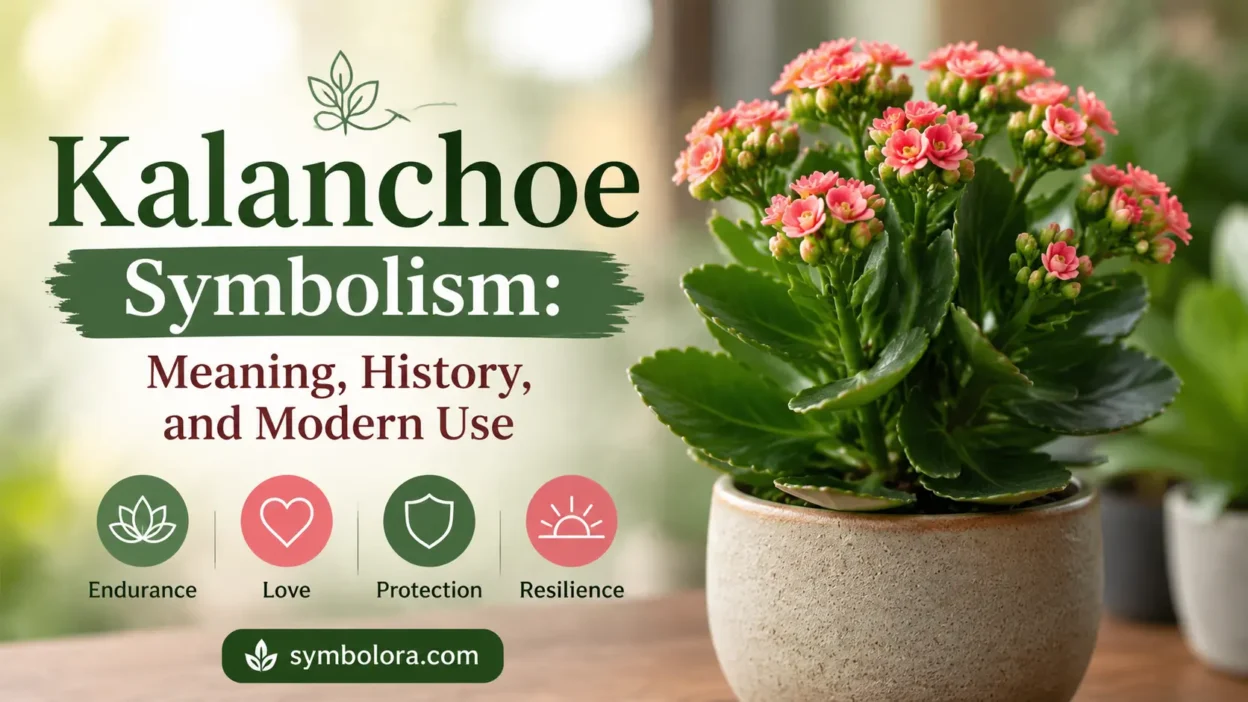
Kalanchoe symbolism is often connected with endurance, affection, optimism, and the ability to thrive through difficult conditions. This small flowering succulent has become popular among plant lovers because it survives with little care while producing bright, long-lasting blooms, giving it associations with resilience and steady growth.
Unlike some flowers with centuries-old mythological traditions, kalanchoe gained much of its symbolic meaning through its physical qualities and modern plant culture. Its ability to store water, adapt to dry environments, and continue flowering has shaped the way many people interpret it today.
In the United States, kalanchoe is commonly seen as a cheerful houseplant, a thoughtful gift, and a symbol of encouragement. People often give it during moments that call for hope, recovery, celebration, or a reminder that small things can continue growing with proper care.
Quick Answer
Kalanchoe symbolism commonly represents resilience, lasting affection, and optimism in modern American culture, especially when given as a gift or kept as a houseplant. Historically, its meaning developed from the plant’s ability to survive harsh conditions and produce bright blooms over long periods.
TL;DR
- Kalanchoe represents resilience and steady growth.
- Its flowers symbolize joy and encouragement.
- Americans often use it as a meaningful gift.
- Succulent traits influence its modern symbolism.
- Different cultures connect it with prosperity.
- Modern designs use it for warmth and positivity.
What the Kalanchoe Plant Looks Like and Where It Appears
Kalanchoe is a group of succulent plants known for thick, fleshy leaves and clusters of small flowers. Many varieties have colorful blooms in shades of red, pink, orange, yellow, or white. The plant’s compact shape makes it especially common in homes, offices, gardens, and decorative containers.
One reason kalanchoe became symbolic is its unusual combination of softness and strength. The flowers appear delicate, but the plant itself is built for survival. Its leaves store water, allowing it to tolerate periods of dryness better than many traditional flowering plants.
In American homes, kalanchoe is often placed on windowsills, desks, kitchen counters, and patios. Its presence is usually associated with adding color, life, and a sense of care to everyday spaces.
The Core Meanings Behind Kalanchoe Symbolism
The most common meanings attached to kalanchoe come from the plant’s natural characteristics.
Resilience is one of its strongest associations. Because kalanchoe can survive with limited watering and continue growing in challenging conditions, many people view it as a reminder of endurance.
Optimism is another common interpretation. Its bright flowers often create a cheerful atmosphere, making it a popular choice for gifts meant to encourage someone or celebrate a positive moment.
Affection and appreciation are also connected to kalanchoe. Unlike cut flowers that fade quickly, a potted kalanchoe can continue living for years with proper care, making it a symbol of lasting thoughtfulness.
Ancient Roots and the Development of Plant Symbolism
Kalanchoe does not have the same long-established symbolic history as roses, lilies, or lotus flowers. Much of its symbolism developed more recently through horticulture, gardening traditions, and the broader cultural meaning of succulents.
Plants that survive difficult environments have often been interpreted as symbols of strength. Across many cultures, drought-resistant plants became associated with patience, adaptation, and resourcefulness because they demonstrate survival without constant support.
As kalanchoe became more widely cultivated around the world, people began attaching emotional meanings to its qualities. The symbolism came less from mythology and more from observation: a plant that keeps growing despite challenges naturally became linked with persistence.
What Kalanchoe Symbolizes in the United States
In the United States, kalanchoe is mainly understood through everyday experiences rather than formal traditions. It appears frequently in homes, workplaces, hospitals, and gift arrangements because it offers color without requiring extensive maintenance.
Many Americans associate kalanchoe with:
| Context | Meaning in the USA | Common Associations | Notes |
|---|---|---|---|
| Gifts | Encouragement and care | Recovery, appreciation, friendship | Often given instead of cut flowers |
| Home Decor | Freshness and positivity | Comfort, warmth, beauty | Popular indoor succulent |
| Gardening | Patience and growth | Adaptability, independence | Easy-care plant appeal |
| Celebrations | Happiness and support | New beginnings, milestones | Bright flowers fit joyful occasions |
| Personal Spaces | Calm and connection with nature | Balance, daily renewal | Common office and home plant |
Unlike some symbolic flowers tied to specific ceremonies, kalanchoe has flexible meaning in American culture. A person giving one may be expressing friendship, congratulations, sympathy, or simple appreciation depending on the situation.
Why Kalanchoe Represents Resilience and Survival
The connection between kalanchoe and resilience comes directly from its biology. Succulents have developed ways to conserve water and survive environments where many plants struggle.
This survival ability creates a natural metaphor. People often relate the plant’s ability to endure dry periods to human experiences such as overcoming challenges, recovering from setbacks, or adapting to change.
For this reason, kalanchoe is sometimes chosen as a gift for someone starting a new chapter, recovering from hardship, moving into a new home, or facing a difficult period.
Its message is not about avoiding problems. Instead, it reflects the idea that growth can continue even when circumstances are imperfect.
Emotional and Psychological Associations of Kalanchoe
Plants often influence how people experience a space, and kalanchoe’s symbolism is closely connected with emotional comfort.
The bright flowers can create feelings of happiness and energy, while the ongoing care required by a living plant can provide a small daily routine. Watering, watching new blooms appear, and maintaining growth can create a sense of connection.
Psychologically, people may associate kalanchoe with:
- Stability during change
- Hope after difficult experiences
- Responsibility and nurturing
- Appreciation for simple beauty
Its meaning often depends on personal experience. Someone who received a kalanchoe during an important moment may attach a much more personal meaning to it than traditional symbolism suggests.
Kalanchoe in Gifts, Holidays, and Special Moments
Kalanchoe is a popular gift because it lasts longer than many floral arrangements. A bouquet may disappear within days, while a healthy kalanchoe can remain part of someone’s home for years.
People commonly give kalanchoe for:
- Housewarmings
- Birthdays
- Workplace appreciation
- Get-well wishes
- Retirement celebrations
- Thank-you gestures
During holidays, its colorful flowers make it suitable for seasonal decorations. While it does not have a single holiday meaning in the United States, its cheerful appearance fits occasions centered around gratitude, celebration, and togetherness.
Cross-Cultural Views of Kalanchoe Meaning
Kalanchoe’s symbolism varies by region because plant meanings often develop through local traditions and gardening practices.
In some East Asian contexts, certain kalanchoe varieties have been associated with good fortune and prosperity because flowering plants are often connected with positive energy and household blessings.
In parts of Africa and other warm regions where kalanchoe grows naturally or is widely cultivated, its survival qualities may contribute to associations with adaptation and strength.
However, these interpretations are not universal. The plant does not carry one fixed meaning across all cultures, and personal or regional traditions often shape its symbolism.
Kalanchoe Color Meanings
The color of kalanchoe flowers can influence how people interpret the plant. Like many flowers, different colors create different emotional associations.
Pink kalanchoe is often connected with affection, kindness, and gentle appreciation. It is a common choice for friendship or thoughtful gifts.
Red kalanchoe may suggest passion, energy, and strong emotions. Its brighter appearance makes it suitable for celebrations.
White kalanchoe can represent simplicity, peace, and elegance. It often fits calm interior designs or respectful gestures.
Yellow and orange kalanchoe are frequently associated with happiness, warmth, and enthusiasm because of their sunny appearance.
These meanings are cultural interpretations rather than strict rules. The sender’s intention usually matters more than the flower color alone.
Kalanchoe in Home Decor and Modern Lifestyle
Modern plant culture has expanded the meaning of kalanchoe beyond traditional gardening. Many people choose plants not only for appearance but also for the atmosphere they create.
In interior design, kalanchoe can represent:
- A connection with nature
- A welcoming environment
- Simple living
- Personal growth
Its compact size makes it popular among apartment residents and people who want greenery without demanding maintenance.
On social media, kalanchoe often appears in plant collections, indoor gardening posts, and lifestyle content. Its symbolism has become connected with mindful living and appreciation for small, sustainable habits.
Kalanchoe in Tattoos and Personal Expression
Kalanchoe tattoos are less common than rose, lotus, or sunflower tattoos, but some people choose the plant because of its personal meaning.
A kalanchoe tattoo may represent:
- Surviving a difficult experience
- Personal transformation
- Emotional recovery
- A connection to nature
- A reminder to keep growing
Because the plant is less traditional in tattoo culture, it can feel more personal and unique. Someone choosing kalanchoe often values its story rather than simply its appearance.
Common Misunderstandings About Kalanchoe Symbolism
One misunderstanding is that kalanchoe has one universal spiritual meaning. In reality, most interpretations come from modern plant culture, personal experiences, and regional traditions.
Another misconception is that every succulent carries identical symbolism. While many succulents share themes of endurance and survival, each plant develops its own associations based on appearance, history, and popularity.
Kalanchoe is also sometimes described with exaggerated mystical claims. These ideas are personal beliefs rather than widely established cultural meanings. The strongest symbolism comes from the plant’s real characteristics: durability, beauty, and continued growth.
How Kalanchoe Symbolism Has Changed Over Time
The meaning of kalanchoe has evolved as the plant moved from natural environments into homes, gardens, and commercial horticulture.
Originally appreciated mainly as a hardy succulent, it gradually gained emotional associations as people experienced its long-lasting blooms and easy care. Modern houseplant culture strengthened these meanings by connecting plants with wellness, comfort, and personal spaces.
Today, kalanchoe represents a blend of nature-based symbolism and modern lifestyle values. It reflects the desire for living things that bring beauty while requiring patience and attention.
Frequently Asked Questions About Kalanchoe Symbolism
What does kalanchoe symbolize spiritually?
Kalanchoe is often interpreted spiritually as a symbol of endurance, renewal, and continued growth. These meanings come mainly from the plant’s ability to survive dry conditions and keep producing flowers.
Is kalanchoe a good luck plant?
In some cultures, flowering kalanchoe varieties are associated with prosperity and positive energy. In the United States, people usually view it more as a cheerful plant that represents care and encouragement.
What does giving someone a kalanchoe mean?
Giving a kalanchoe can express appreciation, support, friendship, or wishes for recovery. Because the plant lasts longer than cut flowers, it often suggests lasting care.
Does kalanchoe have a meaning in weddings?
Kalanchoe is not a traditional wedding flower in American culture, but its meanings of growth, happiness, and lasting affection can fit modern celebrations.
What does a kalanchoe tattoo symbolize?
A kalanchoe tattoo may represent resilience, personal growth, or overcoming challenges. Its meaning depends heavily on the person’s own experiences.
Is kalanchoe associated with mourning?
Kalanchoe is not strongly linked with mourning traditions in the United States. However, its long-lasting nature may make it a thoughtful living tribute in some personal situations.
Conclusion
Kalanchoe symbolism comes from a simple but meaningful idea: a plant can remain beautiful while adapting to difficult conditions. Its bright flowers and lasting growth have made it a symbol of resilience, encouragement, and appreciation in many modern settings.
In American culture, kalanchoe is valued less for ancient myths and more for what it represents in everyday life — care, patience, and the ability to keep growing. Whether displayed at home, given as a gift, or chosen for personal expression, kalanchoe symbolism reflects a practical reminder that strength can appear in quiet and lasting forms.


