Bells of Ireland symbolism is connected with ideas of good fortune, sincerity, protection, and appreciation for nature’s beauty. Despite its name, Bells of Ireland is not actually native to Ireland. This distinctive flowering plant has become widely recognized in American gardens, floral arrangements, and decorative designs because of its unusual green bell-shaped calyces and fresh appearance.
The plant’s symbolic meaning comes from both its visual qualities and the cultural associations people have developed around green flowers. Its tall stems, natural color, and structured shape often suggest growth, renewal, and harmony. In the United States, Bells of Ireland is especially appreciated in weddings, seasonal decorations, and bouquets where people want to express positive emotions without using more traditional flowers.
Understanding the meaning behind this flower requires looking beyond its name. Its symbolism combines botanical characteristics, floral traditions, color associations, and modern American interpretations. While some meanings are based on established floral customs, others have developed through personal use and contemporary design.
Quick Answer
Bells of Ireland symbolism commonly represents good luck, sincerity, and appreciation in modern American culture, especially in floral arrangements and celebrations. Historically, its green color and unusual shape have connected it with renewal, nature, prosperity, and Irish-inspired traditions.
TL;DR
- Represents luck, sincerity, and appreciation today.
- Known for green bell-shaped floral structures.
- Often used in weddings and celebrations.
- Green color symbolizes growth and renewal.
- Not originally native to Ireland.
- Popular in modern floral design.
What Are Bells of Ireland and Why Are They Symbolic?
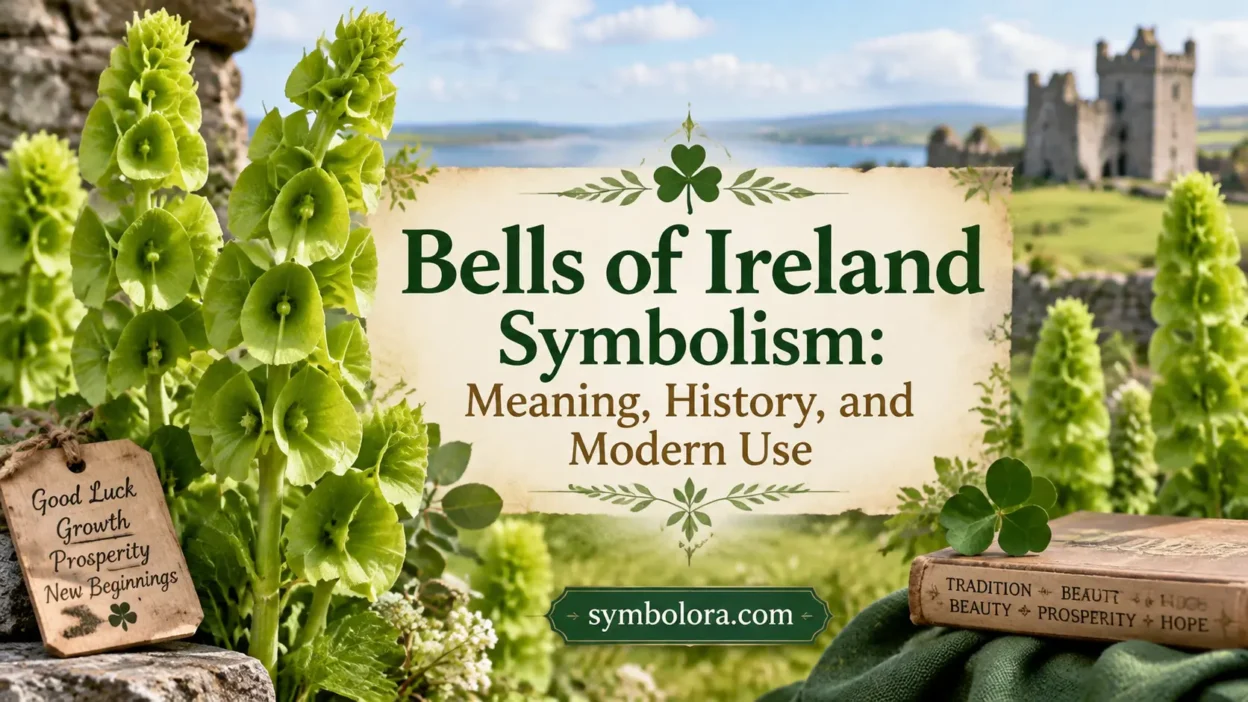
Bells of Ireland is a flowering plant known scientifically as Moluccella laevis. It produces tall stems covered with small, hollow, bell-like green structures that surround tiny white flowers. These green cups, called calyces, create the appearance that the plant is covered with rows of miniature bells.
The plant is popular among gardeners and florists because it adds height, texture, and an unusual green tone to arrangements. Unlike many flowers that rely on bright petals for attention, Bells of Ireland creates visual interest through shape and structure.
Its symbolic associations often come from these physical features. The upright growth pattern can suggest ambition and progress, while the green color naturally connects it with plants, landscapes, and renewal. The bell-like form also contributes to ideas of announcements, celebration, and positive messages.
In American floral culture, flowers are often chosen not only for appearance but also for the emotions they communicate. Bells of Ireland fits this tradition because it can represent encouragement, friendship, gratitude, and hopeful beginnings.
What It Commonly Means in the United States
In the United States, Bells of Ireland is most commonly associated with good luck and positive wishes. Florists frequently include it in bouquets when the goal is to create an arrangement that feels cheerful, fresh, and meaningful.
Its green color plays an important role in American interpretations. Green is commonly connected with nature, health, renewal, and growth. Because of this, Bells of Ireland is often viewed as a flower that represents moving forward and beginning new chapters.
The plant is also connected with sincerity and thoughtfulness. Unlike highly familiar flowers such as roses or lilies, Bells of Ireland feels distinctive and intentional. Choosing it can suggest that someone selected a flower for its personality rather than simply following a common tradition.
| Context | Meaning in the USA | Common Associations | Notes |
|---|---|---|---|
| Weddings | Good wishes and new beginnings | Love, growth, happiness | Often used in bouquets and centerpieces |
| Gardening | Renewal and natural beauty | Patience, seasonal growth | Popular in home landscapes |
| Gifts | Appreciation and kindness | Friendship, sincerity | Less common but meaningful |
| Decor | Freshness and balance | Nature, calm, elegance | Used in modern arrangements |
Ancient Roots and the Origins of Its Symbolic Associations
Although Bells of Ireland carries an Irish-sounding name, the plant’s natural history is more complicated. It is believed to have origins in regions around the eastern Mediterranean, including areas such as Turkey, Syria, and surrounding regions. The name likely developed because of the plant’s green appearance and association with Ireland’s famous green landscapes.
The connection between the plant and Ireland is cultural rather than botanical. Over time, green became strongly associated with Ireland because of the country’s landscapes, history, and national identity. A green flower with “bells” in its appearance naturally gained an Irish association in popular imagination.
Floral symbolism has often developed through similar pathways. A plant’s name, appearance, color, and cultural associations can combine to create meanings that become accepted over generations. Bells of Ireland demonstrates how symbolism does not always come from ancient myths; sometimes it grows from visual impressions and human traditions.
During the Victorian era, flowers became an important method of communication. People used floral arrangements to express emotions that were not always openly spoken. Although Bells of Ireland was not among the most famous flowers in Victorian flower language, its appearance aligned with themes of hope, good fortune, and positive intentions that continue today.
Why Green Color Shapes Bells of Ireland Symbolism
Color is one of the strongest influences on how people interpret flowers. Since Bells of Ireland is primarily green, many of its meanings come from associations connected to this color.
In American culture, green commonly represents:
- Growth and personal development
- Nature and environmental awareness
- Fresh starts
- Balance and harmony
- Prosperity and success
The plant’s green color makes it different from traditional flowering plants with bright reds, pinks, or yellows. Instead of expressing romance or passion, Bells of Ireland often communicates calm encouragement and optimism.
Green also has strong seasonal associations. During spring and summer, green landscapes represent renewal after winter. This connection helps explain why the plant often appears in celebrations focused on new beginnings.
In modern design, green flowers and plants are also connected with natural living and wellness. Homes, offices, and event spaces increasingly use greenery to create environments that feel peaceful and connected to nature.
Bells of Ireland in American Weddings and Celebrations
One of the most visible modern uses of Bells of Ireland is in weddings. American couples and florists often choose the flower because it adds height, texture, and a fresh green element to arrangements.
In wedding symbolism, Bells of Ireland can represent:
- Hope for the future
- A lasting partnership
- Good wishes for the couple
- Growth together
The flower works well in bouquets because its vertical shape creates movement and structure. It is often paired with white flowers, roses, eucalyptus, baby’s breath, and other greenery to create natural-looking arrangements.
Beyond weddings, Bells of Ireland appears in graduations, anniversary celebrations, and seasonal events. Its association with encouragement makes it suitable for occasions where people celebrate achievement or transition.
The plant’s connection with luck also contributes to its popularity. Many people enjoy including flowers with positive associations during important life events, even when they do not follow formal floral traditions.
Cultural Meaning Beyond Ireland and the United States
Although Bells of Ireland is strongly associated with Irish imagery, its symbolism is not limited to one culture. The meanings attached to flowers often change as plants move between regions and become part of new traditions.
In many cultures, green plants are connected with life, fertility, and the natural world. These associations appear in different forms across societies because plants represent visible signs of growth and renewal. A green flowering plant can suggest abundance because it reflects healthy landscapes and changing seasons.
In Irish cultural imagery, the color green carries strong national and historical associations. Green appears in Irish landscapes, clothing, celebrations, and symbols connected with Irish identity. However, Bells of Ireland itself is not an ancient Irish emblem or a traditional religious symbol.
In American culture, the flower is often appreciated more for its appearance and emotional message than for a specific ethnic connection. Many people who use Bells of Ireland in arrangements value its fresh look and positive associations rather than its connection to Ireland alone.
This distinction is important because plant symbolism often develops through shared human interpretation. A flower can gain new meanings as different communities incorporate it into their own celebrations and designs.
Emotional and Psychological Meaning of Bells of Ireland
Flowers influence people not only through symbolism but also through visual and emotional responses. Bells of Ireland’s tall shape, green color, and organized pattern create a feeling of freshness and stability.
Psychologically, green environments are often associated with calmness and restoration. People commonly connect green spaces with outdoor settings, gardens, and natural surroundings. Because Bells of Ireland brings a strong green presence into floral arrangements, it can create a sense of balance and peacefulness.
The flower’s structure may also influence its emotional meaning. The upward growth of the stems can suggest movement, progress, and confidence. This makes the plant especially fitting for moments when people celebrate change or personal milestones.
Unlike flowers traditionally connected with intense emotions, Bells of Ireland communicates quieter messages. It does not usually symbolize dramatic passion or grief. Instead, it expresses encouragement, appreciation, and positive expectations.
For many Americans, the flower’s meaning comes from the feeling it creates: a reminder of nature, possibility, and thoughtful connection.
Bells of Ireland in Home Decor and Interior Design
Modern interior design has increased interest in natural elements, and Bells of Ireland fits well into this trend. Dried and fresh arrangements featuring the plant are used to add texture and a natural accent to living spaces.
In home decor, the flower is often associated with:
- Fresh beginnings
- Natural simplicity
- Organic beauty
- Calm surroundings
Its green color allows it to complement many design styles, including farmhouse, minimalist, rustic, and contemporary interiors. Unlike brightly colored flowers that dominate a room, Bells of Ireland often works as a subtle decorative element.
Dried Bells of Ireland is especially popular because the plant maintains its unusual shape after preservation. This allows people to keep arrangements for extended periods, making the flower a symbol of lasting appreciation and continued beauty.
In offices and creative spaces, green plants are often used to create environments that feel more connected to nature. Bells of Ireland can contribute to this atmosphere by adding a distinctive botanical feature.
The Role of Bells of Ireland in Floral Design
Professional florists value Bells of Ireland because it provides something many flowers cannot: strong vertical structure. Its long stems create height and help organize larger arrangements.
From a design perspective, the plant offers:
- Texture through repeated bell shapes
- A natural green color palette
- Architectural structure
- Seasonal versatility
Florists often use it as a supporting flower rather than the main focal point. It works alongside roses, peonies, lilies, tulips, and other popular flowers by creating contrast and balance.
The flower’s symbolism also influences design choices. When a florist wants an arrangement to communicate encouragement, celebration, or appreciation, Bells of Ireland can add that emotional layer without overwhelming the overall design.
Because floral meanings are personal, many modern arrangements combine traditional symbolism with individual preference. A couple may choose Bells of Ireland because it reminds them of a place, a family connection, or simply a favorite color.
Bells of Ireland Symbolism in Tattoos and Personal Expression
Compared with roses, lotus flowers, or butterflies, Bells of Ireland tattoos are less common. However, people who choose this design often appreciate its unusual appearance and personal meaning.
A Bells of Ireland tattoo may represent:
- Personal growth
- Good fortune
- Connection with nature
- Irish heritage or admiration for Irish culture
- A reminder of a meaningful celebration
Because the flower is visually distinctive, it appeals to people looking for botanical tattoos that feel different from more familiar choices.
The meaning of a tattoo depends heavily on the person wearing it. Someone with Irish family roots may use the flower as a cultural connection, while another person may choose it because green represents renewal after a major life change.
It is also important to separate personal symbolism from historical tradition. A Bells of Ireland tattoo does not have one universal meaning. Like most botanical tattoos, its significance comes from the story attached to it.
Religious and Spiritual Interpretations
Bells of Ireland is not a major religious symbol in Christianity or other major faith traditions. Unlike flowers such as lilies, which have established religious associations, Bells of Ireland does not have a widely recognized sacred meaning.
However, some people may connect the plant with broader spiritual ideas found in nature symbolism. Green plants are often viewed as reminders of creation, renewal, and the continuation of life.
In Christian communities, green is sometimes associated with ordinary time in the church calendar, representing growth and spiritual development. This connection comes from the color itself rather than from Bells of Ireland specifically.
People may include the flower in religious celebrations simply because of its beauty or because they associate it with hope and new beginnings. These interpretations are personal rather than formal religious teachings.
Understanding this difference helps prevent confusion between established religious symbols and modern personal meanings.
Common Misunderstandings About Bells of Ireland Symbolism
Because of its name, Bells of Ireland is sometimes misunderstood. One common misconception is that the plant originated in Ireland. While the flower has a strong Irish association in popular culture, its natural origins are outside Ireland.
Another misunderstanding is that the flower has one fixed symbolic meaning. In reality, floral symbolism changes across cultures, time periods, and personal experiences.
Some people also assume that every meaning connected with the flower comes from ancient traditions. However, many modern flower meanings develop through gardening culture, floral design, and contemporary celebrations.
The most accurate way to understand Bells of Ireland symbolism is to recognize both parts of its identity:
- Its botanical history comes from Mediterranean regions.
- Its cultural symbolism developed through human interpretation.
This balanced view allows people to appreciate the flower without attaching unsupported historical claims to it.
How Bells of Ireland Meaning Has Changed Over Time
The interpretation of Bells of Ireland has evolved as the plant moved through different cultural settings. Originally valued as a distinctive garden plant, it later became popular in floral arrangements because of its unusual appearance.
In earlier gardening traditions, the plant’s appeal came largely from its shape and rarity. Over time, floral designers began using it to represent positive emotions such as luck, encouragement, and appreciation.
Modern American culture has expanded its meaning further. Today, people may associate Bells of Ireland with environmental awareness, natural design, personal milestones, and celebrations of change.
The shift shows how symbols are not permanent. They develop as people interact with plants, objects, and images in new ways.
Bells of Ireland remains meaningful because it combines visual beauty with flexible interpretation. Its symbolism continues to adapt while maintaining its connection to nature and positive occasions.
Modern Uses of Bells of Ireland in American Culture
Today, Bells of Ireland appears in many areas of American life beyond traditional gardening. Its unusual appearance has helped it become popular in floral design, seasonal decoration, photography, and personal celebrations.
In modern floral arrangements, the plant is often selected because it adds a natural green element that feels fresh and contemporary. Many people prefer arrangements that include more greenery because they create a relaxed, organic appearance rather than a formal or overly decorative style.
Common modern uses include:
- Wedding bouquets and ceremony decorations
- Anniversary and celebration flowers
- Garden designs
- Dried floral arrangements
- Event centerpieces
- Home decoration
The flower is also popular among people interested in sustainable and nature-inspired design. As Americans have shown increasing interest in bringing outdoor elements into indoor spaces, plants with distinctive shapes and natural colors have gained attention.
On social media, botanical imagery has also influenced how people view flowers. Photos of unique plants like Bells of Ireland often appear in gardening communities, wedding inspiration posts, and floral design collections. In these spaces, the flower is valued for both its appearance and the feelings it represents.
Bells of Ireland in Gardening and Seasonal Traditions
Gardeners often appreciate Bells of Ireland because it offers a different look from traditional flowering plants. Instead of producing large colorful blooms, it creates vertical green spikes that add structure to gardens.
In American gardens, the plant is commonly associated with:
- Seasonal renewal
- Patience and growth
- Natural beauty
- Connection with gardening traditions
Growing the plant can also carry personal meaning. Many gardeners view planting and caring for flowers as an act of patience and connection with nature. The process of watching a plant develop from seed to mature stalk naturally reinforces ideas of growth and transformation.
Bells of Ireland is often grown in spring and summer gardens, making it suitable for seasonal displays. Its green appearance allows it to blend with many other plants while still creating visual interest.
For gardeners, the symbolism may be less about formal flower meanings and more about the experience of nurturing something living.
Bells of Ireland Compared With Other Green Flowers
Green flowers often share similar symbolic themes, but each plant communicates a different message. Comparing them helps explain why Bells of Ireland has developed its own identity.
| Flower | Common Symbolism | Main Difference |
|---|---|---|
| Bells of Ireland | Luck, sincerity, renewal | Known for bell-shaped green structures |
| Green Rose | Growth, harmony, new beginnings | More closely connected with traditional rose symbolism |
| Green Orchid | Luxury, balance, refinement | Often associated with elegance and rarity |
| Green Chrysanthemum | Renewal and optimism | Connected with chrysanthemum traditions |
Bells of Ireland stands out because its symbolism comes strongly from its unusual appearance. The plant does not depend on a large bloom or intense color contrast. Instead, its meaning comes from simplicity, structure, and natural form.
Controversies and Misuse of Bells of Ireland Symbolism
Bells of Ireland does not have major controversies connected with its symbolism, but misunderstandings can occur when cultural associations are exaggerated.
The biggest misconception involves its connection to Ireland. Because of its name, some people assume it is an ancient Irish flower with a long traditional history in Irish folklore. In reality, the connection is mostly based on appearance, color, and later cultural association.
Another issue is the tendency to present flower meanings as universal facts. Symbolism is influenced by culture, personal experience, and changing traditions. A flower that represents luck to one person may simply represent beauty or a favorite plant to another.
Modern floral symbolism works best when it is viewed as a language of expression rather than a strict rule system. Bells of Ireland can carry meaningful associations, but those meanings depend on context.
Why People Still Connect With Bells of Ireland Today
The continued popularity of Bells of Ireland comes from a combination of appearance and emotional association. It offers something different from traditional flowers while still fitting into familiar celebrations.
Many people are drawn to symbols that represent positive ideas without feeling overly formal. Bells of Ireland provides a quiet message of encouragement, freshness, and optimism.
Its green color connects it with nature, while its tall shape suggests movement and growth. These qualities make it suitable for moments when people want to recognize change, celebrate achievements, or express appreciation.
In a culture where personal expression is increasingly important, flowers often serve as visual reminders of memories, relationships, and values. Bells of Ireland remains meaningful because it allows people to attach their own stories to its symbolism.
Frequently Asked Questions
What does Bells of Ireland symbolize?
Bells of Ireland commonly symbolizes good luck, sincerity, appreciation, and renewal. In modern American floral traditions, it is often chosen for celebrations where people want to express positive wishes and encouragement.
Is Bells of Ireland actually from Ireland?
No. Despite its name, Bells of Ireland is not native to Ireland. The plant is believed to have originated in regions near the eastern Mediterranean, while its Irish connection developed from its green color and bell-like appearance.
What does Bells of Ireland mean in a wedding bouquet?
In wedding bouquets, Bells of Ireland is often associated with good wishes, growth, and a hopeful future. Many couples choose it because its green color adds a natural feeling to wedding arrangements.
Does Bells of Ireland have a religious meaning?
Bells of Ireland does not have a widely established religious meaning in major faith traditions. Some people may personally connect it with ideas such as renewal or creation because of its natural appearance.
What does a Bells of Ireland tattoo symbolize?
A Bells of Ireland tattoo may represent personal growth, luck, nature, or a connection to Irish culture. The meaning depends on the individual’s personal experiences and reasons for choosing the design.
Why is Bells of Ireland called that if it is not Irish?
The name likely comes from the plant’s green color and bell-shaped structures, which reminded people of Ireland’s famous green landscapes. The name reflects cultural association rather than botanical origin.
Is Bells of Ireland considered a lucky flower?
Many people consider Bells of Ireland a lucky flower because modern floral traditions often connect it with good fortune and positive beginnings. This meaning comes from cultural interpretation rather than a universal botanical rule.
Conclusion
Bells of Ireland symbolism represents a combination of good fortune, sincerity, growth, and appreciation for nature. Its meaning developed through its unusual appearance, green color, floral traditions, and the ways people have used it in celebrations and personal expression.
Although the plant is not originally from Ireland, it has gained a strong cultural identity through its association with Irish imagery and modern American floral design. Today, people use it in weddings, gardens, decorations, and personal expressions because it communicates optimism and natural beauty.
The meaning of bells of ireland symbolism continues to evolve as people create new connections with this distinctive flower. Its lasting appeal comes from a simple idea: a small botanical detail can carry a message of hope, appreciation, and new beginnings.