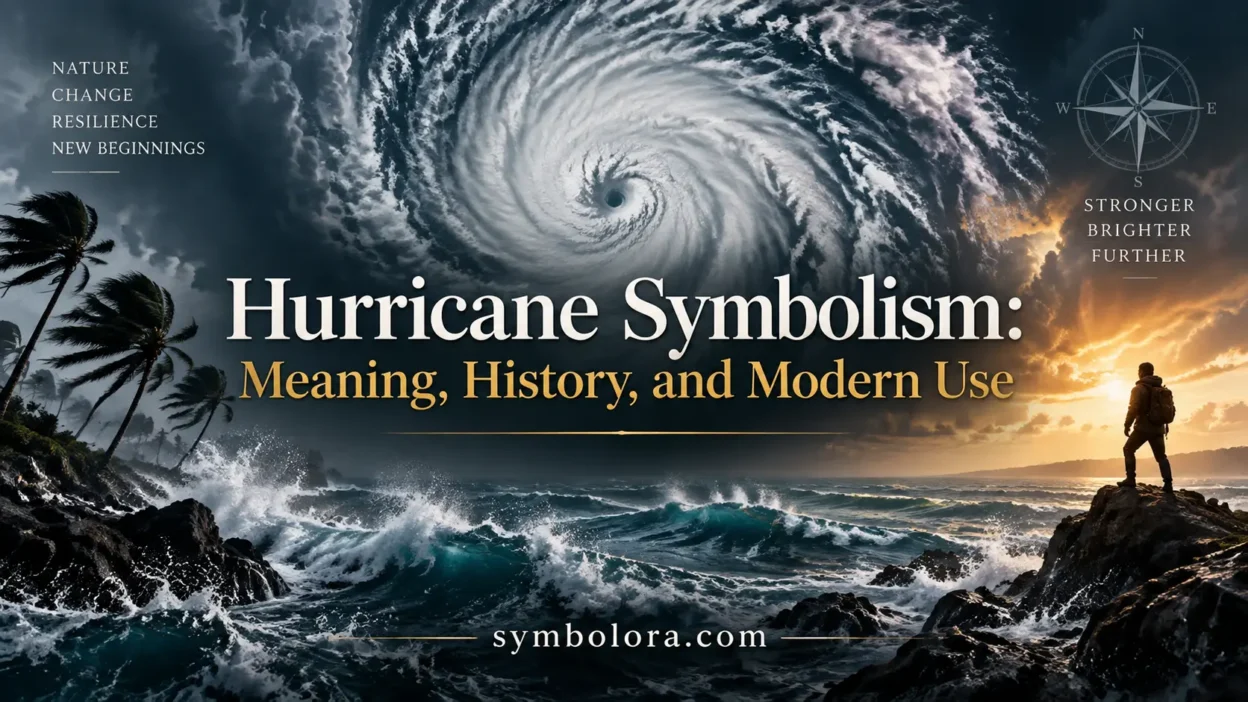
A hurricane is more than a powerful weather event. In stories, art, religion, and personal reflection, hurricane symbolism often represents sudden change, emotional storms, destruction, renewal, and the forces people cannot fully control. Its image appears in literature, movies, tattoos, and conversations about personal struggles and major life transitions.
For many Americans, hurricanes carry both physical and symbolic meanings because storms have shaped communities, especially along the Gulf Coast, Atlantic Coast, and Caribbean-connected regions. They can represent loss and fear, but they can also symbolize survival, rebuilding, and human resilience.
Understanding the meaning behind this symbol requires looking beyond the storm itself. Its interpretation comes from natural observation, cultural memory, mythology, and the ways people use weather imagery to describe powerful experiences.
Quick Answer
Hurricane symbolism commonly represents major change, emotional upheaval, and challenges that test strength in modern American culture. Historically, hurricanes have also symbolized uncontrollable natural forces, destruction, renewal, and the relationship between humans and nature.
TL;DR
- Hurricanes symbolize change, disruption, and emotional intensity.
- Ancient cultures connected storms with powerful natural forces.
- Americans often associate hurricanes with survival and rebuilding.
- Storm imagery appears in art, tattoos, and storytelling.
- Hurricanes can represent both destruction and renewal.
- Modern meanings focus on resilience after hardship.
What a Hurricane Represents as a Symbol
A hurricane is a rotating tropical storm with strong winds, heavy rain, and a powerful center called the eye. Unlike many symbols based on objects or animals, hurricanes come directly from nature and represent movement, instability, and overwhelming force.
The physical qualities of a hurricane shape its symbolic meanings:
- Violent winds suggest disruption and sudden transformation.
- Heavy rainfall can represent cleansing, release, or emotional expression.
- The calm eye of the storm often represents peace found during chaos.
- The storm’s aftermath represents recovery and rebuilding.
Because hurricanes create dramatic changes in landscapes and human lives, people often use them as metaphors for experiences that feel larger than themselves.
What It Commonly Means in the United States
In the United States, hurricanes often symbolize survival, adaptation, and the ability to recover after difficult events. Communities affected by storms frequently develop strong identities around rebuilding and helping one another.
The meaning depends heavily on personal experience. Someone who has lived through a hurricane may associate the symbol with preparation, family, community support, or loss. Someone who has only seen hurricanes through media may view it more generally as a symbol of uncertainty or powerful change.
| Context | Meaning in the USA | Common Associations | Notes |
|---|---|---|---|
| Natural disasters | Survival and recovery | Strength, rebuilding, community | Common in coastal areas |
| Personal struggles | Emotional challenges | Transformation, endurance | Used as a life metaphor |
| Art and literature | Conflict and change | Drama, uncertainty | Often represents turning points |
| Tattoos | Resilience and identity | Courage, overcoming hardship | Personal meanings vary |
| Weather culture | Respect for nature | Preparation and awareness | Connected to real experiences |
Ancient Roots and Early Storm Symbolism
Long before modern weather science explained hurricanes, many societies viewed storms as signs of powerful natural forces. Thunder, wind, and rain often appeared in myths connected with gods, spirits, or cosmic struggles.
Ancient Mediterranean cultures associated storms with figures such as storm deities who controlled weather and protected communities. In Norse traditions, thunder and storms connected with the strength of figures like Thor, whose role reflected humanity’s attempt to understand powerful natural events.
Across many Indigenous cultures of the Americas, storms and weather were understood through relationships between people, land, animals, and spiritual forces. These interpretations varied widely between nations, but storms were often treated with respect rather than viewed simply as destructive events.
The symbolism developed from a simple human observation: storms can change the world quickly, reminding people of nature’s influence.
Hurricanes in American Culture and Collective Memory
Hurricanes hold a unique place in American culture because they are not only symbols but also lived experiences. Major storms have affected cities, families, economies, and landscapes across the country.
In places such as Florida, Louisiana, Texas, and the Carolinas, hurricanes are connected with:
- preparation traditions
- neighborhood cooperation
- emergency planning
- rebuilding efforts
- memories of loss and recovery
After major storms, the hurricane symbol can shift from fear toward resilience. The focus often moves from what was destroyed to what communities rebuilt.
This dual meaning makes hurricanes different from symbols that represent only negative experiences. A hurricane can describe hardship while also highlighting strength.
Emotional and Psychological Meaning of Storm Imagery
People often use hurricanes as emotional metaphors because storms reflect feelings that seem difficult to control. Someone experiencing grief, conflict, anxiety, or major life changes may describe their situation as a personal storm.
Psychologically, hurricane imagery can represent:
- overwhelming emotions
- internal conflict
- periods of uncertainty
- personal transformation
- emotional release
The eye of the hurricane has become especially meaningful because it represents a temporary moment of calm surrounded by chaos. Many people connect this image with finding stability during difficult periods.
However, the symbol does not always suggest negativity. A storm can also represent growth because challenges often lead to new perspectives and stronger identities.
Religious and Spiritual Interpretations of Hurricanes
Many religious traditions use storms as symbols of testing, transformation, or divine power. In some biblical stories, storms represent moments when humans encounter forces beyond their control and must respond with faith or courage.
In spiritual discussions, hurricanes may symbolize:
- major life transitions
- purification
- personal awakening
- lessons learned through difficulty
Interpretations vary widely. Some people view storms as meaningful signs, while others see them simply as natural events that inspire reflection.
Modern spiritual interpretations usually focus less on predicting events and more on using storm imagery to understand personal experiences.
Hurricane Symbolism in Literature and Popular Culture
Writers and filmmakers frequently use hurricanes because they create immediate emotional tension. A storm can change a character’s situation, reveal hidden conflicts, or represent a major turning point.
In fiction, hurricanes often symbolize:
- chaos entering ordinary life
- characters facing difficult choices
- society being tested
- transformation after destruction
Storm imagery appears in novels, films, television shows, and music because it quickly communicates intensity. A hurricane can represent both external events and internal struggles.
The symbol works well because audiences already understand the uncertainty and force associated with storms.
Why People Choose Hurricane Tattoos
Hurricane tattoos often carry personal meanings connected to survival, change, and overcoming difficult experiences. Someone may choose this design after recovering from a major challenge or a period of personal transformation.
Common hurricane tattoo meanings include:
- resilience after hardship
- strength during uncertainty
- acceptance of change
- connection to coastal identity
- remembrance of a major life event
Some designs include additional elements such as waves, lightning, ships, or the hurricane eye. These details can change the interpretation by adding ideas of navigation, hope, or endurance.
Like all tattoos, the meaning depends on the person wearing it.
Hurricane Symbolism in Art, Fashion, and Design
Artists often use hurricanes to create visual contrast between destruction and beauty. Swirling shapes, dark clouds, and ocean imagery can communicate movement and emotional intensity.
In design, hurricane-inspired imagery may appear in:
- paintings
- photography
- clothing graphics
- album artwork
- home decor
The symbol works particularly well because it combines natural power with emotional storytelling. A hurricane image can create a sense of movement even in a still design.
Modern designers often focus on the shape and energy of storms rather than only their destructive aspects.
Positive and Negative Meanings of Hurricane Symbolism
The meaning of a hurricane depends on the context. It can represent hardship, but it can also represent renewal and strength.
| Positive Interpretations | Negative Interpretations |
|---|---|
| Resilience | Destruction |
| Transformation | Loss |
| Renewal | Fear |
| Courage | Chaos |
| Adaptability | Uncertainty |
This contrast explains why hurricanes remain powerful symbols. They reflect the reality that difficult experiences can contain both pain and opportunities for growth.
Common Misunderstandings About the Symbol
One common misunderstanding is that hurricanes always represent something negative. While storms can symbolize destruction, many modern interpretations focus on recovery and personal strength.
Another misunderstanding is assuming every hurricane reference has spiritual meaning. Sometimes writers, artists, or individuals use storm imagery simply because it represents intensity or dramatic change.
The symbol should always be interpreted within its cultural and personal context.
How Hurricane Meaning Has Changed Over Time
Earlier interpretations often focused on fear, divine power, and humanity’s vulnerability before nature. As science developed, people gained a better understanding of storms, but the symbolic meaning remained.
Today, hurricanes represent a wider range of ideas:
- climate awareness
- community resilience
- personal transformation
- emotional challenges
- adaptation
Modern culture often emphasizes what happens after the storm. Recovery stories, volunteer efforts, and rebuilding projects have added new layers to hurricane symbolism.
Modern Uses of Hurricane Symbolism
Today, hurricane imagery appears in many areas of American life, including:
- tattoos representing survival
- social media posts about personal change
- artwork exploring emotions
- motivational messages about recovery
- fictional stories about transformation
The symbol remains popular because it reflects experiences many people recognize: unexpected change, uncertainty, and the need to adapt.
Rather than representing only destruction, modern interpretations often focus on what people do when facing powerful challenges.
Frequently Asked Questions
What does a hurricane symbolize spiritually?
A hurricane can symbolize transformation, testing, and change in spiritual interpretations. Some people view storms as reminders of personal growth, while others see them as examples of nature’s power.
Is a hurricane a positive or negative symbol?
A hurricane can represent both positive and negative ideas. It may symbolize destruction and uncertainty, but it can also represent resilience, renewal, and strength after hardship.
What does a hurricane tattoo mean?
A hurricane tattoo often represents survival, personal change, or overcoming difficult experiences. The meaning depends on the individual’s story and the design elements included.
Why are hurricanes used in literature?
Writers use hurricanes to represent conflict, emotional intensity, and major turning points. Storms create a natural symbol for situations where characters must adapt or change.
What does the eye of a hurricane symbolize?
The eye of a hurricane often represents calmness, reflection, and finding stability during difficult times. It is commonly used as a metaphor for peace within chaos.
Do hurricanes have different meanings in different cultures?
Yes. Different cultures interpret storms through their own histories, beliefs, and relationships with nature. Some emphasize spiritual power, while others focus on survival and environmental forces.
How do Americans usually view hurricane symbolism today?
Many Americans associate hurricanes with preparation, community support, recovery, and resilience, especially in areas where storms are part of everyday life.
Conclusion
A hurricane represents one of nature’s clearest examples of change and uncertainty. In modern American culture, hurricane symbolism often reflects survival, emotional challenges, transformation, and the ability to rebuild after difficult moments.
Its meaning comes from both ancient views of powerful storms and modern experiences with real disasters. While hurricanes can represent loss and disruption, they also remind people of adaptation, cooperation, and recovery.
The symbol remains meaningful because it reflects a common human experience: facing forces beyond control and finding a way forward afterward.