Growth is one of the most universal ideas people connect with change, progress, and personal development. The symbolism of growth appears in nature, art, literature, celebrations, and everyday life because humans often use images of expansion and transformation to represent improvement and new beginnings.
From a small seed becoming a tree to a person overcoming challenges and reaching a new stage of life, growth symbols reflect movement from one state to another. In modern American culture, these symbols often appear in personal goals, education, career milestones, wellness practices, tattoos, home design, and celebrations of achievement.
Understanding growth symbolism helps explain why certain images—such as trees, flowers, butterflies, and rising paths—carry emotional meaning across different communities. These symbols do not only represent success; they also represent patience, learning, resilience, and the process of becoming something different.
Quick Answer
The symbolism of growth commonly represents personal development, progress, renewal, and positive change in modern American culture. Historically, growth symbols have also been connected with nature’s cycles, fertility, transformation, and the human journey toward maturity.
TL;DR
- Growth symbolizes progress, change, and personal improvement.
- Trees and plants represent natural development cycles.
- Americans connect growth with goals and achievement.
- Many cultures link growth with renewal and life stages.
- Tattoos often express personal transformation.
- Modern designs use growth symbols for identity.
What Growth Symbolism Represents In Everyday Life
Growth symbolism is usually connected with the idea of becoming better, stronger, or more developed over time. Unlike symbols that represent a single moment, growth symbols focus on a process. They show movement, change, and the gradual results of effort.
In everyday American life, growth is often connected with personal goals. A student graduating, someone building a career, a person recovering from a difficult experience, or a family creating a new chapter may all describe their experiences through growth imagery.
Common growth symbols include:
| Symbol | Meaning in the USA | Common Associations | Notes |
|---|---|---|---|
| Tree | Stability and personal development | Strength, roots, maturity | Often used in family and identity designs |
| Flower | Renewal and progress | Beauty, change, new beginnings | Common in gifts and celebrations |
| Butterfly | Personal transformation | Freedom, growth, change | Popular in tattoos |
| Seedling | Early progress | Hope, potential, learning | Represents beginnings |
| Mountain Path | Achievement | Goals, challenges, success | Used in motivational designs |
Growth symbols are especially meaningful because they recognize that improvement takes time. A tree does not become tall overnight, and many people use that image as a reminder that personal development requires patience.
Ancient Roots And Early Symbolism Of Growth
The meaning of growth began with humanity’s close relationship with the natural world. Early societies depended on agriculture, seasons, and plant cycles, so growth became closely connected with survival and renewal.
Plants provided food, medicine, shelter, and materials. Because of this connection, images of seeds, crops, trees, and flowers often became associated with life continuing and expanding.
Ancient agricultural communities commonly viewed planting and harvesting as more than practical activities. The cycle of placing a seed into the ground and watching it develop represented hope, patience, and the return of life after periods of difficulty.
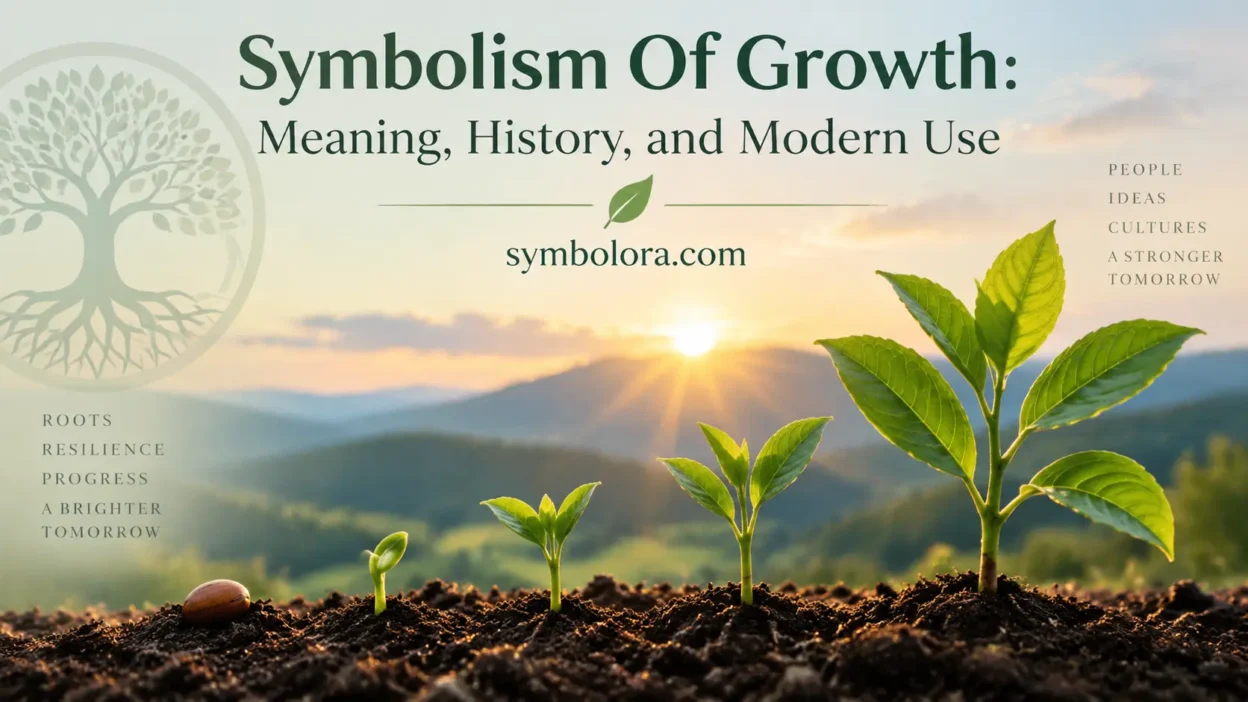
The tree became one of the strongest growth symbols because it showed visible stages of development:
- A seed represented potential.
- Roots represented foundation.
- A trunk represented strength.
- Branches represented expansion.
- Fruit represented achievement.
Different civilizations developed their own interpretations of growth imagery. Some traditions connected trees with wisdom and family lineage, while others viewed plants and seasonal cycles as signs of renewal.
Although meanings varied, the central idea remained similar: growth represented movement from a beginning stage toward greater development.
Why Trees Became A Major Symbol Of Growth
Among all growth-related symbols, the tree is one of the most recognized worldwide. Its meaning comes from its natural life cycle and its visible connection between earth and sky.
A tree begins as something small but develops into something much larger. This transformation makes it a natural representation of human development.
In the United States, tree symbolism appears in many areas of life:
- Family trees represent ancestry and connection.
- Tree artwork is used in homes to create feelings of stability.
- Graduation gifts sometimes feature trees as symbols of future growth.
- Tattoos often use trees to represent personal history and resilience.
The tree also represents balance. Its roots suggest connection to the past, while its branches suggest future possibilities. Many people relate this image to their own lives by seeing growth as a combination of remembering where they came from while continuing forward.
Growth Symbolism In American Culture
In the United States, growth symbolism is strongly connected with ideas of opportunity, self-improvement, and achievement. American culture often emphasizes personal progress, making growth-related images common in education, business, and personal identity.
Graduation ceremonies are one example where growth symbolism appears clearly. A diploma represents knowledge gained and a transition into a new stage of life. Images of open doors, rising paths, and growing plants are frequently used in messages celebrating these moments.
Growth is also common in business and professional environments. Companies often use images of upward movement, expanding branches, or developing landscapes to communicate improvement and future goals.
In wellness and personal development communities, growth symbols appear in journals, artwork, and motivational materials. They represent ideas such as:
- Learning from experiences
- Building confidence
- Developing emotional strength
- Creating healthier habits
However, modern American interpretations usually focus less on perfection and more on progress. Growth does not always mean becoming flawless; it often means continuing to learn and adapt.
Emotional And Psychological Meaning Of Growth Symbols
Growth symbols connect strongly with human emotions because they represent change that people experience throughout life. They can communicate hope during difficult periods and encouragement during moments of transition.
A person who chooses a growth symbol may be expressing:
- A new beginning after hardship
- Personal improvement
- Recovery from past challenges
- A desire to continue learning
- Acceptance of change
Psychologically, growth imagery can serve as a reminder that development happens gradually. A plant growing from a seed reflects the idea that small actions can eventually create meaningful results.
This is why growth symbols are often used in personal spaces. Artwork featuring plants, trees, or natural landscapes can create a visual reminder of patience and progress.
For many people, growth is not only about external success. It can also represent emotional maturity, stronger relationships, self-awareness, and personal values.
Growth Symbolism In Religion And Spiritual Traditions
Growth has been an important idea in many religious and spiritual traditions because it reflects transformation, renewal, and the development of human character. While specific meanings differ between traditions, growth often represents becoming wiser, more compassionate, or more connected with a larger purpose.
In Christianity, growth is frequently connected with spiritual maturity and the development of virtues such as patience, kindness, and faith. Plant imagery appears often in Christian teachings, where seeds, gardens, and trees are used as examples of how beliefs and values can develop over time.
The image of a seed growing into a plant is especially meaningful because it represents potential becoming reality. A small beginning can lead to something larger when it receives care and attention.
In Buddhism, growth is often associated with personal awareness, learning, and the gradual development of understanding. The lotus flower is one of the best-known examples. Because a lotus grows from muddy water while producing a beautiful flower, it is commonly interpreted as a symbol of personal development and transformation.
In Hindu traditions, plants, trees, and natural cycles can represent renewal and the relationship between life, time, and creation. Certain sacred trees hold cultural importance and are connected with knowledge, protection, and spiritual reflection.
Although these traditions use different images and teachings, they share a common theme: growth is a process rather than an instant achievement.
Cross-Cultural Meanings Of Growth Symbols
Growth symbols appear across cultures because the experience of change is part of human life. However, the meaning attached to specific symbols can vary depending on history, environment, and traditions.
A tree may represent family connection in one culture, wisdom in another, and spiritual connection somewhere else. A flower may symbolize beauty, renewal, love, or remembrance depending on the social context.
Some common examples include:
Trees:
Trees are widely associated with strength, continuity, and connection. Their long lifespan makes them symbols of endurance and generations.
Seeds:
Seeds often represent possibility because they contain the potential for future growth. They are frequently connected with hope, preparation, and new beginnings.
Flowers:
Flowers represent change because they move through stages—from bud to full bloom and eventually decline. This cycle connects flowers with both beauty and the temporary nature of life.
Water:
Water is often linked with growth because plants and living beings depend on it. In symbolic use, water can represent renewal, movement, and emotional development.
The similarities across cultures show that people often look to nature to explain human experiences. Natural growth provides a familiar image for personal and social transformation.
Flowers, Seeds, And Plants As Symbols Of Growth
Plants are among the most recognizable symbols of growth because they show visible transformation. A seed, flower, or tree allows people to see development happening over time.
A seed is often used to represent beginnings. It suggests that something valuable can exist before it becomes visible. This idea appears in education, entrepreneurship, relationships, and personal goals.
For example, someone starting a new career may describe their journey as “planting seeds” for future success. A person learning a skill may view early struggles as the beginning stage of development.
Flowers represent a different stage of growth. They often symbolize progress reaching a visible expression. This is why flowers appear in celebrations such as:
- Graduations
- Weddings
- Anniversaries
- New home celebrations
- Personal achievements
Different flowers can also carry specific associations. A sunflower is often linked with positivity and confidence because of its connection with brightness and upward movement. A rose may represent love and emotional development. A lotus often represents transformation and overcoming challenges.
However, flower meanings are not fixed rules. Context, culture, and personal experience influence how people understand them.
Growth Symbolism In Tattoos And Personal Identity
Growth symbols are especially popular in tattoo culture because they allow people to express personal stories through visual designs.
Many people choose growth-related tattoos after important life experiences, including:
- Overcoming difficult periods
- Starting a new chapter
- Recovering from personal struggles
- Celebrating achievements
- Honoring personal change
Tree tattoos are often chosen to represent family roots, stability, and personal history. A tree with branches may symbolize future goals, while roots may represent connection to family or past experiences.
Butterfly tattoos are commonly associated with transformation because of the butterfly’s life cycle. The change from caterpillar to butterfly creates a strong visual connection with personal evolution.
Flower tattoos may represent growth in a more personal way. Some people choose flowers connected with memories, relationships, or important moments in their lives.
In modern American tattoo culture, growth symbols are usually less about a universal meaning and more about personal interpretation. The same image can represent completely different experiences for different people.
Growth Symbolism In Home Decor And Design
Growth imagery is common in interior design because many people associate natural symbols with comfort, balance, and positive environments.
Plants, botanical artwork, and nature-inspired patterns are frequently used in American homes. These designs can create feelings of connection with nature while also representing improvement and renewal.
Common examples include:
- Indoor plants representing ongoing development
- Tree artwork representing family and stability
- Floral patterns representing beauty and renewal
- Nature scenes representing peaceful change
The popularity of houseplants in recent years has also strengthened the connection between physical plant care and personal growth. Caring for a plant requires attention, patience, and consistency, which many people compare to developing healthy habits in their own lives.
Growth symbolism in design often works because it combines visual beauty with personal meaning. A plant on a shelf may simply decorate a room, but for another person, it may represent healing, responsibility, or a fresh start.
Growth Symbols In Modern Media And Digital Culture
Modern media frequently uses growth imagery to communicate improvement, success, and transformation.
Movies, television shows, and books often show characters experiencing growth through challenges. A character who learns from mistakes, develops new skills, or changes their perspective is often described as having personal growth.
Digital culture also uses growth-related language and images. Social media discussions commonly include phrases connected with:
- Personal growth
- Career growth
- Emotional growth
- Learning journeys
- Self-development
Images of plants, mountains, paths, and rising lines are often used in motivational posts because they quickly communicate progress.
However, online discussions sometimes simplify growth by suggesting that improvement is always fast or easy. Real growth often includes setbacks, uncertainty, and periods where progress is difficult to see.
A more realistic interpretation views growth as a long process involving both achievements and challenges.
Positive And Negative Interpretations Of Growth Symbols
Growth symbols are usually viewed positively, but their meanings can change depending on context.
Positive interpretations include:
- Improvement
- Hope
- Learning
- Renewal
- Strength
- Adaptation
However, growth can also represent difficult experiences. Change may involve leaving behind familiar situations, facing uncertainty, or accepting personal limitations.
For example, a tree losing leaves before growing new ones can represent the idea that development sometimes requires change and transition.
Some modern discussions also criticize the pressure to constantly “grow” or improve. In certain contexts, people may feel overwhelmed by expectations to always achieve more.
This perspective reminds us that growth does not always mean constant progress. Rest, reflection, and acceptance can also be important parts of development.
Common Misunderstandings About Growth Symbolism
One common misunderstanding is that growth symbols always represent success or achievement. In reality, growth is broader than reaching goals.
Growth can include:
- Learning from failure
- Developing emotional awareness
- Changing beliefs
- Building stronger relationships
- Becoming more adaptable
Another misconception is that symbols have one universal meaning. A flower, tree, or butterfly may represent growth for many people, but personal experiences influence interpretation.
A tree tattoo might represent family for one person and personal recovery for another. Neither interpretation is incorrect because symbols gain meaning through human experiences.
It is also important to separate cultural symbolism from unsupported claims. Some symbols have long traditions, while others receive newer meanings through modern trends.
Understanding the history and context behind symbols helps people appreciate them without assigning fixed meanings.
How The Meaning Of Growth Has Changed Over Time
The idea of growth has evolved alongside human societies. Earlier interpretations were strongly connected with agriculture, seasons, and survival because people depended directly on natural cycles.
As societies changed, growth became connected with education, personal achievement, innovation, and identity.
Today, growth often refers to internal development as much as physical or economic progress. People talk about emotional growth, personal growth, and creative growth as ways of describing change within themselves.
Modern interpretations also recognize that growth is not always visible. Someone may experience significant personal development without obvious external changes.
This broader understanding has made growth symbolism more personal and flexible. Instead of representing only expansion or success, it now represents the ongoing process of becoming.
FAQs
What Does Growth Symbolism Usually Mean?
Growth symbolism usually represents progress, transformation, learning, and development. It is often connected with personal improvement, new beginnings, and the ability to adapt through life changes.
Why Are Trees Common Symbols Of Growth?
Trees are common growth symbols because they visibly develop from small seeds into large living structures. Their roots, branches, and long lifespan also connect them with stability, history, and future possibilities.
What Does A Growth Tattoo Represent?
A growth tattoo often represents personal change, overcoming challenges, or entering a new stage of life. The exact meaning depends on the person’s experience and the chosen design.
Is Growth Symbolism Connected To Religion?
Yes, many religious traditions use growth imagery to represent spiritual development, renewal, and moral improvement. However, meanings differ between religions and cultural communities.
What Flowers Symbolize Growth?
Many flowers are associated with growth, including lotus flowers, sunflowers, and blooming plants in general. Their meanings depend on cultural background and personal interpretation.
Can Growth Symbolism Have Negative Meanings?
Growth symbols are usually positive, but they can also represent difficult transitions and challenges. Growth often requires change, which may involve uncertainty or leaving behind old habits.
Conclusion
Growth symbols represent the human desire to develop, adapt, and move forward. From trees and flowers to personal tattoos and modern artwork, these images help people express ideas about progress, renewal, and transformation.
The symbolism of growth remains meaningful in American culture because it reflects experiences many people share: learning, changing, rebuilding, and creating new possibilities. Whether used in design, personal identity, or celebrations, growth symbols remind people that development is a process shaped by time and experience.
Growth is not only about reaching a final destination. It is also about the changes that happen along the way and the lessons gained through the journey.


