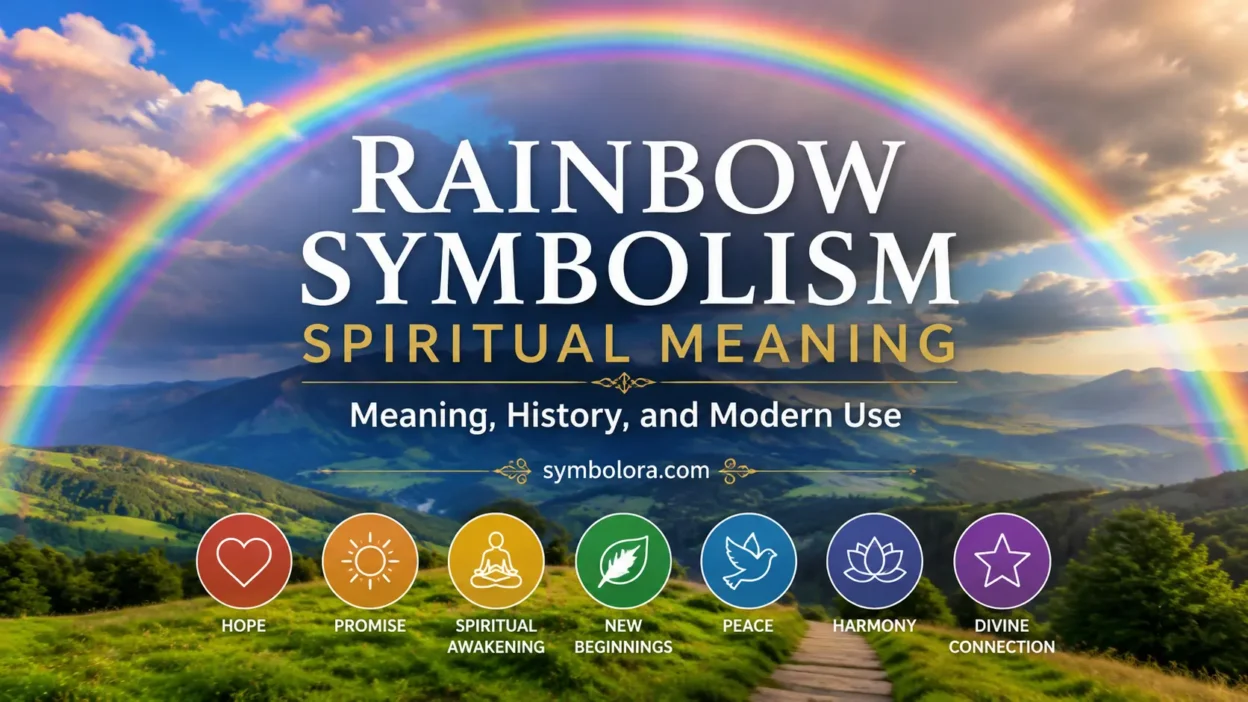
Rainbows have inspired wonder for as long as people have looked toward the sky. Their brief appearance after rain, vivid spectrum of colors, and seemingly unreachable arc have encouraged people to assign meaning far beyond their scientific explanation. Today, rainbow symbolism spiritual meaning is commonly associated with hope, renewal, divine connection, inclusion, and new beginnings in American culture.
Although everyone recognizes a rainbow as a natural optical phenomenon, its symbolism varies depending on history, religion, culture, and personal experience. For some, it represents a promise after hardship. For others, it signals spiritual growth, emotional healing, or unity among different people.
In the United States, rainbows appear everywhere—from children’s books and home décor to religious art, Pride celebrations, greeting cards, memorials, and tattoos. Their symbolism continues to evolve while still reflecting centuries of shared human experience.
Quick Answer
Rainbow symbolism spiritual meaning most commonly represents hope, renewal, and the promise that difficult times eventually give way to brighter days. Historically, many cultures also viewed the rainbow as a bridge between heaven and earth, a sign of divine favor, or a reminder of harmony between humanity and nature.
TL;DR
- Commonly symbolizes hope after hardship.
- Represents renewal and fresh beginnings.
- Associated with divine promises in Christianity.
- Reflects unity through many colors.
- Popular in tattoos, art, and celebrations.
- Meaning continues evolving in modern culture.
What a Rainbow Is and Why It Captures Attention
A rainbow forms when sunlight passes through tiny water droplets suspended in the atmosphere. The light bends, reflects inside the droplets, and separates into visible colors, creating the familiar arc across the sky.
Because rainbows appear unexpectedly and disappear quickly, people have long viewed them as extraordinary rather than ordinary weather events. Their rarity compared with everyday clouds or sunshine contributes to their symbolic value.
Unlike many symbols created by people, the rainbow exists naturally. This gives it a universal quality that allows different cultures to interpret it in their own ways while still appreciating the same beautiful phenomenon.
The Core Spiritual Meaning of the Rainbow
Today, the rainbow most often symbolizes positive change following adversity. Many people interpret its appearance after rain as a reminder that challenges eventually pass.
Its spiritual meanings commonly include:
- Hope during uncertain times
- Renewal after emotional hardship
- Peace and reconciliation
- Harmony among differences
- Faith in a better future
- Personal transformation
- Joy returning after sorrow
These interpretations are not based on the rainbow itself possessing supernatural qualities. Instead, they arise from its natural appearance after storms, making it an easy metaphor for emotional recovery.
Ancient Origins of Rainbow Symbolism
Long before modern science explained rainbows, civilizations developed stories to explain their appearance.
Ancient Greeks believed the rainbow was connected to Iris, the divine messenger who traveled between the gods and humanity. Because of this belief, the rainbow represented communication between different worlds.
In Norse mythology, the rainbow inspired stories about Bifröst, a glowing bridge connecting Earth with the realm of the gods. Rather than simply decorating the sky, it symbolized passage, protection, and sacred connection.
Many Indigenous traditions throughout the Americas also viewed rainbows as meaningful signs connected to creation, weather, or spiritual balance. Interpretations differed widely between nations rather than forming one universal belief.
These early stories established the rainbow as something more significant than a weather event.
The Rainbow in Christianity Rainbow Symbolism Spiritual Meaning
One of the most influential meanings in American culture comes from the Bible.
After the flood story involving Noah, God places a rainbow in the sky as a sign of a covenant never again to destroy the Earth by floodwaters. In this tradition, the rainbow represents:
- Divine promise
- Mercy
- Faithfulness
- Peace between God and humanity
Because Christianity has strongly influenced American history, many people continue to associate rainbows with reassurance during difficult periods.
Church artwork, stained glass, children’s religious education, and Christian literature often use rainbows to reinforce these themes of hope and God’s enduring promises.
How Americans Commonly Interpret Rainbows Today
Modern American symbolism blends religious tradition with broader cultural meanings.
For many people, seeing a rainbow simply feels encouraging. It often appears in messages meant to comfort someone recovering from illness, grieving a loss, or beginning a new chapter.
The rainbow frequently symbolizes:
| Context | Meaning in the USA | Common Associations | Notes |
| After difficult events | Hope | Recovery, resilience | Most common interpretation |
| Religious settings | God’s promise | Noah, faith, mercy | Strong Christian influence |
| Pride celebrations | Diversity and inclusion | Equality, identity | Modern social symbolism |
| Children’s imagery | Happiness | Wonder, imagination | Bright, positive emotions |
| Memorials | Comfort | Continuing love, peace | Often appears in remembrance themes |
Because Americans encounter rainbows in many settings, people often understand several meanings simultaneously rather than choosing only one interpretation.
Spiritual Growth and Personal Transformation
Many people interpret the rainbow as a symbol of inner development.
Just as sunlight emerges after rain, individuals often describe personal growth occurring after periods of grief, uncertainty, or change.
The rainbow therefore represents:
- Learning through adversity
- Emotional healing
- Greater self-awareness
- Renewed optimism
- Moving forward without forgetting the past
This symbolism explains why rainbows appear in journals, meditation spaces, inspirational artwork, and wellness communities.
Rather than suggesting life becomes perfect, the rainbow reminds people that difficult experiences can reshape perspective.
Color Symbolism Within the Rainbow
Each color has accumulated symbolic associations over time. While interpretations differ, these are among the most familiar meanings in contemporary American culture.
- Red: courage, strength, vitality
- Orange: creativity and enthusiasm
- Yellow: optimism, happiness, confidence
- Green: growth, renewal, nature
- Blue: peace, trust, calm
- Indigo: reflection and wisdom
- Violet: imagination, spirituality, inspiration
Together, these colors create a larger symbol of balance. No single color dominates, reinforcing ideas of harmony and diversity.
Rainbows as Symbols of Unity and Inclusion
One of the most recognizable modern meanings developed during the late twentieth century.
The rainbow flag became an international symbol of LGBTQ+ pride, equality, and inclusion. Although this use differs from older religious or mythological interpretations, it also draws upon the rainbow’s long-standing association with diversity and harmony.
In the United States, this symbolism appears during Pride Month, community events, educational programs, and public celebrations of inclusion.
It is important to distinguish between the natural rainbow and the rainbow flag. While they share visual similarities, their symbolic purposes depend on context.
Emotional and Psychological Meaning
Psychologically, rainbows often evoke positive emotional responses because they combine rarity, beauty, and the visual transition from storm clouds to sunlight.
People frequently associate rainbows with:
- Relief
- Gratitude
- Optimism
- Wonder
- Childhood memories
- Emotional reassurance
Their temporary appearance also contributes to their symbolism. Unlike permanent monuments, rainbows remind people that beautiful moments can be brief yet meaningful.
This emotional response explains why rainbows are commonly used in sympathy cards, hospital decorations, children’s hospitals, and recovery programs.
Rainbows in Tattoos, Jewelry, and Personal Expression
Many people choose rainbow-inspired designs because they represent important life experiences rather than simply colorful artwork.
A rainbow tattoo may commemorate:
- Surviving illness
- Recovery from addiction
- Personal resilience
- Acceptance of identity
- Family unity
- Hope after loss
Rainbow jewelry often symbolizes optimism or inclusion, while home décor featuring rainbows typically creates a welcoming and uplifting atmosphere.
Because the rainbow carries multiple meanings, personal interpretation usually matters as much as cultural tradition.
Rainbows in Art, Literature, and Popular Culture
Artists have long used rainbows to communicate possibility, imagination, and emotional transition.
In literature, rainbows often appear near turning points when characters discover hope or reconciliation.
Children’s books frequently use rainbows to represent imagination and joyful discovery because the image is instantly recognizable and emotionally reassuring.
Films, greeting cards, advertising, and digital media continue using rainbow imagery to communicate positivity without requiring lengthy explanation.
Its visual simplicity allows the rainbow to cross generations and cultural backgrounds with remarkable ease.
Cross-Cultural Meanings Around the World
Although interpretations differ, several themes appear repeatedly across cultures.
In some Asian traditions, rainbows have represented harmony between natural forces or balance within the universe.
Certain African traditions associate rainbows with spiritual beings connected to water or creation, though meanings vary significantly among communities.
Australian Aboriginal traditions include rainbow figures within some Dreaming stories, where they may relate to creation, water, fertility, or landscape formation. These traditions differ greatly between language groups and should not be treated as one single belief.
Despite these differences, many cultures independently connect rainbows with transition, connection, or renewal.
Common Misunderstandings About Rainbow Symbolism
Because rainbows carry multiple meanings, misunderstandings sometimes arise.
One misconception is that every rainbow has only religious significance. While biblical symbolism remains influential, many people understand rainbows through nature, psychology, or modern social movements instead.
Another misunderstanding assumes every rainbow image refers to LGBTQ+ identity. Context matters. A rainbow in children’s artwork, weather photography, or religious illustration may have entirely different intended meanings.
Similarly, some spiritual communities assign highly specific supernatural claims to rainbows. While these interpretations may hold personal meaning, they are not universally accepted across cultures or religions.
Recognizing context helps prevent oversimplified interpretations.
How Rainbow Symbolism Has Changed Over Time
The rainbow’s meaning has expanded rather than completely changed.
Ancient societies viewed it as a bridge between worlds or an explanation for extraordinary natural events.
Religious traditions later emphasized divine promises and mercy.
Modern psychology highlighted hope, emotional resilience, and recovery.
Contemporary society added meanings related to diversity, inclusion, identity, and community.
Each new interpretation builds upon earlier symbolism instead of replacing it entirely. This layered history helps explain why the rainbow remains one of the world’s most recognizable and adaptable symbols.
Why the Rainbow Continues to Matter
Many symbols lose relevance as societies change, but the rainbow continues to feel meaningful because it reflects experiences almost everyone understands.
Storms eventually end.
Difficult seasons pass.
Different colors exist together without losing their individuality.
Whether viewed through faith, nature, psychology, or culture, the rainbow offers a visual reminder that change often follows hardship.
Its symbolism remains accessible regardless of age, background, or personal beliefs.
Frequently Asked Questions
What does a rainbow spiritually symbolize?
Most people interpret a rainbow as a symbol of hope, renewal, and peace after difficult experiences. Many religious traditions also view it as a reminder of divine promises or the connection between heaven and earth.
Is seeing a rainbow considered good luck?
Many cultures regard seeing a rainbow as a positive sign because it appears after storms. While there is no universal belief that it brings luck, many people see it as an encouraging reminder that circumstances can improve.
What does a rainbow tattoo usually mean?
Rainbow tattoos commonly represent resilience, healing, inclusion, or important life transitions. The exact meaning depends on the wearer’s personal experiences and intentions.
Does the rainbow have different meanings in Christianity?
Yes. In Christianity, the rainbow primarily symbolizes God’s covenant with Noah after the flood, representing mercy, faithfulness, and the promise that such a flood would never again cover the Earth.
Why is the rainbow associated with diversity?
Its many distinct colors naturally became a symbol of different people living together with mutual respect. This interpretation influenced the adoption of rainbow imagery within movements promoting equality and inclusion.
Can the rainbow have more than one symbolic meaning?
Absolutely. Symbols often develop multiple meanings over time. Depending on the setting, a rainbow may represent faith, hope, emotional recovery, diversity, childhood joy, or simply appreciation for the beauty of nature.
Conclusion
The enduring appeal of the rainbow comes from its ability to express optimism without ignoring life’s challenges. Appearing after rain and illuminated by sunlight, it naturally became a symbol of renewal, reconciliation, and the belief that brighter moments can follow difficult ones.
Today, rainbow symbolism spiritual meaning continues to blend ancient traditions, religious teachings, emotional resilience, and modern cultural values. Whether encountered in the sky, in art, during celebrations, or through personal expression, the rainbow remains a reminder that hope, unity, and new beginnings often emerge when they are needed most.