
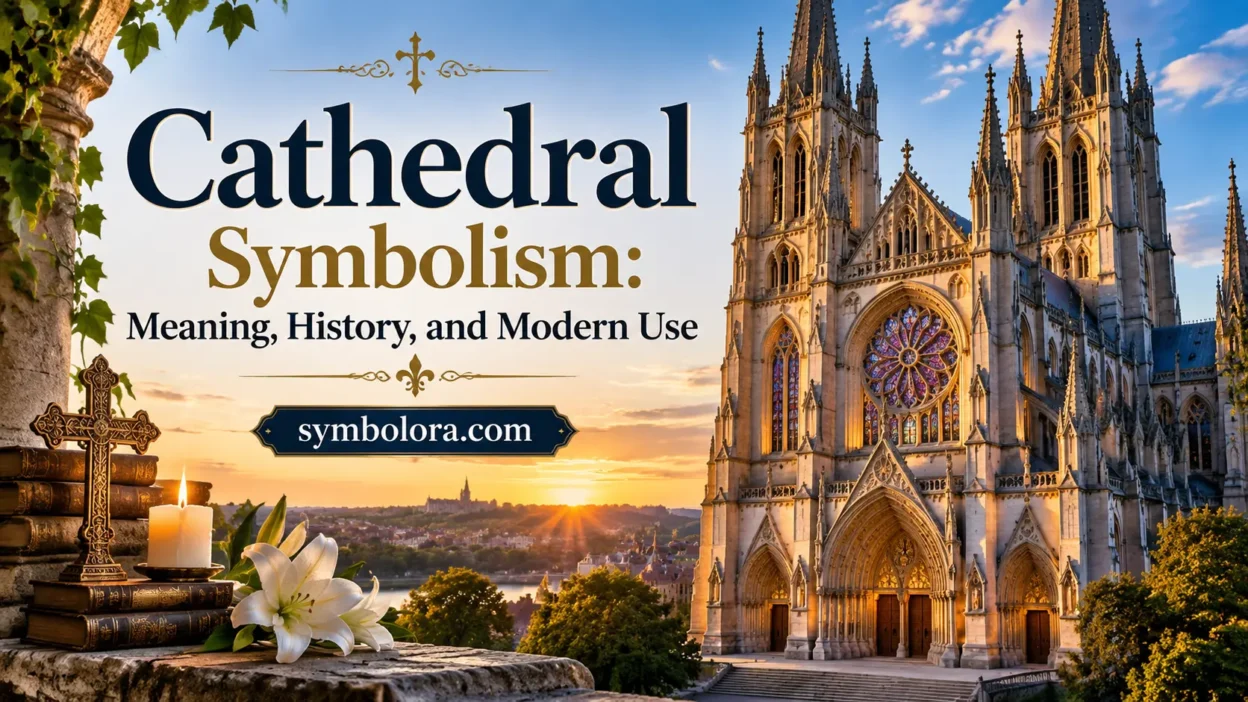
Cathedrals are more than large religious buildings; they are carefully designed spaces that communicate ideas about faith, community, human creativity, and cultural memory. Cathedral symbolism reflects how architecture, art, light, and ritual combine to express beliefs about spirituality, connection, and shared identity.
In the United States, cathedrals appear in many forms, from historic European-inspired churches to modern urban landmarks. Even for people who are not religious, these buildings often represent craftsmanship, heritage, reflection, and the importance of preserving meaningful spaces.
Understanding cathedral symbolism helps explain why these structures continue to influence architecture, art, photography, literature, and public imagination. Their meaning comes not only from religion but also from the human desire to create places that represent hope, belonging, and lasting values.
Quick Answer
Cathedral symbolism commonly represents faith, community, human achievement, and a connection between the earthly world and spiritual beliefs. Historically, cathedrals symbolized religious devotion and social unity, while today they are also viewed as cultural landmarks, architectural achievements, and places of reflection.
TL;DR
- Cathedrals symbolize faith, unity, and human creativity.
- Gothic architecture shaped many cathedral meanings.
- Americans often view cathedrals as heritage landmarks.
- Light and height represent spiritual ideas.
- Modern cathedrals serve cultural purposes.
- Misuse can separate symbols from original meanings.
What a Cathedral Represents as a Symbol
A cathedral is traditionally the main church of a bishop’s authority within certain Christian traditions. The word comes from the Latin term cathedra, meaning “seat” or “chair,” referring to the bishop’s official seat.
Symbolically, a cathedral represents more than a place where people worship. Its design often communicates ideas about order, devotion, and humanity’s search for meaning. The building itself becomes a visual language where every feature can carry a message.
Tall towers suggest aspiration and movement upward. Large windows invite light into the interior, often representing knowledge, hope, or divine presence. Long aisles create a sense of journey, encouraging visitors to move through the space with purpose.
For many people, the cathedral represents a meeting point between human creativity and spiritual imagination.
Ancient Roots and Early Religious Symbolism
The symbolic importance of cathedrals developed from earlier traditions of sacred architecture. Ancient civilizations often created special structures to separate ordinary spaces from places associated with worship, ceremony, and community gatherings.
Early Christian churches borrowed some architectural ideas from Roman public buildings, especially basilicas. These designs allowed large groups of people to gather while creating a sense of importance and order.
As Christianity expanded in Europe, churches became central parts of towns and cities. A cathedral often represented not only religious authority but also education, government influence, artistic achievement, and community identity.
During the Middle Ages, cathedral construction became a major cultural project. Communities invested generations of labor into these buildings, making them symbols of cooperation and shared purpose.
How Gothic Architecture Created New Meanings
Many famous cathedrals are associated with Gothic architecture, which developed in Europe during the Middle Ages. Gothic design introduced features that strengthened the symbolic impact of these buildings.
Common elements included:
| Cathedral Feature | Meaning in the USA | Common Associations | Notes |
|---|---|---|---|
| Tall towers | Aspiration and achievement | Growth, ambition, vision | Often seen in city skylines |
| Stained glass | Beauty and storytelling | Art, history, reflection | Uses color to communicate ideas |
| Arched ceilings | Grandeur and openness | Wonder, inspiration | Creates a spacious feeling |
| Stone construction | Permanence and memory | Heritage, endurance | Represents long-lasting values |
| Natural light | Hope and clarity | Renewal, peace | Important in many sacred spaces |
Gothic cathedrals used height, geometry, and decoration to create an experience that felt different from everyday life. The goal was not only to build a functional structure but also to create an environment that encouraged contemplation.
Cathedral Symbolism in the United States
In America, cathedrals often carry both religious and cultural meanings. Many Americans recognize them as important landmarks even when they do not participate in religious traditions connected to them.
Historic cathedrals in cities such as New York, Washington, and San Francisco often represent immigration history, artistic achievement, and community development. They can serve as reminders of different groups that helped shape American society.
Cathedrals also appear in public conversations about preservation. Their survival represents a connection between past generations and modern communities.
For many Americans, visiting a cathedral may involve appreciating architecture, history, music, or peaceful surroundings rather than only religious practice.
The Meaning of Light, Windows, and Color
Light plays one of the most important symbolic roles inside cathedral design. Large windows and stained glass transform natural light into an artistic experience.
Historically, stained glass helped communicate religious stories to people who could not read written texts. Images, colors, and symbols allowed visitors to understand important ideas visually.
Different colors have often carried symbolic associations:
- Blue may suggest heaven, peace, or devotion.
- Red can represent sacrifice, love, or passion.
- Gold often suggests glory or importance.
- White may represent purity or celebration.
Today, many visitors appreciate stained glass as a form of artistic expression regardless of personal beliefs.
Cathedral Symbolism and Community Identity
Cathedrals have long been connected to community life. They are places where people gather for ceremonies, celebrations, mourning, and important public moments.
In American communities, churches and cathedrals may host weddings, concerts, memorial services, educational events, and cultural programs. These activities expand their meaning beyond worship.
A cathedral can represent collective memory because generations of people may experience important life events in the same location.
This connection between place and personal history gives cathedrals emotional significance.
Religious Meanings Across Traditions
Although cathedrals are most closely associated with Christianity, their broader architectural symbolism connects with ideas found in many religious traditions.
Sacred buildings in different cultures often use similar concepts:
- Vertical structures suggesting connection with the divine.
- Special entrances marking transition into a meaningful space.
- Artistic decoration expressing beliefs and stories.
- Quiet interiors encouraging reflection.
However, each tradition interprets sacred spaces according to its own beliefs and practices. Cathedral symbolism should be understood within its Christian origins while recognizing that sacred architecture appears across many cultures.
Emotional and Psychological Meaning of Cathedrals
People often describe cathedrals as places that create feelings of calm, wonder, or reflection. These reactions come partly from design choices.
Large spaces can create a sense of openness. Soft lighting can encourage quiet attention. Detailed artwork can invite visitors to slow down and observe.
From a psychological perspective, meaningful spaces can influence emotions by creating environments that feel separate from ordinary routines.
For some people, a cathedral represents stability in a changing world. For others, it represents human imagination and artistic accomplishment.
Why Cathedrals Appear in Art and Popular Culture
Cathedrals frequently appear in paintings, novels, films, and photography because they visually communicate ideas of history, mystery, and human achievement.
Artists often use cathedral imagery to explore themes such as:
- Time and memory
- Personal transformation
- Social change
- Faith and doubt
- Human ambition
In movies and literature, a cathedral may represent tradition, conflict, protection, or a connection to the past.
Its meaning depends on the story and cultural context.
Cathedral Symbolism in Modern Design and Decor
Today, cathedral-inspired designs appear outside religious settings. Architects, interior designers, and artists often borrow cathedral elements because of their visual impact.
Examples include:
- High ceilings inspired by Gothic spaces
- Decorative arches
- Stained-glass-style artwork
- Cathedral window patterns
- Stone and wood textures
In homes and public spaces, these designs often communicate elegance, history, and craftsmanship.
Modern use does not always carry the original religious meaning, but it reflects appreciation for the beauty and emotional effect of cathedral-inspired forms.
Cathedral Imagery in Tattoos and Personal Expression
Cathedral tattoos are less common than symbols such as animals, flowers, or religious icons, but they carry strong personal meanings for those who choose them.
Possible interpretations include:
- Faith and spiritual identity
- Connection to family heritage
- Appreciation for architecture
- Personal transformation
- Respect for history
A cathedral tattoo may represent a specific place that holds emotional importance, such as a hometown church or a memorable travel experience.
Like all tattoos, the meaning depends on the individual rather than a universal definition.
Misunderstandings and Modern Misuse of Cathedral Symbols
Cathedrals are sometimes interpreted only as symbols of wealth or institutional power because of their size and historical connection to religious organizations.
While some historical criticism focuses on the resources used to build major cathedrals, these buildings also represented community cooperation, artistic development, and cultural preservation.
Another misunderstanding is assuming every cathedral carries the same meaning for every person. Religious believers, historians, tourists, and artists may all interpret these spaces differently.
Understanding context helps separate historical symbolism from modern assumptions.
How Cathedral Meaning Has Changed Over Time
The meaning of cathedrals has evolved with society. In medieval Europe, they were primarily centers of religious authority and community life.
Later, they became symbols of artistic achievement, national heritage, and historical preservation.
In modern America, cathedrals often exist at the intersection of religion, architecture, tourism, and cultural identity.
A cathedral today may represent faith for one person, history for another, and artistic inspiration for someone else.
This changing interpretation shows how symbols adapt as societies change.
Frequently Asked Questions
What does a cathedral symbolize spiritually?
A cathedral often symbolizes faith, connection with the divine, and a dedicated space for worship and reflection. Its architecture commonly uses height, light, and design elements to express spiritual ideas.
What does a cathedral symbolize in American culture?
In American culture, cathedrals often symbolize heritage, architecture, community history, and religious traditions. Many people also view them as important landmarks regardless of personal beliefs.
What does a cathedral tattoo mean?
A cathedral tattoo can represent faith, personal history, love of architecture, family traditions, or a meaningful place. The meaning usually depends on the person’s experience and intention.
Why are cathedral ceilings considered symbolic?
Cathedral ceilings often symbolize openness, aspiration, and a sense of connection beyond ordinary life. Their height creates an impression of space and importance.
Are cathedrals only religious symbols?
No. While cathedrals have religious origins, they are also recognized as cultural landmarks, architectural achievements, and historical spaces.
What do stained glass windows symbolize in cathedrals?
Stained glass windows traditionally communicate religious stories and ideas through images and colors. Today, many people also appreciate them as examples of artistic craftsmanship.
Can cathedrals represent negative ideas?
Some people associate cathedrals with historical debates about wealth, power, or institutions. These interpretations exist alongside their meanings related to faith, art, and community.
Conclusion
Cathedrals represent a combination of spiritual belief, artistic creativity, community memory, and human effort. Their designs communicate ideas through structure, light, decoration, and shared experiences.
In modern America, cathedral symbolism continues to extend beyond religious practice. These buildings remain important as places of worship, cultural landmarks, artistic achievements, and reminders of the values communities choose to preserve.
Whether viewed through faith, history, or architecture, cathedrals show how human beings use physical spaces to express ideas that matter across generations.


