
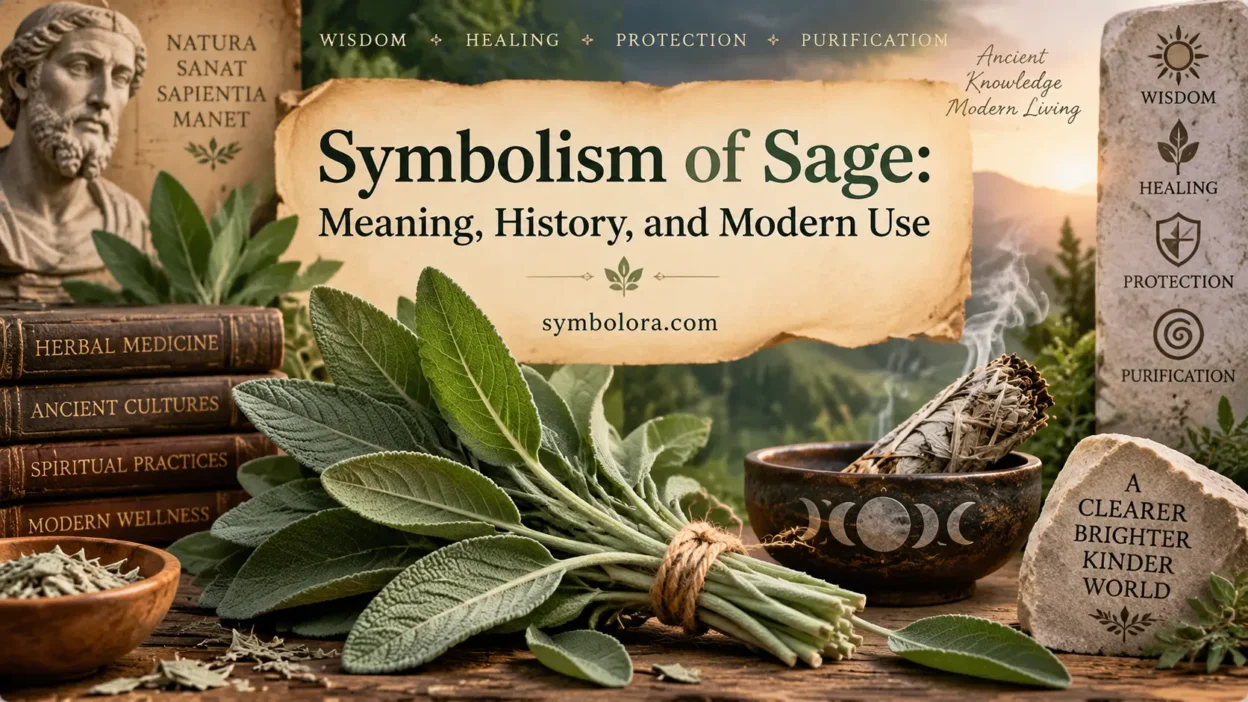
Sage is a fragrant herb recognized for its silvery-green leaves, healing traditions, and long connection with cleansing practices. The symbolism of sage often represents wisdom, protection, purification, and renewal in modern American culture, especially in wellness, gardening, design, and spiritual practices.
For many people in the United States, sage carries meanings connected to calmness, reflection, and respect for nature. Its symbolism comes from both the plant’s practical uses and centuries of cultural traditions that valued sage as a source of medicine, food, and ceremony.
Although sage is often associated with spiritual cleansing today, its meaning is broader than any single practice. Different communities have interpreted the plant through agriculture, Indigenous traditions, religion, herbal medicine, and personal expression.
Quick Answer
Symbolism of sage commonly represents wisdom, purification, protection, and renewal in modern American culture, especially in wellness, home rituals, and natural design. Historically, sage has also been associated with healing, respect for nature, and ceremonial traditions in several cultures.
TL;DR
- Sage symbolizes wisdom, healing, and purification.
- Ancient cultures valued sage as a medicinal plant.
- Americans connect sage with wellness and nature.
- Indigenous traditions use specific sage varieties ceremonially.
- Sage appears in tattoos, decor, and personal rituals.
What Sage Looks Like and Where People Encounter It
Sage refers to many aromatic plants in the Salvia family. Common garden sage (Salvia officinalis) has soft, gray-green leaves with a slightly fuzzy texture and a strong herbal scent. Other varieties, such as white sage, have different appearances and cultural uses.
People encounter sage in many everyday settings:
- Herb gardens and kitchens
- Natural wellness products
- Home fragrance products
- Landscaping and drought-resistant gardens
- Decorative artwork and designs
- Traditional ceremonies
The plant’s physical qualities influence its symbolism. Its ability to survive dry conditions, its long history as a useful herb, and its strong fragrance have all contributed to the meanings people attach to it.
What Sage Commonly Means in the United States
In the United States, sage is most often connected with ideas of wisdom, cleansing, and natural balance. These meanings appear in different contexts, from gardening communities to wellness spaces.
The main symbolic associations include:
| Context | Meaning in the USA | Common Associations | Notes |
|---|---|---|---|
| Wellness | Cleansing and renewal | Calm, reflection, relaxation | Often used in personal routines |
| Gardening | Resilience and connection to nature | Growth, sustainability | Linked with natural landscapes |
| Home design | Peaceful atmosphere | Earth tones, simplicity | Sage green is popular in interiors |
| Traditional practices | Respect and purification | Ceremony, intention | Uses vary by community |
| Personal symbolism | Wisdom and healing | Strength, life experience | Common in tattoos and art |
Sage green, a muted color inspired by the plant, has also developed its own symbolism. In American interior design, the shade often suggests comfort, stability, and a connection with natural surroundings.
Ancient Roots and Early Symbolism of Sage
Sage has been valued for thousands of years because people recognized its practical benefits. Ancient Mediterranean societies used sage as a culinary herb and medicinal plant. The plant’s Latin name, Salvia, comes from a word connected with health and well-being.
In ancient Roman culture, sage was considered a valuable plant. It was associated with health, domestic life, and careful cultivation. Some traditional beliefs connected sage with memory and mental clarity.
European herbal traditions continued to build on these ideas. Medieval herb gardens often included sage because people believed it supported physical health and household protection.
The symbolic connection between sage and wisdom likely developed from its reputation as a useful healing plant. A plant that helped preserve health naturally became linked with knowledge, experience, and care.
Sage Symbolism in Indigenous Traditions
In the United States, sage has important connections with Indigenous cultures, but meanings and practices differ among nations and communities.
Some Indigenous peoples use certain sage species, including white sage, in ceremonial traditions. These practices may involve prayer, gratitude, purification, and spiritual preparation. The meaning is not simply about removing negativity; it can involve relationships with ancestors, the natural world, and community responsibilities.
It is important to recognize that Indigenous traditions are diverse. There is no single Indigenous meaning of sage that applies to all Native communities.
Modern interest in sage has sometimes separated the plant from its cultural context. Many Indigenous advocates have discussed the importance of respecting traditional knowledge and understanding the significance of sacred plants beyond commercial trends.
Sage in American Wellness and Spiritual Practices
Modern American wellness culture often uses sage as a symbol of fresh starts and personal reflection. Burning dried sage bundles, sometimes called smudging in specific cultural contexts, has become widely known through wellness communities.
However, not every use of burning herbs has the same cultural meaning. Some people use sage simply as a scent, while others approach it as part of a spiritual practice.
Common modern associations include:
- Creating a peaceful environment
- Marking a personal transition
- Reflecting after a difficult experience
- Connecting with nature
- Establishing a calming routine
The popularity of sage in wellness spaces shows how older plant traditions continue to change as they enter new cultural settings.
The Emotional and Psychological Meaning of Sage
People often associate sage with emotional qualities because of its appearance, scent, and history.
The plant’s gray-green color is frequently connected with balance and calmness. In color psychology and design, muted greens are often used to create spaces that feel natural and comfortable.
Sage may symbolize:
- Patience during change
- Learning from experience
- Emotional recovery
- A desire for simplicity
- Connection with the natural world
These meanings are personal interpretations rather than universal rules. A person’s relationship with sage may depend on their culture, memories, and experiences.
Religious and Spiritual Interpretations of Sage
Sage appears in different spiritual traditions, although the meanings vary widely.
Some communities associate aromatic plants with prayer, purification, or sacred spaces. Historically, many cultures have used herbs and incense-like materials during religious ceremonies because scent can influence memory, attention, and atmosphere.
In modern America, sage may appear in spiritual practices connected with:
- Meditation spaces
- Personal rituals
- Nature-based spirituality
- Ceremonial traditions
The plant itself does not carry one fixed spiritual meaning. Its interpretation depends on the beliefs and traditions of the people using it.
Why Sage Appears in Tattoos and Personal Style
Sage has become a popular tattoo symbol because it combines natural beauty with personal meaning.
People may choose sage imagery to represent:
- Healing after challenges
- Personal growth
- Wisdom gained through life
- A connection with plants or nature
- A peaceful lifestyle
Sage tattoos are often designed with delicate leaves, botanical details, or combinations with other natural symbols such as moons, flowers, or animals.
Unlike some symbols with widely recognized meanings, sage tattoos are often highly personal. The meaning usually comes from the wearer’s own story.
Sage Symbolism in Home Design and Modern Culture
Sage has a strong presence in American home design, especially through the popularity of sage green.
The color is often used in:
- Walls and furniture
- Clothing
- Wedding themes
- Floral arrangements
- Branding and packaging
Sage green became popular because it combines natural inspiration with a soft, modern appearance. Designers often use it to create spaces that feel peaceful without appearing overly formal.
In weddings, sage green is commonly associated with outdoor settings, botanical themes, and simple elegance. Its connection with nature makes it a frequent choice for garden ceremonies and rustic designs.
Common Misunderstandings About Sage Symbolism
One common misunderstanding is that sage always represents spiritual cleansing. While cleansing is one modern association, the plant has many other meanings connected with medicine, cooking, ecology, and cultural traditions.
Another misunderstanding involves treating all sage varieties as identical. Different species have different histories and uses. White sage, garden sage, and other varieties should not automatically be considered interchangeable.
Commercial popularity has also created concerns about overharvesting certain sage species. Respectful use involves understanding where plants come from and recognizing the communities connected to traditional practices.
How Sage Symbolism Has Changed Over Time
The meaning of sage has evolved from a practical healing herb into a broader cultural symbol.
Earlier meanings focused on:
- Medicine
- Household usefulness
- Protection
- Agricultural knowledge
Modern interpretations often emphasize:
- Wellness
- Environmental awareness
- Personal transformation
- Minimalist design
This shift shows how symbols change as societies develop. A plant once valued mainly for survival and health can later become a representation of lifestyle, identity, and personal values.
Sage Compared With Other Symbolic Herbs
Sage is part of a larger tradition of plants carrying symbolic meanings. Different herbs often represent different qualities based on their uses and histories.
| Herb | Common Symbolic Meaning | Traditional Connection |
|---|---|---|
| Sage | Wisdom and purification | Healing and ceremony |
| Rosemary | Memory and remembrance | Funerals and traditions |
| Lavender | Calm and comfort | Relaxation and fragrance |
| Basil | Protection and prosperity | Household traditions |
Comparing herbs shows that plant symbolism often develops from human experiences with their practical uses.
Modern Uses of Sage Symbolism
Today, sage appears in many forms beyond traditional herbal practices.
Common examples include:
- Botanical artwork
- Jewelry designs
- Tattoos
- Home decorations
- Wellness branding
- Garden planning
- Clothing colors
Social media has also influenced how people understand sage. Online communities often share ideas about natural living, meditation spaces, and plant-inspired aesthetics.
At the same time, increased popularity has encouraged more conversations about cultural respect and responsible sourcing.
Frequently Asked Questions
What does sage symbolize spiritually?
Sage is often associated with purification, reflection, and spiritual preparation. However, its meaning depends on the specific tradition or personal belief system using it.
What does a sage tattoo symbolize?
A sage tattoo may represent wisdom, healing, personal growth, or a connection with nature. Many people choose it because of their own experiences rather than a single established meaning.
Why is sage important in Native American traditions?
Certain sage species are used by some Indigenous communities in ceremonial practices. These meanings vary between nations, and sage should be understood within its specific cultural context.
Is sage always a symbol of cleansing?
No. Cleansing is one modern association, but sage also symbolizes knowledge, health, resilience, and connection with nature.
What does sage green symbolize in American design?
Sage green often represents calmness, balance, nature, and simplicity. It is commonly used in interiors, weddings, and fashion because of its soft natural appearance.
How is ancient sage symbolism different from modern symbolism?
Ancient meanings often focused on healing, survival, and household use. Modern meanings frequently include wellness, personal identity, and environmental awareness.
Can sage have negative symbolism?
Sage is generally viewed positively, but misunderstandings can occur when cultural practices are copied without understanding their origins. The meaning depends on context and use.
Conclusion
Sage represents a connection between human knowledge, natural healing, and cultural traditions. Its meanings have developed from practical uses as a medicinal herb into broader ideas of wisdom, renewal, and personal reflection.
The symbolism of sage in modern America reflects both ancient traditions and contemporary values. Whether seen in gardens, artwork, wellness spaces, or personal designs, sage continues to represent a relationship between people and the natural world.
Its meaning is strongest when understood with respect for the cultures, histories, and communities that have shaped how people view this remarkable plant.


