
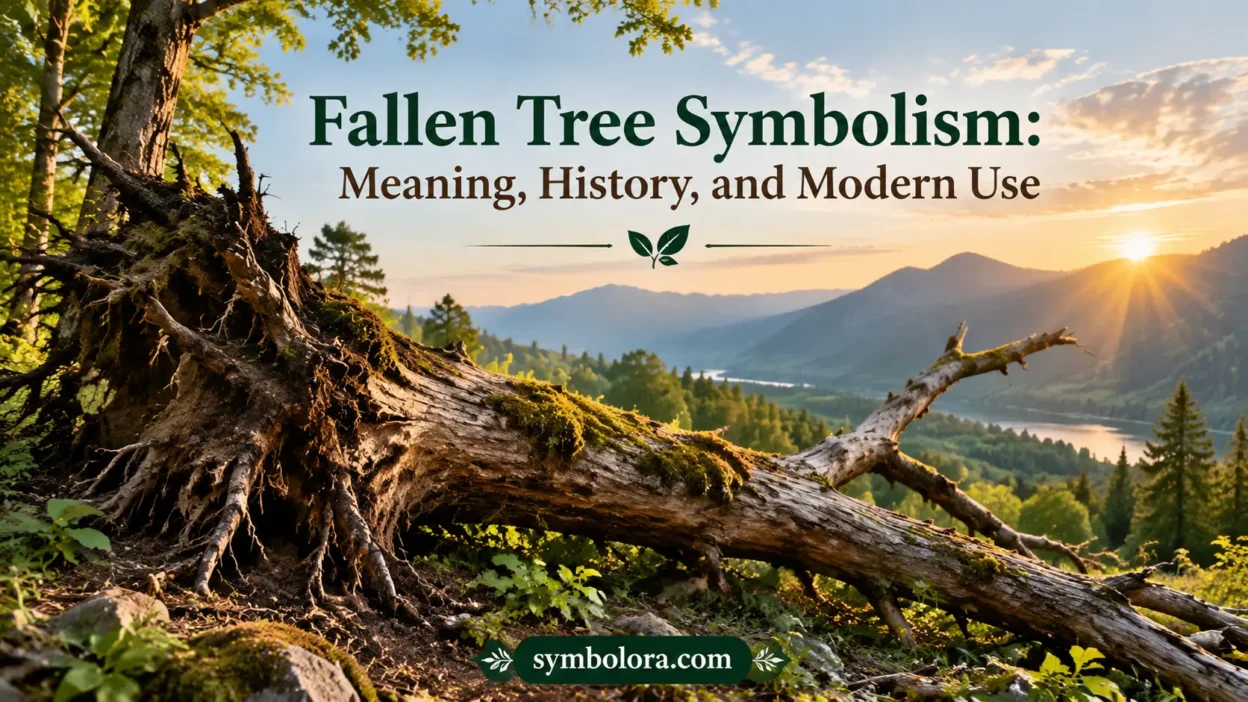
A fallen tree is more than a natural object lying on the ground. Across cultures, people have viewed fallen trees as symbols of change, endings, resilience, memory, and the connection between life and nature. Fallen tree symbolism often reflects the idea that even after a visible ending, transformation and renewal can continue.
In forests, parks, and personal landscapes across the United States, fallen trees create different reactions. Some people see them as signs of loss or destruction after storms, while others view them as important parts of nature’s cycle. A fallen tree can represent the passage of time, the effects of nature, or the strength found in adapting to change.
Understanding this symbol requires looking at both its physical reality and the meanings humans have attached to it. From ancient stories about sacred trees to modern environmental ideas, fallen trees have carried messages about life, death, memory, and renewal.
Quick Answer
Fallen tree symbolism commonly represents change, transformation, endings, and renewal in modern American culture. Historically, fallen trees have also been connected with mortality, natural cycles, resilience, and the relationship between humans and the environment.
TL;DR
- Fallen trees symbolize endings, change, and new beginnings.
- Ancient cultures connected trees with life and spiritual meaning.
- Americans often view fallen trees through nature and conservation.
- A fallen tree can represent resilience after hardship.
- Artists and designers use fallen trees as symbols of memory.
What Does a Fallen Tree Represent?
A fallen tree often represents a transition from one state to another. A standing tree suggests growth, stability, and life, while a fallen tree shows that change is unavoidable.
Many people associate fallen trees with endings because a tree that once reached toward the sky is now on the ground. However, the meaning is not always negative. In nature, a fallen tree can become a source of new life. Moss, insects, fungi, and young plants often depend on decaying wood.
Because of this natural process, fallen trees frequently represent:
- Change after a major event
- The end of one chapter
- Acceptance of natural cycles
- Hidden possibilities after loss
- Strength that remains after difficulty
The meaning depends on the context. A tree damaged by a storm may symbolize sudden disruption, while an old tree that falls naturally may represent aging and completion.
The Physical Meaning Behind Fallen Trees
Before exploring cultural interpretations, it helps to understand what happens when a tree falls.
Trees fall because of many natural causes, including storms, disease, aging, drought, and soil changes. In forests, fallen trees are not simply waste. They become part of an ecosystem.
A fallen tree can provide:
- Shelter for small animals
- Nutrients for soil
- A place for fungi and plants to grow
- Protection for insects and microorganisms
This natural process influences symbolic interpretations. People often connect fallen trees with the idea that something can continue to have value even after its original form changes.
A fallen tree may no longer provide shade or stand upright, but it still contributes to the environment.
Ancient Roots of Tree Symbolism
Trees have held symbolic importance in many cultures because they connect different parts of the world: roots below the earth, trunks on the land, and branches reaching toward the sky.
Ancient traditions often viewed trees as symbols of:
- Life
- Knowledge
- Family connections
- Spiritual growth
- Strength
When a tree fell, people sometimes interpreted it as a meaningful event. A fallen sacred tree could represent loss, a change in fortune, or a reminder that all living things eventually experience transformation.
In Norse mythology, the world tree Yggdrasil represented the structure of existence. In many Indigenous traditions, trees have been respected as living relatives and important parts of creation stories. While interpretations differ among communities, trees often represent relationships between humans, nature, and time.
Fallen Tree Symbolism in the United States
In the United States, fallen trees are often understood through both cultural and environmental perspectives.
Many Americans encounter fallen trees after hurricanes, tornadoes, wildfires, or strong storms. In these situations, a fallen tree can represent damage and loss. A neighborhood with damaged trees may remind people of a difficult event or a community recovering after disaster.
At the same time, environmental awareness has changed how many people view fallen trees. In parks and forests, a fallen tree is often recognized as an important part of wildlife habitats.
Modern American interpretations commonly include:
| Context | Meaning in the USA | Common Associations | Notes |
|---|---|---|---|
| Storm damage | Loss and recovery | Disaster, rebuilding | Often connected with resilience |
| Forest ecosystem | Natural renewal | Growth, biodiversity | Dead wood supports life |
| Art and design | Reflection and memory | Time, change | Used as a visual symbol |
| Personal symbolism | Life transitions | Endings and new beginnings | Meaning varies by individual |
The symbol often depends on whether someone sees the fallen tree as a loss or as part of a larger natural process.
Emotional and Psychological Meaning of a Fallen Tree
People often respond emotionally to fallen trees because trees are associated with stability and permanence. Seeing a large tree on the ground can create feelings of sadness, surprise, or reflection.
A fallen tree may represent personal experiences such as:
- Losing something important
- Moving into a new stage of life
- Recovering after hardship
- Accepting changes that cannot be reversed
For some people, a fallen tree mirrors human experiences. A person may feel “knocked down” by challenges but still continue growing in different ways.
The symbol does not necessarily suggest failure. Instead, it can represent adaptation and the ability to find purpose after change.
Fallen Trees in Folklore and Spiritual Traditions
Trees appear in many folklore traditions because they are long-lived and connected with landscapes. A tree that falls may become part of stories about transformation, warnings, or renewal.
Some traditions interpret fallen trees as reminders of:
- Human connection with nature
- The temporary nature of physical life
- Respect for natural forces
- The importance of humility
In some spiritual interpretations, a fallen tree represents the movement from one stage of existence to another. These interpretations are personal and vary widely between belief systems.
There is no single universal meaning of a fallen tree. Different communities have developed their own explanations based on geography, religion, and cultural history.
Fallen Tree Symbolism in Art and Literature
Artists and writers often use fallen trees to communicate ideas about time, memory, and change.
A fallen tree in artwork may suggest:
- A forgotten past
- A landscape transformed by time
- Human impact on nature
- Survival after destruction
In literature, fallen trees often appear during moments of transition. A damaged forest or fallen tree can reflect a character’s emotional state or represent a changing world.
Photographers also frequently capture fallen trees because they create strong visual contrasts. A broken trunk beside new plants can show both decline and renewal in a single image.
Why Fallen Trees Appear in Tattoos and Personal Style
Fallen tree tattoos are less common than standing tree designs, but they carry specific meanings for people who choose them.
A fallen tree tattoo may symbolize:
- Surviving a difficult period
- Accepting personal change
- Remembering someone or something lost
- Finding strength after hardship
- Respect for nature
Some designs combine fallen trees with other symbols, such as roots, flowers, birds, mountains, or new sprouts. These additions can change the meaning.
For example, a fallen tree with fresh leaves may represent recovery, while a fallen tree with exposed roots may focus on history and personal identity.
Fallen Trees and Environmental Awareness
Modern environmental movements have influenced how people understand fallen trees.
In the past, some people viewed dead or fallen wood as something that needed removal. Today, many conservation efforts recognize fallen trees as valuable parts of natural systems.
A fallen tree can represent:
- Forest regeneration
- Ecological balance
- The importance of natural processes
- Respect for untouched landscapes
National parks and conservation areas often leave fallen trees in place because they support insects, birds, fungi, and other organisms.
This perspective changes the symbol from one of simple loss into one of continued contribution.
Positive and Negative Interpretations of Fallen Tree Symbolism
Fallen trees can carry both hopeful and difficult meanings.
Positive interpretations include:
- Renewal after change
- Wisdom gained through experience
- Connection with nature
- Survival after challenges
Negative interpretations may include:
- Loss
- Destruction
- Instability
- The end of something important
The difference often comes from perspective. Someone who sees a fallen tree after a storm may focus on damage, while someone studying forest ecology may see regeneration.
Both interpretations can exist at the same time.
Common Misunderstandings About Fallen Tree Symbolism
One common misunderstanding is that fallen trees always represent death or failure. In reality, nature shows that falling does not always mean the end of usefulness.
Another misunderstanding is that every culture gives fallen trees the same meaning. Symbolism changes depending on historical background, location, and personal beliefs.
A fallen tree may represent sadness in one situation and hope in another.
It is also important not to assume spiritual meanings are universal. Symbolic interpretations are often personal or connected to specific traditions.
How Fallen Tree Meaning Has Changed Over Time
The meaning of fallen trees has evolved as human relationships with nature have changed.
Earlier societies often depended directly on forests for survival, so trees carried practical and spiritual importance. A fallen tree could mean lost resources, danger, or a natural event.
Modern societies often view trees through additional perspectives, including environmental science, art, psychology, and personal expression.
Today, a fallen tree may represent:
- Environmental awareness
- Personal transformation
- Historical memory
- Natural beauty
- The relationship between destruction and renewal
The symbol continues to change because people continue to find new ways to understand nature.
Modern Uses of Fallen Tree Symbolism
Today, fallen tree imagery appears in many forms, including:
- Home decor
- Landscape photography
- Jewelry designs
- Tattoos
- Paintings
- Environmental campaigns
- Social media artwork
Interior designers may use fallen tree images to create a feeling of natural simplicity. Photographers may capture them as reminders of time and change.
In digital culture, fallen tree images are sometimes used with messages about resilience, recovery, or accepting life changes.
Frequently Asked Questions
What does a fallen tree symbolize spiritually?
A fallen tree can symbolize transformation, acceptance, and the continuation of life after change. Spiritual interpretations vary depending on personal beliefs and cultural traditions.
Is a fallen tree a bad symbol?
A fallen tree is not always a negative symbol. While it can represent loss or endings, it can also represent renewal, resilience, and new growth.
What does a fallen tree tattoo mean?
A fallen tree tattoo often represents overcoming challenges, remembering important experiences, or accepting major life changes. The meaning depends on the design and the person wearing it.
Why are fallen trees important in nature?
Fallen trees support ecosystems by providing habitats and returning nutrients to the soil. They play an important role in forest health and regeneration.
What does a fallen tree symbolize in American culture?
In American culture, fallen trees are often connected with storms, recovery, environmental awareness, and personal reflection. Many people see them as examples of nature’s cycles.
Does a fallen tree symbolize death?
A fallen tree can symbolize an ending, but it does not always represent death. Many interpretations focus on transition, renewal, and continued value.
Why do artists use fallen trees as symbols?
Artists use fallen trees because they visually communicate ideas about time, memory, change, and the relationship between humans and nature.
Conclusion
A fallen tree represents more than a tree that has lost its upright form. It reflects ideas about change, endings, survival, and the ability of nature to continue after disruption. Fallen tree symbolism shows that transformation can happen even when something appears to be finished.
In modern American culture, fallen trees are understood in many ways. They may remind people of storms and loss, but they can also represent ecological renewal, personal growth, and the lasting value of natural cycles.
A fallen tree does not simply mark an ending. It shows that life can continue in different forms, even after major changes.


