
Meta Description:
Discover tulip flower meaning symbolism, explore its history and cultural roots, and learn how tulips are understood in modern American traditions.
Flowers often communicate emotions that words cannot fully express. Among the many flowers used in celebrations, gifts, gardens, and personal designs, tulips remain one of the most recognizable. Their simple shape, bright colors, and seasonal appearance have given them many meanings across different cultures.
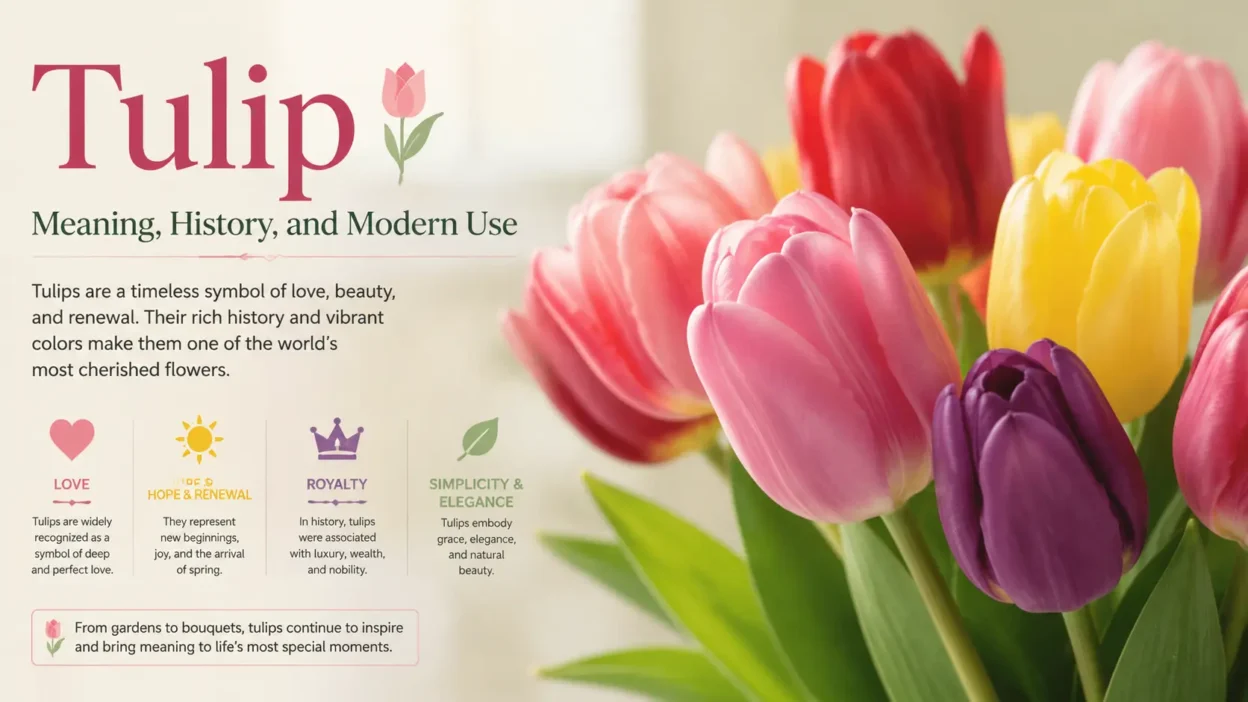
Tulip flower meaning symbolism is commonly connected with love, affection, elegance, and renewal. In modern American culture, tulips often represent thoughtful appreciation, new beginnings, and emotional connections, while their historical meanings developed through art, trade, and traditions across Europe and Asia.
Tulips appear in spring gardens, wedding arrangements, Mother’s Day bouquets, home decorations, and personal gifts throughout the United States. Their meaning can change depending on their color, the situation in which they are given, and the personal message someone wants to express.
Understanding tulip symbolism helps explain why this flower continues to appear in celebrations, personal expressions, and cultural traditions today.
Quick Answer
Tulip flower meaning symbolism commonly represents love, affection, and fresh beginnings in modern American culture, especially in gifts, celebrations, and spring traditions. Historically, tulips have also symbolized beauty, prosperity, and social status through their connections with Ottoman culture and European art.
TL;DR
- Tulips commonly symbolize love, care, and renewal.
- Ottoman traditions helped shape early tulip meanings.
- Americans associate tulips with spring celebrations.
- Different tulip colors communicate different emotions.
- Tulips appear in gifts, weddings, tattoos, and decor.
What the Tulip Flower Looks Like and Where It Appears
Tulips are flowering plants recognized by their smooth, cup-shaped blooms and tall, straight stems. They belong to the genus Tulipa and grow from bulbs that produce flowers mainly during spring.
People encounter tulips in many settings, including home gardens, public parks, flower shops, wedding arrangements, and seasonal decorations. Their organized shape and wide range of colors make them popular in both traditional and modern design.
Unlike flowers with complicated structures, tulips have a clean and balanced appearance. This simplicity often contributes to their association with elegance, sincerity, and refined beauty.
In the United States, tulips are especially connected with spring because they often bloom after winter ends. Their arrival is frequently viewed as a visual sign of warmer weather and seasonal change.
The Core Meaning of Tulips in Modern Culture
Today, tulips are most commonly associated with love, appreciation, and positive emotions. They are often given as gifts because they communicate care without being as intense or traditional as roses.
Red tulips are frequently linked with romantic love and commitment. Pink tulips often express affection, kindness, and admiration. Yellow tulips are commonly associated with happiness and friendship, while white tulips may represent purity, forgiveness, or respect.
Modern interpretations are usually flexible. A person giving tulips may choose them because of personal memories, favorite colors, or the message they want to share.
In American culture, tulips often communicate simple emotional honesty. They can represent gratitude between friends, affection between partners, or encouragement during moments of change.
Ancient Roots and Early Symbolism of Tulips
Tulips have a long history connected to Central Asia and the Ottoman Empire. The flower originally grew in regions around modern-day Kazakhstan, Iran, and surrounding areas before becoming widely cultivated.
During the Ottoman period, tulips gained special cultural importance. They appeared in gardens, artwork, textiles, and decorative designs. The flower became connected with refinement and beauty among wealthy and influential groups.
The Ottoman fascination with tulips became so significant that the early 1700s were known as the “Tulip Era,” a period when the flower represented luxury, artistic taste, and cultural achievement.
Later, tulips reached Europe and became especially popular in the Netherlands. Their rarity and demand contributed to a famous period of tulip trading in the 17th century.
How Tulips Became Symbols of Beauty and Status
When tulips became popular in Europe, they were not simply viewed as garden flowers. Rare varieties became valuable possessions among collectors and wealthy families.
In the Netherlands, unusual tulip colors and patterns attracted strong interest. Some tulip bulbs reached extremely high prices during the period known as “Tulip Mania,” a financial event often discussed in economic history.
Although tulips are affordable and common today, their earlier association with rarity influenced their symbolic connection with beauty, luxury, and appreciation.
Modern Americans usually do not connect tulips with wealth or social status. Instead, the flower’s historical association with elegance continues through fashion, artwork, and interior design.
Tulip Symbolism in the United States
In the United States, tulips are strongly connected with spring, gardening, and seasonal celebrations. Many Americans associate them with optimism because they appear after the cold months of winter.
Tulips are common during:
- Easter celebrations
- Mother’s Day gifts
- Spring weddings
- Garden festivals
- Home decorating
The flower’s connection with renewal makes it popular during events that mark new chapters. A bouquet of tulips may symbolize moving forward, celebrating growth, or showing support during personal transitions.
American gardeners also view tulips as signs of seasonal renewal. Planting bulbs in autumn and seeing them bloom months later creates a connection between patience, preparation, and reward.
| Context | Meaning in the USA | Common Associations | Notes |
|---|---|---|---|
| Romantic gifts | Love and affection | Partners, anniversaries | Red tulips are especially common |
| Spring celebrations | Renewal and happiness | Easter, gardens | Linked with seasonal change |
| Friendship gifts | Appreciation and care | Support, gratitude | Yellow and pink tulips are popular |
| Weddings | Fresh beginnings | Marriage, commitment | Used in bouquets and decor |
| Home design | Beauty and simplicity | Interior decoration | Chosen for elegant appearance |
The Meaning Behind Different Tulip Colors
Tulip colors influence how people interpret their message. While meanings vary between cultures and individuals, certain associations appear frequently.
Red tulips often symbolize romantic love and strong affection. They are commonly chosen when someone wants to express emotional commitment.
Pink tulips usually communicate kindness, admiration, and gentle affection. They are often suitable for friends, family members, or people someone wants to appreciate.
Yellow tulips are associated with happiness, friendship, and positive energy. In modern flower traditions, they often represent cheerful emotions rather than older associations with jealousy.
White tulips may symbolize respect, purity, forgiveness, or remembrance. They are sometimes used in ceremonies where a peaceful or respectful message is important.
Purple tulips are often connected with elegance, creativity, and admiration because purple has historically been associated with rarity and luxury.
Tulips in Weddings, Gifts, and Personal Expressions
Tulips have become popular in weddings because their appearance fits many styles, from traditional ceremonies to modern minimalist designs.
Wedding arrangements often use tulips because their shape creates a clean, organized look. They can symbolize a new relationship chapter and the growth that comes with partnership.
As gifts, tulips provide a message that can range from romantic affection to simple appreciation. Their meaning depends heavily on the relationship between the giver and receiver.
People also choose tulips for personal expressions such as artwork, tattoos, and home decorations. In these situations, the flower often represents personal growth, memories, or important life moments.
Emotional and Psychological Meaning of Tulips
Flowers can influence emotions through color, shape, scent, and personal associations. Tulips often create feelings of calmness, happiness, and freshness because they are strongly linked with spring.
Their balanced shape may contribute to perceptions of harmony and simplicity. Unlike some flowers that appear dramatic or complex, tulips often communicate a quieter form of beauty.
Psychologically, giving or receiving tulips can represent attention and thoughtfulness. The act of choosing a flower itself becomes part of the message.
For many people, tulips are connected with memories of gardens, family traditions, celebrations, or meaningful relationships.
Tulip Symbolism in Tattoos and Personal Style
Tulip tattoos have become a popular way to represent personal values and experiences. The meaning depends on the person wearing the design.
Common interpretations include:
- New beginnings after difficult periods
- Love and emotional connection
- Personal growth
- Beauty and confidence
- Remembrance of someone important
Some people choose tulip tattoos because the flower represents resilience. A tulip grows from a buried bulb and later produces a visible bloom, which some interpret as a reminder of transformation and renewal.
In fashion and accessories, tulip designs often communicate elegance and a connection with nature.
Tulips in Religion, Folklore, and Cultural Traditions
Tulips do not have one universal religious meaning, but they appear in various cultural traditions and artistic expressions.
In Islamic art, tulips have been especially significant because of their historical importance in Ottoman culture. They frequently appeared in decorative patterns and artistic designs.
In European traditions, tulips became connected with gardens, beauty, and artistic appreciation. Paintings from earlier periods often included tulips as symbols of refinement.
Different cultures may interpret the flower differently, but many traditions connect tulips with beauty, renewal, and human appreciation for nature.
Common Misunderstandings About Tulip Symbolism
One common misunderstanding is that every tulip color has a fixed meaning that applies everywhere. In reality, flower meanings change across cultures, time periods, and personal experiences.
Another misconception is that tulips only represent romantic love. While red tulips can express romance, tulips are also widely used for friendship, gratitude, encouragement, and respect.
Some people also connect yellow tulips with negative emotions because older flower traditions sometimes associated yellow flowers with jealousy. Modern American usage usually views yellow tulips more positively, focusing on happiness and friendship.
Understanding context prevents people from treating symbolism as a strict rule.
How Tulip Meaning Has Changed Over Time
Tulip symbolism has evolved as the flower moved between regions and societies. In Ottoman culture, tulips reflected artistic taste and cultural importance. In Europe, they became associated with rarity and luxury. Today, they are mainly connected with affection, spring, and personal expression.
This change shows how symbols are shaped by human experiences. A flower’s meaning does not remain fixed; it develops as communities create new traditions around it.
In modern America, tulips have moved away from ideas of exclusivity and become accessible symbols of kindness, celebration, and renewal.
Modern Uses of Tulip Symbolism Tulip Flower Meaning Symbolism
Today, tulips appear in many areas of everyday life:
- Floral arrangements
- Wedding designs
- Home decorations
- Clothing patterns
- Jewelry
- Tattoos
- Social media posts
- Seasonal artwork
On social media, tulips are often used in spring photography and messages about growth, positivity, and personal milestones.
Interior designers use tulip shapes and images because they create a natural, clean aesthetic. Their simple form works well in modern spaces that emphasize balance and minimalism.
Frequently Asked Questions
What does a tulip symbolize in the United States?
In the United States, tulips commonly symbolize love, appreciation, happiness, and new beginnings. They are especially connected with spring celebrations, gifts, and garden traditions.
What do red tulips symbolize?
Red tulips usually symbolize romantic love, commitment, and strong affection. They are often chosen for partners or meaningful romantic occasions.
Are tulips a good symbol for tattoos?
Yes, tulips are popular tattoo symbols because they can represent growth, renewal, love, and personal transformation. Their meaning often depends on the individual’s life experience.
What do yellow tulips represent?
Yellow tulips are commonly associated with friendship, happiness, and positive feelings in modern American culture. Older traditions sometimes gave yellow flowers different meanings, but current interpretations are generally cheerful.
Do tulips have religious symbolism?
Tulips do not have one universal religious meaning, but they hold cultural importance in Ottoman Islamic art and appear in various artistic traditions connected with beauty and nature.
Why are tulips associated with spring?
Tulips bloom after winter and often mark the beginning of warmer seasons. Because of this timing, many people connect them with renewal, hope, and seasonal change.
Conclusion
Tulips represent more than a beautiful spring flower. Their meanings have developed through centuries of gardening, art, trade, and cultural traditions. Today, they are most often associated with affection, appreciation, renewal, and personal connections.
Tulip flower meaning symbolism continues to evolve as people use the flower in gifts, celebrations, designs, and personal expressions. Whether given to someone special or enjoyed in a garden, tulips remain a simple reminder of growth, beauty, and meaningful moments.
Their lasting appeal comes from their ability to express emotion in a way that feels natural, personal, and connected to everyday life.


