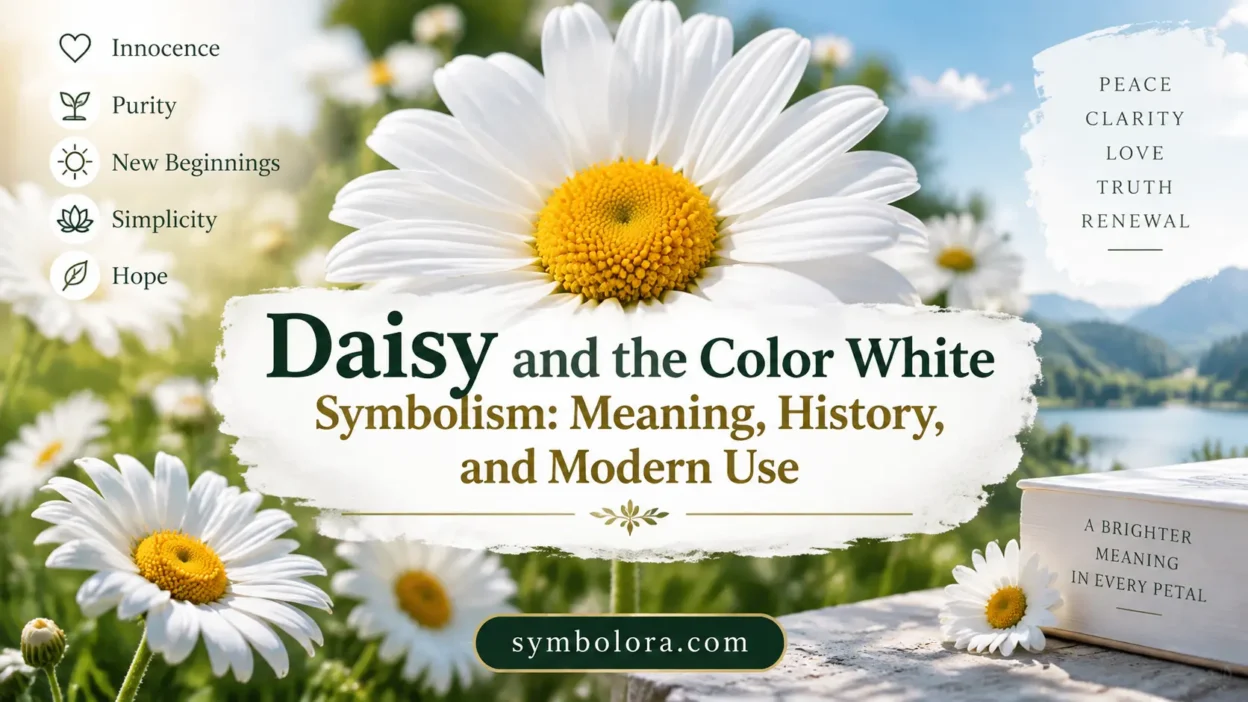
Daisies are among the most recognizable flowers in the world, known for their simple shape, bright center, and delicate white petals. The combination of a daisy and the color white often represents innocence, purity, renewal, and natural beauty. In many cultures, people connect this flower and color pairing with ideas of sincerity, peaceful emotions, and fresh beginnings.
The meaning of daisy and the color white symbolism comes from both the flower’s physical appearance and the cultural meanings attached to white over time. A daisy’s open petals and cheerful appearance have made it a common symbol in gardens, artwork, celebrations, and personal expressions.
In modern American culture, daisies appear in weddings, home decoration, tattoos, fashion, and seasonal designs because many people associate them with simplicity and positive emotions. The color white adds another layer of meaning, often representing cleanliness, honesty, calmness, and new opportunities.
Quick Answer
Daisy and the color white symbolism commonly represents innocence, purity, new beginnings, and simple happiness in modern American culture. Historically, white daisies have also been connected with love, healing, spiritual ideas, and natural renewal in different traditions.
TL;DR
- White daisies often symbolize innocence and fresh starts.
- The flower has roots in ancient European folklore.
- White represents purity, peace, and honesty.
- Americans use daisies in weddings and personal designs.
- Daisies can symbolize childhood, hope, and renewal.
- Modern meanings vary by personal and cultural context.
What Does a White Daisy Represent?
A white daisy usually represents innocence, openness, and natural beauty. Unlike flowers with dramatic colors or complex shapes, daisies have a simple appearance that many people connect with honesty and authenticity.
The white petals often represent a clean beginning or an uncomplicated feeling. A person giving white daisies may want to express friendship, appreciation, affection, or support without creating a strong romantic message.
In the United States, white daisies are frequently associated with:
| Context | Meaning in the USA | Common Associations | Notes |
|---|---|---|---|
| Weddings | Purity and new beginnings | Love, commitment, fresh starts | Often used in bouquets and decorations |
| Childhood themes | Innocence and happiness | Playfulness, memories | Common in illustrations and crafts |
| Home decor | Calm and simplicity | Clean design, natural beauty | Popular in modern interiors |
| Memorial settings | Peace and remembrance | Respect, gentle emotions | Used in some floral arrangements |
| Tattoos | Personal growth | Hope, renewal, identity | Meaning depends on the wearer |
The meaning is not fixed. A white daisy can represent different emotions depending on the person, occasion, and cultural background.
The Physical Features Behind Daisy Symbolism
The daisy’s appearance plays an important role in its symbolic meaning. Most common daisies have a round yellow center surrounded by white petals. This contrast creates a visual balance between brightness and simplicity.
The flower often grows in open fields, gardens, and grassy areas. Its ability to appear in ordinary landscapes contributes to its connection with everyday beauty rather than luxury or status.
Several physical qualities influence its symbolism:
White petals:
The white color suggests cleanliness, peace, and openness. Many cultures connect white flowers with gentle emotions and respectful occasions.
Round shape:
The circular arrangement of petals can represent completeness, harmony, and natural cycles.
Ability to grow easily:
Daisies are often seen as resilient flowers because they can thrive in many environments. This has contributed to meanings related to endurance and renewal.
Bright center:
The yellow center adds warmth and optimism, creating a balance between purity and happiness.
Because of these features, daisies often represent beauty that feels accessible rather than distant.
Ancient Roots and Early Daisy Symbolism
The daisy has a long history in European traditions, especially in folklore and herbal practices. The name “daisy” comes from the phrase “day’s eye,” referring to the way some daisies open during daylight and close at night.
Ancient Europeans observed this daily movement and connected the flower with sunlight, renewal, and the rhythm of nature. The flower became linked with ideas of freshness and the return of light.
In traditional European folklore, daisies were sometimes associated with:
- childhood innocence
- young love
- protection
- healing
- seasonal change
Young people also used daisies in simple games and traditions. One famous example is the practice of pulling petals from a daisy while saying phrases like “he loves me, he loves me not.” Although this tradition became popular in later European cultures, it shows how the flower became connected with romantic curiosity and emotions.
The daisy was not always considered only decorative. Some varieties were used in traditional remedies, which helped create associations with health and restoration.
White Color Symbolism Across Cultures
The color white carries many meanings around the world. While interpretations differ, white is often connected with ideas of purity, peace, and transition.
In many Western cultures, white is strongly associated with:
- weddings
- cleanliness
- innocence
- honesty
- new beginnings
This connection explains why white daisies often appear in wedding arrangements and celebrations.
However, white does not have only one meaning. In some cultures, white flowers are also connected with mourning and remembrance. The meaning depends on traditions, beliefs, and the situation where the flower appears.
The combination of a daisy with white creates a symbol that can represent both celebration and reflection. It can express joy during a wedding or provide a peaceful message during remembrance.
Daisy Symbolism in American Culture
In the United States, daisies have become closely connected with ideas of simplicity, nature, and positive emotions. They are common in gardens, artwork, clothing patterns, and seasonal decorations.
Many Americans associate daisies with:
Childhood memories
Daisies often appear in stories, cartoons, crafts, and outdoor activities. Their simple shape makes them a common symbol of childhood and carefree moments.
Spring and renewal
Because daisies bloom during warmer months, they often represent seasonal change and the return of outdoor life.
Natural beauty
Unlike expensive or rare flowers, daisies represent beauty found in ordinary places. This gives them a connection with authenticity and appreciation for simple things.
Friendly affection
Daisies are often used to express kindness and friendship because they usually feel cheerful rather than formal.
In American design, white daisies frequently appear in farmhouse decoration, clothing patterns, stationery, and lifestyle branding. Their appearance creates a feeling of freshness and comfort.
Daisy Symbolism in Love and Relationships
Daisies have a unique place in romantic symbolism because they represent a softer type of affection. Roses are often associated with intense romantic love, while daisies are more commonly connected with gentle care, loyalty, and innocent affection.
A bouquet of white daisies may communicate:
- sincere feelings
- appreciation
- emotional support
- hopeful beginnings
The flower’s connection with young love comes partly from old traditions involving daisy petals. These customs turned the flower into a symbol of romantic questions and emotional curiosity.
In modern relationships, daisies may appear in:
- anniversary arrangements
- wedding decorations
- friendship gifts
- handmade cards
Their message is usually warm and personal rather than dramatic.
White Daisies in Weddings and Celebrations
White daisies are popular in weddings because they combine simplicity with meaningful symbolism. Many couples choose them because they represent a fresh chapter and a natural form of beauty.
Unlike highly formal flowers, daisies create a relaxed and welcoming atmosphere. They often appear in:
- bridal bouquets
- table decorations
- floral arches
- wedding invitations
- outdoor ceremonies
The white color supports traditional wedding themes connected with commitment and new beginnings.
Modern couples also choose daisies because they can create a feeling of authenticity. The flower suggests that beauty does not need to be complicated or expensive.
Why Daisies Appear in Art, Fashion, and Design
The daisy’s simple shape has made it a popular image in creative fields. Designers often use daisies when they want to create a feeling of freshness, friendliness, or natural simplicity.
In American fashion, daisy patterns became especially recognizable during the 1960s and 1970s, when floral designs were connected with ideas of nature, peace, and a more relaxed lifestyle. The flower later returned in different forms through clothing, accessories, and digital designs.
White daisies in design often communicate:
- Clean and minimal style
- Youthful energy
- Connection with nature
- A relaxed personality
- Optimistic emotions
Unlike symbols that communicate luxury or seriousness, daisies usually feel approachable. They are often chosen by brands and artists that want to appear welcoming and natural.
In home decoration, white daisy designs are common in spaces that aim for a calm atmosphere. They can appear in paintings, fabrics, wallpaper, kitchen items, and seasonal decorations.
The popularity of daisies in design comes from their ability to fit many styles. They can look traditional in a cottage garden, modern in a minimalist room, or playful in children’s artwork.
The Spiritual and Religious Meaning of White Daisies
White flowers have often been connected with spiritual ideas because of their appearance and association with light, cleanliness, and peace. White daisies are sometimes used in spiritual contexts, although their meaning changes depending on the belief system and culture.
In some Christian traditions, white flowers represent purity, innocence, and devotion. While daisies are not a central religious symbol in Christianity, their appearance can support themes connected with simplicity and humility.
The flower’s connection with nature also gives it spiritual associations for many people. Some individuals see daisies as reminders of:
- gratitude for everyday life
- appreciation of creation
- personal renewal
- emotional healing
In modern spirituality, people may choose white daisies for meditation spaces, gardens, or personal rituals because they associate the flower with calmness and balance.
However, there is no single universal spiritual meaning for a daisy. Personal beliefs and cultural background strongly influence interpretation.
Daisy Symbolism in Tattoos and Personal Expression
Daisy tattoos are popular because the flower can represent many personal experiences without having an aggressive or complicated appearance. The meaning usually depends on the wearer’s memories, values, and design choices.
A white daisy tattoo may symbolize:
New beginnings
Some people choose daisies after major life changes, such as starting a new chapter or overcoming a difficult period.
Innocence and childhood memories
The flower can represent happy memories, family connections, or a desire to maintain a playful spirit.
Personal growth
Because daisies return and bloom each year, they can represent resilience and renewal.
Gentle personality traits
Some people choose daisies to express kindness, openness, or a connection with nature.
Tattoo designs often combine daisies with other elements. For example:
- Daisy with a butterfly: transformation and change
- Daisy with a name: remembrance or connection
- Daisy with a sun: happiness and growth
- Daisy with a moon: balance and reflection
The white color in these designs often strengthens ideas of peace, honesty, and simplicity.
Emotional and Psychological Associations of Daisies
People often respond emotionally to flowers because of their colors, shapes, and cultural associations. Daisies commonly create feelings connected with comfort and optimism.
The open structure of a daisy can suggest openness and approachability. Its bright center surrounded by light petals creates a visual impression of warmth.
Many people connect white daisies with:
Calmness
The white color often creates a clean and peaceful visual effect.
Hope
Because flowers return after seasonal changes, daisies can represent improvement and future possibilities.
Happiness
Their cheerful appearance often reminds people of sunny fields, gardens, and pleasant memories.
Simplicity
Daisies are often valued because they represent beauty without complexity.
These emotional associations help explain why daisies appear frequently in gifts, decorations, and personal artwork.
Cross-Cultural Meanings of Daisies and White Flowers
The meaning of daisies and white flowers changes across cultures. A symbol that feels positive in one society may carry different associations elsewhere.
In many European and North American traditions, white flowers are often connected with purity, celebration, and peace. White daisies fit naturally into these interpretations because of their gentle appearance.
In some Asian cultures, white flowers may also appear in mourning traditions and ceremonies connected with remembrance. This does not mean white flowers are viewed negatively; instead, they can represent respect, transition, and honoring the deceased.
Daisies themselves have different roles in folklore around the world. Some traditions connect them with youth and love, while others focus on their connection with nature and seasonal cycles.
Understanding these differences is important when using flowers in international settings. Symbolism depends on cultural context rather than a single fixed definition.
Common Misunderstandings About White Daisy Symbolism
Although white daisies are usually viewed positively, some common assumptions about their meaning are too simple.
One misunderstanding is that every white daisy always represents purity. While purity is a common association, the flower can also represent friendship, remembrance, hope, or personal memories.
Another misunderstanding is that flower symbolism has universal rules. In reality, meanings change across cultures, historical periods, and personal experiences.
Some people also assume that the daisy is only a symbol of innocence. This overlooks other meanings connected with resilience, renewal, and emotional strength.
A more accurate understanding is that daisies carry flexible meanings. Their symbolism develops from the situation where they appear and the feelings people attach to them.
How Daisy Symbolism Has Changed Over Time
The meaning of daisies has evolved as societies changed. Earlier traditions often focused on folklore, healing, and seasonal cycles. Later interpretations added connections with romance, personal identity, and lifestyle choices.
In the past, daisies were closely tied to rural landscapes and traditional customs. People noticed their seasonal appearance and connected them with nature’s patterns.
During the modern era, daisies became associated with:
- casual beauty
- environmental awareness
- youthful expression
- personal creativity
In contemporary America, the daisy is often used less as a strict symbol and more as an emotional image. People choose it because it creates a specific feeling rather than because of one traditional meaning.
The white daisy continues to adapt because its basic qualities remain recognizable: simplicity, freshness, and natural charm.
Modern Uses of Daisy and White Symbolism
Today, white daisies appear in many areas of American life. Their symbolism continues through everyday objects, celebrations, and creative expression.
Common modern uses include:
Weddings
White daisies are chosen for bouquets and decorations because they create a natural and welcoming atmosphere.
Jewelry
Daisy designs appear in necklaces, rings, bracelets, and accessories as symbols of personal style and positivity.
Home decor
White daisy artwork and patterns are used to create peaceful and cheerful spaces.
Social media
People use daisy images and emojis to express happiness, spring feelings, kindness, and natural beauty.
Fashion
Daisy patterns often communicate a relaxed and youthful style.
Gardening
Many people plant daisies because they represent a connection with nature and seasonal renewal.
The continued popularity of daisies shows how symbols survive by adapting to new settings.
Frequently Asked Questions
What does a white daisy symbolize?
A white daisy commonly symbolizes innocence, purity, happiness, and new beginnings. In modern American culture, it is often connected with friendship, natural beauty, and positive emotions.
What does a daisy tattoo mean?
A daisy tattoo can represent personal growth, childhood memories, hope, or a fresh start. The meaning depends on the person’s experience and the other elements included in the design.
Are white daisies considered spiritual symbols?
White daisies can have spiritual meanings for some people, especially associations with peace, renewal, and connection with nature. However, their spiritual meaning depends on individual beliefs rather than one universal tradition.
Why are white daisies popular in weddings?
White daisies are popular in weddings because many people associate them with fresh beginnings, sincerity, and simple beauty. Their appearance also creates a natural and relaxed style.
Do white flowers always represent purity?
No. White flowers often represent purity in many Western traditions, but they can also symbolize remembrance, mourning, peace, or transition in other cultures.
What is the difference between daisy symbolism and rose symbolism?
Daisies are usually associated with simplicity, innocence, and friendship, while roses often carry stronger associations with romantic love and passion. The meaning depends on color and cultural context.
Conclusion
Daisy and the color white symbolism reflects ideas of innocence, renewal, honesty, and natural beauty. The flower’s simple design and white petals have allowed it to represent different emotions across cultures, from celebration and love to remembrance and peace.
In modern American culture, white daisies remain popular because they communicate feelings that many people value: kindness, simplicity, hope, and connection with nature. Whether used in weddings, tattoos, gardens, or artwork, the daisy continues to carry personal meaning shaped by each individual’s experience.
The lasting appeal of the white daisy comes from its ability to represent beauty in ordinary moments. It reminds people that small and familiar things can hold meaningful connections.


