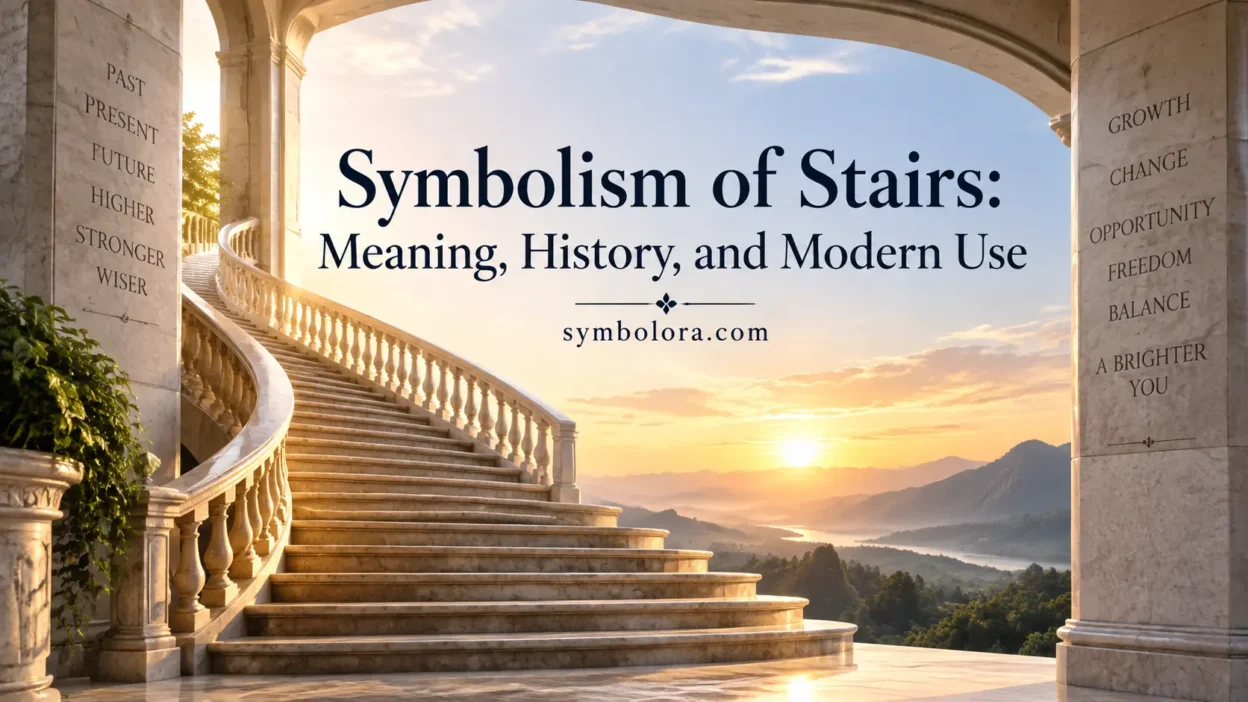
Stairs are everyday structures that help people move between different levels, but the symbolism of stairs often represents progress, transition, growth, and movement toward a goal. From homes and public buildings to art, literature, and personal designs, stairs frequently appear as visual reminders of change and personal journeys.
Because stairs connect one place to another, people often associate them with advancement, challenges, and transformation. In the United States, stair imagery appears in architecture, photography, tattoos, motivational designs, and storytelling because it reflects familiar ideas about achievement and moving forward.
Quick Answer
Symbolism of stairs commonly represents progress, personal growth, and life transitions in modern American culture, especially in designs connected with achievement and change. Historically, stairs have also symbolized spiritual connection, social movement, and the journey between different states of being.
TL;DR
- Stairs symbolize progress, growth, and personal achievement.
- Ancient cultures linked stairs with spiritual journeys.
- Americans use stairs to represent success and change.
- Stair designs appear in tattoos, art, and architecture.
- Direction and condition change stair meanings.
- Modern symbolism focuses on movement and transformation.
What Stairs Represent in Modern American Culture
In contemporary American culture, stairs are most commonly connected with the idea of moving upward. The image of climbing stairs often suggests ambition, improvement, and reaching a higher level. This meaning appears in motivational artwork, business environments, and personal expressions.
A staircase leading upward may represent:
- Career advancement
- Educational progress
- Personal development
- Overcoming obstacles
- Achieving long-term goals
The meaning comes from the physical experience of climbing. Each step requires effort, and the final destination usually cannot be reached instantly. This makes stairs a natural symbol for gradual progress.
However, stairs do not always represent success. A downward staircase can symbolize reflection, entering the unknown, returning to memories, or exploring hidden parts of oneself.
| Context | Meaning in the USA | Common Associations | Notes |
|---|---|---|---|
| Personal growth | Progress and improvement | Goals, success, discipline | Often shown as climbing upward |
| Architecture | Connection between spaces | Movement, design, structure | Symbolism depends on placement |
| Tattoos | Life journey or transformation | Change, ambition, identity | Personal meaning varies |
| Literature and film | Transition or discovery | Challenges, mystery, change | Used as a storytelling device |
| Spiritual imagery | Connection between worlds | Faith, reflection, enlightenment | Found in many traditions |
The Physical Form and Why Stairs Became Symbolic
A staircase consists of repeated steps arranged to allow movement from one height to another. Unlike a simple path, stairs require individual actions. A person must climb one step at a time, which naturally creates associations with patience and effort.
The structure itself influences its symbolic meaning:
- Ascending stairs often suggest improvement, hope, and achievement.
- Descending stairs may represent exploration, memory, or hidden experiences.
- Broken stairs can suggest obstacles or unfinished journeys.
- Spiral stairs often represent cycles, mystery, or continuous change.
Because stairs appear in homes, workplaces, schools, religious buildings, and public spaces, people encounter them in many meaningful moments of life.
Ancient Roots and Early Symbolism of Stairs
The symbolic use of stairs reaches back thousands of years. Many ancient societies used stepped structures to represent movement between human life and sacred realms.
In ancient Mesopotamia, stepped temple towers known as ziggurats were built with terraces that rose toward the sky. These structures reflected a connection between earthly spaces and divine realms.
Ancient Egyptians also used stepped forms in monuments and architecture. The idea of rising upward could represent movement toward the heavens or a connection with spiritual forces.
In these early examples, stairs were not simply practical designs. Their height and direction gave them symbolic importance, especially in religious and ceremonial settings.
Spiritual and Religious Meanings of Staircases
Many religious traditions use stairs as symbols of connection, transformation, or spiritual progress.
In Christianity, Jacob’s Ladder from the Book of Genesis is one of the most recognized staircase-like images. The ladder between earth and heaven represents communication between the human and divine worlds.
In Buddhist and Hindu traditions, elevated pathways and steps can represent spiritual advancement, discipline, and movement toward higher understanding. Temples and sacred sites often use stairs as part of a meaningful physical journey.
Islamic architecture also includes grand stairways and elevated spaces in many historical structures, where movement upward can reflect respect, beauty, and connection with sacred environments.
Although interpretations differ among religions, the shared idea is that stairs can represent movement beyond ordinary experience.
Stair Symbolism in the United States
In the United States, stairs have developed strong connections with ideas of opportunity and achievement. The phrase “climbing the ladder” is commonly used to describe career progress, especially in business and professional life.
American homes also give stairs emotional meanings. A staircase may represent:
- Family memories
- Childhood experiences
- Major life changes
- Entering a new stage of life
In photography and film, staircases often create dramatic scenes because they naturally suggest movement. A character walking up stairs may appear to be approaching success, while someone walking downward may be entering uncertainty or facing personal reflection.
Public monuments and buildings sometimes use large stairways to create feelings of importance and arrival. The steps leading to government buildings, museums, or historic landmarks can communicate stability, tradition, and public significance.
Psychological Meaning: Why People Connect Stairs With Growth
The human mind often connects physical movement with emotional experiences. Moving upward usually feels like improvement, while moving downward can feel like entering something deeper or less visible.
Psychologically, stairs may represent:
- Progress through challenges
- Personal effort
- Independence
- Life transitions
- Facing fears
The repeated nature of steps also reflects how people often experience change. Major achievements usually happen through small actions rather than one sudden event.
This connection explains why stair imagery appears frequently in motivational messages and personal artwork. It visually communicates the idea that progress happens gradually.
Stair Symbolism in Art, Literature, and Storytelling
Artists and writers often use stairs because they can represent more than a physical location. A staircase can become a visual metaphor for a character’s emotional or personal journey.
Common storytelling meanings include:
Upward stairs:
A character seeking success, discovery, or a new opportunity.
Downward stairs:
A character exploring memories, secrets, fears, or hidden truths.
Endless stairs:
A feeling of uncertainty, repetition, or an impossible challenge.
A doorway at the top of stairs:
A symbol of opportunity, change, or discovery.
Movies and novels frequently use staircases to create suspense or show important turning points in a story.
Why People Choose Stair Tattoos and Personal Designs
Stair tattoos often carry personal meanings connected with life experiences. Someone may choose a staircase design to represent overcoming difficulties, reaching goals, or remembering an important journey.
Common staircase tattoo meanings include:
- Personal growth
- Recovery after hardship
- Ambition
- A new chapter in life
- Spiritual exploration
The details of the design can change the meaning. A staircase leading toward light may represent hope, while an unfinished staircase may represent an ongoing journey.
Unlike some symbols with widely fixed meanings, stair tattoos are highly personal. The story behind the design often matters more than the image itself.
Staircases in Home Design and Decoration
In modern American interiors, staircases are often viewed as architectural features rather than only functional elements. Designers use stair shapes, materials, and placement to influence how a space feels.
A wide staircase may create a sense of openness and importance. A spiral staircase can add creativity and visual interest. Floating stairs, which appear to have no visible support, often create a modern feeling of simplicity and innovation.
Homeowners may also decorate stair areas with:
- Family photographs
- Artwork
- Lighting features
- Seasonal decorations
In this context, stairs can represent connection between different areas of a home and the memories created there.
Cultural Differences in Stair Meanings Around the World
Although stairs commonly represent movement and progress, different cultures emphasize different meanings.
In many Asian traditions, elevated structures and temple stairs may represent spiritual development and respect. In European castles and historic buildings, grand staircases often reflected social position and importance.
Some cultures view stairs as a connection between ordinary life and sacred spaces, while others focus more on their practical role as a symbol of achievement.
The meaning depends on cultural background, religious beliefs, and personal experience.
Positive and Negative Interpretations of Stair Symbols
Stairs usually have positive associations, but their meaning can change depending on context.
Positive meanings include:
- Achievement
- Hope
- Improvement
- Opportunity
- Growth
Negative or challenging meanings may include:
- Difficult struggles
- Uncertainty
- Fear of change
- Obstacles
- Falling behind
A staircase going upward may inspire confidence, while a damaged or unsafe staircase may represent challenges or instability.
Understanding the surrounding imagery is important because symbols rarely have only one interpretation.
Common Misunderstandings About Stair Symbolism
One common misunderstanding is that every staircase automatically represents success. While upward movement often suggests progress, stairs can also represent exploration, memory, or emotional change.
Another misconception is that stair symbols have one universal meaning. Different cultures, religions, and individuals interpret stairs differently.
A staircase in a wedding venue, a horror movie, a workplace, and a spiritual setting may communicate completely different ideas.
The meaning comes from context, not only from the object itself.
How Stair Symbolism Has Changed Over Time
The meaning of stairs has evolved as societies changed. Ancient cultures often emphasized their connection with gods, sacred spaces, and spiritual movement.
Modern interpretations focus more on personal achievement, identity, and life experiences. Today, stairs appear in business branding, fitness culture, personal art, and social media as symbols of improvement and forward movement.
The basic idea remains similar: stairs represent movement from one state to another. What changes is the destination people imagine.
FAQ
What does a staircase symbolize spiritually?
A staircase can symbolize spiritual growth, connection between earthly and sacred worlds, and personal transformation. Many traditions use upward movement as an image of spiritual development.
What does a staircase tattoo usually mean?
A staircase tattoo often represents personal progress, overcoming challenges, or moving into a new stage of life. The design details usually determine the specific meaning.
Are stairs always a symbol of success?
No. While climbing stairs often represents achievement, stairs can also symbolize reflection, uncertainty, exploration, or emotional change depending on the context.
What do stairs symbolize in dreams?
Dream interpretations vary, but stairs are often associated with personal transitions, goals, fears, or changes in direction. The condition and direction of the stairs may influence the meaning.
Why are stairs important in architecture?
Stairs connect different spaces while also shaping how people experience a building. Their size, design, and placement can communicate importance, creativity, or movement.
What does a spiral staircase symbolize?
A spiral staircase is often associated with transformation, cycles, creativity, and continuous growth. Its curved design can suggest movement without a simple beginning or ending point.
Conclusion
Stairs represent movement, change, and the process of reaching somewhere new. In American culture, they often symbolize personal progress, ambition, and the effort required to achieve goals, while their older meanings connect them with spiritual journeys and transitions.
The symbolism of stairs continues to evolve because people use stair imagery to express different experiences, from personal growth to creative identity. Whether seen in architecture, art, tattoos, or everyday life, stairs remain a familiar reminder that change often happens one step at a time.


