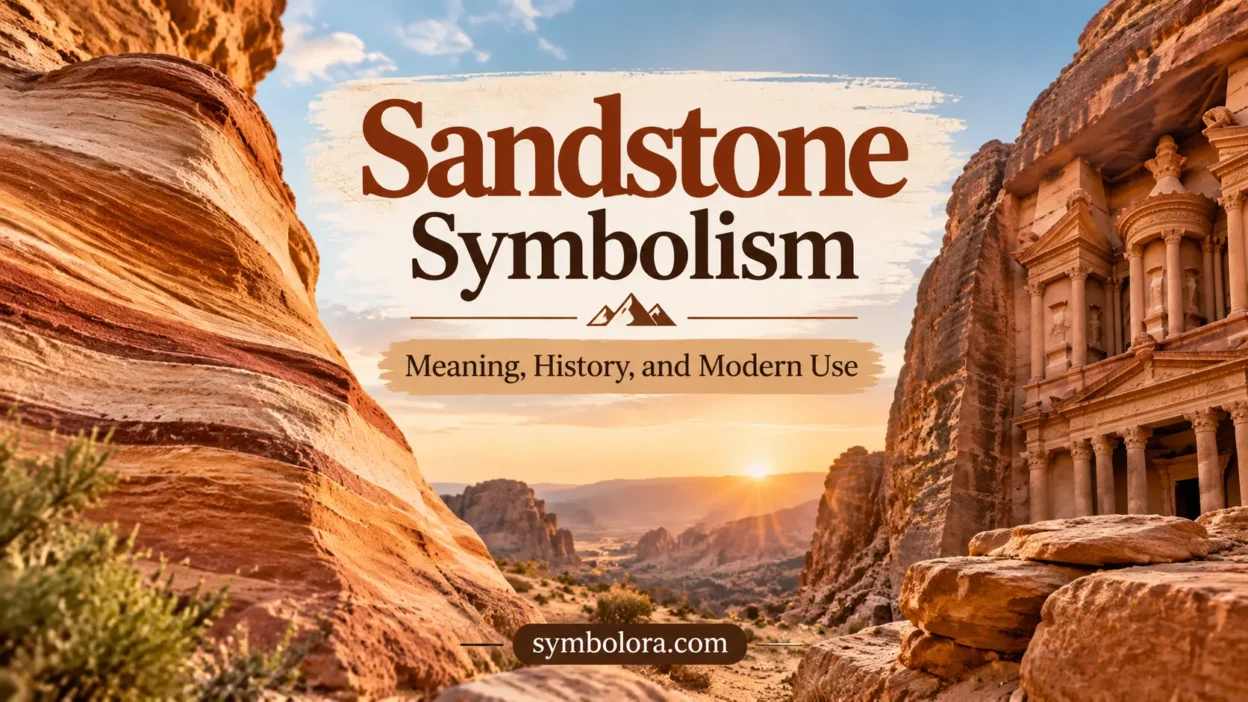
Sandstone has long been connected with ideas of stability, endurance, natural beauty, and the passage of time. Sandstone symbolism reflects how people interpret this ancient stone as a reminder of resilience, connection to the earth, and the lasting marks left by nature and human experience.
From desert landscapes and historic buildings to home design and spiritual practices, sandstone appears in many places where people value strength and natural character. Its layered appearance often encourages reflection on growth, memory, and the changes that happen over generations.
In the United States, sandstone is especially recognized through national parks, historic architecture, monuments, and interior design. The stone’s warm colors and visible layers have made it a symbol of natural heritage, craftsmanship, and a relationship between human structures and the environment.
Quick Answer
Sandstone symbolism commonly represents stability, endurance, and connection to nature in modern American culture, especially in architecture, design, and personal spaces. Historically, sandstone has also been associated with protection, spiritual reflection, and the lasting influence of time and natural forces.
TL;DR
- Sandstone symbolizes endurance, stability, and natural connection.
- Its layers represent time, memory, and transformation.
- Americans associate it with parks, architecture, and heritage.
- Ancient cultures used sandstone for sacred structures.
- Modern design uses sandstone for warmth and authenticity.
- Misinterpretations often confuse beauty with supernatural meaning.
What Sandstone Is and Where People Encounter It
Sandstone is a sedimentary rock formed when layers of sand particles become compressed and cemented together over long periods. Its appearance can vary widely depending on minerals, pressure, and environmental conditions during formation.
Common sandstone colors include:
- Red
- Orange
- Brown
- Yellow
- White
- Gray
The reddish shades often come from iron minerals within the stone, while lighter varieties may contain more quartz or fewer coloring minerals.
People encounter sandstone in many everyday and cultural settings:
- Historic buildings
- Public monuments
- National parks
- Garden walls
- Fireplaces
- Flooring
- Decorative objects
- Sculptures
- Jewelry and carvings
Unlike polished gemstones that are often valued for rarity, sandstone is usually appreciated for its natural texture, visible layers, and connection to landscapes.
In American culture, sandstone often appears in places where people want to emphasize permanence while still maintaining a natural appearance.
The Core Meanings Associated With Sandstone
The symbolic meaning of sandstone comes mainly from its physical characteristics. It is created slowly through pressure and time, which has led many cultures to connect it with patience and endurance.
Stability and Strength
Because sandstone forms through gradual geological processes, it is often viewed as a symbol of lasting strength. It represents the idea that strong foundations develop slowly rather than instantly.
This meaning appears in architecture where sandstone structures are designed to survive for generations. Buildings made from sandstone often communicate reliability, tradition, and permanence.
Connection to Earth and Nature
Sandstone directly connects people with natural landscapes because it comes from ancient environments such as deserts, riverbeds, and coastal regions.
Many people associate it with:
- Grounding
- Simplicity
- Natural balance
- Environmental awareness
Its earthy appearance makes it popular among people who want spaces that feel connected to the outdoors.
Time and Memory
The visible layers inside sandstone are often interpreted as reminders of time. Each layer represents a stage in the stone’s formation, creating a natural record of environmental change.
Symbolically, sandstone can represent:
- Personal growth
- Life experiences
- Family history
- Lessons gained over time
This interpretation is especially common in decorative art and personal objects made from natural stone.
Ancient Roots and Early Symbolism of Sandstone
Sandstone has been used by human civilizations for thousands of years because it is relatively easy to cut compared with harder stones while still being durable.
Ancient builders used sandstone for:
- Temples
- Tombs
- Monuments
- Religious buildings
- Defensive structures
Its availability and workability made it an important building material across different regions.
In ancient Egypt, sandstone was widely used in temples and monuments. Large sandstone structures were connected with religious traditions, royal authority, and the desire to create lasting places of worship.
In parts of Europe and Asia, sandstone was also used for churches, castles, and public buildings. Over time, these structures gave sandstone associations with heritage, craftsmanship, and human achievement.
The symbolic importance did not come from the stone alone. It developed from the role sandstone played in creating places where communities preserved beliefs, history, and collective identity.
Sandstone Symbolism in the United States
In the United States, sandstone is strongly connected with landscapes, architecture, and cultural preservation.
One of the most recognizable associations is the American Southwest, where sandstone formations create some of the country’s most famous natural scenery. Red sandstone cliffs, arches, and canyons are often viewed as symbols of geological history and the relationship between humans and the natural world.
Sandstone is also important in American architecture. Historic buildings made from sandstone often represent:
- Civic pride
- Tradition
- Permanence
- Regional identity
Examples include universities, government buildings, churches, and older city structures that use sandstone for its distinctive appearance.
For many Americans, sandstone carries a sense of place. A sandstone building may remind people of local history, while a sandstone landscape may represent adventure, exploration, and national heritage.
| Context | Meaning in the USA | Common Associations | Notes |
|---|---|---|---|
| Architecture | Permanence and tradition | Historic buildings, universities | Shows craftsmanship and durability |
| Nature | Connection with landscapes | Parks, deserts, canyons | Represents geological time |
| Home Design | Warmth and authenticity | Fireplaces, walls, flooring | Creates natural visual appeal |
| Art and Decor | Simplicity and texture | Sculptures, objects | Highlights natural patterns |
| Personal Symbolism | Growth and resilience | Jewelry, keepsakes | Often linked with life experiences |
Why Sandstone Represents Endurance and Resilience
The symbolism of endurance comes from the way sandstone forms. Small particles of sand must experience pressure and natural bonding before they become solid rock.
This process has made sandstone a metaphor for personal development. Many people interpret it as a reminder that challenges and experiences can shape character over time.
Unlike symbols based on sudden change or transformation, sandstone represents gradual development. It suggests that lasting results often come through patience, consistency, and accumulated experiences.
In personal spaces, sandstone elements are sometimes chosen because they create a feeling of calm permanence. A sandstone fireplace, wall, or sculpture can communicate a desire for stability and connection with nature.
Spiritual and Cultural Interpretations of Sandstone
Across different cultures, sandstone has often been connected with sacred spaces because of its ability to become part of temples, monuments, and places of reflection.
Many spiritual interpretations focus less on the stone having a supernatural ability and more on what it represents:
- Connection with creation
- Respect for nature
- Human history
- Stability during change
In some traditions, natural stones are used in meditation spaces or ceremonial environments because they provide a physical reminder of the natural world. Sandstone’s earthy appearance can create a sense of calm and closeness to the environment.
Religious buildings made from sandstone have also influenced its symbolic meaning. When a community uses sandstone to build a sacred structure, the material can become associated with devotion, memory, and shared cultural identity.
However, meanings differ between communities. Sandstone does not have one universal spiritual interpretation. Its symbolism depends on cultural traditions, personal beliefs, and the context where it appears.
Sandstone in Architecture and Human Identity
Architecture often turns natural materials into symbols of human values. Sandstone has played this role because it combines durability with a warm, organic appearance.
In American architecture, sandstone buildings are often associated with:
- Historical importance
- Education
- Public service
- Regional character
Many older universities and government buildings use sandstone because the material creates an impression of seriousness and permanence.
The stone also carries a connection between humans and the environment. Unlike artificial materials with a uniform appearance, sandstone shows natural variation. Each piece has different patterns, colors, and textures.
This individuality has made sandstone attractive to architects and designers who want spaces to feel authentic rather than manufactured.
A sandstone structure can communicate that a place has roots, history, and a relationship with its surroundings.
The Emotional and Psychological Meaning of Sandstone
People often respond emotionally to natural materials because they connect indoor spaces with the outdoor world. Sandstone’s colors and textures can influence how a space feels.
Common emotional associations include:
Calmness
Warm earth tones, such as beige, tan, and red, are often connected with comfort and relaxation. Sandstone surfaces can make environments feel more natural and welcoming.
Security
Because sandstone is associated with strong structures and ancient landscapes, some people connect it with feelings of safety and reliability.
Reflection
The layered appearance of sandstone can encourage thoughts about time, memories, and personal experiences.
Authenticity
Natural variations in sandstone can represent individuality. Many people prefer materials that show natural imperfections because they feel more genuine.
These meanings are psychological associations rather than fixed rules. A person’s interpretation may depend on their experiences, culture, and personal preferences.
Sandstone in Modern Home Design and Decor
Today, sandstone appears in homes and public spaces as part of a broader interest in natural materials.
Interior designers often use sandstone for:
- Accent walls
- Fireplaces
- Outdoor patios
- Garden features
- Flooring
- Decorative objects
The stone is valued because it creates a connection between indoor spaces and natural landscapes.
Modern design often uses sandstone to create styles such as:
- Rustic homes
- Desert-inspired interiors
- Southwestern designs
- Organic modern spaces
In these settings, sandstone usually represents warmth, simplicity, and a balanced relationship with nature.
Unlike highly polished materials that emphasize luxury or technology, sandstone often communicates comfort and a sense of timeless craftsmanship.
Sandstone Symbolism in Jewelry, Art, and Personal Objects
Although sandstone is less common in jewelry than gemstones like quartz or sapphire, it is still used in artistic and decorative pieces.
People may choose sandstone objects because they appreciate:
- Natural patterns
- Earthy colors
- Geological history
- Handmade craftsmanship
Artists sometimes use sandstone for sculptures because the material carries a connection to landscapes and ancient environments.
Small sandstone items, such as carvings or decorative stones, may serve as personal reminders of:
- Travel experiences
- Favorite natural places
- Personal growth
- Appreciation for nature
The meaning usually comes from the relationship between the person and the object rather than a universal symbolic rule.
Sandstone in Tattoos and Personal Expression
Sandstone itself is not among the most common tattoo symbols, but images connected with sandstone landscapes are popular in body art.
Common designs include:
- Desert cliffs
- Canyon landscapes
- Rock formations
- Natural scenery
These tattoos may represent:
- Adventure
- Strength
- Connection to the earth
- Memories of meaningful places
For someone who has visited a location with sandstone landscapes, such as a national park, the image may represent a personal experience rather than a traditional symbol.
Sandstone-inspired tattoos often focus on the environment around the stone rather than the rock alone. The surrounding landscape gives the design additional meaning.
How Sandstone Appears in American Nature and Public Life
The United States contains many famous landscapes shaped by sandstone formations. These locations influence how Americans understand the stone symbolically.
Sandstone landscapes are often connected with:
- Exploration
- Conservation
- Natural beauty
- Geological history
National parks and protected areas featuring sandstone formations allow people to experience the stone as part of a larger ecosystem.
For many visitors, sandstone cliffs and canyons represent something larger than architecture or decoration. They provide a visible connection to geological processes that existed long before modern societies.
This connection has strengthened sandstone’s association with patience, endurance, and respect for natural history.
Common Misunderstandings About Sandstone Symbolism
Because natural stones are often discussed in spiritual and symbolic contexts, sandstone is sometimes given meanings that are not supported by historical or cultural evidence.
A common misunderstanding is that sandstone has one fixed meaning for everyone. In reality, symbolism changes depending on location, tradition, and personal interpretation.
Another misunderstanding is treating sandstone as automatically connected with supernatural powers. While some individuals may use stones in personal spiritual practices, these beliefs vary and are not universal cultural facts.
A more balanced interpretation is that sandstone symbolizes ideas people associate with its physical qualities:
- Formation through time
- Natural strength
- Earthly connection
- Historical preservation
Its meaning comes from human experience and cultural interpretation rather than from a single official definition.
How Sandstone’s Meaning Has Changed Over Time
The symbolic role of sandstone has evolved alongside human societies.
In ancient times, sandstone was mainly connected with construction, religion, and monuments. Its value came from its practical usefulness and its role in creating lasting structures.
Later, sandstone became associated with heritage and cultural preservation as historic buildings and landmarks gained importance.
Today, its symbolism has expanded into:
- Environmental awareness
- Natural design
- Personal expression
- Appreciation for craftsmanship
Modern interpretations often focus less on power or authority and more on balance, authenticity, and connection with the natural world.
The stone’s basic qualities remain the same, but people continue to find new meanings in those qualities.
Sandstone Compared With Other Symbolic Stones
Different stones carry different cultural associations, often based on their appearance, rarity, and practical uses. Sandstone stands apart because its symbolism comes mainly from its relationship with the earth and the passage of time.
| Stone | Common Symbolic Meaning | Main Associations |
|---|---|---|
| Sandstone | Stability and natural history | Earth, endurance, landscapes |
| Granite | Strength and permanence | Buildings, foundations, resilience |
| Marble | Beauty and refinement | Art, luxury, craftsmanship |
| Quartz | Clarity and energy | Modern wellness practices, decoration |
| Obsidian | Protection and reflection | Ancient tools, dark volcanic glass |
Unlike gemstones that are often valued for rarity or color, sandstone is usually valued for its connection to the environment. Its visible layers remind people of natural processes that happen slowly over long periods.
Granite may symbolize toughness because of its hardness, while marble may represent elegance because of its smooth appearance. Sandstone often represents something different: the relationship between time, nature, and human experience.
The Role of Sandstone in Environmental Awareness
Modern discussions about sustainability have increased appreciation for natural materials, including sandstone.
Many designers and homeowners choose natural stone because it provides:
- A connection to local landscapes
- A long-lasting material option
- A natural appearance that changes less quickly than trends
Sandstone also encourages awareness of geological history. A piece of sandstone can contain evidence of ancient environments, reminding people that landscapes have developed over millions of years.
In this sense, sandstone can symbolize environmental responsibility and respect for natural resources.
However, using natural materials also requires thoughtful choices. Quarrying and transportation can affect ecosystems, so responsible sourcing and conservation practices remain important considerations.
Sandstone in Folklore, Stories, and Human Imagination
While sandstone does not have one dominant mythology surrounding it, stone itself appears frequently in human storytelling.
Across folklore and literature, stones often represent:
- Permanence
- Memory
- Protection
- The connection between humans and the land
Because sandstone frequently forms dramatic cliffs, caves, and monuments, it naturally appears in stories connected with landscapes and ancient places.
In fiction and visual storytelling, sandstone settings often create feelings of mystery, history, or discovery. Desert ruins, ancient cities, and canyon landscapes commonly use sandstone imagery to suggest a connection with earlier civilizations.
The symbolism comes from the environment surrounding the stone as much as from the material itself.
Positive and Negative Interpretations of Sandstone Symbolism
Most interpretations of sandstone are positive, but symbolism depends on context.
Positive Associations
Sandstone is commonly connected with:
- Reliability
- Patience
- Natural beauty
- Heritage
- Personal growth
- Connection to the earth
These meanings come from the stone’s formation process and its role in human structures.
Possible Negative Associations
Some interpretations may focus on sandstone’s tendency to weather and erode over time.
In certain contexts, erosion can symbolize:
- Change
- Impermanence
- The effects of time
However, this does not necessarily represent weakness. Many people view natural erosion as part of a larger cycle of transformation and renewal.
The same quality that shows vulnerability can also represent adaptability.
Sandstone in Modern Digital and Popular Culture
Sandstone does not appear as frequently in digital culture as symbols like hearts, stars, or animals, but it appears through images and themes connected with nature.
Online, sandstone imagery is often associated with:
- Travel photography
- Outdoor exploration
- National parks
- Architecture inspiration
- Environmental content
Social media platforms frequently feature sandstone landscapes because they create visually striking scenes.
For many users, sharing sandstone landscapes represents appreciation for adventure, nature, and memorable experiences rather than a specific symbolic belief.
In popular culture, sandstone environments are often used as settings for stories involving exploration, history, and discovery.
Why People Still Connect With Sandstone Today
The continued appeal of sandstone comes from its ability to represent both nature and human achievement.
A sandstone canyon shows the effects of geological time. A sandstone building shows human creativity and craftsmanship. Together, these examples create a connection between natural history and human history.
People often choose sandstone-inspired designs because they want symbols that feel grounded and authentic.
In a world filled with rapidly changing technology and artificial materials, sandstone represents qualities many people value:
- Patience
- Simplicity
- Permanence
- Connection
Its meaning remains relevant because these ideas continue to influence how people think about identity, home, and place.
FAQ
What does sandstone symbolize?
Sandstone commonly symbolizes stability, endurance, and a connection with nature. Its layered formation also makes it associated with time, memory, and gradual growth.
What does sandstone mean spiritually?
Spiritual interpretations of sandstone vary, but many people associate it with grounding, reflection, and respect for the natural world. These meanings depend on individual beliefs and cultural traditions.
Is sandstone a good symbol for tattoos?
Yes, sandstone-inspired tattoos can represent personal experiences, adventure, strength, or a connection to meaningful landscapes. Many designs focus on sandstone cliffs, deserts, or natural scenery.
Why is sandstone important in American culture?
In the United States, sandstone is connected with national landscapes, historic architecture, and regional identity. It appears in parks, monuments, and buildings that represent natural and cultural heritage.
Does sandstone have a negative symbolic meaning?
Sandstone is usually associated with positive ideas such as stability and endurance. Negative interpretations are uncommon and usually come from specific personal or cultural contexts.
How is sandstone different from other symbolic stones?
Sandstone is unique because its symbolism comes from layers, natural formation, and connection to landscapes rather than rarity or gemstone value. It often represents history and gradual transformation.
Conclusion
Sandstone represents stability, endurance, natural connection, and the influence of time. Its layered formation and widespread use in landscapes, architecture, and art have shaped the way people understand this stone across cultures.
In the United States, sandstone is especially connected with national landscapes, historic buildings, and design choices that emphasize warmth and authenticity. Sandstone symbolism reflects a human appreciation for materials that preserve memories, connect people with nature, and show the slow process of change.
Rather than having one fixed meaning, sandstone continues to gain significance through the places where people encounter it and the experiences they attach to it. A canyon wall, historic building, or decorative stone can each tell a different story while sharing the same connection to the earth’s long history.


