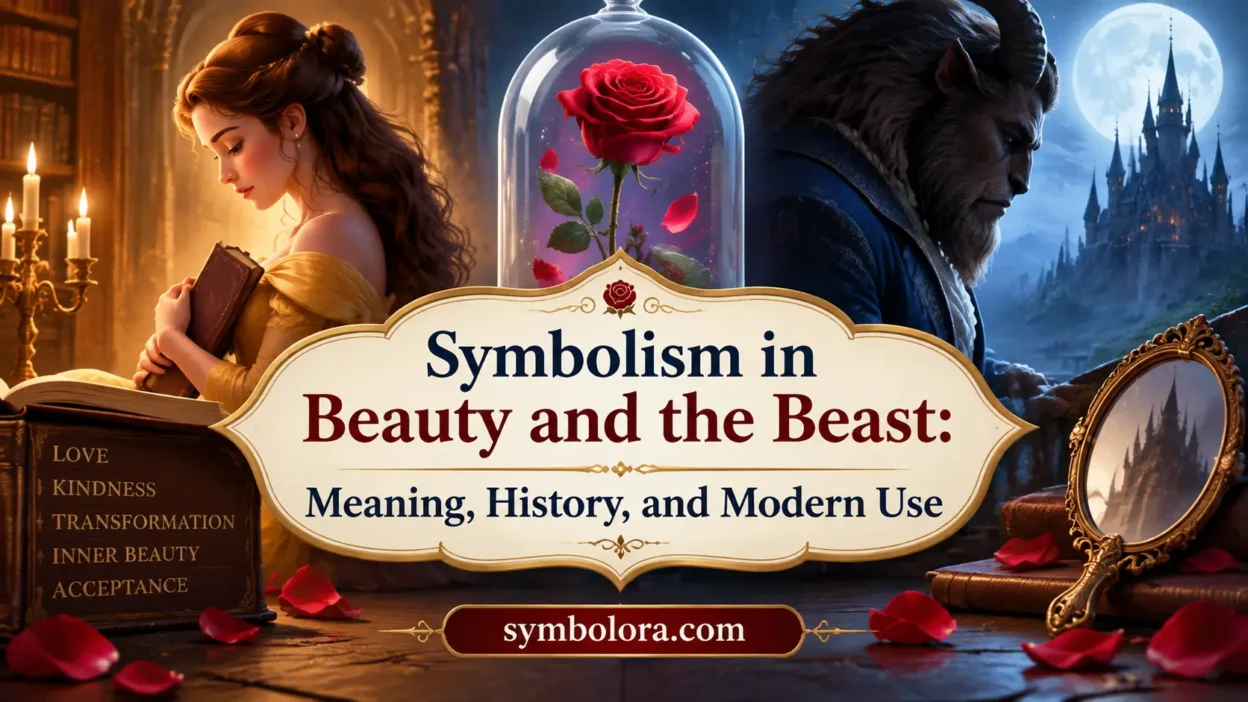
Stories about transformation, love, and identity often stay with audiences because they explore emotions people recognize in their own lives. Symbolism in Beauty and the Beast reveals how a fairy tale uses characters, objects, and settings to explore ideas about appearance, acceptance, personal growth, and the difference between outer image and inner character.
The story of Beauty and the Beast has existed in different forms for centuries, but its themes continue to appear in books, movies, theater, art, and popular culture. Modern audiences often connect with the tale because it challenges the idea that a person’s value can be judged only by appearance.
Beyond romance, the story contains symbols about fear, isolation, emotional healing, and becoming a better version of oneself. These meanings have allowed the tale to remain relevant in American culture, where discussions about identity, self-expression, and acceptance continue to shape entertainment and social conversations.
Quick Answer
Symbolism in Beauty and the Beast commonly represents the importance of seeing beyond physical appearance and valuing kindness, growth, and inner character. Historically, the story has also symbolized transformation, emotional maturity, and the conflict between social judgment and personal identity.
TL;DR
- Beauty represents curiosity, compassion, and independent thinking.
- The Beast symbolizes hidden humanity and personal transformation.
- The rose represents love, time, and emotional vulnerability.
- The castle reflects isolation and inner emotional struggles.
- The tale challenges judgments based only on appearance.
The Story Behind Beauty and the Beast as a Symbolic Tale
Beauty and the Beast is one of the most recognized fairy tales in Western culture. Although many people know the version popularized by modern films, the story comes from older European traditions of transformation tales and folklore.
The best-known literary version was written in the 18th century by French author Gabrielle-Suzanne Barbot de Villeneuve and later shortened by Jeanne-Marie Leprince de Beaumont. Earlier stories from Europe also explored themes of humans transformed into animals or supernatural beings.
At its center, the tale asks a simple but important question: Should someone be judged by their appearance, or by their actions and character?
This question gives the story much of its symbolic meaning.
What Beauty Represents in the United States
In American interpretations, Beauty is often viewed as a symbol of independence, empathy, and personal values.
Unlike traditional fairy tale characters who mainly wait for rescue, Beauty is usually portrayed as someone who thinks for herself. She enjoys reading, questions her surroundings, and refuses to accept shallow social expectations.
Her character often represents:
- intellectual curiosity
- emotional strength
- compassion toward outsiders
- willingness to understand others
For many modern American audiences, Beauty reflects the idea that kindness does not mean weakness. She shows that a person can be caring while still having personal boundaries and strong opinions.
The character also represents the importance of looking deeper. Her ability to recognize the Beast’s humanity becomes a symbol of emotional awareness and acceptance.
The Beast as a Symbol of Hidden Humanity
The Beast is one of the strongest symbols in the story because his appearance conflicts with his true nature.
At first, the Beast appears frightening and dangerous. However, as the story develops, audiences discover that his behavior, emotions, and ability to change matter more than his physical form.
The Beast commonly symbolizes:
- emotional wounds
- fear of rejection
- personal mistakes
- the possibility of change
In psychological interpretations, the Beast can represent parts of ourselves that we hide because we feel ashamed, angry, or misunderstood.
His transformation does not happen simply because someone loves him. Instead, the story connects change with learning patience, generosity, and emotional responsibility.
The Rose and Its Meaning in the Story
The enchanted rose is one of the most recognizable symbols connected to Beauty and the Beast.
The rose represents several ideas:
| Symbol | Meaning in the USA | Common Associations | Notes |
|---|---|---|---|
| Rose | Love and emotional connection | Romance, beauty, time | Often linked with the Beast’s curse |
| Castle | Isolation and personal struggle | Privacy, reflection | Represents emotional barriers |
| Mirror | Self-awareness | Truth, identity | Shows connection beyond appearance |
| Transformation | Growth and change | Healing, maturity | Reflects personal development |
The rose’s limited lifespan creates a sense of urgency. It reminds characters that time affects relationships and choices.
In American culture, roses are already strongly connected with love, especially through Valentine’s Day, weddings, and romantic traditions. The story adds another layer by connecting the flower with vulnerability and the fear of losing opportunities.
The Castle as a Symbol of Isolation and Change
The Beast’s castle is more than a setting. It represents his emotional condition.
The large, mysterious castle separates the Beast from society. It reflects loneliness, fear, and the barriers people create when they feel rejected.
Many American viewers interpret the castle as a symbol of the inner world. It represents the hidden parts of a person that others do not immediately see.
As Beauty enters the castle, the space changes from a place of fear into a place of connection. This mirrors the emotional transformation happening between the characters.
The castle also represents the idea that people may carry hidden stories behind their outward behavior.
The Meaning of Appearance Versus Inner Character
One of the central messages of Beauty and the Beast is the difference between appearance and reality.
The Beast looks frightening but develops kindness. Meanwhile, characters such as Gaston focus heavily on physical image, strength, and social approval.
This contrast creates a symbolic comparison:
- appearance versus personality
- pride versus humility
- popularity versus authenticity
In modern American culture, this theme connects with conversations about self-worth, stereotypes, and judging people too quickly.
The story does not suggest that appearance has no importance. Instead, it argues that appearance alone cannot reveal a person’s complete identity.
Love, Acceptance, and Emotional Growth
The relationship between Beauty and the Beast is often interpreted as a symbol of emotional growth rather than simple romance.
The story shows two characters changing through their experiences together.
Beauty learns that understanding someone requires patience and openness. The Beast learns that love and respect cannot be demanded; they must be earned through actions.
This interpretation has made the tale popular in discussions about relationships because it focuses on communication, forgiveness, and personal improvement.
However, modern audiences also examine the story carefully, especially regarding the importance of healthy relationships and mutual respect.
Historical Roots of Transformation Symbolism
Transformation stories appear in many cultures. Folklore around the world includes humans becoming animals, spirits, or supernatural beings as part of a lesson or personal journey.
European fairy tales often used transformation as a way to explore morality, identity, and social expectations.
In Beauty and the Beast, the transformation is not only physical. The deeper change happens emotionally:
- the Beast learns compassion
- Beauty develops understanding
- both characters move beyond first impressions
This connects the tale with a broader storytelling tradition where change represents personal growth.
Cross-Cultural Interpretations of Beauty and the Beast
Different cultures have interpreted the story through their own values and traditions.
In European folklore, the tale often focuses on virtue, marriage expectations, and moral lessons. Some versions emphasize family duty and social roles.
In modern American culture, the focus has shifted more toward:
- individuality
- acceptance
- emotional intelligence
- overcoming stereotypes
Other cultures also have similar stories involving humans transformed into animals or supernatural beings. These tales often explore themes of trust, sacrifice, and understanding between different worlds.
The details change, but the symbolic question remains similar: what makes someone truly human?
Emotional and Psychological Meaning of the Tale
Many people connect with Beauty and the Beast because the story reflects common emotional experiences.
The Beast can represent feelings of being misunderstood or rejected. Beauty can represent the desire to connect with people beyond surface impressions.
The story may appeal to people who have experienced:
- loneliness
- insecurity
- personal change
- fear of judgment
Psychologically, the tale suggests that identity is not fixed. People can learn, improve, and redefine themselves through choices and relationships.
This message helps explain why the story continues to appear in modern films, books, and personal interpretations.
Beauty and the Beast Symbolism in Modern American Culture
Today, the symbols from Beauty and the Beast appear in many forms of American culture.
Common examples include:
Weddings:
The rose, castle imagery, and romantic themes often appear in wedding decorations inspired by fairy tales.
Fashion and Decor:
Rose designs, vintage objects, and storybook aesthetics are used in home design and personal style.
Tattoos:
People often choose Beauty and the Beast tattoos to represent love, transformation, acceptance, or personal growth.
Pop Culture:
The story continues through movies, theater productions, merchandise, and fan communities.
The symbols have moved beyond the original fairy tale and become part of a larger cultural language about relationships and identity.
Common Misunderstandings About the Symbolism
Although Beauty and the Beast is often celebrated as a love story, some interpretations overlook important details.
One misunderstanding is that the story simply means love can change anyone. A more balanced reading shows that personal growth requires effort, responsibility, and willingness to change.
Another misunderstanding is that Beauty accepts the Beast only because she sees his hidden goodness. In many versions, their relationship develops through shared experiences and gradual understanding.
Modern audiences also discuss whether some parts of traditional fairy tales reflect older social expectations. These conversations show how interpretations of stories can change as cultural values evolve.
How the Meaning of Beauty and the Beast Has Changed Over Time
The symbolism of Beauty and the Beast has evolved with society.
Earlier versions often focused on morality, marriage, and social expectations. Modern versions place more attention on identity, emotional development, and acceptance.
The Beast has shifted from being mainly a warning figure into a symbol of healing and self-improvement.
Beauty has also changed from a figure representing virtue into a character associated with independence and personal choice.
This evolution shows how classic stories gain new meanings as different generations interpret them.
Frequently Asked Questions
What does Beauty and the Beast symbolize?
Beauty and the Beast symbolizes looking beyond appearances and recognizing the value of character, kindness, and personal growth. The story also represents transformation and emotional healing.
What does the rose symbolize in Beauty and the Beast?
The rose symbolizes love, vulnerability, and the passage of time. Its connection to the Beast’s curse also represents the importance of choices and opportunities.
What does the Beast represent psychologically?
The Beast can represent hidden emotions, insecurity, and the fear of rejection. His transformation reflects personal growth and learning how to build healthier relationships.
Why is Beauty and the Beast still popular in American culture?
The story remains popular because its themes connect with modern ideas about identity, acceptance, and judging people beyond their appearance. Its symbols also appear widely in entertainment, fashion, and celebrations.
Is Beauty and the Beast only a love story?
No. While romance is an important part of the tale, it also explores personal change, empathy, forgiveness, and the importance of understanding others.
What does a Beauty and the Beast tattoo symbolize?
A Beauty and the Beast tattoo may represent love, transformation, acceptance, overcoming struggles, or seeing value beyond outward appearance. The meaning depends on the person’s own connection to the story.
Are there negative interpretations of Beauty and the Beast symbolism?
Some modern discussions examine issues such as power differences and relationship dynamics in traditional versions. These interpretations focus on how stories reflect the values and expectations of the societies that created them.
Conclusion
The symbolism in Beauty and the Beast remains meaningful because the story explores questions that continue to matter: how people see themselves, how they judge others, and how change happens.
The rose, the castle, Beauty, and the Beast each represent different parts of the human experience, from vulnerability and isolation to acceptance and growth.
Symbolism in Beauty and the Beast shows that identity cannot be understood through appearance alone. The lasting message of the tale comes from its reminder that character, choices, and compassion often reveal more than what is visible on the surface.


