
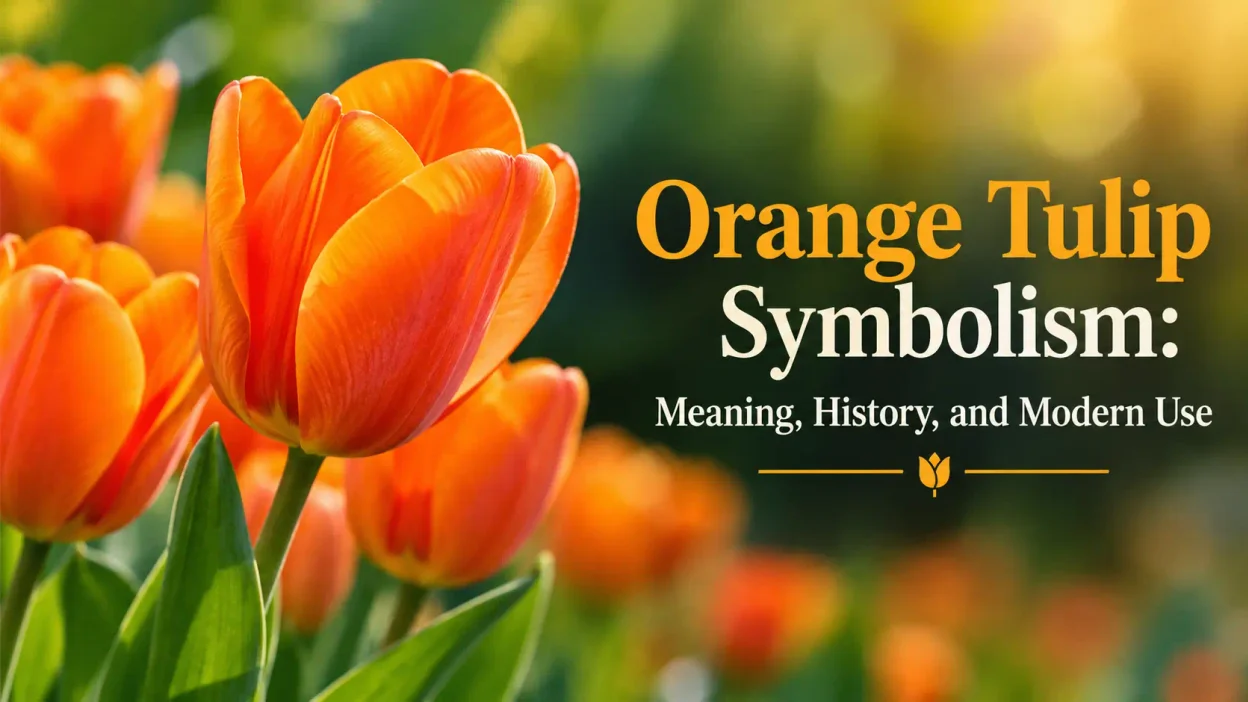
Orange tulip symbolism centers on enthusiasm, warmth, encouragement, and a lively appreciation for life. With their bright petals and association with spring, orange tulips offer a way to express excitement, admiration, and affection without relying on the more familiar romantic message of red roses. In the United States, these flowers appear in spring bouquets, garden displays, celebrations, and modern floral arrangements that call for a cheerful, energetic touch.
Tulips have a long cultural history, particularly in the Ottoman world and the Netherlands, where they became important in art, gardening, and commercial flower culture. Orange tulips belong to this broader tradition, but their modern meanings also reflect the way people interpret color. Orange combines the visual intensity of red with the brightness of yellow, making it a natural choice for expressing friendliness, confidence, and optimism.
Understanding the flower’s symbolism means separating documented tulip history from modern color associations. There is no single ancient rule assigning orange tulips one universal meaning, but their appearance, cultural background, and everyday uses help explain why people choose them.
Quick Answer
Orange tulip symbolism commonly represents enthusiasm, warmth, encouragement, and joyful affection in modern American culture. Tulips have historical connections to Ottoman art and Dutch horticulture, while the orange variety’s contemporary meaning largely reflects the color’s associations with energy, friendliness, and optimism.
TL;DR
- Orange tulips symbolize enthusiasm, warmth, encouragement, and cheerful affection.
- Tulips gained prominence through Ottoman gardens and Dutch flower culture.
- Orange combines the visual qualities associated with red and yellow.
- Americans use orange tulips in spring bouquets, celebrations, and garden designs.
- Orange tulips can express admiration without emphasizing traditional romantic love.
- Their meaning depends on the occasion, relationship, and personal interpretation.
What Orange Tulips Look Like and Why Their Color Matters
Orange tulips have cup-shaped flowers with petals ranging from pale apricot and peach to vivid tangerine, copper, and reddish orange. Some varieties display several shades in one bloom, while others have contrasting edges, streaks, or darker centers.
Their color immediately affects how people perceive them. A soft peach-orange tulip may look gentle and welcoming, while a saturated orange bloom can appear energetic and attention-grabbing. These differences allow florists and gardeners to choose a variety that fits a particular mood.
Orange tulips are also visually versatile. They stand out against dark green foliage, complement purple and blue flowers, and create warm combinations with yellow, red, and cream blooms. Their upright stems and recognizable shape make them useful in both informal spring bouquets and structured floral arrangements.
The flower’s symbolism grows from this visual experience. People often associate bright orange petals with sunlight, warmth, activity, and celebration. These associations are culturally influenced rather than fixed meanings carried by every orange tulip.
The Core Meaning of Orange Tulips
The main contemporary associations of orange tulips are enthusiasm, warmth, encouragement, and positive attention. Their color feels lively without necessarily communicating the intense romantic commitment traditionally associated with red roses.
An orange tulip bouquet can suit a friend starting a new job, a family member celebrating an achievement, or a partner who appreciates colorful flowers. In each case, the flowers can communicate happiness about another person’s success or excitement about a shared experience.
Orange tulips may also express admiration. Their bright color draws attention, while the tulip’s familiar shape keeps the arrangement elegant rather than overly dramatic. This makes them appropriate when the giver wants to communicate interest, appreciation, or affection in a cheerful way.
Still, the meaning is not universal. Some people choose orange tulips simply because they enjoy the color or want flowers that brighten a room. Symbolism can enrich a gift, but the recipient’s preferences and the occasion matter more than any rigid floral dictionary.
How Orange Combines the Meanings of Red and Yellow
Color symbolism offers a useful way to understand orange tulips. Orange sits between red and yellow on the traditional color wheel, and people often associate it with qualities connected to both colors.
Red commonly suggests passion, intensity, courage, or romantic love in many modern Western settings. Yellow often brings to mind sunshine, friendship, cheerfulness, and optimism. Orange can combine these impressions into a message that feels warm, active, and sociable.
This combination helps explain why orange tulips can suit several relationships. They can look affectionate without appearing exclusively romantic, celebratory without seeming formal, and bright without carrying the sharp intensity that some people associate with a deep red bouquet.
Color associations also vary by shade and context. Burnt orange may feel autumnal and grounded, while bright tangerine can appear playful and energetic. Peach-orange flowers may communicate gentleness, especially when paired with cream or pale pink blooms.
These are useful modern interpretations, not universal psychological laws. People learn color meanings through family traditions, cultural experiences, advertising, art, and personal memories.
Tulips in Ottoman History and Cultural Traditions
Tulips have an important place in the cultural history of the Ottoman Empire. They appeared in gardens, decorative arts, textiles, ceramics, and other forms of visual design. Their elegant shape and variety of colors made them suitable for stylized patterns that emphasized symmetry and natural beauty.
The tulip became particularly prominent during the Ottoman period often called the Tulip Era, associated with the early eighteenth century. During this period, tulips featured in elite social life, garden culture, and artistic expression. The historical importance of tulips, however, began before this era and cannot be reduced to one short period.
Ottoman tulip culture helps explain why the flower carries associations with refinement, beauty, and cultivated gardens. Yet historical caution is important: the popularity of tulips in Ottoman art does not prove that orange tulips specifically had a standardized symbolic meaning.
Modern interpretations sometimes assign precise spiritual messages to every tulip color. Those claims should not be treated as established Ottoman tradition unless there is clear historical evidence for them. The broader history is meaningful on its own, even when the symbolism of a particular modern variety remains open to interpretation.
How the Netherlands Shaped Modern Tulip Culture
The Netherlands became one of the world’s most recognizable centers of tulip cultivation and trade. Tulips arrived in Western Europe during the sixteenth century and became increasingly popular among collectors and gardeners. Dutch growers later developed an extensive horticultural industry around the flower.
The Dutch tulip mania of the seventeenth century remains a famous episode in economic history. During the peak of the speculative market in 1636–1637, prices for certain tulip bulbs rose dramatically before the market collapsed. The event involved a limited market in prized bulbs rather than the entire Dutch economy, and popular retellings sometimes exaggerate its scale.
Over time, tulip cultivation expanded beyond rare collector varieties into commercial production and widespread garden planting. Today, Dutch tulips are closely associated with spring landscapes, flower farms, horticultural expertise, and international flower markets.
This history gives orange tulips a place within a much larger tradition of gardening and floral appreciation. It does not establish a unique historical message for the orange color itself, but it helps explain why tulips are so familiar as gifts and decorative flowers in modern American life.
What Orange Tulips Mean in the United States
In the United States, orange tulips are often interpreted through springtime, color symbolism, and the social purpose of giving flowers. Their bright appearance makes them suitable for expressing congratulations, gratitude, encouragement, or friendly affection.
A bouquet of orange tulips may be sent to celebrate a promotion, welcome someone into a new home, or recognize a personal achievement. Their color can feel energetic and informal, which makes them useful when traditional white or red flowers seem too solemn or romantic for the occasion.
Orange tulips also work well in American spring gardens. They provide a vivid contrast with emerging greenery and can complement purple crocuses, blue grape hyacinths, and other seasonal flowers. In home decor, they bring a warm focal point to kitchens, entryways, and dining areas.
Their meaning can shift with the setting. A bright orange bouquet at a birthday gathering may suggest celebration, while a peach-orange arrangement at a family dinner may communicate warmth and welcome. In professional settings, orange tulips can make an office or reception area feel lively without requiring an elaborate display.
There is no single American tradition that assigns orange tulips one fixed message. Their contemporary symbolism is flexible, shaped by the occasion, the relationship between giver and recipient, and the colors used alongside them.
Orange Tulips for Love, Friendship, and Admiration
Orange tulips can express affection across different kinds of relationships. Their meaning is often less narrowly romantic than the familiar symbolism of red roses, which makes them a flexible choice for partners, friends, relatives, and people celebrating shared achievements.
For romantic partners, orange tulips can communicate enthusiasm, attraction, and appreciation. They may be especially appropriate in a newer relationship when a bouquet of red roses feels too intense or formal. For established couples, they can offer a cheerful alternative for anniversaries, casual surprises, or everyday expressions of affection.
For friends, the same flowers can celebrate confidence, personal growth, and mutual encouragement. An orange bouquet can be a thoughtful way to recognize a friend’s accomplishment or brighten their day without implying romance.
For family members, orange tulips may express pride, gratitude, and warmth. They can also be used in congratulations bouquets for graduations, new jobs, and other milestones.
The important point is that the flowers do not communicate a guaranteed message on their own. A short personal note can make the intended meaning clear and prevent the recipient from having to guess what the color represents.
Emotional and Psychological Associations of Orange Tulips
Orange is a visually noticeable color, and many people describe it using words such as lively, warm, cheerful, and energetic. In flowers, these qualities can influence the atmosphere of a room or the emotional impression of a gift.
A vase of orange tulips can make a neutral space feel more inviting. Their color creates a focal point that may seem especially welcome during the transition from winter to spring. In a bouquet, orange petals can also add visual warmth to cooler shades such as lavender, blue, and white.
The emotional response is personal, however. Some people find orange stimulating and cheerful, while others prefer quieter colors such as pale pink, lavender, or white. Cultural background, personal memories, and individual taste influence these reactions.
Orange tulips can also communicate a particular image of the giver. Choosing a bright, unconventional bouquet may suggest playfulness or a preference for expressive design. Yet it would be inaccurate to infer someone’s personality solely from their flower choices.
Their emotional value comes from the combination of appearance, setting, and intention. A carefully selected bouquet often matters because it shows that the giver considered what the recipient might enjoy.
Orange Tulips for Spring, New Beginnings, and Celebrations
Tulips are strongly associated with spring because many varieties bloom during the season when gardens begin to recover from winter. This seasonal connection makes them natural choices for celebrations involving change, growth, and fresh starts.
Orange adds a particularly upbeat tone. A bouquet may mark a graduation, the start of a new job, a move to a different city, or the beginning of a new chapter in someone’s life. In these situations, the flowers can express encouragement rather than making a formal statement about destiny or transformation.
Orange tulips also suit birthdays, housewarming gatherings, and spring celebrations. Their color works well with cheerful wrapping paper, simple glass vases, and arrangements that combine several complementary flowers.
The connection with renewal is partly seasonal and partly interpretive. Tulips emerge and bloom after winter, so people naturally use them to represent a welcome change in the environment. Orange intensifies that impression by adding warmth and visual brightness.
These meanings are especially useful when a gift needs to feel optimistic without becoming overly sentimental. Orange tulips can recognize a milestone while keeping the message simple: the occasion deserves to be celebrated.
What Different Shades of Orange Tulips Communicate
Not every orange tulip creates the same impression. The shade, surrounding flowers, and overall arrangement can change how a bouquet feels.
Bright orange tulips tend to look energetic and celebratory. They are suitable for birthdays, congratulations, and occasions when the goal is to make a bold, cheerful impression.
Peach and apricot tulips have a softer appearance. They may suggest tenderness, appreciation, or gentle affection, making them suitable for family gifts, thoughtful gestures, and understated romantic arrangements.
Coral-orange tulips combine orange with pink or red undertones. Their appearance can feel expressive and affectionate, especially in bouquets intended for partners or close friends.
Burnt-orange tulips have deeper, earthier tones. They work particularly well in autumn arrangements, rustic interiors, and designs that use copper, brown, cream, or dark green.
These distinctions are visual and interpretive rather than a standardized language of flowers. A florist may describe a peach tulip as romantic, while another person may simply see it as a soft, attractive color. The most appropriate choice depends on the impression you want to create.
Orange Tulips Compared With Other Tulip Colors
Tulip colors are often used to communicate different moods, although their meanings vary across cultures and individual preferences. Comparing colors can help you select flowers for a specific occasion.
| Tulip color | Common modern association | Suitable occasions | Overall impression |
|---|---|---|---|
| Orange | Enthusiasm, warmth, encouragement | Birthdays, congratulations, friendly gifts | Energetic and welcoming |
| Red | Romantic love and passion | Anniversaries, romantic gestures | Intense and affectionate |
| Yellow | Cheerfulness, friendship, optimism | Spring gifts, celebrations | Bright and friendly |
| Pink | Tenderness, appreciation, affection | Thank-you gifts, family celebrations | Soft and caring |
| White | Sincerity, remembrance, fresh starts | Weddings, formal occasions, memorials | Calm and understated |
| Purple | Elegance, admiration, dignity | Special occasions, decorative bouquets | Refined and distinctive |
These associations are common in contemporary Western floral culture, not universal rules. The recipient’s preferences, cultural background, and the occasion can influence the message more than the flower’s color alone.
Orange Tulips in Weddings, Home Decor, and Fashion
Orange tulips can bring warmth to wedding flowers, particularly in spring and early summer celebrations. They work well in bouquets that combine peach, cream, coral, or pale pink, and they can add contrast to arrangements dominated by white flowers.
Their meaning at a wedding depends on the couple’s chosen palette. Orange may represent enthusiasm for a shared future or simply reflect a preference for vivid colors. It is not a required symbol of marriage or a traditional universal wedding emblem.
In home decor, orange tulips can brighten spaces that use neutral furnishings. A small arrangement on a dining table or kitchen counter adds a seasonal accent without requiring a large decorative display. Pairing them with natural wood, ceramic vases, or green foliage can create a balanced appearance.
Orange also appears in fashion and graphic design as a color associated with visibility, warmth, and energy. When tulip imagery is used on fabric, stationery, packaging, or illustrations, the flower can soften the intensity of orange by introducing an organic shape.
These uses demonstrate how a flower can communicate mood even outside a traditional bouquet. The tulip’s recognizable form and orange color work together to create an impression of liveliness and natural beauty.
Orange Tulips in Other Cultures and Traditions
Tulips have different cultural histories, and their symbolism should be understood within the traditions where they developed.
In Ottoman art and garden culture, tulips became prominent decorative motifs associated with cultivated beauty and refined artistic expression. Their historical importance is well established, although assigning a specific ancient meaning to the orange variety requires more evidence than the broader history provides.
In the Netherlands, tulips are closely linked with horticulture, spring landscapes, and the country’s international flower industry. They are widely recognized as part of Dutch cultural identity, but their modern popularity does not mean every tulip color carries a formal national meaning.
In the United States, tulips are familiar spring flowers sold in supermarkets, flower shops, garden centers, and farmers’ markets. Orange varieties often gain their associations from color symbolism, seasonal expectations, and the purpose of the gift.
In other societies, flower meanings may differ according to local customs, religious practices, and traditions of giving flowers. Even within one country, interpretations can vary between generations and communities.
The useful distinction is between the history of tulips as cultivated flowers and the modern symbolic meanings assigned to individual colors. Both matter, but they are not the same thing.
How to Give Orange Tulips Without Sending the Wrong Message
Orange tulips are generally flexible flowers, but context still matters when giving them to someone else.
For a friend, a bright orange bouquet can celebrate a success or express appreciation. For a romantic partner, it can communicate enthusiasm and affection, especially when paired with a personal note explaining the occasion.
For a coworker, orange tulips may be suitable for a promotion, retirement celebration, or office milestone. A simple arrangement can feel encouraging without implying an intimate relationship.
If you are choosing flowers for someone whose preferences you do not know, consider whether they enjoy vivid colors. A smaller bouquet with orange tulips mixed with cream or white flowers can feel more restrained than a large arrangement dominated by saturated orange.
It is also worth considering practical details. Tulips continue to grow after being cut, and their stems can bend toward light. A clean vase, fresh water, and regular stem trimming help keep the arrangement attractive.
There is no need to rely on a strict flower dictionary. A clear message and a thoughtful choice will usually communicate more than an assumed symbolic code.
Common Misunderstandings About Orange Tulip Symbolism
One common misunderstanding is that orange tulips have a single meaning recognized across all cultures. Enthusiasm and warmth are common modern associations, but they are not universal definitions.
Another misconception is that every tulip color has an ancient symbolic meaning. Tulips have a long history in Ottoman and Dutch culture, but modern interpretations of orange often draw on general color associations rather than a documented historical tradition specific to orange petals.
It is also misleading to treat orange tulips as exclusively romantic flowers. They can express affection, but they are equally suitable for friendship, congratulations, family gifts, and seasonal decoration.
Some popular interpretations claim that orange tulips guarantee success, attract prosperity, or carry a particular spiritual message. These ideas may be meaningful to individuals, but they should be understood as personal or contemporary beliefs rather than established historical facts.
Finally, no flower color can reliably communicate a complex message without context. A bouquet may suggest warmth and enthusiasm, but the recipient’s understanding will also depend on the relationship, the occasion, and any accompanying words.
How Orange Tulip Symbolism Has Changed Over Time
Tulip symbolism has developed alongside the flower’s movement between regions, gardens, artistic traditions, and commercial markets. The flower’s historical importance in Ottoman culture helped establish its place in decorative art, while Dutch cultivation and international trade made tulips familiar to a much wider audience.
Modern flower markets expanded the range of available tulip colors and varieties. As growers developed different shades and patterns, people could choose flowers based on visual preference as well as occasion.
The symbolic interpretation of orange tulips fits into this modern environment. Orange is widely associated with warmth, enthusiasm, and activity, so the color naturally lends itself to upbeat gifts and decorative arrangements. These meanings are reinforced by advertising, seasonal displays, fashion, and everyday experience.
Social media has also made floral arrangements more visible as forms of personal expression. A photograph of orange tulips may communicate a spring mood, celebrate a milestone, or complement a particular aesthetic without making any historical claim.
The flower’s meaning is therefore not fixed. Its cultural history provides context, while modern color associations and personal experiences shape how people use it today.
Orange Tulip Symbolism at a Glance
| Context | Common meaning | Why it fits |
|---|---|---|
| Romantic gift | Affection and enthusiasm | Offers warmth without relying on traditional red-rose symbolism |
| Friendship | Encouragement and appreciation | The bright color creates a cheerful impression |
| Graduation or promotion | Celebration and optimism | Suitable for marking a new stage in life |
| Spring garden | Renewal and seasonal beauty | Tulips are closely associated with spring flowering |
| Home decor | Warmth and visual energy | Orange creates contrast and draws attention |
| Wedding flowers | Joy and a shared future | The color can complement a couple’s chosen theme |
These are practical modern interpretations rather than a formal historical code.
Frequently Asked Questions
What does an orange tulip symbolize?
An orange tulip commonly symbolizes enthusiasm, warmth, encouragement, and cheerful affection. Its meaning is flexible, so it can suit romantic gifts, friendship, family celebrations, and congratulations.
Are orange tulips romantic flowers?
Yes, orange tulips can express attraction, appreciation, and affection in a romantic relationship. They are also suitable for nonromantic occasions, making them a versatile alternative when red roses feel too traditional or intense.
What does giving someone orange tulips mean?
Giving orange tulips often communicates that you want to celebrate, encourage, or show appreciation for someone. The intended message depends on your relationship, the occasion, and whether you include a personal note.
Do orange tulips have a spiritual meaning?
Some contemporary spiritual interpretations connect orange tulips with personal growth, optimism, creativity, or renewed motivation. These meanings are modern interpretations rather than a universally documented religious tradition specific to orange tulips.
What is the difference between orange and yellow tulip symbolism?
Orange tulips are commonly associated with enthusiasm, warmth, and energetic affection, while yellow tulips often suggest friendship, happiness, and optimism. These associations overlap, and neither color has one universally accepted meaning.
Are orange tulips appropriate for a funeral or sympathy gift?
They can be appropriate when the recipient appreciates bright flowers, but orange tulips are more commonly associated with cheerful occasions than traditional mourning. For a formal sympathy arrangement, consider the family’s preferences and cultural customs before choosing a vivid color.
Do orange tulips symbolize new beginnings?
Orange tulips can represent new beginnings because tulips are associated with spring and the return of flowering plants after winter. Their warm color adds an optimistic tone, making them suitable for graduations, new jobs, housewarmings, and other transitions.
Conclusion
Orange tulip symbolism is most closely associated with enthusiasm, warmth, encouragement, and joyful affection in modern American culture. The flower’s history connects it with Ottoman decorative traditions and Dutch horticulture, while its contemporary meaning reflects the way people respond to orange and use flowers to mark important moments.
Whether given to a friend, a partner, a family member, or displayed at home, orange tulips offer a flexible way to express appreciation and celebrate change. Their meaning does not depend on a rigid symbolic code; it grows from the flower’s color, the occasion, and the intention behind the gesture.


