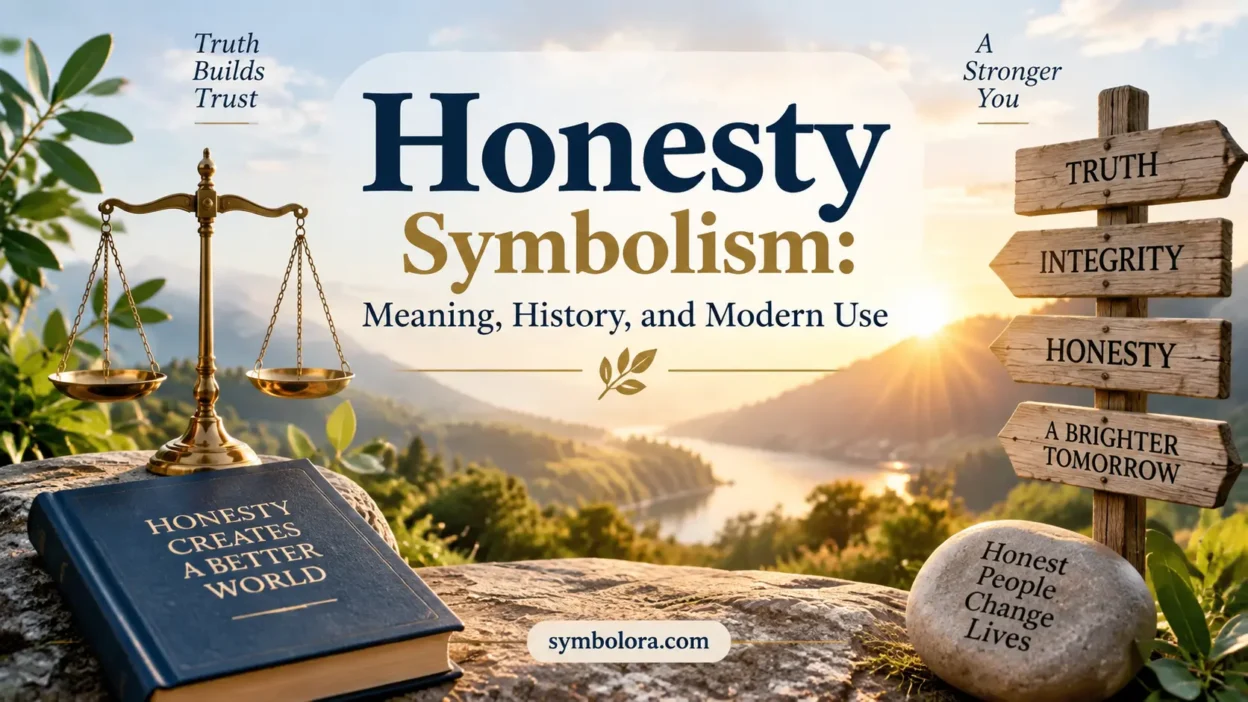
Symbols connected to honesty represent truthfulness, trust, openness, and moral integrity. Honesty Symbolism appears in many forms, from everyday objects and animals to colors, gestures, and cultural traditions that communicate reliability and sincerity. In modern American culture, people use these symbols to express personal values, build trust, and represent authenticity in relationships, art, branding, and personal identity.
The idea of honesty has always been closely linked with human communication. Before written language became common, people relied on visible signs, rituals, and objects to show loyalty, fairness, and truthful intentions. Over time, certain images became widely recognized as reminders of ethical behavior.
Today, symbols of honesty appear in many areas of life, including wedding traditions, professional branding, tattoos, jewelry, home decor, and social movements focused on transparency. While the exact meaning can change depending on culture and context, the central message usually remains connected to truth and trust.
Quick Answer
Symbolism for honesty commonly represents truth, trust, sincerity, and moral integrity in modern American culture, especially in relationships, personal identity, and communication. Historically, symbols such as open hands, clear light, white colors, and certain animals have represented fairness, loyalty, and truthful intentions across different traditions.
TL;DR
- Honesty symbols represent truth, trust, and authenticity.
- Open hands became signs of peaceful intentions.
- Light and white often connect with clarity and purity.
- Animals like swans and elephants can represent loyalty.
- Modern culture uses honesty symbols in branding and tattoos.
What Honesty Symbols Look Like and Where People See Them
Honesty does not have one single universal symbol. Instead, many objects, colors, animals, and gestures have gained meanings connected with truthfulness and trust.
Common honesty-related symbols include:
| Symbol | Meaning in the USA | Common Associations | Notes |
|---|---|---|---|
| Open hand | Trust and openness | Cooperation, fairness, peace | Often used in communication and gestures |
| White color | Purity and sincerity | Weddings, cleanliness, simplicity | Meaning changes by cultural setting |
| Light | Truth and clarity | Knowledge, awareness, honesty | Common in art and literature |
| Mirror | Self-reflection and truth | Authenticity, self-awareness | Represents seeing reality clearly |
| Dove | Peace and goodwill | Harmony, sincerity | Often connected with religious traditions |
These symbols appear in artwork, logos, ceremonies, and personal expressions because honesty is an idea people often communicate visually rather than directly.
The Core Meaning Behind Honesty Symbolism
At its foundation, honesty symbolism represents the relationship between truth and trust. A person who communicates honestly allows others to understand their intentions without deception or hidden motives.
In everyday American life, honesty is commonly associated with:
- keeping promises
- admitting mistakes
- speaking clearly
- acting fairly
- showing genuine intentions
Symbols connected with honesty often focus on openness because honesty requires removing barriers between people. An open hand, for example, suggests that nothing is being hidden. A clear window suggests visibility and understanding.
Unlike symbols of power or wealth, honesty symbols usually communicate character rather than status. They represent qualities that people hope to recognize in friends, leaders, partners, and communities.
Ancient Roots and Early Symbolism of Truth and Integrity
The connection between symbols and honesty reaches back to ancient civilizations. Many societies developed visual ways to represent truth, justice, and ethical behavior.
In ancient Egypt, truth was connected with the concept of Ma’at, which represented balance, order, and justice. The feather associated with Ma’at became a symbol of truth and moral balance.
Ancient Greek culture also connected honesty with ideas of virtue and ethical character. Philosophers discussed truthfulness as an important part of living a good life.
In many early societies, symbols helped communicate values because literacy was limited. Images, objects, and rituals allowed communities to share ideas about fairness and responsibility.
Over time, these symbols changed, but their basic purpose remained: reminding people about the importance of truthful actions.
What Honesty Represents in American Culture
In the United States, honesty is strongly connected with personal character and social trust. American culture often emphasizes direct communication, personal responsibility, and keeping one’s word.
Symbols of honesty appear in many areas:
Business and branding:
Companies often use clean designs, open imagery, and transparent messaging to suggest reliability.
Relationships:
Couples and families may choose symbols of honesty to represent trust and commitment.
Public life:
Images connected with transparency and fairness are often used in discussions about leadership and responsibility.
Personal identity:
People may use tattoos, jewelry, or artwork featuring honesty-related symbols to represent their values.
The meaning depends on context. A white color in a wedding may represent sincerity and commitment, while a clear glass design in business may represent openness and transparency.
Colors Associated With Honesty and Truth
Colors often communicate emotional ideas, and several colors have become connected with honesty.
White
White is commonly associated with purity, openness, and sincerity in many Western traditions. In the United States, white wedding clothing often represents ideas such as commitment and a fresh beginning.
However, color meanings are not universal. In some cultures, white may have different associations, including mourning traditions.
Blue
Blue is frequently connected with trust, stability, and dependability. Many American organizations use blue in visual identity because people often associate it with calmness and reliability.
Gold
Gold can symbolize honesty when connected with ideas of value, loyalty, and integrity. It is often used to represent something genuine or lasting.
Animals That Symbolize Honesty and Trust
Animals have long carried symbolic meanings because people observe their behaviors and connect them with human qualities.
Dove
The dove is widely recognized as a symbol of peace and goodwill. Because peaceful relationships require trust and honest communication, the bird is sometimes connected with sincerity.
Elephant
Elephants are often associated with loyalty, memory, and strong social bonds. These qualities can connect with honesty because trust develops through consistent actions over time.
Swan
Swans are frequently linked with loyalty and devotion. In symbolic traditions, their connection with lasting bonds can represent faithfulness and sincerity.
Animal symbolism varies widely, and no animal has one fixed meaning across all cultures.
Religious and Spiritual Interpretations of Honesty Symbols
Many religious traditions connect honesty with moral responsibility.
In Christianity, truthfulness is often viewed as an important virtue. Symbols such as light are frequently used to represent truth, guidance, and spiritual understanding.
In Buddhism, honest speech is connected with ethical living and mindful communication. Truthful words are considered part of responsible behavior.
In Judaism and Islam, honesty and keeping promises are also important ethical teachings. Truthfulness is often connected with justice and proper relationships between people.
Although traditions differ, many spiritual systems treat honesty as a quality that strengthens communities.
Psychological Meaning of Honesty Symbols
From a psychological perspective, honesty symbols often represent safety and emotional openness.
People usually feel more comfortable when they believe communication is genuine. Symbols of honesty can remind individuals of qualities such as:
- emotional security
- self-acceptance
- trust
- confidence
- authenticity
A mirror, for example, can symbolize honest self-examination. It suggests the willingness to recognize reality rather than avoid uncomfortable truths.
People may choose honesty-related symbols because they want a visible reminder of personal values or life lessons.
Why People Choose Honesty Symbols for Tattoos and Jewelry
Honesty symbols are popular in personal design because they represent values rather than temporary trends.
Common reasons people choose these symbols include:
- celebrating personal growth
- honoring a commitment
- remembering an important lesson
- expressing personal beliefs
- representing trust in relationships
A mirror tattoo may represent self-awareness, while an open hand may represent kindness and trust.
The meaning is often personal. Two people may choose the same symbol but connect it with different experiences.
Honesty Symbols in Modern Design and Media
Modern businesses, artists, and creators use honesty-related imagery to communicate trust.
Examples include:
- transparent materials in product design
- simple and clean logos
- natural colors
- open shapes and spaces
- images of light or clarity
Digital culture has also increased interest in authenticity. Online communities often discuss being “real” or showing genuine experiences rather than creating false appearances.
As social media continues to influence identity, symbols connected with honesty often appear as reminders of authenticity.
Common Misunderstandings About Honesty Symbolism
Honesty symbols are sometimes misunderstood because meanings change across cultures and situations.
For example, white does not always mean honesty. In some places, it may represent grief or mourning. Similarly, an animal symbol may have positive meanings in one culture and different associations elsewhere.
Another misunderstanding is believing that a symbol automatically proves someone is honest. Symbols communicate intentions or values, but actions create trust.
A person wearing a symbol of honesty does not necessarily demonstrate honesty through that symbol alone. The meaning comes from behavior and context.
How Honesty Symbolism Has Changed Over Time
The meaning of honesty symbols has evolved as societies changed.
In ancient cultures, honesty symbols often focused on justice, balance, and divine order. Later traditions emphasized personal morality and character.
Modern interpretations focus more on authenticity, transparency, and personal identity. Today, people often use honesty symbols not only to communicate moral values but also to express individuality.
The shift reflects broader changes in society, where personal expression has become an important part of how people communicate beliefs.
Honesty Symbolism in Everyday American Life
People encounter honesty symbols more often than they may realize.
They appear in:
- wedding ceremonies
- business logos
- nonprofit organizations
- home decoration
- artwork
- jewelry
- tattoos
- personal gifts
A simple object can carry a meaningful message. An open hand may suggest cooperation. A light image may suggest truth. A mirror may encourage self-reflection.
These symbols work because they connect visible images with invisible values.
Frequently Asked Questions
What is the most common symbol of honesty?
The open hand is one of the most recognizable symbols connected with honesty because it suggests openness, trust, and peaceful intentions. Other symbols, such as light and mirrors, also represent truth and self-awareness.
What color represents honesty?
White and blue are commonly associated with honesty in many modern Western contexts. White often suggests sincerity and purity, while blue is frequently linked with trust and reliability.
What animal symbolizes honesty?
No animal universally represents honesty, but doves, elephants, and swans are sometimes connected with qualities such as loyalty, peace, and trust. Their meanings depend on cultural context.
What does an honesty tattoo mean?
An honesty tattoo often represents personal values such as truthfulness, authenticity, self-awareness, or commitment to living openly. The meaning usually depends on the individual’s personal experience.
Are honesty symbols connected to religion?
Yes, many religious traditions use symbols related to truth and moral behavior. Light, balance, and truthful speech are common themes across several spiritual traditions.
Can symbols really represent honesty?
Symbols cannot prove honesty, but they can communicate ideals and values. Their meaning comes from cultural associations and personal interpretation.
Conclusion
Honesty has been represented through symbols of openness, clarity, loyalty, and truth across many cultures. While no single image defines honesty, different symbols help people express the importance of trust and sincere communication.
In modern life, symbolism for honesty continues to appear in personal style, relationships, design, and cultural traditions. These symbols serve as reminders that honesty is not only an idea people value but also a quality shown through everyday choices and actions.
The strongest meaning behind any honesty symbol comes not from the image itself, but from the behavior and principles it represents.


