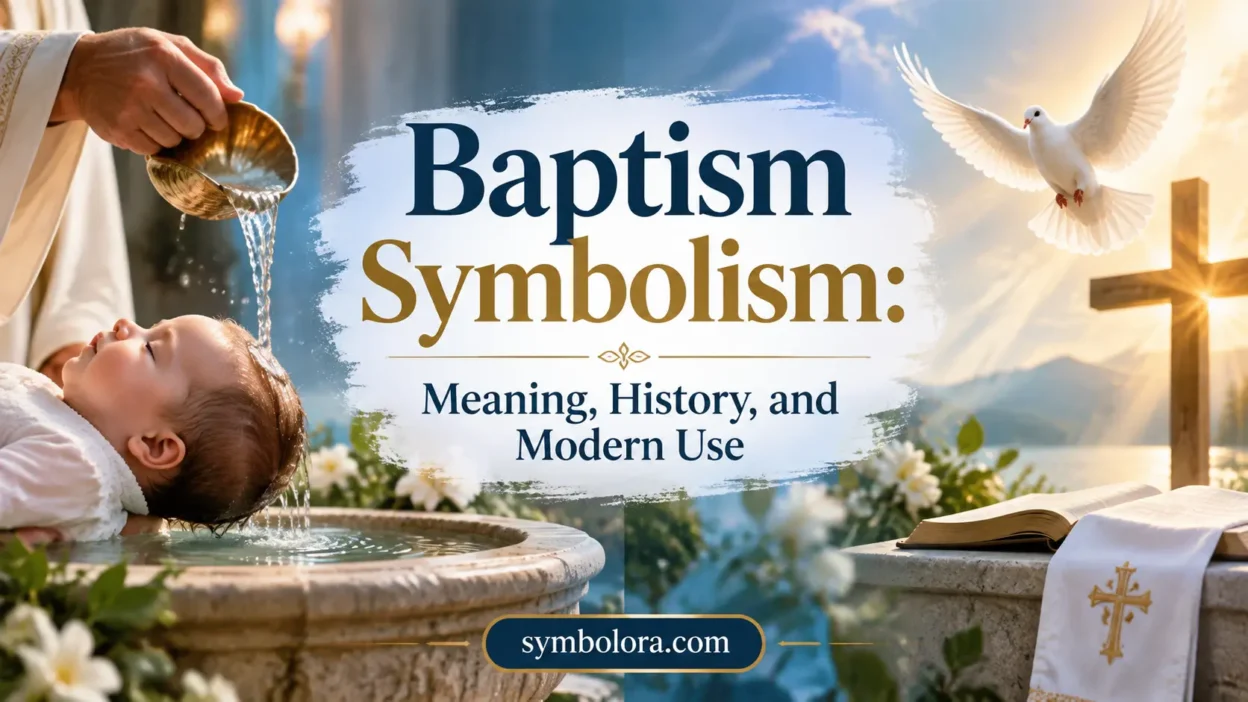
Baptism is one of the most recognized religious symbols in Christianity, representing ideas of spiritual renewal, commitment, forgiveness, and a new beginning. The symbolism of baptism comes from ancient water rituals, biblical traditions, and centuries of Christian practice that continue to shape how many Americans understand faith, identity, and belonging today.
For many Christians, baptism is more than a ceremony involving water. It represents a person’s relationship with God, acceptance into a faith community, and a public expression of spiritual change. While traditions differ among churches, the central image remains connected to transformation and renewal.
Quick Answer
Baptism symbolism commonly represents spiritual cleansing, new life, forgiveness, and commitment to Christian faith in modern American culture. Historically, water baptism developed from Jewish purification practices and early Christian teachings about renewal, belonging, and spiritual transformation.
TL;DR
- Baptism symbolizes cleansing, renewal, and spiritual commitment.
- Water represents purification and a new beginning.
- Early Christians connected baptism with faith and identity.
- American churches practice baptism in different ways.
- Baptism remains important in religious and family traditions.
What Is Baptism and Why Does It Carry Symbolic Meaning?
Baptism is a religious ceremony where water is used as a sign of spiritual transformation. In Christianity, it usually involves pouring water, sprinkling water, or full immersion in water depending on the denomination.
The physical act is simple, but its meaning is layered. Water has long represented life, cleansing, and renewal across human cultures. Christianity adopted and developed these ideas through biblical teachings about repentance, salvation, and becoming part of a spiritual community.
For many believers, baptism marks a transition from an old way of life to a renewed spiritual identity. It may represent leaving behind past mistakes, accepting faith, and beginning a closer relationship with God.
In the United States, baptism is often connected with important life moments. Some churches baptize infants as a sign of family faith and community belonging, while others baptize older children or adults who personally choose to express their beliefs.
The Main Symbolic Meanings of Baptism
Although baptism practices vary, several meanings appear across many Christian traditions.
| Context | Meaning in the USA | Common Associations | Notes |
|---|---|---|---|
| Religious ceremony | Faith commitment and spiritual renewal | Christianity, church membership | Meaning varies by denomination |
| Water symbolism | Cleansing and new beginnings | Purity, forgiveness | Water is central to the ritual |
| Infant baptism | Family faith and community connection | Tradition, blessing, belonging | Common in many historic churches |
| Adult baptism | Personal faith decision | Transformation, dedication | Often practiced by evangelical groups |
| Baptism celebrations | Family and social gathering | Support, identity, community | Often followed by meals or events |
Spiritual Cleansing and Purification
One of the most common meanings of baptism is cleansing. Water symbolizes washing away sin and beginning a renewed spiritual life.
This idea comes from biblical references where water is connected with repentance and transformation. In Christian teachings, baptism does not simply represent physical washing. It represents an inner change connected with faith.
Many believers view baptism as a symbolic moment where a person receives forgiveness and moves toward a closer relationship with God.
New Life and Personal Transformation
Baptism is also associated with rebirth. The ceremony often symbolizes leaving behind an old identity and entering a new spiritual chapter.
This meaning is especially emphasized in traditions that practice full immersion. When a person goes beneath the water, it may represent death to an old life. Rising from the water represents renewal and new life.
For many Christians, this imagery reflects personal growth, hope, and a commitment to live according to their faith.
Belonging and Community Identity
Another important meaning of baptism is belonging. The ceremony often welcomes a person into a religious community.
In many churches, baptism is not only an individual event. It is witnessed by family members, friends, and members of the congregation. This public aspect shows that faith is connected with community relationships.
In American churches, baptism ceremonies often become meaningful family events where generations gather to celebrate shared beliefs and traditions.
Ancient Roots of Baptism and Early Religious Meaning
The origins of baptism reach back before Christianity. Water purification rituals existed in several ancient cultures, including Jewish religious traditions.
In Judaism, ritual washing practices were associated with purification and preparation for religious participation. These traditions influenced the cultural environment in which early Christian baptism developed.
The Christian practice became especially connected with John the Baptist, a Jewish preacher who baptized people in the Jordan River as a sign of repentance and spiritual preparation.
According to Christian teachings, Jesus was baptized by John, and this event became an important foundation for later Christian baptism practices.
Early Christians continued baptism as a way to express faith, enter the Christian community, and symbolize spiritual change.
Biblical Symbolism Behind Baptism
The Bible presents baptism through several important images, including water, cleansing, death, resurrection, and belonging.
Water appears throughout biblical stories as a symbol of both destruction and renewal. The story of Noah’s flood, for example, connects water with judgment and a new beginning. The crossing of the Red Sea represents liberation and a transition from slavery to freedom.
Christian interpretations often connect these themes with baptism. The water represents movement from one state of life into another.
The baptism of Jesus is another central example. Christians view this event as the beginning of his public ministry and as a model for believers.
Baptism is also connected with the idea of resurrection. Many Christians understand immersion and rising from water as symbolic of sharing in the death and resurrection of Jesus.
How Baptism Is Understood in the United States
Baptism has a significant place in American religious culture, but its meaning differs across denominations.
Many Protestant churches emphasize personal faith and often baptize people when they are old enough to make their own religious commitment. These churches may describe baptism as an outward expression of an inner belief.
Catholic, Orthodox, and some Protestant traditions often practice infant baptism. In these communities, baptism may represent God’s grace, family faith, and the child’s connection to the church community.
American baptism ceremonies also reflect cultural traditions. Families may hold gatherings after baptisms, take photographs, give religious gifts, and celebrate the event as an important milestone.
For many Americans, baptism represents both religious belief and family heritage.
Different Forms of Baptism and Their Symbolic Differences
Different Christian groups practice baptism in different ways. The method often reflects theological beliefs.
Immersion Baptism
Immersion involves placing a person completely underwater before bringing them back up.
This method strongly emphasizes symbolism of death and rebirth. Going underwater represents leaving an old life behind, while rising represents renewal.
Many Baptist and evangelical churches commonly practice immersion baptism.
Pouring or Affusion
Affusion involves pouring water over a person’s head.
This practice focuses on receiving God’s grace and the cleansing symbolism of water. It is used by many Christian communities around the world.
Sprinkling Baptism
Sprinkling involves applying small amounts of water to the person.
Some churches use this method because of historical tradition, practical reasons, or theological interpretations.
Although methods differ, the symbolic connection between water and spiritual transformation remains central.
Cross-Cultural and Religious Connections of Baptism Symbolism
Although baptism is most strongly associated with Christianity, the use of water as a symbol of purification and renewal appears in many cultures and religions. Understanding these connections helps explain why water became such a meaningful part of religious ceremonies.
In Judaism, ritual washing practices have long represented spiritual preparation and cleanliness. These traditions existed before Christianity and influenced the religious environment where early baptism developed.
In some Hindu traditions, water is connected with purification, sacred rivers, and spiritual practices. While these rituals are not the same as Christian baptism, they share the broader human idea that water can represent renewal and spiritual preparation.
Islam also places importance on ritual washing before prayer. These practices are different from baptism, but they show how water has commonly been used in religious life to represent readiness, respect, and devotion.
Across cultures, water often carries similar associations: life, cleansing, transition, and connection between the physical and spiritual worlds.
The Symbolism of Water in Baptism
Water is the central element of baptism, and its meaning is connected to several important ideas.
Cleansing and Forgiveness
Water naturally removes dirt and impurities, making it an easy symbol for spiritual cleansing. In baptism, many Christians understand water as representing forgiveness and freedom from past wrongdoing.
The symbolism is not about the water itself having magical qualities. Instead, the water serves as a visible sign of an invisible spiritual change.
Life and Renewal
Human life depends on water, which makes it a natural symbol of growth and renewal. Baptism uses this connection to represent a new spiritual beginning.
Many Christians see baptism as a moment when a person begins a transformed life guided by faith.
Transition and Change
Baptism often marks a transition from one stage of life to another. It may represent entering a church community, accepting personal beliefs, or beginning a new spiritual journey.
This idea of transition is one reason baptism remains meaningful in many families and religious communities.
Baptism Symbolism in Weddings, Families, and Personal Traditions
In American culture, baptism is often connected with family celebrations and important personal milestones.
Parents may choose baptism for their children as a way to express their faith and introduce them to a religious community. These ceremonies often bring together grandparents, relatives, and close friends.
Baptism can also create family traditions. A baptism gown, religious gift, photograph, or family Bible may be passed from one generation to another.
For adults, baptism may represent a personal turning point. Some people choose baptism after a period of spiritual searching, major life changes, or renewed religious commitment.
The event often carries emotional importance because it connects personal identity with family and community relationships.
Emotional and Psychological Meaning of Baptism
Beyond religious beliefs, baptism carries emotional symbolism for many people.
A Sense of Belonging
Baptism can create a feeling of connection. Being welcomed into a religious community may provide a sense of support and shared identity.
For many believers, the ceremony represents that they are not walking their spiritual path alone.
Hope and Personal Renewal
People often associate baptism with starting again. The ceremony may symbolize hope after difficult experiences or a desire to live according to new values.
This meaning is especially important for adults who choose baptism as a personal decision.
Identity and Self-Expression
Baptism can communicate personal identity. It may show a person’s religious beliefs, family traditions, and connection to a particular community.
In this way, baptism functions as both a spiritual practice and a public expression of values.
Baptism Symbolism in Art, Jewelry, and Modern Design
Baptism symbolism appears frequently in Christian art, jewelry, and decorative objects.
Common baptism-related symbols include:
| Symbol | Meaning | Common Use |
|---|---|---|
| Water | Cleansing and renewal | Baptism ceremonies and artwork |
| Dove | Peace and Holy Spirit | Church art and jewelry |
| Cross | Christian faith and sacrifice | Necklaces, decorations, gifts |
| White clothing | Purity and new beginning | Baptism outfits |
| Shell | Baptism and water traditions | Christian artwork |
The Dove Symbol
The dove is one of the most recognizable baptism symbols. It is connected with the Holy Spirit in Christian tradition, especially through accounts of Jesus’ baptism.
Today, dove designs appear on baptism invitations, jewelry, church decorations, and artwork.
White Clothing
White clothing is commonly used during baptism because white is associated with purity, innocence, and a new beginning.
In many Christian communities, baptismal garments carry emotional meaning and may become family keepsakes.
The Cross
The cross connects baptism with central Christian beliefs about Jesus. Many people wear cross necklaces or give cross-shaped gifts during baptism celebrations.
Why People Choose Baptism Today
Modern reasons for baptism vary depending on personal beliefs and religious background.
Some people are baptized because they were raised in a Christian family and want to continue a tradition. Others choose baptism later in life because they personally identify with Christian teachings.
For some, baptism represents a major spiritual decision. For others, it represents family connection, cultural identity, or participation in a religious community.
In the United States, baptism continues to appear in both traditional churches and newer religious movements. Its meaning often depends on personal faith, denomination, and family background.
Baptism Symbolism in Tattoos and Personal Expression
Religious tattoos have become increasingly common in modern culture, and baptism-related imagery appears among people who want to express faith or personal transformation.
Common baptism-inspired tattoo designs include:
- Crosses
- Doves
- Water waves
- Bible verses
- Dates of baptism
- Religious symbols connected with renewal
A baptism tattoo may represent a person’s faith journey, a meaningful life change, or a connection to a religious experience.
However, tattoo meanings are personal. Two people may use the same symbol while connecting it to different memories or beliefs.
Common Misunderstandings About Baptism Symbolism
Because baptism has many interpretations, some misunderstandings exist around its meaning.
Baptism Is Not the Same in Every Church
One common misunderstanding is that all Christian groups view baptism in exactly the same way.
Different denominations have different beliefs about whether baptism is necessary for salvation, when it should happen, and what the ceremony represents.
Some churches emphasize baptism as a sacrament through which God provides grace. Others emphasize it as a public declaration of personal faith.
Baptism Does Not Have One Universal Meaning
Although cleansing and renewal are common themes, individuals may experience baptism differently.
For one person, it may represent faith commitment. For another, it may represent family tradition or spiritual identity.
Historical Symbols Can Change Over Time
Symbols often develop new meanings as societies change. Baptism has maintained its religious foundation while also becoming connected with family celebrations, cultural traditions, and personal milestones.
Controversies and Misuse of Baptism Symbolism
Baptism is generally viewed as a sacred religious practice, but debates exist about how it should be performed and understood.
One major difference among Christian groups involves infant baptism versus believer’s baptism. Some traditions believe baptizing infants connects them with the faith community, while others believe baptism should happen after a person can personally express belief.
Another discussion involves whether baptism is symbolic or spiritually transformative. Different Christian traditions answer this question differently based on their theological views.
These differences do not remove the importance of baptism symbolism. Instead, they show how one ceremony can carry different meanings within various communities.
How Baptism Symbolism Has Changed Over Time
The meaning of baptism has developed across centuries.
Early Christians used baptism mainly as a sign of entering the Christian community and following Jesus’ teachings. Over time, different churches developed unique practices and interpretations.
During different historical periods, baptism became connected with family identity, social belonging, and cultural traditions.
Today, baptism continues to combine ancient religious meaning with modern personal expression. Many people view it as both a spiritual ceremony and a meaningful life event.
Baptism Symbolism in Modern American Culture
In modern America, baptism exists at the intersection of religion, family, and personal identity.
Church baptisms often include photography, family gatherings, and celebrations. Social media has also changed how people share these moments, with families sometimes posting baptism announcements and photographs online.
At the same time, baptism remains a deeply personal religious practice for many believers. While cultural expressions may change, the central themes of faith, renewal, and belonging remain important.
The continued presence of baptism in American communities shows how ancient symbols can remain meaningful in changing societies.
Frequently Asked Questions About Baptism Symbolism
What does baptism symbolize in Christianity?
Baptism symbolizes spiritual cleansing, faith commitment, and becoming part of the Christian community. Many Christians also connect it with new life and forgiveness.
Why is water used in baptism?
Water is used because it represents cleansing, renewal, and life. In baptism, water serves as a visible symbol of an internal spiritual transformation.
What does baptism symbolize in a tattoo?
A baptism tattoo may represent faith, personal transformation, spiritual growth, or an important religious experience. The meaning depends on the individual’s personal connection to the symbol.
Why do Christians baptize babies?
Many Christian traditions baptize babies as a sign of God’s grace, family faith, and connection to the church community. Other traditions prefer baptism after a person can personally choose faith.
Is baptism only a Christian symbol?
Baptism is primarily a Christian practice, but water purification rituals exist in many religions and cultures. These practices may share themes of cleansing and renewal while having different meanings.
What does white clothing symbolize in baptism?
White clothing commonly symbolizes purity, innocence, and a new beginning. Many churches use white baptism garments to represent spiritual renewal.
Does baptism have the same meaning in every denomination?
No. Different Christian denominations understand baptism in different ways. Some focus on sacramental meaning, while others emphasize personal faith and public commitment.
Conclusion
Baptism symbolism centers on ideas of renewal, cleansing, faith, and belonging. Through the use of water and religious tradition, baptism represents a meaningful transition that connects personal belief with community identity.
Across American churches and families, baptism continues to hold importance as both a spiritual practice and a cultural tradition. While interpretations differ, the ceremony remains a lasting expression of commitment, hope, and a new beginning.
Understanding baptism symbolism means looking beyond the water itself and recognizing the beliefs, traditions, and personal experiences that give the ceremony meaning.


