
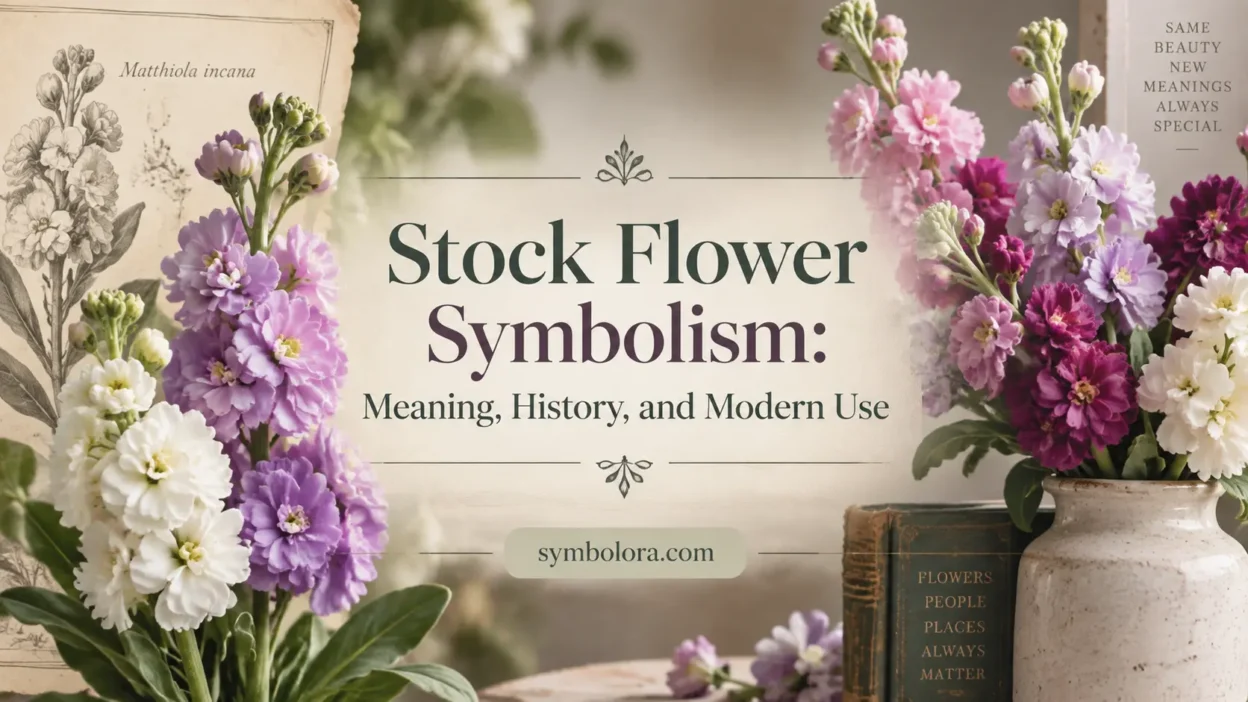
Stock flowers are known for their tall flower spikes, soft colors, and sweet fragrance that often fills gardens and floral arrangements. Beyond their beauty, stock flower symbolism connects these blossoms with affection, lasting bonds, happiness, and emotional warmth. In modern American culture, stock flowers are often chosen for weddings, gifts, gardens, and decorative designs because they communicate positive feelings in a gentle and traditional way.
The flower belongs to the genus Matthiola and has been appreciated for centuries because of its appearance and pleasant scent. While different cultures have developed their own interpretations, stock flowers commonly represent devotion, sincerity, and the simple joys of life.
Quick Answer
Stock flower symbolism commonly represents lasting affection, happiness, and deep appreciation in modern American culture, especially in weddings, gifts, and floral designs. Historically, stock flowers have also been associated with enduring bonds, beauty, and emotional connection in European flower traditions.
TL;DR
- Stock flowers symbolize affection, happiness, and lasting relationships.
- Their history connects to European gardens and Victorian flower meanings.
- Americans often use them for weddings and meaningful gifts.
- Fragrance adds associations with memory and emotional warmth.
- Colors influence their modern symbolic interpretations.
- Today they appear in gardens, bouquets, tattoos, and decor.
What Stock Flowers Look Like and Where People Find Them
Stock flowers are flowering plants recognized by their upright stems covered with clusters of small, four-petaled blooms. They commonly appear in shades of pink, purple, white, red, peach, and yellow. Their strongest feature is often their fragrance, which many people describe as sweet, spicy, or similar to clove.
Gardeners value stock flowers because they add height, color, and scent to landscapes. Florists also use them in bouquets because their tall shape creates structure and their fragrance adds another sensory element.
In the United States, stock flowers are commonly seen in:
- spring gardens
- wedding arrangements
- seasonal bouquets
- cottage-style landscaping
- floral gifts
- decorative centerpieces
The flower’s appearance helps explain part of its symbolism. Its clustered blooms suggest connection and togetherness, while its fragrance creates associations with memory and emotional experiences.
What Stock Flowers Commonly Mean in the United States
In modern American floral culture, stock flowers are mainly connected with positive human emotions rather than dramatic symbolism. They are often used when someone wants to express warmth, appreciation, or affection.
Common meanings include:
| Context | Meaning in the USA | Common Associations | Notes |
|---|---|---|---|
| Weddings | Love and commitment | Marriage, devotion, unity | Often included in romantic arrangements |
| Gifts | Appreciation and kindness | Friendship, gratitude | Suitable for many occasions |
| Gardens | Happiness and beauty | Peaceful outdoor spaces | Valued for fragrance |
| Memorial flowers | Loving remembrance | Memories, emotional connection | Meaning depends on arrangement |
| Personal style | Individual expression | Beauty and softness | Used in tattoos and artwork |
Unlike some flowers with strict symbolic meanings, stock flowers usually communicate gentle emotions. Their message depends heavily on the situation, color, and relationship between the giver and receiver.
Ancient Roots and Early Symbolic Associations
Stock flowers have a long connection with Mediterranean and European gardening traditions. The plant name Matthiola honors the Italian physician and botanist Pietro Andrea Mattioli, who studied medicinal plants during the Renaissance period.
Early gardeners valued stock flowers not only for appearance but also for their fragrance. In historic European gardens, scented flowers played an important role because gardens were designed as places of relaxation, beauty, and sensory enjoyment.
Over time, flowers became part of a larger language of symbolism. People began assigning emotional meanings to different blooms based on appearance, cultural traditions, and common uses. Stock flowers developed associations with:
- loyalty
- affection
- happiness
- beauty that lasts
These meanings became especially popular during the Victorian era, when flowers were frequently used to communicate emotions that were difficult to express openly.
Victorian Flower Language and Stock Flower Meaning
During the Victorian period, flowers became a subtle communication system. People used bouquets and individual flowers to express feelings, messages, and social meanings.
Stock flowers were connected with ideas of:
- enduring affection
- bonds that continue over time
- happiness in relationships
The flower’s long-lasting presence in arrangements helped strengthen these associations. A bloom that remained attractive after cutting could naturally represent something steady and dependable.
Although modern flower symbolism is less strict than Victorian traditions, many floral meanings from that era still influence how people understand flowers today.
Stock Flower Symbolism in American Weddings
Weddings are one of the most common places where Americans use stock flowers symbolically. Their soft appearance and pleasant scent make them popular choices for romantic celebrations.
In wedding arrangements, stock flowers may represent:
- commitment between partners
- appreciation for loved ones
- a hopeful future together
- emotional warmth
They are often combined with roses, peonies, lilies, or greenery to create arrangements with different textures and meanings.
Many couples choose flowers based on personal style rather than traditional symbolism alone. Still, stock flowers fit naturally into wedding themes because they suggest affection without feeling overly dramatic.
Color Meanings of Stock Flowers
The color of a stock flower can influence how people interpret its message. While meanings vary between cultures and personal preferences, certain associations are common in American floral design.
| Stock Flower Color | Common Symbolic Meaning | Typical Uses |
|---|---|---|
| Pink | Affection and admiration | Romantic gifts, celebrations |
| White | Purity and sincerity | Weddings, formal arrangements |
| Purple | Grace and elegance | Decorative bouquets |
| Yellow | Happiness and friendship | Cheerful gifts |
| Red | Love and strong emotion | Romantic occasions |
Color symbolism is not fixed. A person may choose a color simply because they like its appearance, but traditional associations can add another layer of meaning.
Emotional and Psychological Meaning of Stock Flowers
Flowers often influence emotions through color, scent, and personal memories. Stock flowers have a special connection with the sense of smell because their fragrance is one of their defining qualities.
A familiar floral scent can remind people of:
- childhood gardens
- family celebrations
- springtime experiences
- important personal moments
Because scent is closely linked with memory, stock flowers can create feelings of comfort and nostalgia.
Their soft colors and clustered blooms may also communicate friendliness and calmness. Unlike flowers associated with dramatic passion or mourning, stock flowers often create a feeling of warmth and everyday happiness.
Stock Flowers in Cross-Cultural Traditions
Although stock flowers are especially connected with European and American gardening traditions, flowers in general carry symbolic importance across many cultures.
In some regions, fragrant flowers are valued because scent represents beauty, hospitality, and emotional connection. Gardens filled with scented plants have often been viewed as peaceful spaces where people connect with nature.
Different cultures may interpret stock flowers differently depending on local customs. There is no single universal meaning, but themes of beauty, affection, and appreciation appear frequently.
Modern Uses in Fashion, Tattoos, and Design
Today, stock flowers appear beyond traditional bouquets. Their delicate shape and vintage appearance make them attractive in modern creative fields.
Common uses include:
Tattoos
Stock flower tattoos may represent:
- personal growth
- cherished relationships
- memories
- gentle strength
People often combine them with names, dates, or other botanical designs to create personal meanings.
Home Decor
Stock flower designs appear in:
- artwork
- wallpaper patterns
- textiles
- seasonal decorations
Their classic appearance fits both traditional and modern interior styles.
Digital Culture
Floral symbols are frequently used online to express:
- kindness
- beauty
- celebration
- emotional connection
Stock flowers may appear in digital illustrations, social posts, and creative branding.
Stock Flowers and Their Connection to Memory
One of the strongest modern associations with stock flowers comes from their fragrance. Many people remember places and experiences through scent, making fragrant flowers especially meaningful.
A bouquet of stock flowers may remind someone of:
- a wedding day
- a family garden
- a special person
- a particular season
This connection between flowers and memory explains why people often choose scented blooms for emotionally important occasions.
Common Misunderstandings About Stock Flower Symbolism
Stock flowers generally have positive associations, but floral symbolism can sometimes become oversimplified.
A few common misunderstandings include:
- There is only one meaning: Flower symbolism changes depending on culture, color, and situation.
- Every historical meaning applies today: Victorian meanings influence modern views but are not strict rules.
- The flower has supernatural meanings: Symbolism is usually cultural and emotional rather than based on evidence of hidden powers.
Understanding flowers requires looking at human traditions, personal experiences, and cultural context.
How Stock Flower Meaning Has Changed Over Time
The meaning of stock flowers has shifted from formal flower-language traditions toward more personal interpretations.
Historically, people used flowers as coded messages. Today, most Americans choose flowers based on:
- personal taste
- emotional connection
- event style
- color preference
The traditional ideas of affection and happiness remain, but modern use allows individuals to create their own meanings.
A stock flower bouquet today may represent love, friendship, gratitude, remembrance, or simply appreciation for natural beauty.
Why Stock Flowers Remain Popular Today
Stock flowers continue to appear in gardens and floral designs because they combine visual beauty with fragrance.
Their popularity comes from several qualities:
- attractive flower clusters
- pleasant scent
- traditional appearance
- flexible use in arrangements
- connection with positive emotions
They fit many occasions, from celebrations to everyday garden enjoyment.
Frequently Asked Questions About Stock Flower Symbolism
What does a stock flower symbolize?
Stock flowers commonly symbolize affection, happiness, appreciation, and lasting emotional connections. Their meaning often depends on the occasion, color, and relationship between people.
Are stock flowers good for weddings?
Yes. Stock flowers are popular in weddings because they provide fragrance, texture, and associations with love and commitment. They are often used in bouquets, centerpieces, and decorative arrangements.
What does a stock flower tattoo mean?
A stock flower tattoo may represent affection, personal memories, beauty, or meaningful relationships. The exact meaning depends on the person’s own story and design choices.
Do stock flowers have a spiritual meaning?
Stock flowers do not have one universal spiritual meaning. Some people connect fragrant flowers with peace, gratitude, and emotional reflection, but interpretations vary.
What do white stock flowers symbolize?
White stock flowers are often associated with sincerity, purity, and elegance. They are commonly used in weddings and formal floral designs.
Are stock flowers associated with love?
Yes. Stock flowers are often linked with affection and devotion, making them suitable for romantic occasions and meaningful gifts.
Conclusion
Stock flowers represent affection, happiness, and emotional connection in many modern American settings. Their fragrance, soft appearance, and history in floral traditions have helped them become symbols of warmth and appreciation.
The meaning of stock flower symbolism continues to evolve as people use these blooms in weddings, gardens, gifts, and personal designs. While traditions influence their interpretation, the most meaningful symbolism often comes from the memories and emotions people attach to them.
A stock flower is not only a decorative bloom; it is a small reminder of connection, kindness, and the moments people choose to remember.


