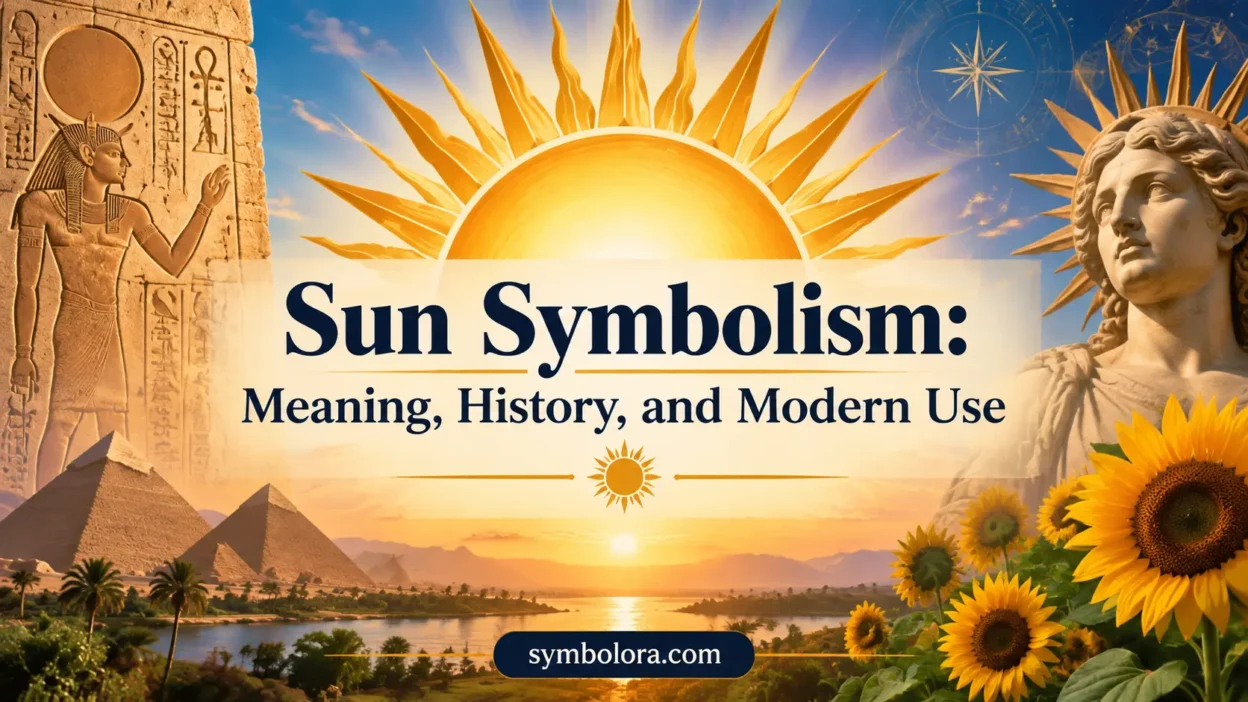
The sun has been one of the most recognized symbols in human culture, appearing in art, religion, architecture, literature, and personal expression. Sun symbolism commonly represents life, energy, growth, and renewal because sunlight supports life on Earth and shapes daily human experiences.
People in the United States encounter sun imagery in many forms, from national symbols and holiday decorations to tattoos, jewelry, home designs, and personal artwork. While its meaning can vary by context, the sun often communicates ideas connected to optimism, strength, warmth, and new beginnings.
Understanding why the sun carries these meanings requires looking at both ancient traditions and modern interpretations. Across different societies, people have viewed the sun as a source of light, a guide through darkness, and a natural force that influences seasons, agriculture, and human activity.
Quick Answer
Sun symbolism commonly represents life, energy, growth, and hope in modern American culture, especially in art, personal designs, and expressions of positivity. Historically, the sun has also been associated with creation, divine power, renewal, and guidance across many civilizations.
TL;DR
- Sun represents life, warmth, and renewal.
- Ancient cultures connected it with divine forces.
- Americans often view it as optimism.
- Sun tattoos express identity and personal growth.
- Solar imagery appears in art and design.
- Meanings change across cultures and contexts.
What the Sun Represents in Modern American Culture
In the United States, the sun is most often understood as a symbol of positivity, opportunity, and vitality. Its daily appearance after darkness makes it a natural image for hope and fresh starts.
Sun imagery frequently appears in motivational artwork, home decorations, clothing, and personal accessories. A sunrise may represent a new chapter after a difficult period, while a bright sun design can communicate happiness, confidence, or an appreciation for nature.
The meaning also depends on the setting. A sun on a beach-themed decoration may suggest relaxation and summer memories. A sun used in wellness spaces may represent balance, natural energy, or connection with the environment. In personal artwork, it may reflect someone’s journey, beliefs, or important life changes.
Unlike some symbols with fixed meanings, the sun remains flexible. People often adapt its meaning to match their own experiences.
The Physical Symbol and Where People Encounter It
The sun symbol is usually shown as a circular shape with rays extending outward. Some designs present it realistically, while others use simple geometric forms, faces, or artistic patterns.
Common versions include:
- A circle representing the sun’s central body
- Straight or curved rays showing light and movement
- Sunrise images representing beginnings
- Sun faces appearing in folk art and decorative styles
- Solar patterns used in architecture and textiles
Americans encounter sun imagery in many everyday places:
- National and state symbols
- Flags and emblems
- Jewelry and tattoos
- Outdoor decorations
- Clothing and fashion
- Logos and branding
- Paintings and digital artwork
Because the sun is universally visible and connected to daily life, it remains one of the easiest symbols for people to recognize.
Ancient Roots and Early Symbolism
Human interpretations of the sun developed because early communities depended heavily on sunlight. The sun controlled farming cycles, helped people measure time, and influenced survival.
Ancient civilizations often connected the sun with powerful spiritual or divine ideas. In many cultures, solar deities represented authority, creation, protection, or order.
In ancient Egypt, the sun was linked with gods such as Ra, who was associated with the sun’s daily journey across the sky. The rising and setting sun reflected cycles of renewal, death, and rebirth.
Ancient Greeks connected sunlight with figures such as Helios, who represented the sun’s movement across the heavens. Later traditions also connected solar imagery with knowledge, truth, and enlightenment.
Many Indigenous cultures across North America developed their own relationships with the sun. Specific meanings differ among nations, but solar imagery has often been connected with life, seasonal cycles, ceremony, and respect for natural forces.
The exact interpretation has never been identical everywhere. Instead, communities shaped sun symbolism according to their environment, beliefs, and social traditions.
Religious and Spiritual Meanings of the Sun
The sun appears in many religious traditions because light often represents order, awareness, and creation.
In Christianity, sunlight is sometimes used symbolically to represent God’s presence, guidance, and spiritual understanding. Light imagery appears throughout Christian art and writing, often contrasting with darkness as a symbol of uncertainty or separation.
In Hindu traditions, the sun is associated with Surya, a figure connected with light, life, and cosmic order. The practice of Surya Namaskar involves movements traditionally performed as a respectful greeting toward the sun.
In Buddhism and other spiritual traditions, sunlight may represent awareness, clarity, and the removal of ignorance. However, meanings vary depending on the specific tradition and cultural setting.
For many modern Americans, sun imagery may have a spiritual meaning without belonging to a specific religion. Some people use it to express gratitude for life, connection with nature, or personal transformation.
Sun Symbolism in American History and Public Life
The sun has appeared in American public imagery for centuries. Its associations with freedom, progress, and a new beginning have made it a useful symbol in many settings.
One example is the symbolism of sunrise imagery. A rising sun often suggests a fresh start, growth, or a better future. This idea appears in political artwork, community symbols, and cultural designs.
The sun also appears in some state and regional symbols. For example, Arizona’s state flag features a rising sun design representing the state’s landscape and natural environment.
In American architecture and design, sun motifs have appeared in decorative arts, especially during periods when geometric solar patterns became popular. The symbol’s connection with warmth and openness makes it common in homes, gardens, and outdoor spaces.
The meaning is usually positive, but interpretation depends on the surrounding imagery and purpose.
Sun Symbolism Across Cultures Around the World
Although the sun is a universal part of nature, different cultures have developed their own interpretations of what it represents. These meanings often reflect the environment, traditions, and beliefs of each society.
In many agricultural societies, the sun became connected with growth and survival because crops depended on sunlight. Seasonal changes also made the sun a symbol of cycles, time, and renewal.
In Japanese culture, the sun holds an important place in national identity. The flag of Japan features a red sun disk, reflecting the country’s association with the rising sun. The sun is also connected with Amaterasu, a major figure in Shinto tradition.
In Aztec culture, the sun was central to religious beliefs and calendar systems. The sun was viewed as a force connected with cosmic balance and the continuation of life.
In Celtic traditions, solar symbols were often linked with seasonal changes, protection, and the natural world. Circular designs resembling the sun appeared in artwork and decorative objects.
African cultures also developed diverse solar traditions. In some communities, the sun has represented leadership, fertility, time, and connection between the physical and spiritual worlds.
These examples show that the sun’s meaning is not limited to one interpretation. Its symbolism developed from humanity’s shared experience of depending on light and warmth.
The Emotional and Psychological Meaning of the Sun
The sun often creates strong emotional associations because humans naturally respond to light and seasonal changes. Bright sunlight is commonly linked with feelings of comfort, activity, and openness.
Psychologically, sun imagery may communicate:
- Optimism after challenges
- Confidence and self-expression
- Motivation and movement
- Warmth in relationships
- Personal growth
A sunrise is especially meaningful because it represents transition. Many people associate it with leaving behind the past and beginning something new.
This explains why sun imagery appears frequently in inspirational artwork and personal expressions. Someone choosing a sun design may be communicating resilience, a positive outlook, or appreciation for life.
However, symbolism depends on personal experience. For some people, the sun may represent memories of childhood summers, family gatherings, or meaningful places rather than a general idea of positivity.
Sun Symbolism in Tattoos and Personal Style
Sun tattoos are popular because the symbol is simple, recognizable, and adaptable. People often choose sun designs to represent personal beliefs, important experiences, or changes in their lives.
Common meanings behind sun tattoos include:
- A new beginning after hardship
- Personal strength and confidence
- Connection with nature
- Family or cultural heritage
- Appreciation for life
Different designs can change the interpretation. A sunrise tattoo may suggest hope or transformation, while a traditional circular sun may represent balance and stability.
Some people combine the sun with other symbols, such as:
- The moon, representing balance between opposites
- Flowers, representing growth and beauty
- Ocean waves, representing nature and change
- Animals, representing personal traits
Modern tattoo culture has made sun imagery highly customizable. The same symbol can represent different stories depending on the person wearing it.
Sun Symbolism in Fashion, Art, and Home Design
The sun remains a common design element because it creates feelings of warmth and movement. Designers use solar imagery in many styles, from minimalist graphics to detailed artwork.
In fashion, sun patterns may create associations with summer, freedom, travel, and outdoor living. Clothing brands often use sun imagery in seasonal collections because people connect sunlight with relaxation and adventure.
In home decor, sun motifs are often used to create welcoming spaces. Wall art, mirrors, rugs, and decorative pieces may include sun shapes to suggest brightness and openness.
Artists also use the sun to explore larger themes. A painted sunrise may represent hope, while a setting sun may suggest reflection, endings, or the passage of time.
The meaning depends on the artist’s intention and the viewer’s interpretation.
The Sun in Holidays and American Traditions
Sun imagery appears in several American traditions because many celebrations connect with seasons, outdoor activities, and natural cycles.
Summer events often use sun-related designs because warm weather encourages gatherings, travel, and outdoor celebrations. Beach decorations, festivals, and seasonal artwork frequently include sun motifs.
The sun also appears in discussions about environmental awareness and renewable energy. Solar power imagery connects the sun with sustainability, technology, and future-focused ideas.
In some communities, sunrise ceremonies or nature-based gatherings use the sun as a symbol of gratitude and connection. These practices vary widely and should be understood within their specific cultural contexts.
The sun’s role in American traditions is often less about worship and more about appreciation for nature, seasons, and human experiences.
Common Meanings of the Sun Symbol in Different Contexts
| Context | Meaning in the USA | Common Associations | Notes |
|---|---|---|---|
| Tattoos | Growth and personal identity | Change, strength, memories | Meaning depends on design |
| Home Decor | Warmth and positivity | Comfort, openness, beauty | Common in artistic styles |
| Religious Art | Divine light and guidance | Faith, creation, awareness | Varies by tradition |
| Nature Themes | Life and renewal | Seasons, environment, balance | Connected with the natural world |
| Fashion | Summer and freedom | Travel, happiness, outdoor life | Often seasonal |
How Sun Symbolism Has Changed Over Time
The meaning of the sun has changed as societies changed. Early communities often focused on survival, agriculture, and religious explanations for the sun’s power.
As scientific understanding developed, people began explaining sunlight through astronomy and physics rather than only spiritual traditions. However, symbolic meanings remained important.
Today, the sun is often separated from strict religious interpretations. Many people use it as a personal symbol of motivation, happiness, or connection with nature.
Modern culture has also expanded the sun’s meanings through media, branding, and personal expression. A simple sun image can communicate different ideas depending on where it appears.
A sun in a wellness advertisement may suggest health and balance. A sun in artwork may represent creativity. A sun tattoo may tell a personal story.
The symbol continues to evolve because people continue finding new ways to connect with it.
Common Misunderstandings About Sun Symbolism
Because the sun appears in many traditions, some interpretations are sometimes oversimplified. A common mistake is assuming that every sun symbol has the same meaning everywhere.
For example, a sun design may have religious importance in one culture but represent personal growth in another. Context matters.
Another misunderstanding is that sun symbols always represent only positive ideas. While the sun is often connected with life and hope, it can also represent endings, cycles, time passing, or intense natural forces.
Some modern discussions also attach unrelated meanings to solar imagery without considering historical context. A symbol’s original meaning and a later interpretation may not always match.
Understanding the background of a sun symbol helps prevent inaccurate assumptions.
The Sun as a Symbol of Identity and Personal Meaning
Many people choose sun imagery because it allows them to express something about themselves without using words.
For one person, the sun may represent overcoming a difficult period. For another, it may represent family memories, cultural heritage, or a love of nature.
The symbol is especially appealing because it combines simplicity with flexibility. A small sun design can carry a personal story while remaining easy for others to recognize.
In modern American culture, symbols often function as personal statements. The sun fits this role because it can represent both individual experiences and shared human connections.
FAQ About Sun Symbolism
What does the sun symbolize spiritually?
The sun is often associated with spiritual ideas such as awareness, guidance, creation, and connection with higher forces. Specific meanings depend on the religious or cultural tradition where the symbol appears.
What does a sun tattoo usually mean?
A sun tattoo commonly represents growth, strength, renewal, or a meaningful life change. The exact meaning depends on the design and the personal story behind it.
Is the sun a positive symbol?
The sun is usually viewed positively because it represents light, life, and warmth. However, some traditions also connect it with cycles, time, and powerful natural forces.
What does the sun symbolize in Christianity?
In Christianity, sunlight is often used as an image of divine presence, guidance, and spiritual understanding. The meaning depends on the specific artwork or context.
Why is the sun important in American culture?
The sun appears in American culture through nature appreciation, seasonal traditions, design, and personal expression. It is often associated with optimism, freedom, and new beginnings.
What does a rising sun symbolize?
A rising sun commonly represents fresh starts, hope, progress, and renewal. It is often used to express the idea of moving forward after change.
Conclusion
The sun has remained one of the most recognizable symbols because it connects directly with human life. It provides light, influences seasons, and shapes how people experience the natural world.
Across cultures, sun symbolism has represented ideas such as life, renewal, guidance, and personal growth. In modern American culture, people continue using the sun in tattoos, art, fashion, and design to express individual meanings and shared experiences.
Whether viewed as a cultural image, spiritual symbol, or personal reminder, the sun continues to represent humanity’s connection with light, change, and the world around us.