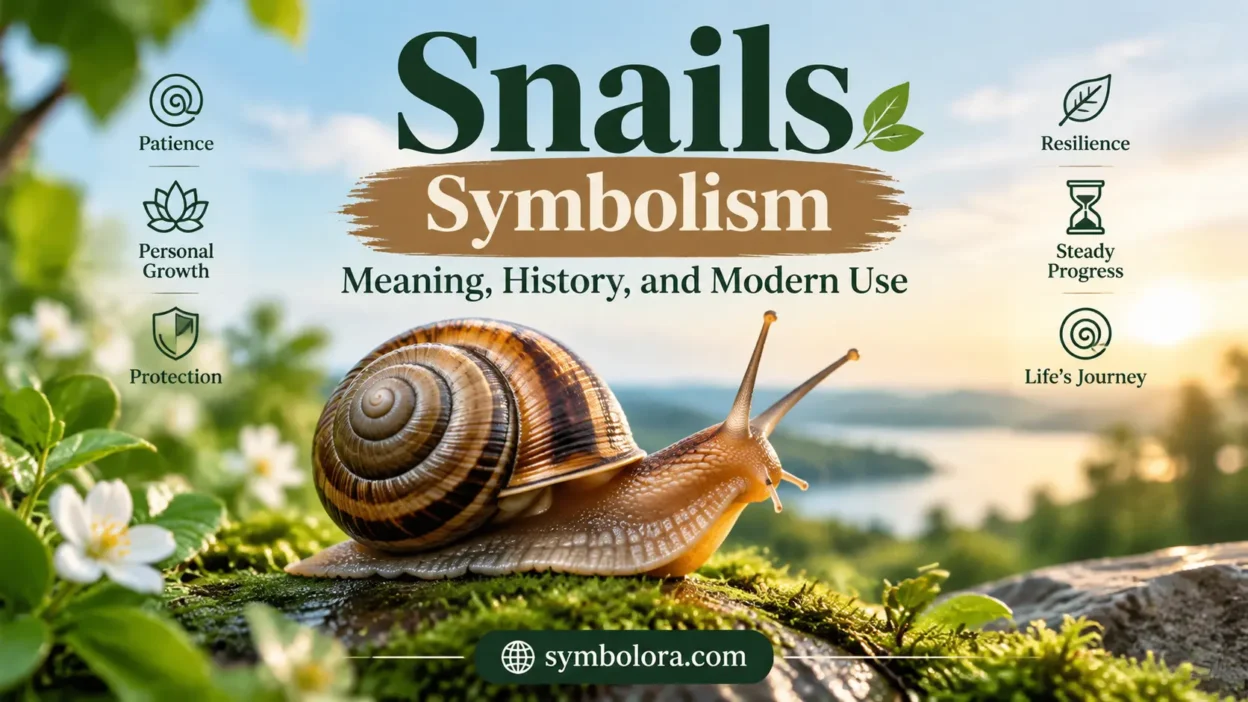
Snails are small creatures often noticed after rain, in gardens, forests, and natural landscapes. Despite their slow movement and delicate appearance, snails symbolism carries several meanings connected to patience, protection, personal growth, resilience, and a connection with nature.
In modern American culture, snails are often viewed as reminders to slow down, appreciate steady progress, and create a sense of safety in a fast-moving world. Their shells also make them meaningful symbols of home, privacy, and carrying one’s personal space wherever life leads.
The meaning of the snail has developed across different cultures. Ancient traditions connected the snail with cycles of nature, fertility, water, and renewal, while modern interpretations often focus on mindfulness, emotional strength, and individual journeys.
Quick Answer
Snails commonly symbolize patience, steady progress, protection, and personal growth in modern American culture, especially in nature-inspired art, tattoos, and personal reflection. Historically, snails have also represented renewal, fertility, water cycles, and the connection between humans and the natural world.
TL;DR
- Snails represent patience and slow, steady progress.
- Shells symbolize protection, privacy, and personal space.
- Ancient cultures linked snails with nature and renewal.
- Americans often view snails as mindfulness symbols.
- Snail tattoos express resilience and individuality.
- Modern art uses snails to celebrate simplicity.
What the Snail Represents as a Symbol
A snail is recognized by its soft body, spiral shell, and slow movement across land or plants. Unlike animals associated with speed or strength, the snail represents a different approach to survival: moving carefully, protecting oneself, and continuing forward despite obstacles.
The shell is one of the most important parts of snail symbolism. Because the snail carries its home on its back, people often connect it with security, independence, and emotional boundaries. The shell suggests that comfort and protection can come from within rather than from external surroundings.
The snail’s movement also shapes its symbolic meaning. Its slow pace is not usually seen as failure; instead, it represents consistency. A snail continues moving even when progress is almost invisible, making it a symbol of determination and patience.
What Snails Symbolize in the United States
In the United States, snails are most commonly associated with slowing down, appreciating nature, and accepting personal timing. Many Americans encounter snails in gardens, hiking areas, and outdoor spaces, where they represent peaceful natural rhythms.
The growing interest in mindfulness and simple living has strengthened the snail’s modern meaning. People often use snail imagery to represent stepping away from constant pressure and allowing life to develop naturally.
Snails also appear in children’s books, environmental education, and creative designs because they represent curiosity, gentleness, and the importance of small creatures within ecosystems.
| Context | Meaning in the USA | Common Associations | Notes |
|---|---|---|---|
| Nature | Patience and balance | Gardens, rain, ecosystems | Represents natural cycles |
| Tattoos | Personal growth | Resilience, individuality | Often chosen for personal journeys |
| Home decor | Comfort and safety | Shell, protection | Connects with peaceful spaces |
| Art | Simplicity and mindfulness | Creativity, slow living | Used in modern designs |
| Children’s culture | Curiosity and learning | Exploration, imagination | Common in stories and illustrations |
Ancient Roots and Early Symbolism
Snails have appeared in human cultures for thousands of years because people observed their connection with moisture, seasons, and reproduction. Their presence after rain made them natural symbols of renewal and changing conditions.
In some ancient Mediterranean traditions, shell-bearing creatures were connected with water and fertility because they appeared in environments associated with life and growth. The spiral shell also attracted attention because spirals occur throughout nature, including plants, waves, and celestial patterns.
The snail’s ability to withdraw into its shell gave it another symbolic association: survival through protection. Ancient observers saw the shell as a natural shelter that allowed the creature to endure difficult conditions.
Rather than representing weakness, the snail often represented adaptation. It survived not through force but through patience and careful movement.
The Spiral Shell and Its Symbolic Meaning
The snail shell is one of the strongest sources of symbolic interpretation. Its spiral shape has inspired meanings connected with growth, cycles, and transformation.
Spirals appear throughout the natural world, from plants to weather patterns. Because of this, many cultures have viewed spiral forms as representations of continuous movement and development.
For many people today, the shell represents:
- A safe personal space
- Emotional protection
- Inner strength
- Personal history
- The ability to adapt
The shell also reflects the idea that individuals carry their experiences with them. Like a snail carrying its home, people often carry memories, lessons, and identities wherever they go.
Snail Symbolism in Folklore and Cultural Traditions
Different societies have interpreted snails through their relationship with nature. Folklore often focuses on the snail’s unusual combination of vulnerability and survival.
In European folklore, snails were sometimes connected with rain and agricultural cycles because they appeared during wet weather. Farmers observed their relationship with gardens and changing seasons.
Some traditions viewed snails as symbols of fertility because of their connection with reproduction and natural abundance. Others focused on their ability to survive harsh conditions by retreating into their shells.
Folklore interpretations vary widely, but a common theme appears across many cultures: the snail represents adaptation and harmony with natural rhythms.
Emotional and Psychological Meaning of Snails
From a psychological perspective, the snail often represents emotional safety and personal boundaries. The image of an animal carrying its own shelter can reflect the human desire for comfort and security.
People who connect with snail symbolism may identify with qualities such as:
- Taking life at their own pace
- Protecting their emotional well-being
- Valuing quiet strength
- Building progress gradually
The snail can also represent patience during difficult periods. It reminds people that meaningful change does not always happen quickly.
In a culture where speed is often associated with success, the snail offers a different message: progress can still matter even when it happens slowly.
Snails in Tattoos and Personal Expression Snails Symbolism
Snail tattoos have become a way for people to express personal values and life experiences. While tattoo meanings vary from person to person, common interpretations include resilience, patience, and personal transformation.
A snail tattoo may represent someone who has overcome challenges through persistence rather than quick victories. The shell may symbolize emotional protection, independence, or creating a personal sanctuary.
Common snail tattoo styles include:
- Minimal line drawings
- Realistic nature designs
- Colorful cartoon snails
- Spiral-focused artwork
- Snails combined with flowers or plants
Many people choose snail imagery because it feels gentle and unusual while still carrying meaningful symbolism.
Snails in Modern Art, Design, and Popular Culture
Modern artists often use snails because their appearance creates a contrast between fragility and endurance. A small snail can communicate ideas about nature, simplicity, and peaceful living.
In design, snail imagery appears in:
- Home decorations
- Nature illustrations
- Jewelry
- Clothing patterns
- Children’s products
- Digital artwork
The snail has also gained attention in online culture as a symbol of slow living. It represents stepping away from constant urgency and finding value in everyday experiences.
The symbol works well in modern design because it is recognizable, simple, and connected with positive ideas.
Snail Symbolism in Spiritual and Religious Interpretations
Snails are not central symbols in most major religions, but they appear in broader spiritual interpretations connected with nature and personal development.
Some spiritual traditions associate the snail with:
- Patience during life changes
- Returning to one’s inner self
- Respect for natural cycles
- Quiet personal growth
The shell may be interpreted as a metaphor for inner protection and reflection. However, these meanings are often modern personal interpretations rather than official religious teachings.
Understanding this difference helps separate cultural symbolism from individual spiritual beliefs.
Positive and Negative Meanings Associated With Snails
Snails usually carry positive symbolism, but interpretations can change depending on context.
Positive meanings include:
- Patience
- Persistence
- Protection
- Calmness
- Adaptability
- Connection with nature
Negative interpretations sometimes focus on:
- Slowness
- Delay
- Withdrawal
- Avoiding challenges
These negative meanings often come from viewing speed as the only measure of success. In many symbolic traditions, the snail’s slower pace represents wisdom rather than weakness.
How Snail Symbolism Has Changed Over Time
The meaning of the snail has shifted as societies changed. Earlier interpretations often focused on nature, fertility, weather, and survival. Modern meanings emphasize emotional balance, mindfulness, and personal identity.
Today, many people see the snail as a reminder that growth does not need to happen quickly to be valuable.
The symbol has moved from being mainly connected with natural observation to becoming a personal expression of lifestyle and values.
Common Misunderstandings About Snail Symbolism
One common misunderstanding is that snails symbolize laziness. This interpretation focuses only on their speed and ignores their ability to survive and adapt.
Another misconception is that all snail symbolism has the same meaning across cultures. Symbolic interpretations depend on historical setting, personal beliefs, and cultural traditions.
A snail can represent different ideas, from protection and patience to transformation and renewal.
Why Snails Appear in Nature-Based Symbolism
Snails are closely connected with natural environments. They depend on moisture, plants, and changing weather conditions, making them symbols of ecological balance.
Environmental movements and nature-focused art often use snail imagery because it highlights the importance of small organisms within larger ecosystems.
The snail reminds people that every living creature has a role, even those that move quietly and slowly.
FAQ Section
What does a snail symbolize spiritually?
A snail may symbolize patience, inner protection, and personal growth in spiritual interpretations. These meanings are usually based on personal reflection rather than formal religious teachings.
What does a snail tattoo mean?
A snail tattoo often represents resilience, slow progress, emotional protection, or living according to one’s own pace. The exact meaning depends on the person who chooses the design.
Are snails considered lucky symbols?
In some cultures, snails are connected with fertility, abundance, and natural cycles, which can give them positive associations. However, beliefs about luck vary between traditions.
Why do snails symbolize patience?
Snails move slowly but continue making progress. This behavior has made them symbols of persistence and steady growth.
What does a snail shell symbolize?
A snail shell commonly represents protection, home, privacy, and carrying personal experiences through life.
Are snails positive or negative symbols?
Snails are usually positive symbols associated with patience and adaptation. Some people may view them negatively because of their slow movement, but many traditions interpret that quality as strength.
Conclusion
Snails symbolize patience, protection, adaptation, and steady growth. Their shells represent safety and personal identity, while their slow movement reflects the value of consistent progress.
In modern American culture, snails symbolism appears in tattoos, art, nature education, and personal expressions of mindful living. The snail’s message is not about moving quickly but about continuing forward while staying connected to one’s own needs and surroundings.
The small size of the snail does not limit its meaning. Its symbolism comes from the way it survives, adapts, and carries its own shelter through changing environments.


