Wolfsbane flower symbolism brings together beauty, danger, protection, and mystery. Wolfsbane, commonly known as monkshood or aconite, is a striking flowering plant recognized by its blue, purple, or violet blossoms and distinctive hood-shaped petals. Its appearance can seem elegant and delicate, yet the plant contains highly toxic compounds that have shaped its reputation in folklore and literature.
The flower’s history is especially notable in European traditions, where stories connected aconite with poison, witches, wolves, and supernatural danger. Ancient Greek mythology also links the plant with Cerberus, the guardian of the underworld, giving it associations with death and the boundary between the human world and the realm of the dead.
In the United States, wolfsbane is familiar mainly through fantasy fiction, gothic art, gardening discussions, and popular depictions of werewolves. Its symbolism often depends on context: one person may see a sign of hidden danger, while another may value its unusual beauty or use it as an image of resilience and mystery.
Understanding these meanings requires separating documented history from later legends and modern creative interpretations.
Quick Answer
Wolfsbane flower symbolism commonly represents danger, protection, mystery, and hidden power in modern American culture, especially in gothic art, fantasy stories, and supernatural fiction. Historically, its poisonous nature and associations with ancient Greek mythology and European folklore connected it with death, witchcraft, and defenses against feared supernatural beings.
TL;DR
- Wolfsbane represents danger because the plant contains highly toxic compounds.
- Ancient Greek mythology connects aconite with Cerberus and the underworld.
- European folklore associated the flower with poison, witchcraft, and werewolves.
- Modern American fiction uses wolfsbane as a supernatural warning or protective ingredient.
- Its unusual blossoms can also suggest mystery, individuality, and dark beauty.
- Gardening and handling require caution because every part can be poisonous.
What Is Wolfsbane, and What Does the Flower Look Like?
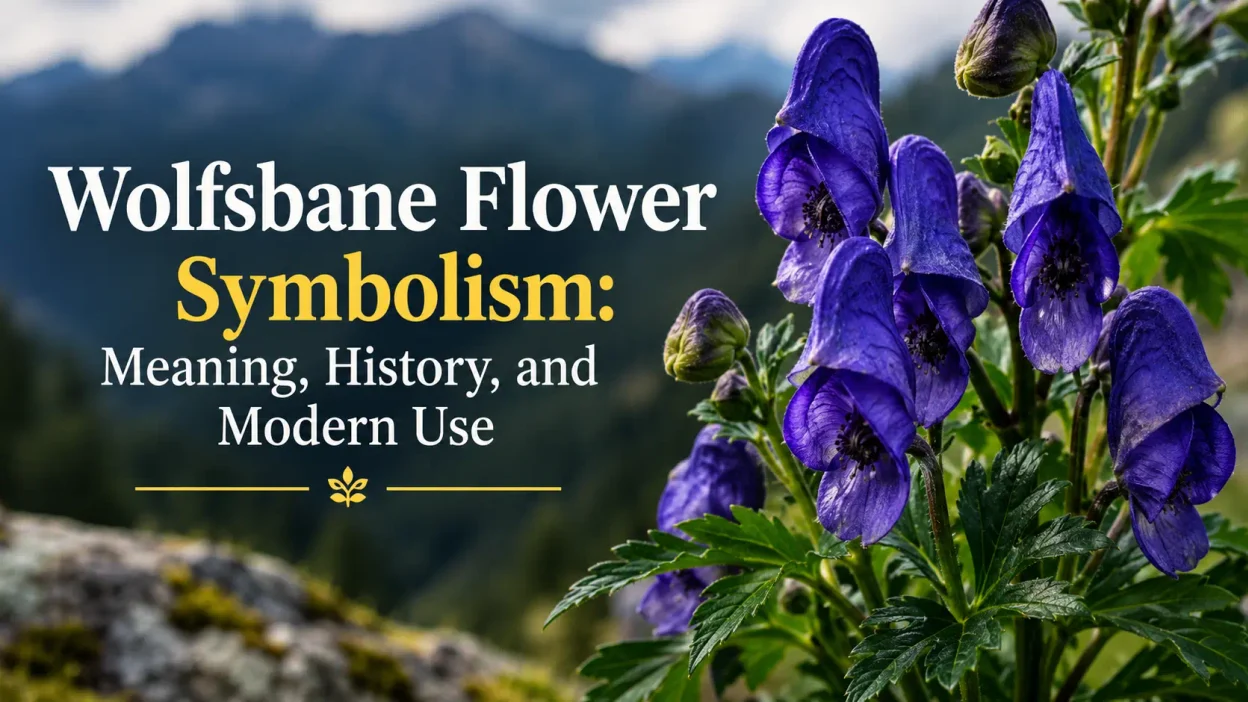
Wolfsbane is a common name for plants in the genus Aconitum, which belongs to the buttercup family, Ranunculaceae. One well-known species is Aconitum napellus, often called common monkshood. The name monkshood comes from the flower’s distinctive shape, which resembles the hood worn by a monk.
The flowers usually grow in upright clusters, with shades ranging from deep violet and blue to purple and, in some species or varieties, yellow or white. Their unusual shape makes them recognizable among ornamental flowering plants. Depending on the species and growing conditions, the plants may bloom in summer or early fall.
Wolfsbane grows naturally in parts of Europe and Asia, and related species occur in North America. Gardeners sometimes cultivate monkshood for its dramatic flowers, especially in cool gardens with suitable soil and partial shade.
The plant’s appearance contributes to its symbolism. Its rich colors and unusual shape can suggest elegance, secrecy, or an otherworldly quality. Its toxicity, however, gives those visual associations a practical foundation: this is a beautiful plant that must be treated with respect.
The name wolfsbane also reflects the plant’s historical reputation. The word suggests something used against wolves, although the stories and historical practices associated with the name vary.
The Core Symbolic Meanings of Wolfsbane
Wolfsbane does not have one universally accepted symbolic meaning. Its associations developed through a combination of physical characteristics, traditional beliefs, mythology, and modern storytelling.
Danger and hidden toxicity are among its most firmly grounded meanings. The plant looks ornamental but contains aconitine and related alkaloids that can cause severe poisoning. Its contrast between attractive appearance and real danger makes it an effective symbol of concealed risk.
Protection and defense appear in folklore and fantasy, particularly in stories involving wolves, werewolves, and supernatural threats. These meanings are connected to traditional beliefs about the plant rather than to any demonstrated ability to protect someone from supernatural beings.
Mystery and secrecy arise from its unusual shape, dark coloring in some varieties, and association with witchcraft and magical narratives. These are largely cultural and artistic interpretations.
Death and the underworld connect to ancient accounts of aconite’s poisonous origins and later literary uses. In this context, the flower represents a boundary between life and death rather than a simple symbol of sadness.
Dark beauty and individuality are common modern interpretations. The flower’s distinctive appearance makes it suitable for gothic designs and personal artwork that embraces beauty outside conventional floral symbolism.
These meanings overlap, but they are not interchangeable. The plant’s toxicity is a botanical fact; its association with werewolves is a folkloric and fictional tradition; and its meaning in a tattoo or painting depends on the creator’s intention.
Wolfsbane in Ancient Greek Mythology
One of the best-known mythological explanations for aconite comes from ancient Greek stories about Cerberus, the multiheaded dog guarding the entrance to the underworld.
In one version of the tradition, aconite grows where Cerberus’s poisonous saliva falls as the creature is brought into the upper world during the labors of Heracles. The plant’s deadly reputation fits the story’s setting: it emerges from contact with a guardian associated with death and the underworld.
Ancient accounts of aconite are not all identical, and the plant’s identification in historical texts can be complicated by differences in botanical terminology. Nevertheless, the connection between aconite, poison, and underworld imagery became an influential part of its cultural history.
This mythological association helps explain why later writers used aconite as a plant linked with death and supernatural danger. It also offers a more specific historical foundation than the broad claim that all purple flowers symbolize mystery.
In modern art, a wolfsbane flower placed near a skull, dark doorway, or underworld figure can draw on this tradition. The image suggests danger crossing the boundary between the ordinary world and a place associated with death.
Why Wolfsbane Became Associated With Wolves
The name wolfsbane is closely tied to European traditions involving wolves and poisonous plants. Historical accounts of aconite describe its use as a poison, including in hunting and other harmful applications. Some traditions also connect poisonous bait with efforts to kill wolves.
The precise history behind the common name is not uniform across every region, and popular retellings sometimes turn uncertain historical details into a single dramatic origin story. It is safer to understand the name as reflecting a long association between aconite and the use of poison against animals, rather than assuming every account describes the same practice.
The connection with wolves also makes the plant a natural fit for later supernatural stories. Wolves have occupied different roles in European folklore, sometimes appearing as dangerous predators and sometimes as creatures associated with transformation, wilderness, or human fear.
Once werewolf legends became intertwined with the plant in modern fiction, wolfsbane acquired an additional meaning: a defense against a creature that is both human and animal. This association is especially familiar to American audiences through horror films, fantasy novels, television, and games.
The historical plant and its fictional role should remain distinct. Wolfsbane is toxic in real life, but there is no scientific basis for treating it as a supernatural weapon against werewolves.
Wolfsbane, Witchcraft, and European Folklore
Wolfsbane’s poisonous properties made it a natural subject for stories about dangerous substances, secret knowledge, and magical practices. European folklore and early modern accounts of witchcraft often portrayed certain plants as ingredients in preparations associated with spells, curses, or unusual experiences.
Aconite became part of this broader cultural landscape because its effects could be severe and unpredictable. In societies where medical knowledge was limited and explanations for poisoning varied, a dangerous plant could acquire a reputation extending beyond its physical effects.
However, claims about historical witchcraft should be treated carefully. The existence of stories about witches using poisonous plants does not establish that all such practices occurred as described, nor does it prove that aconite had one consistent role in European magical traditions.
Wolfsbane’s modern image as a witch’s flower draws partly on this history but is also shaped by later fiction and gothic aesthetics. A purple aconite blossom beside a cauldron or an old book may communicate forbidden knowledge to a contemporary audience even when the specific scene is a modern invention.
Its association with witchcraft therefore reflects several layers of cultural meaning: the real danger of the plant, historical fears about poison, folklore, and the creative traditions that later combined them.
Protection, Boundaries, and the Idea of Warding Off Evil
Protection is one of the most recognizable modern meanings attached to wolfsbane, especially in supernatural fiction. In werewolf stories, the plant is sometimes portrayed as a substance that prevents transformation, weakens a supernatural creature, or keeps danger away.
These fictional roles build on the plant’s older associations with poison and wolves. A substance believed to harm a feared animal could easily become a symbolic defense against something more frightening than an ordinary predator.
Wolfsbane can therefore represent the idea of a boundary: a line between safety and danger, the human and the monstrous, or knowledge and forbidden territory. This interpretation is particularly useful in literature because the flower can function as a warning as well as a weapon.
In modern spiritual artwork, some people may use wolfsbane imagery to express personal boundaries or a desire to confront difficult experiences. That is a personal interpretation, not evidence that the flower provides spiritual protection.
There is also an important practical distinction. Because aconite is highly poisonous, it should never be used in homemade protective remedies, charms intended for physical contact, or preparations for consumption. Its symbolic role does not make the real plant safe.
Wolfsbane as a Symbol of Death and Transformation
Wolfsbane’s association with death comes from its toxicity, mythological background, and use in stories involving poison. Unlike flowers that are frequently used in funerals to express remembrance or sympathy, wolfsbane more often suggests danger approaching life or a passage into a threatening unknown.
Transformation is a related but distinct theme. In werewolf fiction, wolfsbane frequently appears near moments when a character’s identity changes or when the human and animal sides of a person come into conflict.
This makes the flower a useful symbol for stories about divided identity, fear of losing control, and the consequences of concealed behavior. Its meaning comes from the narrative surrounding it, rather than from an ancient universal rule that aconite represents transformation.
Modern writers may also use the plant to represent irreversible choices. A character who encounters wolfsbane might be approaching a dangerous discovery, a moral crisis, or a turning point that cannot easily be undone.
These interpretations make sense within literature and visual storytelling. They should not be treated as predictions about real events or as evidence that the flower has supernatural effects.
What Wolfsbane Means in Modern American Culture
In the United States, wolfsbane is more recognizable through popular culture than through everyday symbolic traditions. Many people encounter the name in werewolf stories, fantasy games, gothic fiction, or discussions of poisonous plants.
American horror and fantasy frequently use recognizable objects as shorthand for danger. Wolfsbane works especially well because it has both a real-world basis and a fictional reputation. A viewer who recognizes the name may immediately expect a supernatural threat, even before the story explains how the plant will be used.
The flower also appeals to people interested in unusual garden plants and darker floral aesthetics. Its tall stems and hood-shaped blooms can look dramatic in a garden, illustration, or floral study.
Unlike roses, which have widely established associations with love and romance in American culture, wolfsbane does not have one dominant public meaning. Its significance depends heavily on whether it appears in a botanical setting, a fantasy story, a tattoo, or a gothic design.
That flexibility makes it a distinctive symbol, but it also means that audiences may interpret it differently. A plant enthusiast might see an ornamental species, while a horror fan might think immediately of werewolves and poison.
Wolfsbane in Literature, Film, and Fantasy
Popular entertainment has played a major role in shaping what Americans associate with wolfsbane. The flower appears in stories where ordinary plants become important because of their relationship with supernatural creatures, secret knowledge, or dangerous transformations.
One influential example is The Wolf Man (1941), which helped popularize the association between wolfsbane and werewolf lore for movie audiences. Later fantasy books, television series, and role-playing games continued to develop the idea that the plant could repel or weaken supernatural beings.
The flower’s real toxicity makes this fictional role especially convincing. Unlike an invented magical herb, aconite has a documented history as a dangerous poison. Writers can therefore build supernatural rules around an actual botanical property, even when the resulting effects are entirely fictional.
In these stories, wolfsbane may represent a character’s knowledge of hidden dangers, an attempt to control a transformation, or a barrier between ordinary life and the supernatural. Its presence can also foreshadow betrayal or a threat that has not yet become visible.
These literary associations are now so familiar that people may recognize the flower’s name without knowing its botanical identity or ancient history. Popular culture has not replaced the older symbolism entirely, but it has given the plant a particularly recognizable role in modern horror and fantasy.
Wolfsbane in Tattoos, Jewelry, and Gothic Design
Wolfsbane’s distinctive appearance and associations with danger make it a natural choice for some forms of alternative art and personal design. Unlike conventional floral tattoos that commonly emphasize romance or remembrance, a wolfsbane design can communicate a more complicated relationship with beauty, risk, and individuality.
A tattoo featuring a single monkshood bloom might represent an appreciation for unusual plants or a preference for darker botanical imagery. A design that combines the flower with a crescent moon, an antique key, or a wolf may emphasize mystery, transformation, or folklore.
Jewelry and illustrations can use similar visual cues. Purple flowers against a dark background often create a gothic mood, while detailed botanical drawings can highlight the plant’s structure rather than its supernatural reputation.
The meaning depends on the accompanying elements. A realistic botanical illustration does not necessarily suggest witchcraft, and a flower paired with a wolf does not automatically indicate a connection to werewolf fiction.
People choosing wolfsbane imagery should also distinguish between personal symbolism and historical claims. The flower can express a modern identity without every decorative detail representing an established European tradition.
The Emotional and Psychological Meaning of Wolfsbane
Wolfsbane can appeal to people who appreciate contrasts. Its flowers look elegant, yet the plant is poisonous; its shape appears almost ceremonial, yet its history includes practical uses associated with hunting and poison.
That contrast can make the flower a symbol of the difference between appearance and reality. In a painting or story, it might represent a person whose attractive exterior conceals harmful intentions, or a situation that seems inviting but carries risks.
The plant can also communicate caution. Unlike a symbol that reassures viewers, wolfsbane may encourage them to question what they see and consider the consequences of approaching something unfamiliar.
For some people, its associations with gothic art and supernatural fiction offer a way to express individuality. Choosing an unusual flower may signal an interest in folklore, horror, botanical history, or imagery that challenges conventional ideas of beauty.
These interpretations are possibilities, not psychological rules. A person who likes wolfsbane artwork does not necessarily identify with danger or secrecy. Symbolism works through context, personal experience, and the meaning an individual intentionally gives an image.
Wolfsbane Across Cultures: Similar Plants, Different Meanings
Although European mythology and folklore strongly influence the modern image of wolfsbane, the broader genus Aconitum also has a history in Asian traditions.
In parts of China, certain aconite species and processed roots have been used in traditional medical systems. These practices involve different species, preparations, and historical frameworks, and the plants’ toxicity makes the distinction between traditional use and safe handling especially important.
In South Asian traditional medicine, aconite-related plants have also appeared in historical medical practices. Their use does not mean that the plants are harmless or that their symbolic meanings match those found in European folklore.
These traditions illustrate a broader point: a plant can be understood as a poison, a medicinal substance, or an object of cultural interest depending on the community and historical setting. The same botanical genus does not carry one universal symbolic message.
For American readers, it is useful to recognize these differences without blending unrelated traditions into a single story about magical flowers. Wolfsbane’s familiar associations with wolves and witches arise mainly from European history and later Western popular culture, while other traditions require their own historical context.
Safety, Misuse, and Common Myths About Wolfsbane
Wolfsbane’s reputation is not based on folklore alone. Plants in the genus Aconitum contain toxic alkaloids, including aconitine, that can interfere with the normal function of nerves and the heart. Poisoning can cause tingling, numbness, vomiting, dangerous heart rhythm disturbances, and death.
Every part of the plant can be hazardous, although toxicity varies by species and plant part. It should never be eaten, brewed into tea, or used in homemade remedies, and its fictional reputation as a protective ingredient does not make it safe for practical use.
Another misconception is that all plants called wolfsbane are exactly the same species. The common name can refer to different members of the genus, so accurate botanical identification matters when discussing a particular plant.
Claims that wolfsbane wards off werewolves, removes curses, or offers supernatural protection belong to folklore and fiction. There is no reliable evidence that the plant produces these effects.
When handling cultivated monkshood, follow reputable horticultural safety guidance, avoid contact with the mouth and eyes, and keep the plant away from children and pets. If ingestion or suspected poisoning occurs, contact emergency services or a poison control center immediately rather than relying on folk remedies.
Wolfsbane Flower Symbolism at a Glance
| Context | Common symbolic meaning | Historical or cultural basis |
|---|---|---|
| Ancient Greek mythology | Death and the underworld | Stories connecting aconite with Cerberus |
| European folklore | Poison and witchcraft | Historical knowledge of toxicity and magical traditions |
| Werewolf fiction | Defense against supernatural danger | Modern horror and fantasy conventions |
| Gothic art and tattoos | Mystery and unconventional beauty | Contemporary artistic interpretation |
| Botanical and garden settings | Beauty accompanied by caution | The plant’s striking flowers and real toxicity |
The table separates documented botanical and historical associations from meanings that developed primarily through modern storytelling.
How Wolfsbane’s Meaning Has Changed Over Time
Wolfsbane’s cultural identity developed through several overlapping stages. In the ancient Mediterranean world, aconite was known as a dangerous plant and appeared in accounts of poison, mythology, and medicinal knowledge. Its reputation was connected to physical effects that could be observed, even when the explanations surrounding those effects included legend.
During later European history, the plant’s associations with wolves, poison, and witchcraft helped give it a place in folklore. The monkshood flower also became recognizable as an ornamental plant, creating a contrast between its cultivated appearance and its hazardous properties.
Twentieth-century horror films and later fantasy entertainment gave wolfsbane a more specialized identity as a plant connected with werewolves and supernatural defense. These stories helped make the name familiar to American audiences who might never encounter the plant in a garden.
Today, wolfsbane can serve several purposes at once. It is a real botanical species, a subject of historical interest, a gothic design element, and a familiar object in supernatural fiction.
Its meaning continues to evolve because each generation encounters it through different settings. A historian may focus on ancient accounts of poison, a gardener may appreciate its flowers, and a fantasy fan may associate it with a werewolf’s transformation. Each interpretation draws attention to a different part of the plant’s cultural history.
Frequently Asked Questions
What does a wolfsbane flower symbolize spiritually?
In contemporary spiritual interpretations, wolfsbane may represent protection, caution, personal boundaries, or confronting hidden fears. These meanings are modern interpretations rather than a single established spiritual doctrine shared across historical traditions.
Is wolfsbane a symbol of protection or danger?
It can represent both, depending on the context. Its poisonous nature supports associations with danger, while folklore and fantasy use it as a defense against wolves or supernatural creatures.
What does a wolfsbane tattoo mean?
A wolfsbane tattoo may express an interest in gothic art, folklore, unusual botanical imagery, or the contrast between beauty and danger. When paired with a wolf or moon, it may also reference werewolf stories and supernatural transformation.
Why is wolfsbane associated with werewolves?
The association draws on the plant’s historical connection with wolves and its later role in supernatural fiction. Films, novels, and games helped establish wolfsbane as a familiar fictional defense against werewolves, but this is not a real protective property.
Is wolfsbane mentioned in Greek mythology?
Yes. Ancient traditions connect aconite with Cerberus, the guardian of the underworld, and describe the plant as emerging from the creature’s poisonous saliva. The story helped reinforce the flower’s associations with death and poison.
Does wolfsbane symbolize death?
Death is one of its established cultural associations because of its toxicity and its connection with underworld mythology. In modern artwork, the flower can suggest mortality or hidden danger, although its meaning depends on the surrounding imagery.
Is wolfsbane poisonous in real life?
Yes. Aconitum species contain highly toxic compounds that can cause life-threatening poisoning, including dangerous heart rhythm disturbances. The plant should never be consumed or used as a homemade remedy, regardless of its symbolic or fictional associations.
Conclusion
Wolfsbane flower symbolism combines botanical reality with mythology, European folklore, and modern fantasy. Its poisonous nature supports associations with danger and caution, while stories about Cerberus, witchcraft, and werewolves have connected it with death, secrecy, and supernatural defense.
In contemporary American culture, the flower also represents an unusual kind of beauty: striking, distinctive, and inseparable from its risks. Whether it appears in gothic artwork, a fantasy story, or a botanical illustration, its meaning becomes clearer when historical evidence is separated from later invention.
Wolfsbane reminds us that a flower’s appearance does not tell its whole story, and that understanding a symbol often begins by looking beyond what first catches the eye.