
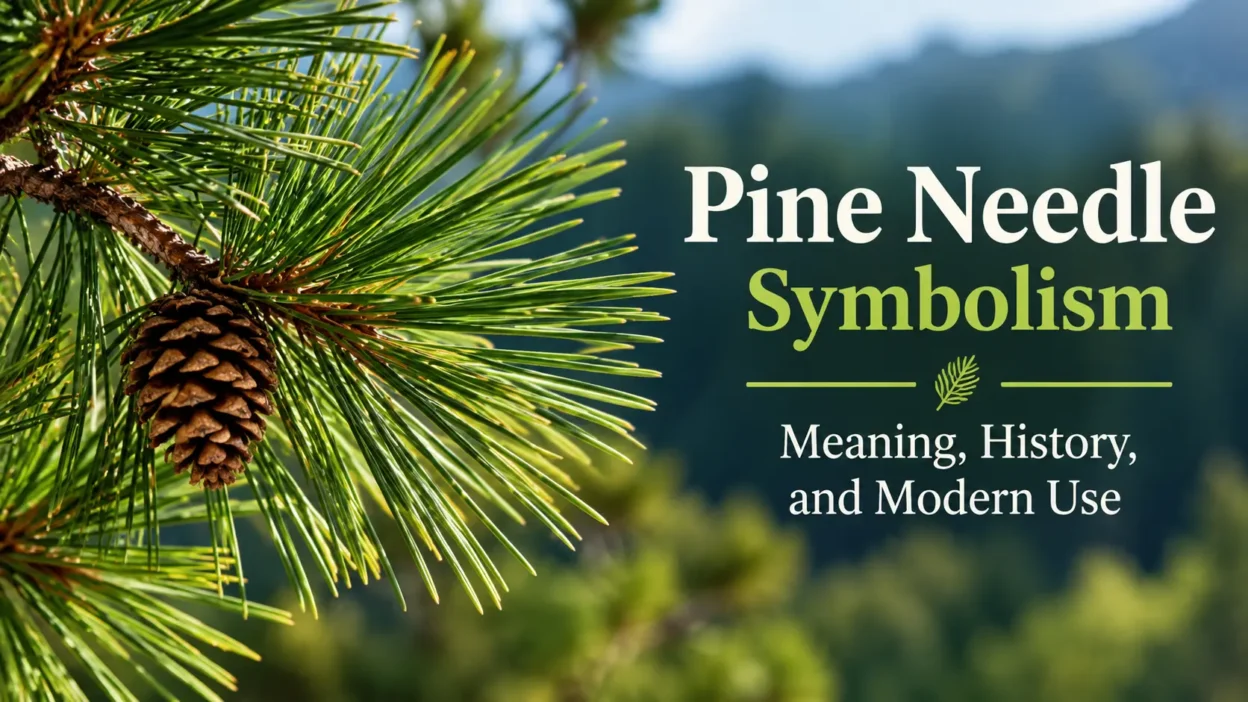
Pine needle symbolism is often connected to endurance, resilience, and continuity. Although pine needles are small and easy to overlook, they come from trees that remain green through winter, giving them a meaning that extends far beyond their physical appearance.
People encounter pine needles in forests, parks, holiday decorations, wreaths, and seasonal landscapes across the United States. Their year-round presence has helped shape how many cultures interpret them.
Today, pine needles are often associated with persistence during difficult times, a strong connection to nature, and the ability to remain steady through change. These meanings have developed over centuries through practical experience, folklore, religion, and cultural traditions.
Quick Answer
Pine needle symbolism most commonly represents resilience, longevity, and staying strong through challenges in modern American culture. Historically, pine needles also symbolized eternal life, protection, and continuity because pine trees remain green even during winter when many other plants lose their leaves.
TL;DR
- Commonly symbolizes resilience and endurance.
- Connected to evergreen life during winter.
- Often represents longevity and continuity.
- Associated with nature, renewal, and stability.
- Appears in holiday traditions and seasonal decor.
- Used today in art, jewelry, and personal symbolism.
What Pine Needles Look Like and Why They Matter
Pine needles are the slender leaves of pine trees. Unlike broad leaves that change color and fall each autumn, pine needles often remain attached for several years. Their shape helps conserve moisture and survive harsh weather.
This unusual characteristic has influenced their symbolism. People have long observed that pine trees stay green while surrounding vegetation becomes bare. As a result, pine needles came to represent persistence and life that continues despite difficult conditions.
The physical nature of pine needles also contributes to their symbolic meaning. They are flexible rather than fragile, bending in strong winds without easily breaking. This balance between strength and adaptability has become an important part of their cultural interpretation.
The Core Meaning of Pine Needles Today
In contemporary American culture, pine needles most often symbolize endurance.
People frequently view them as reminders that strength does not always appear dramatic. A pine needle survives not because it is large or imposing but because it is adapted to withstand challenges over time.
Several meanings commonly associated with pine needles include:
- Resilience during hardship
- Long-term stability
- Consistency and reliability
- Connection to nature
- Personal growth through adversity
- Hope during difficult seasons
These interpretations make pine needles popular symbols for individuals facing life transitions, recovery journeys, or long-term goals.
Ancient Roots of Pine Symbolism
The symbolism of pine needles comes largely from the symbolic history of pine trees themselves.
Many ancient cultures noticed that evergreen trees remained alive and green throughout winter. In environments where winter represented scarcity and uncertainty, evergreen plants naturally became symbols of survival.
In parts of Europe and Asia, pine trees were associated with long life and enduring vitality. Because the trees could live for centuries, their needles became visual reminders of continuity and persistence.
Ancient communities also relied on pine forests for shelter, fuel, and building materials. This practical value reinforced symbolic associations with protection and security.
Over time, the needles inherited many of the broader meanings attached to the tree.
Why Evergreen Needles Became Symbols of Eternal Life
One of the strongest historical meanings connected to pine needles is eternal life.
Before modern science explained seasonal cycles, people often interpreted winter as a period when nature temporarily lost its vitality. Evergreen trees appeared different. They remained green while other plants seemed dormant or dead.
This contrast led many traditions to see evergreen needles as evidence that life continued beneath the surface even during difficult periods.
Religious and spiritual traditions later adopted similar interpretations. Evergreen branches became symbols of ongoing life, spiritual endurance, and continuity beyond temporary hardships.
While modern Americans may not always think in religious terms, the association between pine needles and lasting life remains widely recognized.
Pine Needle Symbolism in the United States
American interpretations of pine needles are heavily influenced by geography and seasonal experience.
Pine forests cover large portions of the United States, especially in the Northeast, Southeast, Rocky Mountains, and Pacific Northwest. For many Americans, pine trees are familiar parts of everyday landscapes.
Because of this visibility, pine needles often symbolize:
- Strength during adversity
- Connection to wilderness
- Environmental awareness
- Family traditions
- Seasonal continuity
- Rural heritage
In regions where winters are severe, evergreen needles can represent hope and perseverance. In forested regions, they may symbolize a connection to local identity and natural heritage.
The symbolism tends to feel practical and grounded rather than abstract.
Pine Needles and American Holiday Traditions
Many Americans encounter pine needles most often during the winter holiday season.
Christmas trees, wreaths, garlands, and seasonal decorations frequently feature pine, fir, or spruce greenery. The visual presence of evergreen needles during the darkest months of the year reinforces themes of hope and continuity.
For many families, these decorations symbolize:
- Family togetherness
- Seasonal renewal
- Tradition across generations
- Optimism during winter
The symbolism comes not only from religion but also from shared cultural practices. The scent of pine needles alone often evokes memories of celebrations, family gatherings, and childhood traditions.
Because of these associations, pine needles frequently carry emotional significance that extends beyond their botanical role.
Emotional and Psychological Meanings
On a psychological level, pine needles often communicate steadiness.
People commonly associate them with individuals who remain dependable even during stressful periods. The image of a pine tree enduring snow, wind, and cold weather creates a powerful metaphor for emotional resilience.
Common emotional interpretations include:
- Inner strength
- Patience
- Calm persistence
- Reliability
- Confidence through experience
Unlike symbols that emphasize sudden transformation, pine needles suggest gradual endurance. Their symbolism focuses on staying present and continuing forward rather than making dramatic changes.
This perspective appeals to many people navigating long-term challenges.
Pine Needles in Different Cultural Traditions
Although meanings vary across cultures, several recurring themes appear.
In East Asian traditions, pine trees have often symbolized longevity, dignity, and steadfast character. Because they remain green year-round, they became symbols of endurance and moral strength.
In some European traditions, evergreen branches represented protection and continued life through winter.
Indigenous peoples across North America have also used pine trees and needles in practical, medicinal, and ceremonial ways. Meanings vary greatly among different nations and communities, making it important not to treat Indigenous symbolism as a single unified tradition.
Despite cultural differences, the themes of survival and continuity appear remarkably often.
Symbolic Meanings in Nature and Environmental Awareness
Modern environmental movements have introduced another layer of symbolism.
Today, pine needles can represent ecological balance, conservation, and respect for natural systems. As awareness of climate and environmental issues has grown, many people see forests as symbols of long-term stewardship.
Pine needles may symbolize:
- Sustainability
- Ecological responsibility
- Natural resilience
- Human connection to landscapes
- Respect for future generations
These meanings are especially common in outdoor communities, conservation groups, and environmental education programs.
Common Meanings by Context
| Context | Meaning in the USA | Common Associations | Notes |
|---|---|---|---|
| Winter holidays | Hope and continuity | Christmas trees, wreaths | Seasonal symbolism |
| Nature and outdoors | Resilience | Forests, hiking, wilderness | Strong modern meaning |
| Personal growth | Endurance | Recovery, challenges | Frequently used metaphorically |
| Home decor | Stability | Rustic design, cabins | Connected to comfort |
| Environmental themes | Sustainability | Conservation efforts | Growing modern interpretation |
Pine Needles in Tattoos and Personal Symbolism
Pine needle tattoos are less common than full pine tree tattoos, but they carry distinct meanings.
People who choose pine needle imagery often want a symbol that feels subtle and personal rather than highly decorative.
Common reasons include:
- Representing resilience after hardship
- Honoring a connection to forests
- Remembering a meaningful place
- Expressing long-term personal growth
- Reflecting a calm and grounded personality
The symbolism often appeals to individuals who value persistence over dramatic achievement.
Because pine needles are simple in appearance, they can communicate meaningful ideas without attracting significant attention.
Pine Needles in Art, Design, and Decor
Designers frequently use pine needle imagery to create a sense of natural stability.
In home decor, pine branches and needles often suggest comfort, tradition, and connection to the outdoors. Rustic and cabin-inspired aesthetics commonly incorporate pine motifs for this reason.
Artists may also use pine needles symbolically to represent:
- Seasonal cycles
- Endurance
- Solitude
- Reflection
- The relationship between people and nature
Their understated appearance allows them to communicate meaning without overwhelming a design.
Common Misunderstandings About Pine Needle Symbolism
One misunderstanding is that pine needles symbolize sadness simply because they are associated with winter.
In reality, most traditions interpret them in the opposite way. Their symbolic value comes from remaining alive and green during difficult seasons.
Another misconception is that pine needles represent immortality in a literal sense. Historically, they more often symbolized continuity, renewal, and enduring life rather than eternal physical existence.
Some people also assume pine needle symbolism is exclusively religious. While religious traditions contributed to certain interpretations, many modern meanings are cultural, seasonal, environmental, or psychological.
How the Meaning of Pine Needles Has Changed Over Time
The symbolism of pine needles has evolved alongside society.
Historically, meanings focused heavily on survival through winter and the mystery of evergreen growth. Communities living close to nature viewed evergreen plants as remarkable examples of endurance.
As societies became more urbanized, the symbolism shifted toward emotional and personal interpretations. Pine needles increasingly came to represent resilience, stability, and a connection to nature.
In the 2025–2026 cultural landscape, environmental awareness has added new layers of meaning. Many people now view pine needles not only as symbols of personal endurance but also as reminders of ecological responsibility and the importance of preserving natural spaces.
FAQ
What do pine needles symbolize spiritually?
Pine needles are often associated with endurance, continuity, and lasting life in spiritual traditions. Their evergreen nature has led many cultures to connect them with hope and persistence through difficult periods.
Are pine needles a positive symbol?
Most interpretations are positive. They commonly represent resilience, stability, longevity, and the ability to remain strong during challenging circumstances.
What do pine needle tattoos mean?
Pine needle tattoos often symbolize personal endurance, growth through hardship, and a deep connection to nature. Many people choose them as quiet reminders of perseverance.
Why are pine needles associated with winter holidays?
Evergreen branches remain green throughout winter, making them symbols of hope and continuity during the coldest season. This association became part of holiday traditions that continue today.
Do pine needles symbolize protection?
Historically, some cultures viewed evergreen plants as protective symbols because they survived harsh conditions and provided shelter. This protective meaning still appears in certain traditions and decorative uses.
What is the difference between pine tree symbolism and pine needle symbolism?
Pine tree symbolism often emphasizes the whole tree’s strength, longevity, and stature. Pine needle symbolism focuses more specifically on endurance, adaptability, and survival through changing seasons.
Are pine needles connected to environmental symbolism?
Yes. In modern culture, pine needles can symbolize conservation, sustainability, and respect for forests. These meanings have become more common as environmental awareness has increased.
Conclusion
Pine needle symbolism is rooted in one simple observation: evergreen trees remain green when much of the surrounding landscape changes. From that observation grew associations with endurance, continuity, protection, and lasting life.
Across history and cultures, people have looked to pine needles as reminders that strength often comes from persistence rather than force. In modern America, they continue to symbolize resilience, connection to nature, family traditions, and environmental responsibility.
Whether encountered in a forest, holiday wreath, piece of artwork, or personal tattoo, pine needle symbolism remains closely tied to the idea of staying steady through life’s changing seasons.


