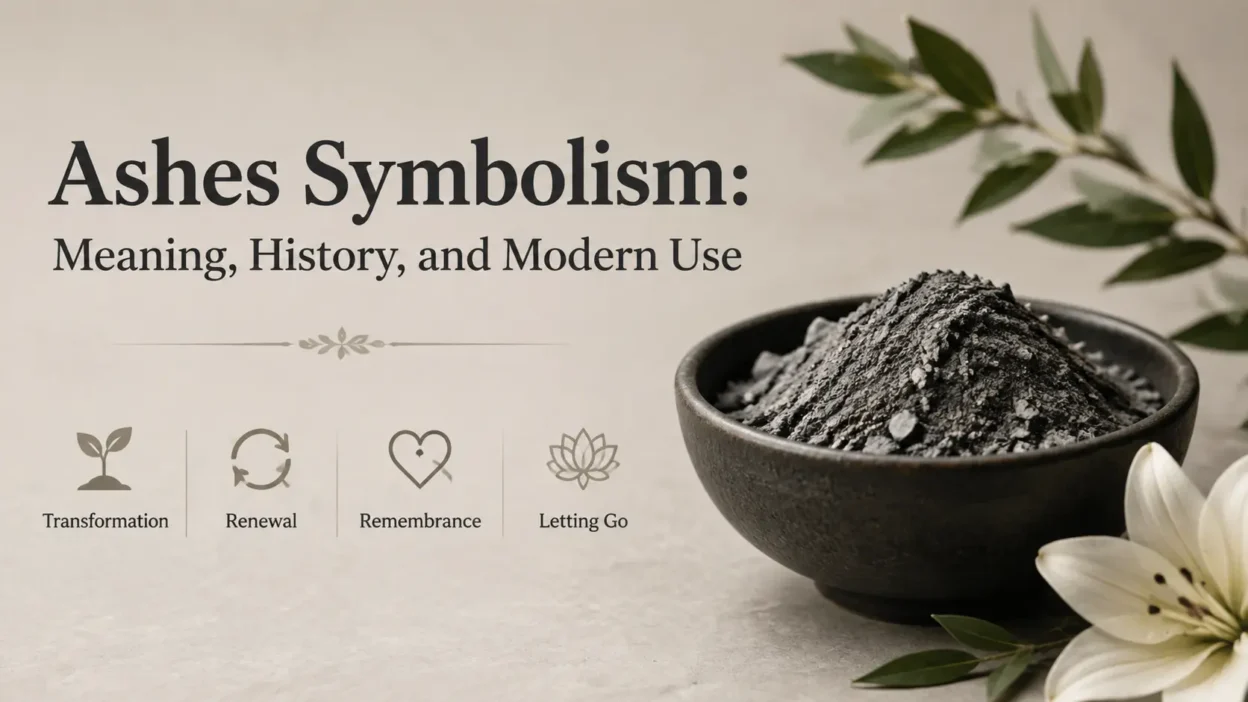
Ashes have long represented the remains of something that has ended, but their meaning extends far beyond destruction. In modern American culture, ashes symbolism often connects with grief, remembrance, transformation, and the possibility of beginning again after loss. From funeral traditions to personal rituals, ashes represent the relationship between endings and new chapters.
People encounter ashes in many forms: the remains left after a fire, cremated human remains, ceremonial markings, artistic materials, and even symbols used in literature and popular culture. Their meaning changes depending on the situation, but the central idea often involves change, memory, and the temporary nature of life.
Understanding the symbolism of ashes helps explain why this simple material appears in religious ceremonies, memorial practices, tattoos, artwork, and storytelling. Rather than representing only sadness or destruction, ashes often carry ideas of reflection, acceptance, and renewal.
Quick Answer
Ashes symbolism commonly represents loss, remembrance, transformation, and renewal in modern American culture, especially in mourning traditions and personal rituals. Historically, ashes have also been connected with humility, spiritual reflection, purification, and the cycle of life and change.
TL;DR
- Ashes symbolize endings, memory, and transformation.
- Ancient traditions linked ashes with humility and repentance.
- Americans often associate ashes with mourning and remembrance.
- Cremation has shaped modern meanings around identity and legacy.
- Ash imagery appears in tattoos, art, and storytelling.
What Ashes Represent in the United States Today
In the United States, ashes are most commonly associated with remembrance and transition. Many Americans encounter ashes through cremation, funeral practices, religious ceremonies, or personal memorials for loved ones.
Cremation has become increasingly common, changing how people understand ashes. Instead of viewing remains only as something connected to death, many families see ashes as a physical connection to someone’s life, memories, and relationships.
Ashes may be kept in urns, scattered in meaningful locations, transformed into memorial objects, or incorporated into ceremonies. These practices show that ashes can represent continuing bonds rather than only an ending.
The meaning often depends on personal experience. For one person, ashes may represent grief after losing someone. For another, they may symbolize survival after hardship, a fresh start, or the closing of an important chapter.
Ancient Roots and Early Symbolism of Ashes
Ashes gained symbolic meaning in many ancient societies because fire was viewed as a force that changed materials permanently. When something burned, what remained represented what survived after transformation.
In ancient religious traditions, ashes were often connected with humility and human mortality. They reminded people that life is temporary and encouraged reflection on personal actions and values.
Some cultures used ashes in purification ceremonies or protective practices. Because fire was often associated with cleansing and renewal, ashes could represent what remained after something harmful or unwanted was removed.
The meaning was not always negative. Ashes could symbolize the result of a process: something had changed, but something meaningful remained.
Ashes in Religious Traditions and Spiritual Practices
Ashes hold important roles in several religious traditions, especially Christianity and Hinduism.
In many Christian communities, ashes are used during Ash Wednesday, a ceremony marking the beginning of Lent. The placement of ashes on the forehead serves as a reminder of mortality, repentance, and spiritual reflection.
In Hindu traditions, sacred ashes called vibhuti or bhasma may represent purity, devotion, and the temporary nature of physical existence. They are connected with religious practices and philosophical ideas about life and the material world.
Across different traditions, ashes often encourage people to think beyond immediate concerns. They can represent humility, spiritual awareness, and the relationship between physical life and deeper values.
The Connection Between Ashes and Mourning Traditions
Ashes are strongly connected with grief because they are often the final physical remains after cremation. For many families, they become a meaningful part of remembering someone who has died.
American mourning practices have evolved over time. While traditional burials remain common, cremation allows families to create different forms of remembrance. Some keep ashes at home, while others scatter them in places connected to the person’s life.
The emotional meaning of ashes often comes from memory. A container holding ashes may represent family history, shared experiences, and the continuing importance of someone’s presence.
However, ashes themselves do not define grief. People process loss differently, and some may find comfort in keeping ashes while others prefer different forms of memorialization.
Transformation, Rebirth, and Starting Again
One of the strongest symbolic meanings of ashes is transformation. Ashes show that something has changed permanently, but they also suggest that change can lead to new possibilities.
This idea appears in the famous image of the phoenix rising from ashes. Although the phoenix comes from mythology rather than everyday life, the image has influenced modern ideas about recovery and personal growth.
People often use ash imagery after difficult experiences such as major life changes, personal struggles, or overcoming challenges. In these contexts, ashes symbolize what remains after hardship and the ability to rebuild.
The symbolism focuses less on destruction itself and more on what follows afterward.
Ashes in American Art, Literature, and Popular Culture
Artists and writers frequently use ashes to explore themes of memory, loss, and change. A pile of ashes can represent the aftermath of conflict, the end of a relationship, the collapse of an old identity, or the consequences of human actions.
In movies and books, ashes often appear after dramatic events such as fires, wars, or personal tragedies. They visually communicate that something important has been lost.
At the same time, ash imagery can represent resilience. Characters who rebuild their lives after destruction are often described through images of rising, rebuilding, or creating something new from what remains.
This dual meaning makes ashes a flexible symbol in storytelling.
Ashes in Tattoos and Personal Identity
Ash-themed tattoos often carry deeply personal meanings. Some people choose ash imagery to honor someone who has died, while others use it to represent survival, change, or leaving behind an earlier version of themselves.
Common designs include:
- Ashes mixed with natural elements such as trees or flowers
- Phoenix imagery connected with rebirth
- Ash clouds representing major life transitions
- Memorial tattoos incorporating cremation symbolism
Unlike some symbols with widely recognized meanings, ash tattoos are highly individual. The story behind the design usually matters more than the image itself.
A tattoo involving ashes may represent grief, but it may also communicate strength, acceptance, and personal evolution.
Ashes and the Psychology of Loss and Change
Psychologically, ashes can represent the process of accepting change. They provide a visible reminder that something has ended, which can help people recognize and process major transitions.
Objects connected with memory often become important during grief because they provide a sense of connection. Ashes can serve this role by representing a person, place, or period of life.
At the same time, ashes may symbolize emotional release. Letting go of what no longer exists can be part of healing and personal growth.
The psychological meaning depends heavily on context. Ashes connected to a loved one may bring comfort, while ashes from destruction may bring feelings of sadness or shock.
How Ashes Appear in Modern Design and Decor
Ash symbolism appears in modern design through artwork, memorial pieces, jewelry, and decorative objects.
Some people choose memorial jewelry containing a small amount of cremated remains. Others use ash-inspired designs because they appreciate the visual connection between endings and renewal.
Interior design may also use charcoal, gray tones, and burned textures to create feelings of simplicity, reflection, or natural change.
The use of ashes in design often reflects a broader cultural interest in authenticity and meaningful objects rather than purely decorative items.
Ashes Across Different Cultures
Ashes have different meanings around the world, although many traditions connect them with transformation and mortality.
| Context | Meaning in the USA | Common Associations | Notes |
|---|---|---|---|
| Cremation | Memory and connection | Family, remembrance, legacy | Often personalized through rituals |
| Religious ceremonies | Reflection and humility | Faith, repentance, devotion | Meaning depends on tradition |
| Fire aftermath | Loss and rebuilding | Destruction, recovery | Common in stories and media |
| Tattoos and art | Personal transformation | Identity, resilience | Meaning varies by individual |
In some cultures, ashes are treated as sacred materials. In others, they represent the remains of something that has passed away. Despite these differences, ashes frequently connect human experiences of change and continuity.
Common Misunderstandings About Ash Symbolism
A common misunderstanding is that ashes always represent sadness or death. While they are often connected with mourning, their meaning is broader.
Ashes can represent growth after difficulty, spiritual reflection, personal change, and the importance of memory.
Another misconception is that ashes have one universal interpretation. In reality, cultural background, personal beliefs, and circumstances greatly influence what ashes mean.
A funeral urn, a religious marking, and ashes left after a wildfire may all involve the same material but communicate completely different ideas.
The Changing Meaning of Ashes in Modern Life
The meaning of ashes continues to evolve as society changes. Increased acceptance of cremation has created new ways for people to think about remembrance and legacy.
Digital memorials, personalized ceremonies, and creative memorial products have expanded how people interact with ashes after death.
Modern culture often focuses on storytelling and personal connection. Because of this, ashes are increasingly viewed not only as remains but as symbols connected to relationships, experiences, and identity.
The symbol has moved from representing only an ending to representing the entire process of change.
Controversies and Misuse of Ash Symbolism
Because ashes carry strong emotional and religious meanings, they can sometimes be misunderstood or used in inappropriate ways.
For example, ashes connected with sacred ceremonies may lose their intended meaning when removed from their cultural context. Similarly, fictional portrayals may exaggerate or simplify ash symbolism.
Historical meanings should be separated from modern interpretations. An image of ashes in entertainment may represent destruction, while the same image in a religious setting may represent reflection and renewal.
Respect for cultural traditions remains important when using ash-related symbols.
Why Ashes Continue to Matter as a Symbol
Ashes remain meaningful because they represent experiences that almost everyone encounters: endings, memories, change, and adaptation.
Unlike symbols based only on appearance, ashes gain meaning from human experiences. They remind people that life includes both loss and transformation.
Whether found in religious practice, memorial traditions, art, or personal expression, ashes continue to represent the relationship between what has ended and what remains.
Frequently Asked Questions
What do ashes symbolize spiritually?
Ashes often symbolize humility, reflection, purification, and awareness of mortality in spiritual traditions. Their exact meaning depends on the religion or practice where they appear.
What do ashes symbolize in a tattoo?
Ash tattoos commonly represent remembrance, personal transformation, survival, or overcoming a difficult experience. The meaning is usually connected to the person’s own story.
Are ashes a positive or negative symbol?
Ashes can represent both loss and renewal. They may symbolize grief after an ending, but they can also represent rebuilding and moving forward.
Why are ashes used on Ash Wednesday?
Ashes are used on Ash Wednesday as a reminder of human mortality, repentance, and spiritual reflection. The practice is part of many Christian communities’ preparation for Lent.
What do ashes symbolize in American culture?
In the United States, ashes are often connected with cremation, memorial practices, and remembering loved ones. They can also represent change, resilience, and new beginnings.
Do ashes always represent death?
No. While ashes are commonly associated with death and cremation, they can also symbolize transformation, recovery, and the results of personal change.
Conclusion
Ashes represent more than what remains after something burns. They symbolize memory, change, reflection, and the ability to move forward after an ending. In American culture, ashes often connect personal experiences with broader ideas about life, loss, and renewal.
Understanding ashes symbolism means looking beyond destruction and recognizing the many ways people use ashes to express remembrance, identity, faith, and transformation. Whether preserved in a memorial, used in a ceremony, or represented in art, ashes continue to reflect the human experience of change.


