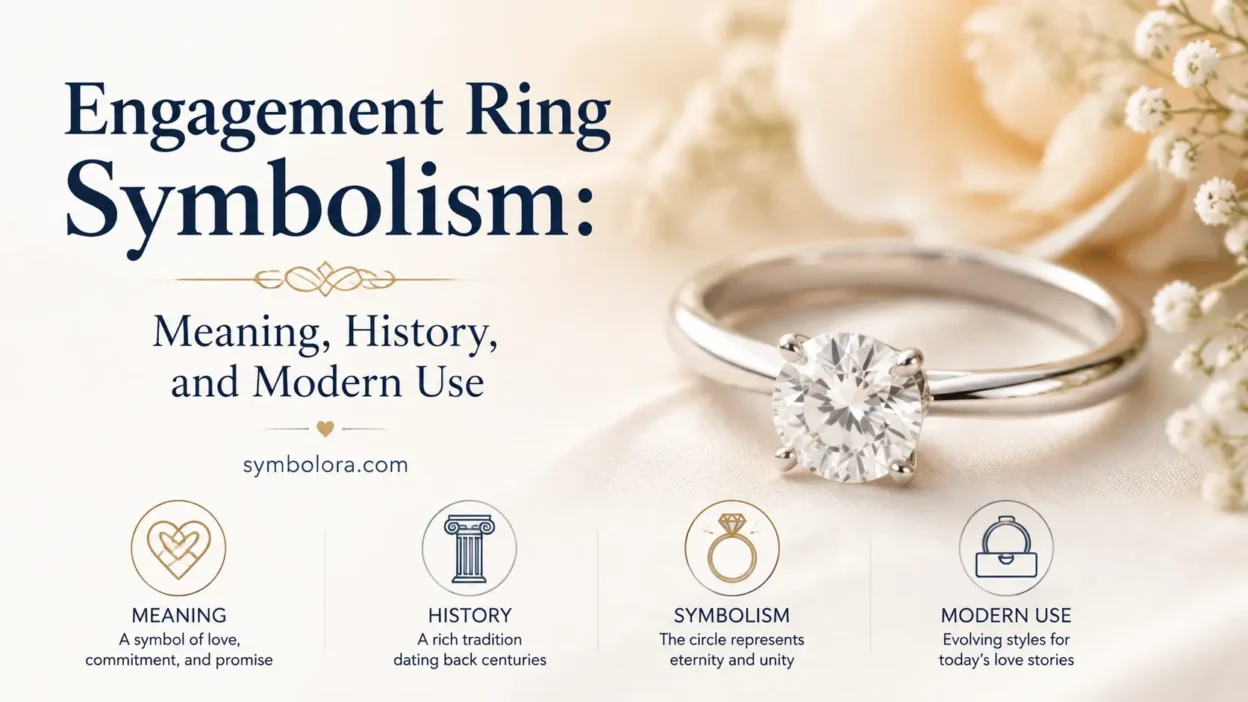
An engagement ring is more than a piece of jewelry. For many people, engagement ring symbolism represents love, commitment, trust, and the promise of a shared future. In the United States, the ring has become one of the most recognizable symbols connected to marriage proposals and romantic partnerships.
The meaning behind an engagement ring comes from a mixture of ancient customs, cultural traditions, personal values, and modern ideas about relationships. While many couples see it as a sign of devotion, others view it as a personal expression rather than a fixed tradition.
Understanding the symbolism behind an engagement ring helps explain why this small object carries such emotional importance. Its meaning has changed over time, but it continues to represent a significant moment in many people’s lives.
Quick Answer
Engagement ring symbolism commonly represents love, commitment, and the promise of marriage in modern American culture. Historically, engagement rings have also symbolized agreements, loyalty, social bonds, and the intention to build a future together.
TL;DR
- Engagement rings symbolize love and commitment today.
- Ancient traditions connected rings with agreements and loyalty.
- Americans often view rings as personal relationship symbols.
- Diamond rings became popular through modern marketing.
- Designs and meanings vary among couples.
- Cultural interpretations continue to evolve.
What an Engagement Ring Represents in Modern America
In the United States, an engagement ring usually represents a promise between two people who intend to marry. It marks a transition from dating or partnership into a formal commitment.
For many couples, the ring communicates:
- emotional dedication
- trust between partners
- plans for a shared future
- recognition of an important life event
The ring is often worn publicly, allowing it to function as a visible sign of a relationship milestone. It can communicate a person’s relationship status without words.
However, modern Americans increasingly interpret engagement rings in personal ways. Some couples choose traditional diamond rings, while others select gemstones, vintage designs, family heirlooms, or simple bands based on their own preferences.
The Physical Design and Why It Carries Meaning
An engagement ring usually consists of a circular band with a gemstone or decorative feature. The circular shape is one of the most recognized parts of its symbolism.
The unbroken circle has often been associated with:
- continuity
- connection
- lasting partnership
- shared experiences
The gemstone can also influence meaning. Diamonds are commonly associated with strength and durability because of their physical qualities. Other stones may represent personal memories, birth months, favorite colors, or family connections.
The ring’s material, design, and history often contribute to its emotional value.
Ancient Roots of Ring Symbolism
Rings have represented agreements and relationships for thousands of years. Ancient civilizations used rings in different ways, including as markers of status, ownership, loyalty, and social contracts.
In ancient Rome, rings were sometimes connected to marriage arrangements and legal agreements. A ring could represent a commitment between families or individuals.
Early ring traditions were not identical to modern engagement customs. The idea of a romantic proposal with a gemstone ring developed gradually through European traditions and later became widely adopted in American culture.
How Engagement Rings Became Connected With Marriage
The connection between engagement rings and marriage developed over centuries as societies created customs around courtship and unions.
European traditions helped shape the idea that an engagement ring represented a formal promise before marriage. Over time, the ring became less about family agreements and more about personal romantic commitment.
By the 20th century, engagement rings became strongly connected with marriage proposals in the United States. Advertising, popular culture, and changing social expectations helped establish the diamond engagement ring as a familiar tradition.
Today, the meaning is usually centered on the couple rather than outside expectations.
The Meaning of Diamonds in Engagement Rings
Diamonds became the most common gemstone choice for engagement rings in the United States during the modern era. Their popularity is connected to ideas about durability, rarity, and lasting relationships.
Many people associate diamonds with:
| Context | Meaning in the USA | Common Associations | Notes |
|---|---|---|---|
| Proposal | Commitment and love | Marriage plans, devotion | Most common modern meaning |
| Diamond stone | Strength and endurance | Durability, permanence | Based partly on physical qualities |
| Family heirloom | Connection across generations | Memory, heritage | Personal history adds meaning |
| Custom design | Individual expression | Personality, creativity | Reflects modern preferences |
| Simple band | Practical commitment | Equality, simplicity | Popular among some couples |
Although diamonds remain popular, many couples now choose alternatives such as sapphires, emeralds, lab-grown diamonds, or meaningful family stones.
Engagement Ring Symbolism in American Weddings and Culture
American wedding culture places strong emotional importance on engagement rings. They often appear in proposal photos, engagement announcements, wedding planning, and family celebrations.
Social media has also influenced how people view engagement rings. Ring photos, proposal videos, and wedding content have made the ring a highly visible part of relationship storytelling.
At the same time, American attitudes are becoming more flexible. Some couples decide together when and how to choose rings. Others avoid traditional engagement rings completely and use different symbols of commitment.
The central meaning remains the relationship itself rather than the object alone.
Emotional and Psychological Meaning of Wearing a Ring
A ring can carry personal meaning because people connect objects with memories and emotions. Wearing an engagement ring may remind someone of a proposal, a partner, or a shared goal.
Psychologically, symbolic objects can strengthen personal identity and emotional attachment. A ring may represent:
- belonging
- security
- partnership
- life changes
The meaning often comes from the experience attached to the ring rather than the material value of the jewelry.
A simple ring with a meaningful story may hold greater emotional importance than an expensive ring with no personal connection.
Cultural and Religious Interpretations Around the World
Different cultures understand engagement and wedding rings in different ways.
In many Western cultures, rings are connected with romantic commitment and marriage preparation. In some traditions, rings are exchanged during wedding ceremonies rather than engagements.
Religious communities may also interpret rings differently. Some view them as symbols of vows, while others focus more on the promises made during the ceremony itself.
The symbol is not universal in every society, but the broader idea of using objects to represent human commitments appears across many cultures.
Why People Choose Engagement Rings as Tattoos or Art Symbols
Engagement ring imagery appears in tattoos, artwork, and personal designs because it represents important emotional experiences.
A person may use ring imagery to represent:
- a marriage
- a personal promise
- a meaningful relationship
- a memory of someone important
Unlike wearing an actual engagement ring, symbolic artwork allows people to express commitment in a more permanent or creative way.
The image may represent love, but it can also represent independence, personal growth, or a meaningful life chapter.
The Role of Color and Gemstone Choices
The color of a gemstone can affect how people interpret an engagement ring.
Common associations include:
- Blue gemstones: calmness, loyalty, and trust
- Green gemstones: growth, renewal, and harmony
- Red gemstones: passion and strong emotion
- White diamonds: clarity and traditional elegance
These meanings are not fixed rules. Personal experiences and cultural backgrounds often shape how someone understands a particular stone.
A gemstone chosen because it belonged to a family member may carry a stronger meaning than its traditional symbolism.
Common Misunderstandings About Engagement Rings
One common misunderstanding is that every engagement ring must represent the same thing. In reality, couples attach different meanings to their rings.
Some people believe the price of a ring reflects the strength of a relationship. However, many couples today focus more on personal meaning, financial responsibility, and shared values.
Another misconception is that diamond rings are the only traditional option. Throughout history, different gemstones and ring styles have been used to represent commitment.
The symbolism comes from the promise behind the ring, not only its appearance.
How Engagement Ring Meaning Has Changed Over Time
The meaning of engagement rings has shifted as relationships and social values have changed.
Earlier traditions often emphasized family agreements, social expectations, and formal arrangements. Modern interpretations usually focus more on individual choice, emotional connection, and partnership.
Today’s couples may choose rings based on sustainability, affordability, cultural heritage, or personal style. The symbol continues to adapt because people use it to express their own values.
Controversies and Modern Debates About Engagement Rings
Engagement rings can also create discussions about tradition, expectations, and social pressure.
Some debates involve:
- the cost of rings
- expectations around proposals
- environmental concerns
- traditional gender roles
Some people question whether engagement rings create unnecessary financial pressure. Others view them as meaningful traditions worth maintaining.
There is no single correct interpretation. The meaning depends on the people involved and the values they want the symbol to represent.
Engagement Rings in Modern Identity and Personal Expression
Today, engagement rings are often part of personal identity. The style someone chooses can reflect personality, lifestyle, cultural background, or family history.
A vintage ring may represent appreciation for the past. A modern minimalist ring may reflect simplicity and practicality. A custom design may show creativity and individuality.
The ring has become both a relationship symbol and a personal statement.
Frequently Asked Questions
What does an engagement ring symbolize?
An engagement ring usually symbolizes love, commitment, and the intention to marry. For many couples, it represents a shared future and a meaningful relationship milestone.
Why are engagement rings usually circular?
The circular shape is often associated with continuity and an unbroken connection. Many people interpret the circle as representing an ongoing partnership.
Do engagement rings always have to contain diamonds?
No. Diamonds are common, but many people choose other gemstones, lab-grown stones, vintage rings, or simple bands. The meaning comes from the commitment rather than the specific stone.
What does an engagement ring symbolize in American culture?
In American culture, engagement rings commonly represent romantic commitment and the transition toward marriage. They are also connected with proposals, celebrations, and personal relationship stories.
Can an engagement ring have a negative meaning?
For some people, engagement rings may represent social pressure, financial expectations, or traditional roles they do not personally value. The meaning depends on individual beliefs and experiences.
What do different gemstone colors mean in engagement rings?
Gemstone colors may suggest qualities such as loyalty, passion, growth, or elegance. However, personal memories and preferences often matter more than traditional color meanings.
Why do people keep family engagement rings?
Family engagement rings are often valued because they carry memories, history, and connections between generations. Their emotional meaning may come from the people and stories associated with them.
Conclusion
An engagement ring represents more than jewelry. In modern American culture, it commonly symbolizes love, commitment, and a promise between two people planning a future together.
The meaning of engagement ring symbolism has changed from ancient agreements and social traditions into a personal expression of partnership and identity. Whether traditional, customized, or completely different from common expectations, the value of the ring comes from the commitment and story behind it.
A ring may be small in size, but its meaning is shaped by the memories, promises, and relationships connected to it.


