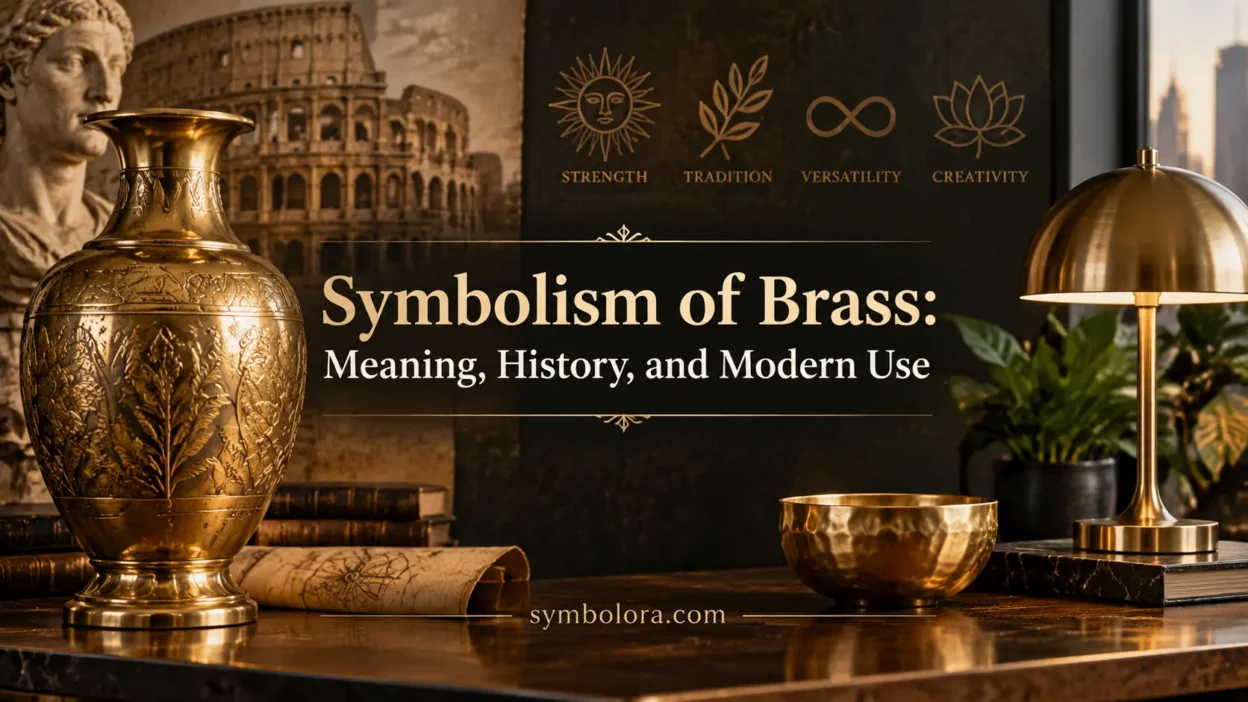
Brass is a golden-colored metal made mainly from copper and zinc, and its warm appearance has connected it with ideas of strength, celebration, craftsmanship, and tradition. The symbolism of brass often reflects durability, confidence, warmth, and human creativity because the metal has been used for tools, instruments, decorations, religious objects, and personal items across many societies.
Unlike precious metals such as gold or silver, brass has a more familiar and practical identity. People often associate it with everyday beauty, skilled workmanship, and objects that are built to last. In modern American culture, brass appears in home design, musical instruments, jewelry, architecture, military traditions, and decorative arts.
Understanding brass symbolism requires looking beyond its color. Its meaning comes from how people have used it: as a material connected with sound, ceremony, protection, memory, and artistic expression.
Quick Answer
Symbolism of brass commonly represents strength, warmth, confidence, and craftsmanship in modern American culture, especially in design, music, and decorative objects. Historically, brass has also symbolized celebration, spiritual devotion, endurance, and human skill because of its long use in instruments, sacred items, and practical tools.
TL;DR
- Brass symbolizes strength, warmth, and lasting craftsmanship.
- Ancient cultures valued brass for tools, art, and ceremonies.
- Americans connect brass with music, architecture, and vintage style.
- Brass instruments represent celebration, communication, and community.
- Brass objects often suggest tradition, memory, and quality.
- Modern designs use brass for elegance and visual warmth.
What Brass Looks Like and Why Its Appearance Matters
Brass has a bright yellow-gold appearance that resembles gold but carries a more accessible and practical character. Freshly polished brass can appear shiny and reflective, while aged brass develops a darker patina that many people value for its antique appearance.
The physical qualities of brass influence its symbolic associations. Its golden tone connects it with sunlight, warmth, and prosperity, while its durability suggests stability and reliability.
People encounter brass in many forms, including:
- Musical instruments such as trumpets, trombones, and horns
- Door handles and architectural details
- Lamps, clocks, and household decorations
- Jewelry and fashion accessories
- Plaques, medals, and memorial objects
Because brass combines beauty with usefulness, it often represents the relationship between art and everyday life.
What It Commonly Means in the United States
In the United States, brass is often associated with confidence, tradition, and quality craftsmanship. Its symbolism changes depending on where it appears.
In interior design, brass details can create a feeling of warmth and sophistication. Designers often use brass fixtures, lighting, and furniture accents to add a classic or vintage character to modern spaces.
In music, brass carries meanings related to celebration and public expression. Brass bands, marching bands, and jazz traditions have made brass instruments symbols of energy, teamwork, and cultural identity.
In military and public settings, brass can represent honor and achievement. Brass plaques, medals, and ceremonial objects are often connected with recognition and remembrance.
| Context | Meaning in the USA | Common Associations | Notes |
|---|---|---|---|
| Home design | Warmth and elegance | Vintage style, luxury details | Often used in fixtures and décor |
| Music | Celebration and expression | Bands, jazz, performances | Connected with community events |
| Military traditions | Honor and achievement | Medals, badges, ceremonies | Represents recognition |
| Jewelry | Individual style | Confidence, classic fashion | Chosen for golden appearance |
| Memorial objects | Memory and respect | Plaques, inscriptions | Used to preserve names and stories |
Ancient Roots and Early Symbolism of Brass
Brass has a long history because humans discovered ways to create copper-zinc alloys thousands of years ago. Early metalworkers valued brass because it was easier to shape than some metals while still being strong and visually attractive.
Ancient civilizations used brass-like alloys for household objects, tools, decorations, coins, and artistic works. Its golden color made it appealing for objects that needed to look important without requiring rare materials.
In many historical settings, metals with golden tones were connected with the sun, authority, and prosperity. Brass gained some of these associations because it shared visual similarities with gold while serving practical purposes.
Over time, brass became a symbol of human invention. It represented the ability to transform ordinary materials into something useful and beautiful.
Brass Symbolism in Religion and Spiritual Traditions
Brass has appeared in religious and ceremonial settings across different cultures. Its use often reflected ideas of purity, devotion, durability, and connection between the physical and spiritual worlds.
In some religious traditions, brass objects were used for lamps, vessels, musical instruments, and decorative elements. The material’s ability to resist wear made it suitable for items intended for long-term use.
The meaning of brass in religious contexts depends on the tradition. Some communities view it as a symbol of endurance and service, while others appreciate it because its golden color suggests light and sacred importance.
However, brass itself does not have one universal religious meaning. Its symbolism develops from how each culture uses and interprets it.
Why Brass Represents Strength and Endurance
One of the most common symbolic meanings of brass is durability. The metal can survive regular use, making it associated with objects that remain valuable over time.
Unlike fragile materials, brass develops character as it ages. Many people appreciate the natural patina that forms on older brass items because it shows history and continued existence.
This connection between age and value gives brass a symbolic relationship with:
- Resilience
- Stability
- Experience
- Long-lasting relationships
- Heritage
A brass object is often valued not because it is flawless, but because it carries evidence of use and time.
The Connection Between Brass and Music
Brass instruments have shaped much of the metal’s modern symbolism. Trumpets, horns, trombones, and tubas are strongly associated with public sound and emotional expression.
In American culture, brass instruments appear in:
- Jazz performances
- School marching bands
- Military ceremonies
- Parades
- Religious music
Because these instruments create powerful and recognizable sounds, brass often symbolizes communication, confidence, and collective celebration.
A brass instrument is rarely associated with silence or privacy. Instead, it represents making a presence known and bringing people together.
Brass in American Homes and Interior Design
Modern American design often uses brass to create visual warmth. Unlike colder metals such as chrome or stainless steel, brass has a softer appearance that many designers connect with comfort and tradition.
Common uses include:
- Kitchen hardware
- Light fixtures
- Furniture accents
- Mirrors
- Decorative objects
Brass décor can communicate different styles depending on the finish. Polished brass may suggest elegance and formality, while aged brass may create a feeling of history and authenticity.
In home symbolism, brass often represents a balance between old and new. It allows modern spaces to include elements that feel connected to the past.
Emotional and Psychological Meaning of Brass
Materials can influence how people experience a space or object. Brass often creates emotional associations because of its color and texture.
Its warm golden tone may suggest:
- Comfort
- Optimism
- Confidence
- Creativity
- Familiarity
People may choose brass objects because they feel inviting and personal. A brass clock inherited from a family member, for example, may represent memory more than the material itself.
The emotional meaning usually comes from personal experiences combined with cultural associations.
Brass in Jewelry, Fashion, and Personal Style
Brass jewelry has become popular because it offers a golden appearance while maintaining a handmade and artistic character.
People often choose brass accessories for reasons connected with:
- Individual expression
- Vintage aesthetics
- Artisan craftsmanship
- Natural materials
Unlike highly polished luxury metals, brass often communicates personality and creativity. Handmade brass rings, bracelets, and necklaces can suggest originality and appreciation for traditional techniques.
In fashion, brass details are often used to create a classic, earthy, or artistic appearance.
Brass Symbolism in Tattoos and Personal Expression
Although brass is less common as a direct tattoo symbol compared with animals, flowers, or celestial images, it can appear through related imagery.
A brass instrument tattoo may represent:
- Love of music
- Personal expression
- Community connection
A brass object such as a compass, key, or antique item may represent:
- Exploration
- Memory
- History
- Personal journeys
The meaning depends heavily on the image and the individual’s story.
Cross-Cultural Interpretations of Brass
Brass symbolism varies around the world because different societies have used the metal in different ways.
In parts of Asia and Africa, brass has been used in artistic objects, ceremonial items, and traditional crafts. These uses often connect brass with cultural identity, skilled workmanship, and heritage.
In European history, brass became important for decorative arts, scientific instruments, and household objects. It was valued for both appearance and function.
Across cultures, common themes include:
- Craftsmanship
- Endurance
- Beauty through usefulness
- Tradition
However, no single meaning applies to every culture or community.
Common Misunderstandings About Brass Symbolism
Because brass resembles gold, people sometimes assume it carries exactly the same symbolism. While the two metals share associations with warmth and value, their cultural meanings are different.
Gold is often connected with wealth, rarity, and high status. Brass is more commonly linked with accessibility, craftsmanship, and practical beauty.
Another misunderstanding is that brass always represents wealth. Historically, brass was valued because it was useful and attractive, not only because of financial value.
Its symbolism comes more from human creativity and lasting use than from monetary worth.
How Brass Symbolism Has Changed Over Time
The meaning of brass has evolved as societies changed.
In earlier periods, brass was important because it provided useful tools, artistic materials, and ceremonial objects. Its value came from its combination of function and appearance.
During later periods, brass became strongly connected with:
- Musical traditions
- Industrial design
- Decorative arts
- Collecting and antiques
Today, brass often represents a connection between historical craftsmanship and modern style. Designers and artists use it because it creates a sense of warmth while maintaining a contemporary appearance.
Modern Uses of Brass in Culture and Design
Today, brass appears in many areas of American life.
Common modern uses include:
- Interior decoration
- Architecture
- Musical performances
- Jewelry design
- Art installations
- Collectible objects
Social media and design trends have also increased interest in brass because people often seek materials that feel authentic and handcrafted.
Brass fits modern preferences for objects that combine function, beauty, and a sense of history.
Controversies and Misuse of Brass Symbolism
Brass itself is generally viewed as a neutral material, but specific objects made from brass can carry different meanings depending on their context.
For example, historical artifacts, military items, or ceremonial objects may have complicated backgrounds connected with particular events or institutions.
The symbolism comes from the object’s purpose and cultural setting, not simply from the metal.
Understanding brass requires separating the material’s general associations from the meanings attached to specific uses.
Frequently Asked Questions About Brass Symbolism
What does brass symbolize spiritually?
Brass can symbolize endurance, devotion, warmth, and craftsmanship in some spiritual traditions. Its meaning depends on the religious or cultural context where it is used.
Is brass a symbol of wealth?
Brass can represent prosperity and beauty because of its golden appearance, but it is usually associated more with craftsmanship and practicality than financial wealth.
What does brass symbolize in American culture?
In the United States, brass commonly represents tradition, music, achievement, and classic design. It appears in homes, ceremonies, instruments, and decorative arts.
What does a brass instrument symbolize?
A brass instrument often symbolizes expression, celebration, teamwork, and public communication because of its role in bands, performances, and ceremonies.
Why is brass used in home décor?
Brass is used in décor because its warm color adds character and creates a connection between modern spaces and traditional craftsmanship.
Does brass have the same symbolism as gold?
No. Brass shares some visual associations with gold, such as warmth and brightness, but it is more commonly connected with usefulness, creativity, and handmade quality.
Conclusion
Brass represents a combination of beauty and practicality. Its golden appearance, durability, and long history have connected it with craftsmanship, celebration, communication, and tradition.
The symbolism of brass continues to evolve as people use the metal in music, design, jewelry, architecture, and personal objects. Rather than representing only status or wealth, brass often reflects the value of skill, memory, and things made to last.
From historic instruments to modern interiors, brass remains meaningful because it connects everyday objects with human creativity and lasting expression.


