
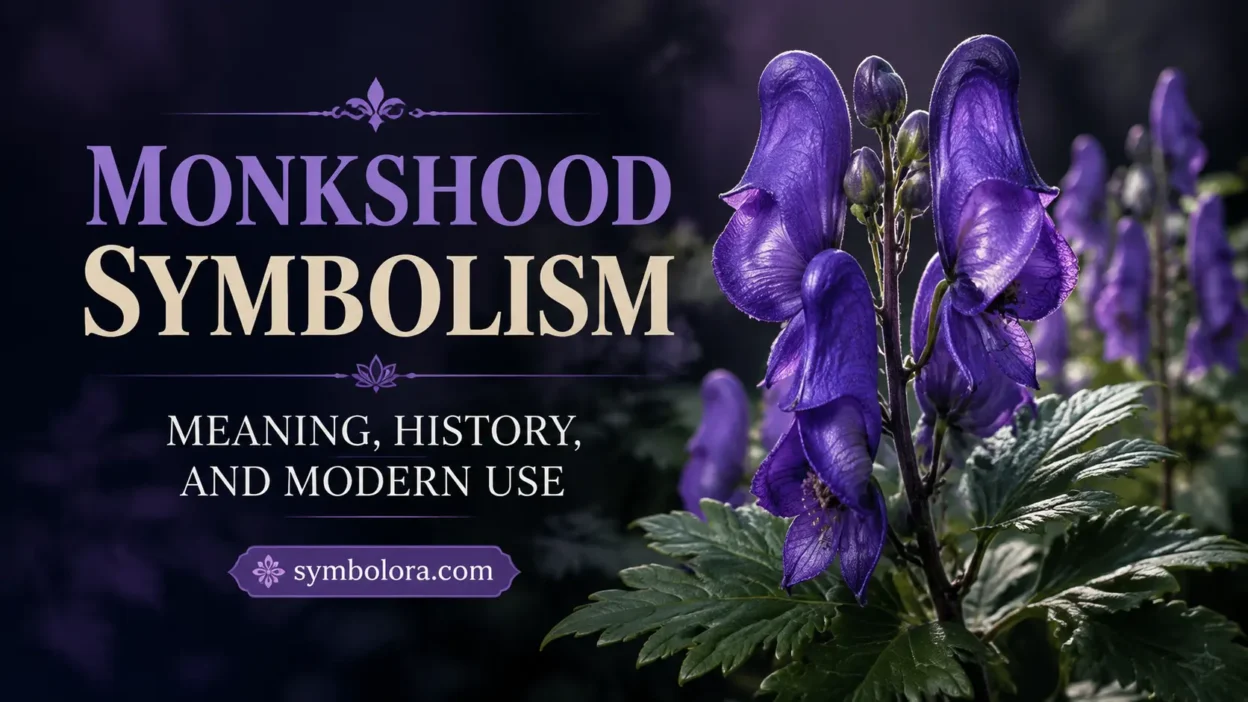
Monkshood symbolism reflects a complex connection between beauty, caution, protection, and transformation. Known for its unusual hood-shaped blue or purple flowers and its long history in folklore and herbal traditions, monkshood carries meanings that go beyond its appearance.
People are often drawn to monkshood because it looks delicate yet has a reputation for danger. The contrast between its attractive blooms and toxic nature has shaped how different cultures interpret the plant. In modern American culture, monkshood symbolism is often connected with resilience, mystery, awareness, and respect for nature’s boundaries.
Understanding this flower requires looking at both its natural characteristics and the stories humans have attached to it over time. From ancient folklore to modern gardens and artistic designs, monkshood represents the idea that beauty can exist alongside caution.
Quick Answer
Monkshood symbolism commonly represents protection, caution, and transformation in modern American culture, especially through nature, gardening, and artistic expression. Historically, it has also been associated with folklore, healing traditions, and the balance between beauty and danger.
TL;DR
- Monkshood represents caution, protection, and transformation.
- Its name comes from hood-shaped flowers.
- Ancient folklore linked it with magic and danger.
- Americans view it as a rare botanical symbol.
- Modern uses include gardens, art, and tattoos.
What Monkshood Looks Like and Where It Appears
Monkshood is a flowering plant belonging to the Aconitum genus. It is recognized by its tall spikes of blue, violet, white, or sometimes yellow flowers. The petals curve upward in a shape resembling a monk’s hood, which inspired its common name.
The plant grows naturally in mountainous regions of Europe and Asia and has also been cultivated in parts of North America. In the United States, gardeners sometimes grow monkshood as an ornamental perennial because of its unusual appearance and late-season blooms.
Its visual contrast strongly influences its symbolism. The flower appears elegant and refined, but the plant is also known for containing toxic compounds. This combination has made monkshood a symbol of awareness, respect, and hidden complexity.
What It Commonly Means in the United States
In American culture, monkshood is not one of the most common floral symbols like roses, lilies, or sunflowers. Instead, its meaning is usually connected to personal interpretation, gardening culture, and interest in unusual plants.
Common American interpretations include:
| Context | Meaning in the USA | Common Associations | Notes |
|---|---|---|---|
| Gardens | Beauty with caution | Rare plants, knowledge, nature | Valued for appearance |
| Art | Mystery and contrast | Dark beauty, complexity | Used symbolically |
| Tattoos | Personal strength | Survival, awareness | Often chosen for uniqueness |
| Folklore interest | Transformation | Legends and old beliefs | Connected to history |
| Personal identity | Individuality | Uncommon choices | Represents uniqueness |
Many Americans associate monkshood with the idea that something beautiful can require careful understanding. It can symbolize emotional maturity, awareness, and the ability to recognize hidden qualities.
Ancient Roots and Early Symbolism
Monkshood has been known for thousands of years, especially in European and Asian traditions. Its scientific name, Aconitum, comes from ancient references connected with poisonous plants.
In Greek mythology, some legends associated aconite with the underworld and supernatural forces. Medieval European folklore also connected the plant with witches, magical practices, and protective beliefs. These associations developed partly because people recognized its dangerous properties but did not fully understand its chemistry.
In some historical settings, monkshood was feared because it could cause serious harm if handled improperly. Its reputation created a symbolic connection between knowledge and danger: understanding nature was seen as necessary for survival.
How Monkshood Became Associated With Protection
Although monkshood has often been linked with danger, it has also carried protective meanings. Historically, people sometimes used plants with strong qualities as protective symbols, believing that awareness of danger itself offered safety.
The flower’s symbolism often comes from contrast. A person who recognizes the risks of monkshood demonstrates caution and wisdom. In this sense, the plant represents boundaries, careful choices, and respect for powerful forces.
Modern interpretations often move away from literal protection and focus more on emotional protection, such as setting boundaries or becoming stronger through difficult experiences.
Monkshood Symbolism in Folklore and Mythology
Folklore has played a major role in shaping monkshood’s reputation. Stories often portrayed the plant as mysterious because of its unusual appearance and dangerous qualities.
European legends sometimes connected aconite with witches and magical mixtures. These stories reflected historical fears surrounding unfamiliar plants rather than proven everyday uses. The flower became part of tales about hidden knowledge, transformation, and supernatural themes.
In mythology, plants associated with poison often represented a meeting point between life and death. Monkshood fits this pattern because it carries both an attractive appearance and a serious warning.
Emotional and Psychological Meaning of Monkshood
Symbolically, monkshood often represents complexity. It suggests that people, like plants, can have qualities that are not immediately visible.
The flower may represent:
- Learning from difficult experiences
- Protecting personal boundaries
- Accepting change
- Recognizing hidden strengths
- Respecting nature’s power
For some people, monkshood reflects the idea that challenges can create awareness. Its symbolism is not about danger alone but about understanding and responding wisely.
Religious and Spiritual Interpretations
Monkshood does not have one universal religious meaning. Unlike symbols such as the cross, lotus, or olive branch, it is not widely tied to a specific faith tradition.
However, some spiritual interpretations view the plant as a reminder of balance. Its beauty and toxicity can represent the coexistence of positive and negative forces in life.
In modern spiritual communities, people may interpret monkshood as a symbol of transformation, protection, or personal reflection. These meanings are personal interpretations rather than shared religious traditions.
Monkshood Symbolism in American Gardens and Design
In the United States, monkshood is mainly appreciated as an ornamental flower. Gardeners value it for its unusual shape, cool colors, and ability to add visual interest to landscapes.
In garden design, monkshood can symbolize:
- Appreciation for rare beauty
- Respect for natural diversity
- Patience and care
- A connection with traditional gardening
Because of its toxicity, responsible gardeners usually treat it as a plant requiring awareness. This practical reality also reinforces its symbolic connection with caution.
Why Monkshood Appears in Tattoos and Personal Style
Monkshood tattoos are less common than rose, lotus, or sunflower designs, which makes them appealing to people seeking distinctive imagery.
A person may choose monkshood imagery to represent:
- Personal transformation
- Strength after hardship
- A connection with nature
- Individuality
- Awareness of life’s contrasts
The flower’s unusual appearance also works well in detailed botanical tattoo styles. Artists may emphasize the hood-like petals, deep colors, and historical associations.
Monkshood in Modern Media and Popular Culture
Monkshood occasionally appears in books, fantasy stories, films, and games where plants with mysterious qualities are used symbolically.
Its association with folklore makes it a natural choice for fictional worlds involving magic, ancient knowledge, or hidden dangers. However, these portrayals often exaggerate historical beliefs for storytelling purposes.
In real life, modern interest in monkshood is usually connected with gardening, botanical art, photography, and nature appreciation rather than superstition.
Common Misunderstandings About Monkshood Symbolism
One common misunderstanding is that monkshood only represents death or danger. While its toxicity influenced historical stories, modern symbolism is broader.
Another misconception is that every cultural interpretation of monkshood is the same. Meanings vary depending on historical period, location, and personal beliefs.
The flower is better understood as a symbol of contrast: attractive yet dangerous, delicate yet powerful, rare yet recognizable.
How Monkshood Symbolism Has Changed Over Time
The meaning of monkshood has shifted as human relationships with plants have changed.
In earlier periods, fear and mystery shaped much of its symbolism because poisonous plants were poorly understood. Over time, scientific knowledge changed how people viewed the flower.
Today, monkshood is less associated with fear and more connected with botanical appreciation, individuality, and symbolic reflection. Its meaning has moved from warning alone toward a broader idea of balance and awareness.
Cross-Cultural Views of Monkshood
Different cultures have interpreted monkshood through their own traditions. In parts of Europe, it became linked with folklore, medicine, and cautionary stories. In some Asian traditions, aconite species were recognized within historical herbal practices, although their use required specialized knowledge.
These different perspectives show how the same plant can represent danger, knowledge, healing traditions, or transformation depending on cultural context.
Modern Uses of Monkshood Symbolism
Today, monkshood symbolism appears in several creative areas:
Art and illustration:
Artists use the flower to explore themes of contrast, nature, and mystery.
Home and garden design:
Gardeners may include monkshood as a statement plant representing unusual beauty.
Jewelry and crafts:
Botanical designs may use monkshood imagery for a distinctive natural theme.
Digital culture:
Nature-focused communities sometimes share monkshood photography as an example of rare plant beauty.
Its modern meaning usually focuses on appreciation rather than fear.
Frequently Asked Questions
What does monkshood symbolize spiritually?
Monkshood can symbolize awareness, transformation, and personal boundaries in spiritual interpretations. These meanings are individual rather than part of one universal belief system.
Is monkshood a positive or negative symbol?
Monkshood can represent both positive and negative ideas. It may symbolize beauty and resilience while also representing caution because of its toxic nature.
What does a monkshood tattoo mean?
A monkshood tattoo may represent personal growth, uniqueness, strength, or a connection with nature. The meaning depends on the person wearing the design.
Why is monkshood associated with danger?
Monkshood became associated with danger because some species contain toxic compounds. Historical awareness of this trait influenced folklore and symbolic meanings.
Does monkshood have religious symbolism?
Monkshood does not have a major universal religious meaning. Some people interpret it spiritually as a symbol of balance, change, or awareness.
Is monkshood common in American gardens?
Monkshood is grown by some American gardeners as an ornamental plant, especially by those interested in unusual flowers. Because it requires careful handling, it is usually chosen by knowledgeable gardeners.
How is monkshood different from other flower symbols?
Unlike many flowers that represent simple emotions like love or happiness, monkshood often represents complexity. Its symbolism comes from the contrast between appearance and hidden qualities.
Conclusion
Monkshood symbolism represents a balance between beauty, caution, awareness, and transformation. Its unusual appearance and long history have made it a flower associated with both admiration and respect.
In modern American culture, monkshood symbolism is mainly understood through gardening, art, personal expression, and interest in natural history. Rather than representing only danger, the flower reminds people that understanding and awareness can change how they see the world.
Monkshood remains a unique botanical symbol because it reflects an important human idea: something can be beautiful while still requiring care and respect.


