The north wind symbolism represents change, endurance, clarity, and the arrival of difficult but meaningful transitions. In many cultures, the north wind has been connected with colder seasons, reflection, survival, and the strength required to face challenges. In the United States, people often view it as a symbol of resilience, renewal, and nature’s ability to reshape life.
Unlike symbols created by humans, the north wind comes from the natural world. People have watched northern winds bring winter weather, clear skies, storms, and seasonal changes for generations. Because of this connection with transformation and hardship, the north wind has gained different meanings in mythology, literature, art, and personal expression.
Today, the north wind appears in poetry, tattoos, home décor, storytelling, and symbolic designs. Its meaning depends on context: for some, it represents a fresh start; for others, it reflects independence, wisdom, or the courage to continue through difficult periods.
Quick Answer
North wind symbolism commonly represents resilience, change, and personal strength in modern American culture, especially in contexts involving growth, survival, and new beginnings. Historically, it has also been associated with winter, spiritual reflection, protection, and the forces of nature.
TL;DR
- North wind symbolizes resilience and personal transformation.
- Ancient cultures connected it with winter and natural forces.
- Americans often view it as strength during challenges.
- Literature uses it to represent change and reflection.
- Tattoos often express endurance and independence.
- Modern designs use it for nature-inspired identity.
What the North Wind Represents in Modern American Culture
In the United States, the north wind is often understood through the experience of changing seasons. Northern winds usually bring colder temperatures, shorter days, and the arrival of winter. Because of this connection, many Americans associate it with preparation, patience, and the ability to withstand difficult conditions.
The symbol does not always represent something negative. Winter can also suggest rest, renewal, and preparation for future growth. A north wind can clear the air, remove what is old, and create space for something new.
In personal symbolism, people may use the north wind to represent:
- Strength during uncertain times
- Acceptance of life changes
- Independence and self-reliance
- Wisdom gained through experience
- A willingness to face challenges
The meaning often depends on whether someone views winter as a period of struggle or a necessary part of nature’s cycle.
The Natural Appearance and Meaning of the North Wind
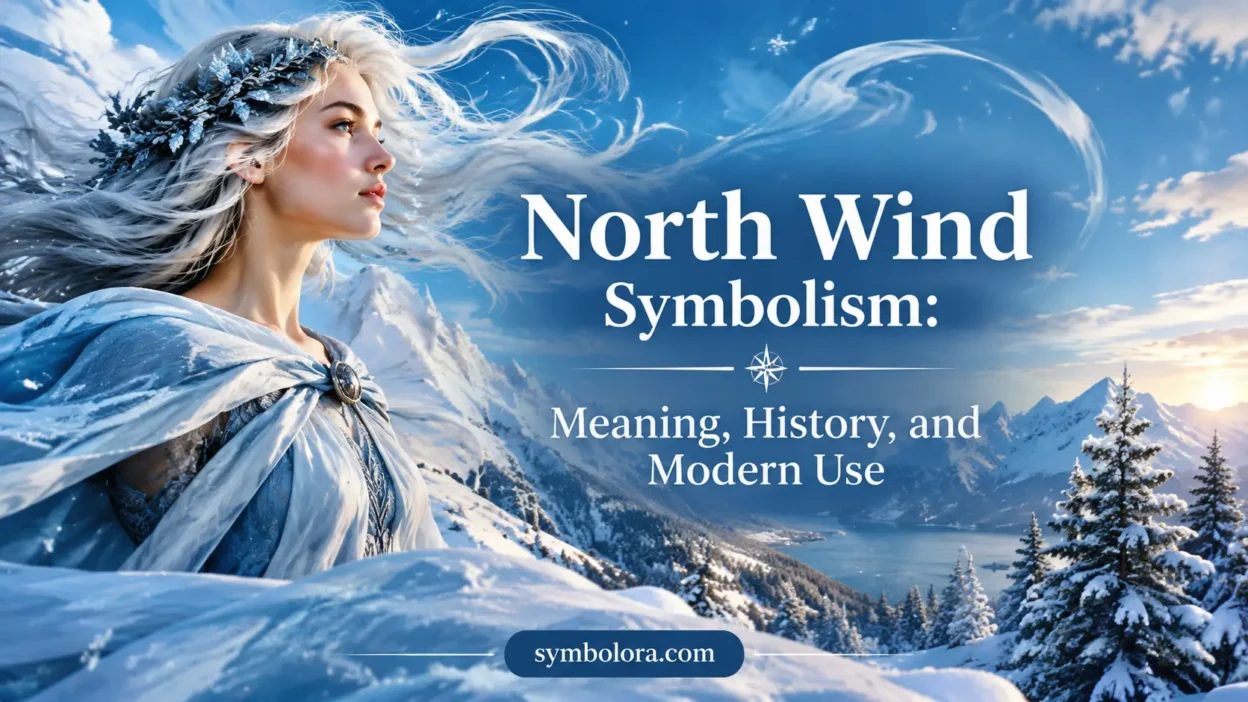
The north wind is not a physical object but a natural force. It is commonly experienced as a cold current of air moving from northern regions. In visual art and symbolism, it is often shown through:
- Snow and ice imagery
- Winter landscapes
- Swirling clouds
- Bare trees
- A figure representing wind
- Frost patterns and pale colors
Artists often use these images to communicate emotional states. A frozen landscape may suggest loneliness or silence, while a clear winter sky may represent honesty, focus, and a fresh perspective.
The north wind’s connection to nature makes it different from many human-created symbols. Its meaning comes from observation: people noticed what happened when northern air arrived and developed stories around those experiences.
Ancient Roots and Early Symbolism
The north wind has appeared in ancient traditions because wind was often considered a major force that shaped human life. Before modern weather systems existed, people depended heavily on understanding seasonal patterns for farming, travel, and survival.
In ancient Greek mythology, the north wind was represented by Boreas. Boreas was described as a powerful wind associated with winter and cold weather. Stories about him reflected the Greek understanding of northern winds as strong natural forces capable of bringing dramatic change.
In other traditions, northern directions were often connected with ideas such as:
- Darkness before renewal
- Winter survival
- Hidden knowledge
- Stillness and reflection
- Connection with ancestors
These meanings developed because northern regions were often colder and more difficult environments, shaping human interpretations of the direction itself.
North Wind Symbolism in Literature and Storytelling
Writers have frequently used the north wind as a metaphor for emotional and personal experiences. It can represent a turning point when a character must leave comfort behind and face something unknown.
Common literary meanings include:
| Context | Meaning in the USA | Common Associations | Notes |
|---|---|---|---|
| Nature writing | Seasonal change | Winter, landscapes, weather | Shows the power of the natural world |
| Personal stories | Growth through hardship | Courage, endurance | Often represents life transitions |
| Poetry | Reflection and emotion | Silence, loneliness, renewal | Used to create atmosphere |
| Fantasy stories | A mysterious force | Adventure, transformation | Often connected with journeys |
The north wind may appear as a challenge or guide. A character facing a cold wind can symbolize someone confronting reality, leaving behind the past, or discovering inner strength.
Seasonal Meaning: Winter, Rest, and Renewal
One of the strongest associations of the north wind is winter. In many places, northern winds signal colder months and a shift in the environment.
However, winter symbolism is not limited to hardship. In nature, winter serves important purposes. Plants enter periods of rest, animals adapt, and ecosystems prepare for future growth.
Because of this cycle, the north wind can represent:
- A pause before progress
- Reflection after a difficult period
- Preparation for future opportunities
- Acceptance of natural change
Many modern Americans understand seasonal symbols through this idea of balance. A difficult season does not necessarily mean an ending; it can represent preparation for a new stage.
Emotional and Psychological Meaning of the North Wind
Symbolically, the north wind often connects with emotional strength. A person who identifies with this symbol may see themselves as someone who remains steady during challenging circumstances.
The emotional meanings can include:
Resilience
Cold winds require endurance. As a symbol, the north wind can represent continuing forward despite discomfort.
Clarity
Cold air is often associated with a clear atmosphere. Symbolically, this can represent clear thinking and seeing situations honestly.
Independence
A strong wind moves freely across landscapes. Some people interpret it as a reminder to follow their own path.
Reflection
Winter landscapes are quieter than other seasons, making the north wind a symbol of solitude and thoughtful moments.
Religious and Spiritual Interpretations
Different cultures and belief systems have interpreted wind as a connection between the physical and spiritual worlds. Wind is often seen as invisible but powerful, influencing human life without being directly controlled.
The north direction has received different meanings depending on cultural traditions. Some groups associate it with wisdom, ancestors, protection, or spiritual awareness. Others connect it with coldness, challenges, or the unknown.
In modern American spiritual communities, the north wind may appear in personal rituals, meditation practices, and symbolic artwork. These interpretations vary widely and are usually influenced by individual beliefs rather than one universal meaning.
North Wind Symbolism in Native and Indigenous Traditions
Many Indigenous cultures of North America have traditions involving directions, seasons, and natural forces. However, meanings connected to the north vary greatly between different nations and communities.
In some traditions, the north direction may relate to winter, elders, knowledge, or endurance. In others, it may have different ceremonial meanings based on geography, language, and cultural history.
It is important to avoid treating all Indigenous interpretations as the same. The symbolism of the north wind should be understood within each specific cultural tradition rather than as one single belief shared by all Indigenous peoples.
The North Wind in American Art and Design
The north wind has influenced visual design because it creates strong imagery. Designers often use winter themes to communicate elegance, strength, and simplicity.
Common appearances include:
- Winter landscape paintings
- Nature-inspired home décor
- Outdoor brand designs
- Seasonal artwork
- Fantasy illustrations
Colors commonly associated with the north wind include:
- White for snow and purity
- Blue for cold air and calmness
- Gray for storms and uncertainty
- Silver for frost and reflection
In modern design, the symbol often creates a feeling of quiet confidence rather than fear.
Why People Choose North Wind Tattoos
Tattoos based on the north wind usually represent personal experiences rather than a fixed meaning. Someone may choose this symbol after overcoming hardship, experiencing major change, or embracing independence.
Common tattoo interpretations include:
- Surviving difficult periods
- Beginning a new chapter
- Staying strong during challenges
- Respect for nature
- Personal freedom
Designs may include wind patterns, snowflakes, mountains, trees, compass imagery, or northern landscapes.
Because tattoos are personal symbols, the meaning depends on the individual’s story.
Modern Uses in Media and Popular Culture
The north wind continues to appear in modern storytelling, movies, fantasy works, and online creative communities.
Creators often use it to establish moods such as:
- Mystery
- Adventure
- Isolation
- Transformation
- Discovery
In digital culture, nature symbols are frequently used to communicate personality traits. A north wind image may suggest someone who values independence, calmness, or strength.
The symbol remains popular because it combines natural beauty with emotional meaning.
Common Misunderstandings About the North Wind Symbol
Although the north wind has many positive interpretations, its meaning is not universally the same.
Some common misunderstandings include:
It Always Represents Something Negative
Because it is connected with cold weather, some assume the north wind only represents hardship. However, many traditions view winter as a necessary period of renewal.
It Has One Universal Meaning
Symbolism changes across cultures and individuals. The north wind does not have one fixed interpretation.
It Always Has a Spiritual Meaning
Some people use the north wind symbol for artistic or personal reasons without any spiritual connection.
Understanding the symbol requires considering the cultural and personal context behind its use.
How North Wind Symbolism Has Changed Over Time
The meaning of the north wind has evolved alongside human experiences with nature. Earlier societies often viewed winds through survival and agricultural needs. Weather patterns directly affected food, travel, and safety.
Modern interpretations are usually more personal. Today, people often use the north wind as a metaphor for emotional strength, personal growth, and adaptation.
The symbol has moved from being mainly a natural force to becoming a reflection of human experiences.
North Wind Symbolism in Everyday Life Today
People encounter north wind imagery in many everyday settings:
- Clothing designs
- Jewelry
- Tattoos
- Artwork
- Books
- Home decoration
- Outdoor branding
Its popularity comes from its ability to represent both struggle and possibility. The north wind suggests that difficult conditions can lead to growth and greater understanding.
Frequently Asked Questions
What does north wind symbolism mean?
North wind symbolism commonly represents resilience, change, and endurance. It can also reflect reflection, wisdom, and the ability to adapt during difficult periods.
Is the north wind a positive or negative symbol?
The meaning depends on context. Some people associate it with hardship and coldness, while others see it as a symbol of strength, renewal, and personal growth.
What does a north wind tattoo symbolize?
A north wind tattoo often represents overcoming challenges, independence, transformation, or respect for nature. The meaning usually comes from the wearer’s personal experience.
Does the north wind have religious meaning?
Some traditions connect northern directions and winds with spiritual ideas such as wisdom, ancestors, or protection. These meanings vary between cultures and belief systems.
Why is the north wind connected with winter?
Northern winds often bring colder weather, especially in regions where winter arrives from northern climates. This natural connection led many cultures to associate the north wind with winter symbolism.
How is the north wind viewed in American culture?
In the United States, the north wind is often interpreted as a symbol of endurance, seasonal change, and facing challenges with strength. Its meaning appears in art, literature, and personal symbolism.
Conclusion
The north wind has become a symbol of change, endurance, and adaptation because people have long connected it with the challenges and cycles of nature. Its cold arrival may represent difficulty, but it can also suggest preparation, clarity, and renewal.
Across history and modern American culture, north wind symbolism continues to reflect the human experience of moving through uncertain seasons and finding strength along the way. Whether used in art, tattoos, stories, or personal reflection, it remains a reminder that change is part of growth.