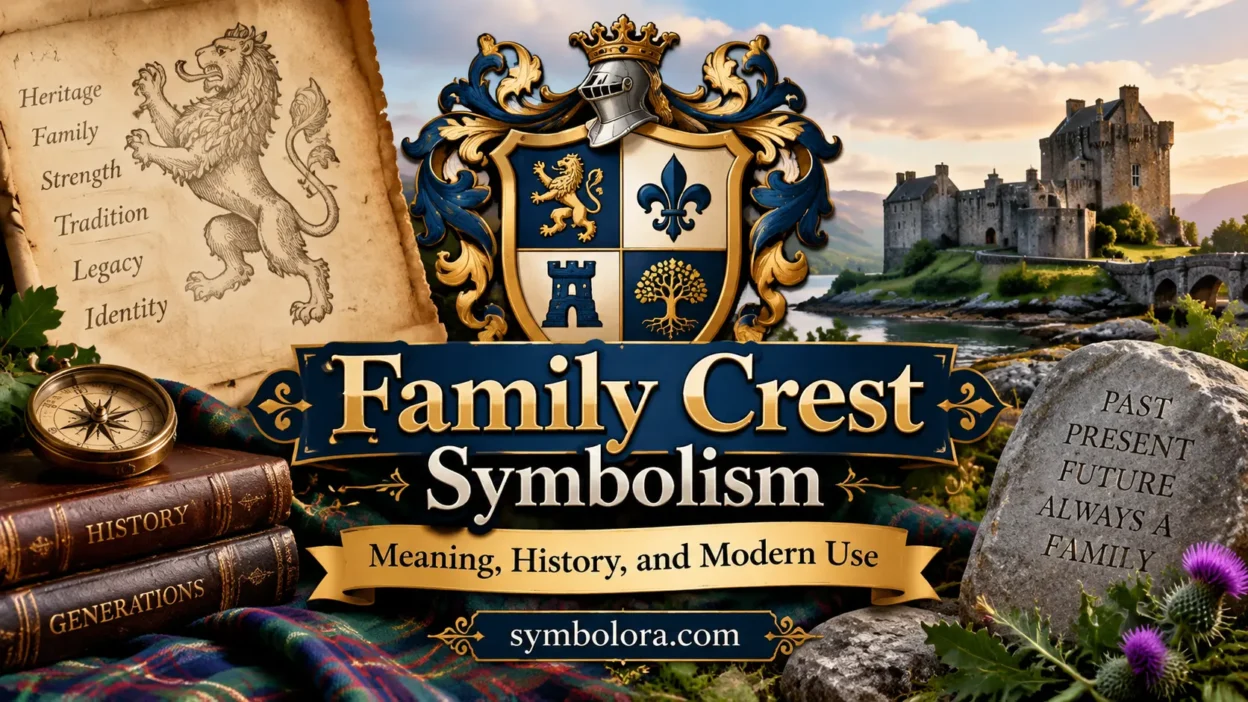
A family crest is more than a decorative emblem. It is a visual design that represents ancestry, identity, values, and connections between generations. Family crest symbolism helps people understand why certain images, colors, animals, and patterns appear on these traditional designs and how they continue to influence modern American ideas about heritage.
Many people encounter family crests through genealogy research, wedding decorations, personalized gifts, home artwork, tattoos, or historical records. In the United States, these symbols often represent family pride and personal connection rather than official status or inherited authority.
Understanding family crests requires looking at where they came from, how different cultures used them, and why people still choose these designs today. The meanings behind shields, animals, crowns, plants, and colors reveal stories about loyalty, courage, occupation, beliefs, and family traditions.
Quick Answer
Family crest symbolism commonly represents family identity, heritage, personal values, and ancestral connections in modern American culture. Historically, these designs communicated lineage, social position, achievements, and responsibilities through heraldic symbols used by European families.
TL;DR
- Family crests represent heritage, identity, and family values.
- Heraldic symbols began as medieval identification tools.
- Americans often use crests for genealogy and personal pride.
- Animals and colors communicate specific character traits.
- Modern designs appear in tattoos, decor, and gifts.
What a Family Crest Represents Today
In modern American culture, a family crest usually represents a connection to the past and a desire to preserve family stories. Many people view these designs as reminders of ancestors, traditions, and values they want to carry forward.
Unlike official medieval systems, most Americans do not use family crests as legal markers of family status. Instead, a crest often works as a personal symbol. A person may display one because it reflects their heritage, honors relatives, or expresses qualities they admire.
The meaning of a crest depends on its individual elements. A lion may suggest bravery, an oak tree may represent strength, and a blue background may communicate loyalty or trust. Each feature contributes to the overall message of the design.
For many families, the emotional value comes from the story behind the symbol rather than the artwork itself. A crest can become a visual reminder of family experiences, migration stories, cultural roots, or shared beliefs.
Ancient Roots of Heraldic Family Symbols
The origins of family crests connect closely with medieval Europe, especially the development of heraldry. During the Middle Ages, knights wore helmets and armor that made them difficult to identify on battlefields. Symbols placed on shields, banners, and clothing helped distinguish one warrior from another.
Over time, these designs became connected with families, noble houses, military achievements, and social identity. Heraldic systems developed rules about colors, symbols, and arrangements so that designs could communicate specific information.
The shield was usually the central part of a coat of arms. Around it, additional elements such as helmets, animals, supporters, and decorative features appeared. These additions could represent rank, achievements, or family history.
Although many people today use the terms “family crest” and “coat of arms” interchangeably, they are historically different. A coat of arms is a complete heraldic design, while a crest originally referred to a specific symbol placed above the helmet.
Modern conversations often use “family crest” as a general term for heritage-inspired designs. This broader use has become common, especially among people exploring genealogy.
How Family Crests Developed Across Cultures
Although European heraldry strongly influenced the idea of family crests, many cultures developed their own systems of symbolic identity.
In Japan, family symbols called kamon used simple designs to identify clans and households. These symbols often featured plants, animals, or geometric patterns connected to family history.
In Scotland and Ireland, heraldic traditions became closely connected with clans and ancestry. Symbols on shields and badges often reflected family connections, historical events, or regional identity.
In Native American communities, identity symbols developed through different traditions. Clan symbols, animal relationships, and cultural artwork communicated belonging and responsibilities rather than following European heraldic rules.
Across cultures, the common idea is that visual symbols can preserve memory and communicate identity. However, each tradition has its own history and meaning system.
The Meaning of Common Family Crest Elements
Every part of a family crest can contribute to its interpretation. Colors, animals, plants, objects, and shapes often carry symbolic associations that developed over centuries.
| Crest Element | Meaning in the USA | Common Associations | Notes |
|---|---|---|---|
| Lion | Courage and leadership | Strength, bravery, confidence | Common in European heraldry |
| Oak Tree | Stability and endurance | Family roots, longevity | Often linked with nature symbolism |
| Blue Color | Loyalty and trust | Honesty, responsibility | Frequently used in designs |
| Sword | Protection and duty | Defense, honor | Connected with warrior traditions |
| Eagle | Freedom and vision | Independence, pride | Popular in American imagery |
These meanings are not fixed rules. A family may choose symbols because of personal experiences rather than traditional interpretations.
Why Animals Appear on Family Crests
Animals are among the most recognizable parts of family crest designs. They often represent qualities that families wanted to associate with their name or history.
The lion became one of the most common heraldic animals because European cultures connected it with courage, authority, and leadership. Eagles often represented vision, freedom, and strength, making them especially meaningful in American symbolism.
Wolves, bears, horses, and deer also appear in symbolic designs. A wolf may represent loyalty and cooperation, while a deer may suggest gentleness, awareness, or connection with nature.
Animal symbolism works because people naturally connect certain behaviors with human characteristics. A strong animal image can communicate a family’s ideals without using words.
Color Symbolism in Family Crests
Colors play an important role in communicating messages within crest designs. Traditional heraldry developed associations between certain colors and qualities.
Gold or yellow often represented generosity, achievement, and wealth. Red commonly suggested courage, sacrifice, or determination. Green was frequently connected with hope, growth, and nature.
In modern America, people may interpret these colors more personally. A family might choose green because of a connection to farming, forests, or environmental values rather than traditional heraldic meaning.
The emotional response to color also affects how people view a crest. A dark blue shield may feel dependable and serious, while bright colors may create a more energetic appearance.
How Americans Use Family Crests for Identity and Heritage
In the United States, family crests are most commonly connected with ancestry, genealogy, and personal identity. Because America is a nation shaped by many immigrant communities, people often use family symbols to explore where their ancestors came from and how those histories shaped their lives.
Many Americans discover interest in family crests while researching genealogy. Old documents, family records, immigration stories, and historical photographs can encourage people to create a visual connection with earlier generations.
However, modern American use is different from medieval Europe. A family crest usually does not represent legal ownership, inherited power, or official family authority. Instead, it functions as a meaningful reminder of heritage, personal values, and family stories.
For some families, a crest appears during important moments such as weddings, anniversaries, reunions, or milestone celebrations. It may be placed on invitations, family trees, gifts, or decorative items to represent unity and shared history.
The popularity of genealogy websites and ancestry research has also increased interest in these symbols. Many people enjoy learning about possible historical connections and creating artwork inspired by their background.
Family Crests in Weddings, Gifts, and Family Traditions
Family crests often appear in celebrations because they visually represent belonging and connection. Weddings are one of the most common modern settings where these symbols appear.
Couples may include a family-inspired emblem on invitations, wedding signs, cake designs, or keepsakes. The symbol can represent the joining of two families and the creation of a new shared story.
Personalized gifts also commonly feature crest designs. Items such as engraved watches, framed artwork, jewelry, glassware, and wooden decorations may include symbols chosen for their connection to family history.
In family reunions, a crest can help create a shared identity among relatives who may live in different locations. It provides a visual reminder that family relationships continue across generations.
The meaning comes from emotional connection rather than the object itself. A simple symbol can represent memories, relationships, and values passed between relatives.
Family Crest Symbolism in Tattoos and Personal Style
Family crest tattoos have become a popular way for people to express ancestry and personal identity. Unlike temporary fashion choices, tattoos often represent a lasting connection to something meaningful.
People may choose a crest tattoo to honor parents, grandparents, cultural roots, or family traditions. Some combine traditional elements with modern designs by adding dates, initials, flowers, animals, or personal symbols.
Common tattoo features include shields, lions, birds, trees, crowns, and family names. Each element can represent a personal interpretation of strength, loyalty, protection, or belonging.
In American tattoo culture, family-related designs often focus less on historical accuracy and more on emotional meaning. A person may create a unique crest that represents their own experiences rather than copying an old heraldic design.
The popularity of these tattoos reflects a broader interest in identity symbolism. Many people use body art to show what relationships, memories, and values matter most to them.
Religious and Spiritual Connections With Family Crests
Family crests are not primarily religious symbols, but some designs include elements connected with faith and spiritual traditions.
Crosses, angels, biblical imagery, doves, and other religious symbols sometimes appear in family-inspired artwork. These additions may represent beliefs, moral values, protection, or gratitude.
In Christian communities, certain symbols may reflect ideas such as faith, sacrifice, hope, or devotion. A cross included in a family design may represent religious identity rather than traditional heraldic meaning.
Other cultures may include spiritual symbols connected with their own beliefs and traditions. The meaning depends on the family’s background and personal interpretation.
It is important to separate historical heraldry from later additions. Many modern family designs combine ancestry, religion, and personal values into one visual expression.
Psychological Meaning Behind Family Symbols
Family symbols can influence how people understand their own identity. Psychologically, symbols help people organize memories, relationships, and personal narratives.
A family crest can create a sense of connection by representing something larger than one individual. It may remind someone of relatives, childhood experiences, cultural traditions, or lessons learned from previous generations.
For people who feel disconnected from their ancestry, a family symbol can provide a starting point for exploring their background. It gives a visual form to questions about identity and belonging.
Symbols also communicate values. A person who chooses a lion may connect with courage, while someone who selects a tree may focus on stability and family roots.
The meaning does not come from the design alone. It develops through the relationship between the person and the story they attach to the symbol.
Family Crest Symbolism in Home Decor and Design
Family crest designs continue to appear in modern interior design. Many homeowners use heritage-inspired artwork to create spaces that feel personal and connected to their history.
Common uses include framed wall art, wooden carvings, embroidered fabrics, decorative signs, and customized furniture. These items often appear in offices, libraries, entryways, or family rooms.
Modern designers frequently adapt traditional crest elements into simpler styles. Instead of complex medieval designs, contemporary versions may use clean lines, minimal colors, or personalized symbols.
The popularity of vintage-inspired decor has also increased interest in traditional emblems. People often combine old-fashioned designs with modern homes to create a connection between past and present.
For many Americans, a family crest displayed at home is less about status and more about storytelling.
Common Misunderstandings About Family Crests
One of the biggest misunderstandings about family crests is the belief that every surname has one official crest that belongs to all people with that name.
Historically, heraldic systems were usually connected to specific individuals or family branches rather than everyone sharing the same surname. Two unrelated families could have the same last name but different histories and symbols.
Another misconception is that purchasing a “family crest” online automatically provides an authentic historical connection. Some modern products use surname-based designs created for decorative purposes rather than verified ancestry.
This does not mean these designs have no value. A personalized crest can still hold emotional importance if it represents a family’s own story.
The difference is between historical accuracy and personal meaning. Both can exist, but they should not be confused.
When Family Crest Symbols Are Misused
Because family crests carry ideas of heritage and identity, they can sometimes be misunderstood or used in inaccurate ways.
Commercial products may present generic designs as official family symbols without explaining their origins. This can create confusion for people researching their ancestry.
Some historical symbols have also been connected with outdated social systems, including ideas about inherited status or superiority. Modern interpretations often separate the artwork from those historical contexts.
A family crest should be viewed as a cultural symbol rather than proof of personal achievement or social rank.
Responsible use involves understanding the history behind symbols and respecting the traditions from which they developed.
How Family Crest Meaning Has Changed Over Time
Family crests have changed significantly from their original medieval purpose. Early designs helped identify warriors and families in societies where visual symbols were essential for recognition.
Later, they became associated with genealogy, family records, and heritage preservation. In modern America, they have become flexible symbols that people adapt to express personal identity.
Today, a family crest may combine traditional imagery with modern experiences. A person might include symbols representing immigration, careers, hobbies, hometowns, or family achievements.
The shift shows how symbols evolve with society. Their meanings are not frozen in the past; they continue to change as people create new connections with them.
Modern Uses of Family Crest Symbolism
Today, family crest designs appear across many areas of everyday life:
- Tattoos: Personal expressions of ancestry and values
- Jewelry: Meaningful family keepsakes
- Home decor: Heritage-inspired artwork
- Digital profiles: Online identity symbols
- Wedding designs: Family connection themes
- Custom gifts: Personalized reminders of relationships
Social media has also changed how people share family symbols. A crest can become part of digital storytelling, genealogy communities, and family history discussions.
Modern creators often blend traditional heraldic elements with contemporary design. This allows people to honor history while creating something unique.
Frequently Asked Questions About Family Crest Symbolism
What does a family crest symbolize?
A family crest symbolizes heritage, identity, values, and connections between generations. In modern America, people usually view it as a personal or family expression rather than an official mark of status.
Are family crests connected to every last name?
No. A surname does not automatically have one official family crest shared by everyone with that name. Historical crests were usually connected to specific families or individuals.
What do animals on family crests mean?
Animals often represent qualities associated with character or values. Lions may suggest courage, eagles may represent freedom, and deer may symbolize gentleness or awareness.
Do family crest tattoos have a special meaning?
Family crest tattoos often represent ancestry, loyalty, memories, or personal identity. The meaning depends on the individual’s connection to the design.
Are family crests religious symbols?
Family crests are not generally religious symbols, but some designs include faith-related imagery. Religious elements usually reflect the beliefs of the person or family using the design.
Why are family crests popular in America?
Family crests remain popular because many Americans are interested in genealogy, heritage, and preserving family stories. They provide a visual way to connect with personal history.
Conclusion
Family symbols continue to help people express where they come from and what values matter to them. While medieval crests once served practical purposes in identifying families and warriors, modern interpretations focus more on heritage, memory, and personal connection.
Family crest symbolism represents a bridge between ancestry and modern identity. Whether displayed in a home, worn as jewelry, or created as a tattoo, these designs continue to give people a meaningful way to honor family stories.
The most important part of any crest is not the artwork alone but the history and meaning a person chooses to preserve through it.


