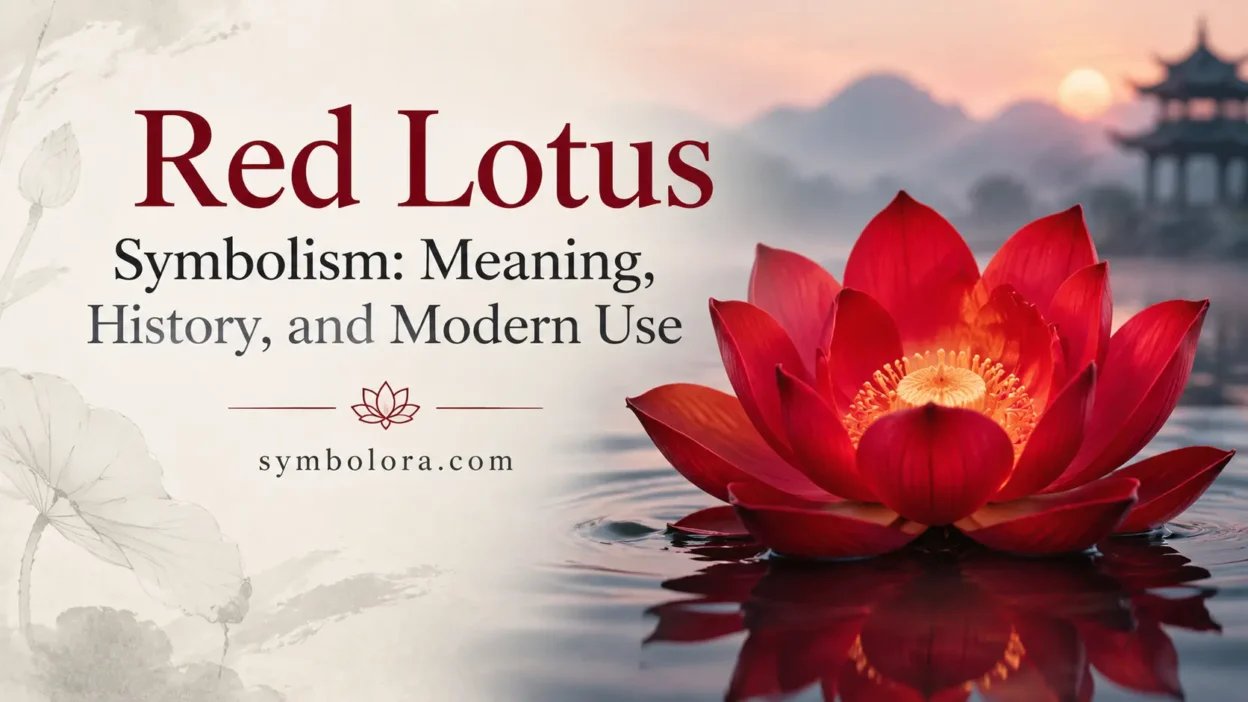
Flowers often carry meanings that extend beyond their physical beauty. The red lotus symbolism is connected with love, compassion, passion, transformation, and spiritual awareness. Across different cultures, the red lotus has represented emotional depth and the ability to grow through challenging conditions.
In the United States, people often encounter the red lotus through art, tattoos, meditation spaces, jewelry, and decorative designs. While its meanings come from older cultural traditions, modern Americans frequently interpret it as a symbol of personal growth, emotional strength, and beauty that develops through life experiences.
The red lotus stands out because it combines two contrasting ideas: the calm purity associated with the lotus flower and the emotional intensity connected with the color red. This combination has allowed the symbol to develop different meanings across religious, artistic, and personal contexts.
Quick Answer
Red lotus symbolism commonly represents love, compassion, emotional strength, and personal transformation in modern American culture. Historically, the red lotus has been associated with devotion, spiritual awakening, and the heart in several Asian religious and artistic traditions.
TL;DR
- Red lotus represents love and compassion.
- Ancient traditions linked it with spiritual devotion.
- Americans use it for beauty and personal meaning.
- Red lotus tattoos often symbolize growth.
- Color psychology connects red with emotion.
- The symbol has varied cultural interpretations.
What Is the Red Lotus and Where Is It Found?
The red lotus is a flowering aquatic plant recognized for its striking red or pink-red petals that rise above water. Like other lotus varieties, it grows from muddy environments while producing a flower that appears clean and untouched above the surface.
This natural characteristic has influenced many symbolic interpretations. The lotus’s ability to emerge from difficult surroundings became connected with ideas of resilience, renewal, and overcoming obstacles.
People may encounter red lotus imagery in religious artwork, paintings, garden designs, meditation spaces, tattoos, clothing patterns, and home decorations. In modern design, the flower is often chosen because it combines elegance with emotional meaning.
The red color adds another layer of interpretation. Unlike white lotus flowers, which are often linked with purity and clarity, the red lotus is more commonly associated with human emotions, relationships, compassion, and the heart.
What It Commonly Means in the United States
In the United States, the red lotus does not have one official meaning. Instead, people interpret it through personal beliefs, artistic choices, and cultural influences.
Many Americans associate the red lotus with:
| Context | Meaning in the USA | Common Associations | Notes |
|---|---|---|---|
| Tattoos | Personal growth and emotional strength | Healing, change, identity | Often chosen after major life experiences |
| Home Decor | Peaceful beauty and balance | Calm spaces, meditation | Popular in modern wellness designs |
| Jewelry | Love and connection | Romance, confidence | Often worn as a personal reminder |
| Art | Beauty and transformation | Nature, emotions, spirituality | Used in symbolic artwork |
For many people, the red lotus represents the idea that difficult experiences do not define a person’s future. Instead, challenges can become part of a larger story of growth and change.
The symbol also appears in wellness communities, where lotus imagery is often connected with mindfulness and inner reflection. However, its meaning depends on the person using it rather than a single universal definition.
Ancient Roots and Early Symbolism
The lotus flower has been important in Asian cultures for thousands of years, especially in regions connected with ancient India, Egypt, China, and Southeast Asia. Different societies developed their own interpretations based on religion, philosophy, and local traditions.
In Hindu traditions, lotus flowers are strongly associated with spiritual development, creation, and divine connection. Many Hindu deities are represented with lotus imagery, reflecting ideas of beauty, balance, and higher awareness.
In Buddhism, lotus flowers represent awakening and the journey toward understanding. The flower’s growth from muddy water into a beautiful bloom became a metaphor for moving beyond suffering and developing wisdom.
The red lotus developed a specific association with emotions and compassion in some Buddhist traditions. It is sometimes connected with qualities of the heart, including love, kindness, and devotion.
Although these traditions differ, they share a common appreciation for the lotus as a symbol of transformation.
Why the Color Red Changes the Lotus Meaning
Color plays an important role in how people understand symbols. The same object can communicate different ideas depending on its color.
Red is commonly associated with:
- Love
- Passion
- Courage
- Energy
- Emotion
- Human connection
When combined with the lotus flower, these associations create a symbol that feels more personal and emotionally expressive than other lotus colors.
A white lotus may suggest purity or peaceful awareness, while a blue lotus may represent wisdom and knowledge in some traditions. The red lotus focuses more on emotional qualities, relationships, and the heart.
In American culture, red is also strongly connected with romance, celebration, and personal expression. This helps explain why red lotus designs are often chosen for tattoos, gifts, and artwork related to meaningful relationships or life changes.
Red Lotus Symbolism in Religious Traditions
Religious interpretations of the red lotus vary depending on the tradition and region. It is important to understand these meanings within their original cultural contexts rather than treating them as universal symbols.
In Buddhism, the red lotus is sometimes connected with compassion, love, and qualities of the heart. It can represent emotional awareness and the development of positive human qualities.
In Hindu traditions, lotus imagery frequently represents spiritual beauty and connection with the divine. While not every lotus reference specifically refers to the red lotus, the flower itself holds a respected place in religious art and philosophy.
Outside Asia, lotus symbolism has also appeared in artistic and spiritual movements where people use the flower as a representation of renewal, peace, and personal reflection.
Modern Americans may adopt these meanings in meditation practices, yoga spaces, or personal artwork. However, many people also use the red lotus simply because they connect with its visual beauty and emotional symbolism.
Emotional and Psychological Meaning of the Red Lotus
Symbols often become meaningful because they help people express feelings that are difficult to describe directly. The red lotus is frequently connected with emotional experiences such as love, recovery, courage, and self-discovery.
From a psychological perspective, flowers that grow in challenging environments often represent resilience. The lotus develops underwater in muddy conditions before producing a visible flower, making it a natural image of progress and adaptation.
For many people, the red lotus represents the ability to experience strong emotions while continuing to move forward. It can symbolize accepting the past, building confidence, and finding beauty after difficult periods.
The connection with the heart is especially important. The red lotus is often viewed as a symbol of emotional openness rather than emotional weakness. It suggests that compassion, affection, and vulnerability can be signs of strength.
In personal spaces, artwork featuring a red lotus may serve as a reminder of balance between feeling deeply and maintaining inner stability.
Why People Choose Red Lotus Tattoos
Red lotus tattoos have become popular because they combine visual appeal with personal meaning. Unlike some symbols that have one fixed interpretation, lotus tattoos allow individuals to attach their own stories to the design.
Common reasons people choose a red lotus tattoo include:
- Representing personal transformation
- Honoring emotional healing
- Celebrating love or relationships
- Marking a major life change
- Expressing connection with nature or spirituality
Some people choose a blooming lotus to represent a new beginning, while others prefer a closed bud to symbolize potential and future growth.
Tattoo placement can also influence personal interpretation. A red lotus near the heart may emphasize love and emotion, while a larger design on the back or shoulder may represent a broader life journey.
In American tattoo culture, the red lotus is often appreciated because it blends traditional symbolism with modern individual expression.
Red Lotus Symbolism in American Art and Design
In the United States, lotus imagery appears in many forms of creative expression. Artists, designers, and decorators often use the flower because it communicates both elegance and meaning.
The red lotus can appear in:
- Wall art
- Fashion patterns
- Jewelry designs
- Wellness branding
- Meditation spaces
- Garden decorations
Modern interior design often uses lotus imagery to create peaceful environments. A red lotus painting may introduce warmth and emotion into a room while still maintaining a connection with natural beauty.
In fashion, lotus designs are sometimes chosen for their graceful appearance rather than their traditional symbolism. However, many people still appreciate the ideas of renewal and emotional strength associated with the flower.
The symbol’s flexibility allows it to exist in both spiritual and purely artistic settings.
The Red Lotus in Weddings, Relationships, and Love Symbolism
Because red is strongly associated with love and passion, the red lotus can naturally connect with relationships and emotional bonds.
Some people interpret the flower as representing:
- Devotion between partners
- Emotional connection
- Respect and compassion
- The growth of a relationship over time
Unlike traditional romantic symbols such as roses or hearts, the red lotus often adds an additional idea of personal development. It suggests that healthy relationships require growth, patience, and understanding.
In American weddings and celebrations, lotus imagery is less common than roses, but it may appear in multicultural ceremonies, floral artwork, invitations, or decorative themes where symbolic meaning is important.
The red lotus is especially meaningful for people who want a symbol that represents both love and personal evolution.
Modern Uses of Red Lotus Symbolism
Today, the red lotus appears in many areas of everyday life. Its meaning continues to change as people use it in new contexts.
Common modern uses include:
Tattoos and Body Art
Many people use the red lotus as a permanent reminder of personal experiences, emotional growth, or important relationships.
Jewelry
Red lotus pendants and earrings are often worn as symbols of beauty, confidence, or personal values.
Meditation and Wellness Spaces
Yoga studios, meditation rooms, and wellness products frequently use lotus imagery because of its association with calmness and reflection.
Digital Culture
Online, lotus designs are often used in profile images, artwork, and inspirational content. The red lotus may communicate themes of self-improvement, emotional awareness, and creativity.
Home Decoration
Paintings, sculptures, and patterns featuring lotus flowers are popular among people who want natural imagery with symbolic meaning.
The modern use of the red lotus shows how traditional symbols can adapt while still keeping connections to their historical roots.
Common Misunderstandings About the Red Lotus
Although the red lotus has many positive associations, some interpretations can become oversimplified.
One common misunderstanding is that every lotus color has one universal meaning everywhere. In reality, interpretations change between cultures, religions, and individual experiences.
Another misunderstanding is assuming that lotus symbolism always has a religious meaning. While the flower has important religious connections, many people use lotus imagery for artistic, emotional, or decorative reasons.
The red lotus is also sometimes presented online with exaggerated claims about hidden meanings or guaranteed personal outcomes. These interpretations usually reflect modern personal beliefs rather than traditional cultural meanings.
Understanding the symbol requires respecting both its historical background and the personal reasons people choose it today.
How Red Lotus Meaning Has Changed Over Time
The meaning of the red lotus has developed through centuries of cultural exchange. Earlier interpretations were often connected with religious ideas, spiritual growth, and philosophical teachings.
Over time, the symbol moved into broader artistic and personal spaces. Today, many people who use the red lotus may not follow the traditions where the symbol originated, but they still connect with themes of growth, love, and renewal.
Global communication has also influenced how symbols travel. Through art, media, travel, and online communities, lotus imagery has become familiar to people around the world.
In modern America, the red lotus often represents a combination of traditional ideas and personal interpretation. Someone may view it as a spiritual symbol, while another person may see it as a reminder of resilience or emotional strength.
Both interpretations can exist because symbols often gain meaning through human experience.
Controversies and Cultural Respect Around Lotus Symbolism
As symbols move between cultures, questions about respect and understanding can arise. The lotus has significant importance in several Asian religious traditions, so using it only as a decorative trend can sometimes overlook its cultural background.
This does not mean people outside those cultures cannot appreciate or use lotus imagery. Instead, respectful use involves recognizing that the symbol has histories beyond modern design trends.
For example, someone choosing a red lotus tattoo may want to learn about its traditional meanings rather than relying only on simplified online descriptions.
Cultural symbols often become part of global art and fashion. The most thoughtful approach is to appreciate their origins while allowing individuals to create personal meanings.
Red Lotus Symbolism Compared With Other Lotus Colors
Different lotus colors often create different emotional impressions. While meanings vary across traditions, people commonly associate lotus colors with certain themes.
| Lotus Color | Common Symbolic Meaning | Modern Interpretation |
|---|---|---|
| Red Lotus | Love, compassion, emotion | Personal connection and emotional growth |
| White Lotus | Purity and clarity | Peaceful spaces and simplicity |
| Blue Lotus | Wisdom and knowledge | Learning and reflection |
| Pink Lotus | Spiritual devotion and beauty | Grace and harmony |
These associations are not fixed rules. A person’s culture, beliefs, and personal experiences can influence how they understand each color.
The red lotus stands apart because it focuses more strongly on emotional expression and human connection.
Frequently Asked Questions
What does a red lotus symbolize?
A red lotus commonly symbolizes love, compassion, emotional strength, and transformation. Its meaning often connects the beauty of the flower with the idea of growth through challenging experiences.
What does a red lotus tattoo mean?
A red lotus tattoo often represents personal growth, emotional healing, love, or a significant life change. The exact meaning depends on the person wearing it and their personal story.
Is the red lotus a religious symbol?
The red lotus has religious associations in some Buddhist and Hindu traditions, especially connected with compassion, devotion, and spiritual development. However, many people also use it as a nonreligious artistic symbol.
What does the red lotus mean in American culture?
In the United States, the red lotus is often interpreted as a symbol of beauty, resilience, love, and personal transformation. Its meaning is usually shaped by individual experiences rather than one shared definition.
Is the red lotus a positive symbol?
Yes, the red lotus is generally viewed positively. It is commonly associated with compassion, emotional connection, renewal, and the ability to grow despite difficulties.
How is a red lotus different from a red rose?
A red rose is traditionally linked with romance and passion, while a red lotus often adds ideas of transformation, inner growth, and emotional balance. Both can represent love, but they communicate different themes.
Conclusion
The red lotus symbolism represents a blend of emotional expression, compassion, love, and personal growth. Its origins in Asian religious and artistic traditions have influenced how people understand the flower, while modern American culture has expanded its meaning through tattoos, design, wellness practices, and personal expression.
The red lotus remains meaningful because it connects natural beauty with human experiences. Whether used as artwork, jewelry, or a personal symbol, it reflects the idea that growth and beauty can emerge from difficult circumstances.


