Stories about beauty and beasts appear across cultures because they explore a familiar human experience: looking beyond appearances to understand character, identity, and change. Beauty and the Beast symbolism represents the contrast between outward appearance and inner value, showing how compassion, acceptance, and personal growth can transform relationships.
The tale is especially meaningful in modern American culture because it challenges ideas about attractiveness, judgment, and what makes someone worthy of love or respect. From movies and literature to weddings, tattoos, and personal expression, the story continues to represent emotional maturity and the belief that people are more than their first impressions.
The symbol is not limited to romance. It also reflects struggles with self-image, isolation, fear of rejection, and the process of becoming a better version of oneself.
Quick Answer
Beauty and the Beast symbolism commonly represents seeing beyond appearances, accepting inner character, and experiencing personal transformation. Historically, the story has also symbolized love overcoming fear, social judgment, and emotional barriers.
TL;DR
- Beauty represents compassion, curiosity, and inner strength.
- The Beast symbolizes isolation, fear, and hidden goodness.
- The tale developed from older European folklore traditions.
- Americans often view it as a story of acceptance.
- Modern uses include tattoos, art, weddings, and media.
- Its meaning has changed with modern ideas about relationships.
What Beauty and the Beast Represents in Modern Culture
The central idea behind Beauty and the Beast is the difference between appearance and identity. The beautiful character is not valuable only because of physical attractiveness, and the beastly character is not defined only by his frightening appearance.
In the United States, many people interpret the story as a reminder that personality, kindness, and emotional growth matter more than surface impressions. This interpretation connects with modern conversations about self-worth, empathy, and avoiding quick judgments.
The symbol often appears when people want to express a relationship or personal journey that involves acceptance, patience, and change.
The Meaning of Beauty as a Symbol
Beauty traditionally represents qualities such as kindness, intelligence, grace, and emotional awareness rather than only physical appearance.
In the story, Beauty is different from the typical fairy-tale character because she shows independence and curiosity. She values learning, family, and compassion. Her character suggests that true beauty comes from choices and actions.
In modern American interpretations, Beauty often symbolizes:
- Emotional intelligence
- Confidence without arrogance
- Compassion toward others
- The ability to see beyond stereotypes
- Personal freedom
Because of this, the symbol is frequently connected with people who believe character matters more than appearance.
The Beast as a Symbol of Hidden Identity
The Beast represents the parts of human nature that are misunderstood or hidden. His frightening appearance reflects fear, anger, loneliness, and emotional pain.
However, the character is not presented as permanently cruel. His transformation depends on learning patience, kindness, and responsibility. This makes him a symbol of personal development rather than simply a monster figure.
Many modern readers connect the Beast with experiences such as:
- Feeling judged by others
- Struggling with insecurity
- Learning emotional control
- Wanting acceptance despite imperfections
The Beast’s story suggests that people can change when they recognize their mistakes and choose better actions.
Ancient Roots and Early Story Traditions
Although many people know the story through modern adaptations, Beauty and the Beast comes from older European storytelling traditions.
The best-known written version appeared in 18th-century France, but themes involving humans, animals, magical transformations, and unusual relationships existed in earlier folklore.
These older stories often explored practical concerns such as marriage, family expectations, social status, and the uncertainty of relationships. The “beast” figure was sometimes used to represent the unknown or the fear of entering unfamiliar situations.
Over time, the story shifted from a tale about social arrangements into a broader story about emotional connection and personal transformation.
How the Story Changed Through Different Eras
The meaning of Beauty and the Beast has evolved as societies changed.
Early versions focused more on duty, marriage, and moral lessons. Beauty’s kindness helped create harmony between two different worlds.
Later interpretations placed greater emphasis on romance, emotional understanding, and individual choice. Modern versions often highlight the importance of consent, communication, and mutual respect.
In American culture, the story is now commonly viewed less as a traditional fairy tale and more as a reflection on relationships, identity, and personal growth.
Beauty and the Beast Symbolism in the United States
American audiences often connect the story with ideas of acceptance and transformation. The popularity of film adaptations, stage productions, merchandise, and themed events has helped make the symbolism widely recognizable.
In the United States, common interpretations include:
| Context | Meaning in the USA | Common Associations | Notes |
|---|---|---|---|
| Relationships | Looking beyond appearances | Love, acceptance, trust | Often used in romantic contexts |
| Personal growth | Becoming a better person | Change, healing, maturity | Focuses on the Beast’s transformation |
| Art and design | Contrast between opposites | Beauty, darkness, balance | Used in creative themes |
| Weddings | Devotion and understanding | Romance, commitment | Inspired by fairy-tale imagery |
| Self-expression | Embracing uniqueness | Identity, confidence | Common in tattoos and fashion |
The story remains popular because it fits American ideals of reinvention and believing that people can grow beyond their past.
Emotional and Psychological Meaning Behind the Tale
From a psychological perspective, Beauty and the Beast reflects common human fears and desires.
The Beast represents emotional defenses. People sometimes hide behind anger, distance, or harsh behavior because of insecurity or past experiences. Beauty represents empathy and the willingness to understand another person’s perspective.
The story also explores the tension between fear and connection. The Beast must overcome his fear of vulnerability, while Beauty must overcome her fear of what she does not understand.
This makes the symbol relevant to discussions about emotional growth and healthier relationships.
Why Beauty and the Beast Appears in Tattoos and Personal Style
Many people choose Beauty and the Beast imagery for tattoos because the story represents more than romance.
Common tattoo meanings include:
- Accepting imperfections
- Personal transformation
- Finding beauty in unexpected places
- Overcoming emotional struggles
- Celebrating a meaningful relationship
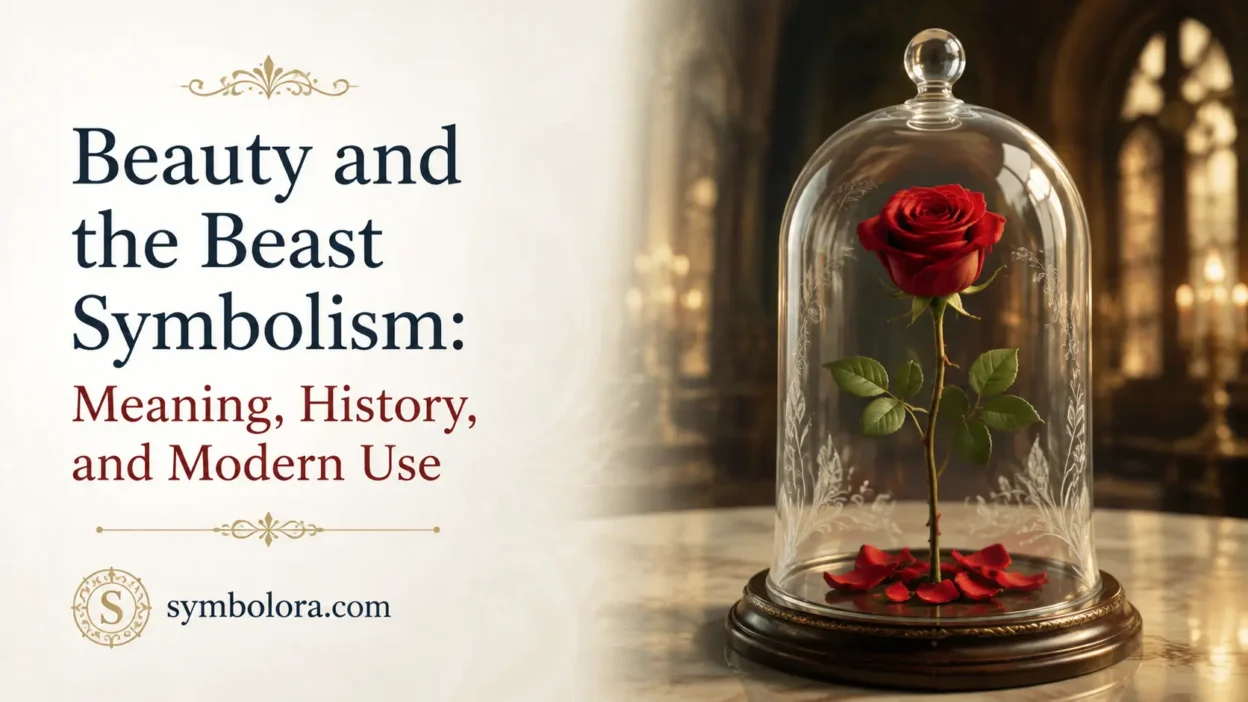
Some designs focus on the rose, which became strongly associated with later versions of the story. The rose often represents time, love, patience, and the fragile nature of relationships.
Others use the characters themselves to represent balance between different parts of personality.
The Rose Symbolism Connected to Beauty and the Beast
The enchanted rose is one of the most recognizable symbols connected with the story.
It represents limited time, responsibility, and the consequences of failing to change. Its connection to love also makes it a common romantic symbol.
In American culture, roses already carry strong meanings related to:
- Romance
- Commitment
- Remembrance
- Beauty
- Emotional expression
When combined with Beauty and the Beast imagery, the rose often represents love that requires care, patience, and understanding.
Cross-Cultural Interpretations of the Story
Although the familiar version is European, similar themes appear in many cultures.
Stories involving transformations between humans and animals appear in folklore around the world. These narratives often explore relationships between the familiar and unfamiliar.
Different cultures may interpret the story through their own traditions. Some focus on marriage and family, while others emphasize transformation, morality, or the relationship between humans and nature.
The shared idea is usually the same: appearances can hide important truths.
Religious and Moral Interpretations
Beauty and the Beast is not a religious story, but some audiences connect its themes with moral ideas found in various traditions.
The transformation of the Beast may remind people of concepts such as:
- Redemption after wrongdoing
- The importance of compassion
- The value of forgiveness
- Inner character over outward appearance
However, interpretations vary. Some people view it simply as a literary story about relationships rather than a spiritual message.
Modern Pop Culture and Digital Use
The story remains influential in movies, television, theater, and online culture.
In modern digital spaces, people use Beauty and the Beast references to describe:
- Unexpected relationships
- Personal transformations
- Before-and-after changes
- Contrasting personalities
Social media has also expanded the symbol beyond the original story. People may use the phrase casually when discussing situations where someone’s appearance does not match their personality.
Common Misunderstandings About Beauty and the Beast Symbolism
One common misunderstanding is that the story means someone should tolerate harmful behavior because a person might change.
Modern interpretations often separate transformation from excuses. Growth requires responsibility and genuine effort, not simply receiving acceptance from others.
Another misunderstanding is that the story only represents romantic love. In reality, it can symbolize friendships, family relationships, self-acceptance, and personal development.
The symbolism works because it addresses broader human experiences, not just one type of relationship.
How the Meaning Has Evolved Today
Modern audiences increasingly examine the story through ideas of equality, independence, and healthy relationships.
Earlier versions often focused on Beauty’s ability to change the Beast. Contemporary interpretations pay more attention to both characters growing together.
Today, the symbol is less about a person being “fixed” by love and more about understanding, accountability, and accepting complexity in people.
This shift reflects changing views about identity and relationships in American society.
FAQ About Beauty and the Beast Symbolism
What does Beauty and the Beast symbolize?
Beauty and the Beast symbolizes looking beyond appearances and recognizing inner character. It also represents personal growth, acceptance, and emotional transformation.
What does the Beast represent symbolically?
The Beast represents hidden emotions, insecurity, isolation, and the possibility of change. His transformation reflects learning compassion and responsibility.
Is Beauty and the Beast symbolism positive or negative?
The symbolism is generally positive because it focuses on acceptance and growth. However, modern interpretations emphasize that positive change requires effort and accountability.
What does a Beauty and the Beast tattoo mean?
A Beauty and the Beast tattoo often represents transformation, self-acceptance, love, or finding value beyond outward appearances. The exact meaning depends on the person’s design and experience.
Why is the rose important in Beauty and the Beast?
The rose represents time, love, and the need to appreciate important moments. It became one of the most recognizable symbols associated with the story.
How do Americans usually interpret Beauty and the Beast?
Many Americans view the story as a message about acceptance, emotional maturity, and judging people by their actions rather than appearance.
Conclusion
Beauty and the Beast symbolism represents the idea that identity cannot be understood through appearance alone. The story connects beauty with kindness and the beast with hidden struggles, showing how people can grow through understanding and compassion.
From classic storytelling to modern tattoos, entertainment, and personal expression, the symbol continues to reflect changing ideas about relationships and self-improvement. Its lasting appeal comes from a simple human question: what can we discover when we look beyond what we see?