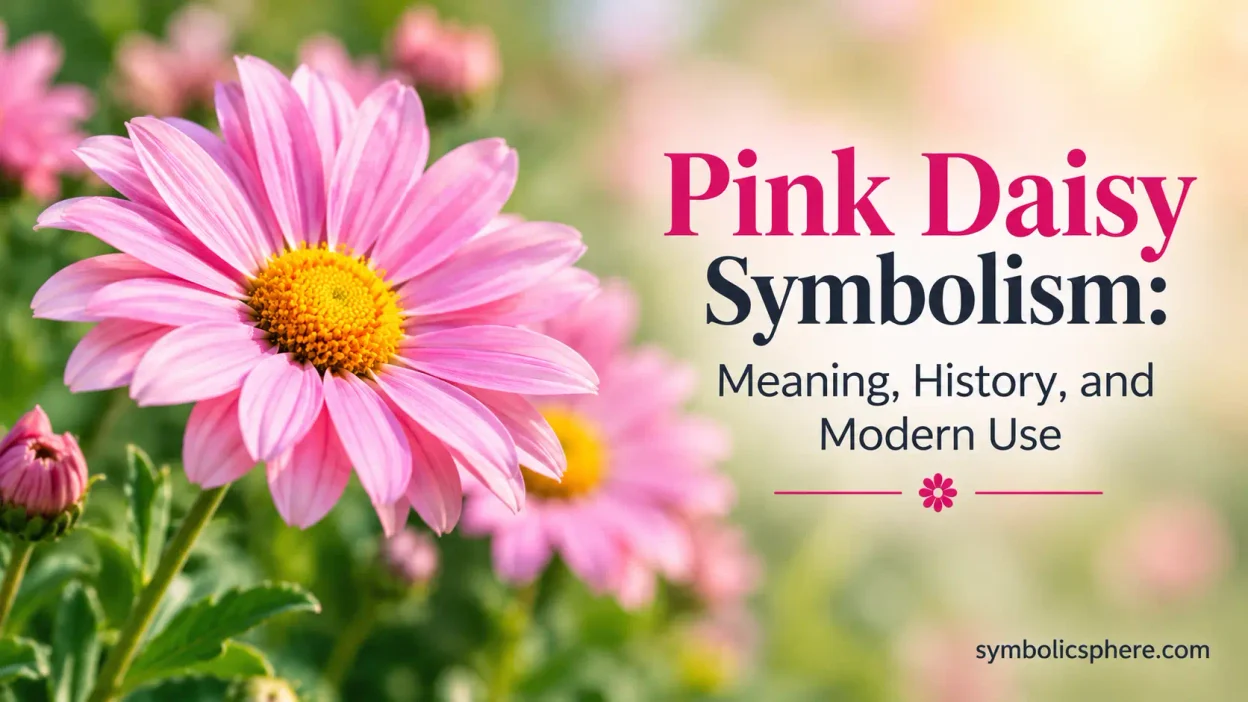
Pink daisy symbolism is commonly associated with gentle affection, happiness, admiration, and fresh beginnings. With soft pink petals surrounding a bright yellow center, this flower combines the familiar simplicity of a daisy with the warmth and tenderness often associated with the color pink. In the United States, pink daisies appear in bouquets, gardens, greeting cards, and floral gifts that express care without feeling overly formal.
Daisies have a long history in European folklore, art, and everyday flower traditions. Their familiar appearance has helped them become symbols of innocence, simplicity, and natural beauty, while pink varieties add associations with romance, friendship, appreciation, and emotional warmth.
However, a pink daisy does not have one universally accepted meaning. Its symbolism depends on the occasion, the relationship between the giver and recipient, and the cultural context. Understanding those differences helps explain why this cheerful flower can communicate anything from a sweet romantic gesture to encouragement for someone beginning a new chapter.
Quick Answer
Pink daisy symbolism commonly represents gentle love, affection, happiness, innocence, and new beginnings in modern American culture, especially in bouquets, gifts, and garden designs. Daisies have older associations with purity and natural simplicity, while the pink color adds meanings of tenderness, admiration, and caring relationships.
TL;DR
- Pink daisies commonly symbolize affection, happiness, and gentle admiration.
- Traditional daisy symbolism includes innocence, purity, and natural simplicity.
- Pink petals add warmth and tenderness to the flower’s meaning.
- American bouquets use pink daisies for birthdays, friendship, romance, and encouragement.
- Flower meanings vary by culture, occasion, and personal experience.
- Pink daisies also appear in tattoos, home decor, fashion, and digital art.
What Does a Pink Daisy Look Like?
A typical pink daisy has a rounded center surrounded by narrow petals that spread outward like rays of sunlight. The center is often yellow, while the petals may range from pale blush and dusty rose to vivid pink. This simple arrangement creates a bright, approachable appearance that many people associate with cheerfulness and freshness.
The term daisy can refer to several different plants rather than one botanical species. Some flowers sold as pink daisies are pink cultivars of the common daisy or related ornamental plants. Others belong to species such as painted daisies or gerbera daisies, which can have larger flower heads and a wider range of colors.
These botanical differences matter because a pink gerbera daisy may communicate a bolder, more contemporary feeling than a small, delicate wildflower. Even so, the basic visual combination of pink petals and a contrasting center supports many of the same modern associations.
People encounter pink daisies in flower shops, backyard gardens, wedding arrangements, floral illustrations, clothing prints, and digital stickers. Their recognizable shape makes them easy to use as a symbol even when the viewer cannot identify the exact plant.
The Core Meaning of Pink Daisy Symbolism
Pink daisies combine two familiar symbolic elements: the daisy itself and the color pink. Their meaning develops from the interaction between these elements rather than from a single fixed tradition.
The daisy is often associated with innocence, simplicity, freshness, and the natural world. Pink commonly suggests affection, warmth, tenderness, and appreciation in contemporary American color symbolism. Together, these associations make pink daisies suitable for expressing caring feelings in a relaxed, approachable way.
Their meaning can shift according to the shade and setting. Pale pink flowers may feel delicate or sentimental, while bright pink varieties can communicate enthusiasm and playful energy. A mixed bouquet may use pink daisies to soften stronger colors or add a friendly touch to a more formal arrangement.
Pink daisies are therefore particularly useful when someone wants to show affection without making an intense romantic declaration. They can express appreciation for a friend, encouragement for a loved one, or simple happiness about an occasion.
Why Pink Represents Tenderness and Affection
The color pink plays a major role in how people interpret pink daisies. In contemporary American culture, pink is frequently connected with affection, kindness, appreciation, and romantic warmth. Unlike bright red, which often communicates passion or intense romantic love, pink can express caring feelings in a softer, less dramatic way.
These associations developed through changing traditions in art, fashion, gift-giving, and popular culture. Pink became especially prominent in clothing, cosmetics, greeting cards, and floral arrangements, where it often conveyed sweetness or delicacy.
Color meanings are not universal, however. Pink can also suggest playfulness, confidence, creativity, or bold self-expression, particularly when the shade is vivid. A hot-pink daisy arrangement may feel energetic and modern, while pale pink flowers can create a quieter, more sentimental impression.
When pink is combined with the daisy’s familiar shape, the result often communicates affection without excessive formality. This makes the flower a useful choice for relationships in which the giver wants to express warmth without implying a serious romantic commitment.
The Historical Roots of Daisy Symbolism
Daisies have accumulated symbolic associations through European folklore, literature, gardening, and religious art. Their simple flower heads and familiar presence in meadows made them accessible subjects for poets, painters, and storytellers.
The English word daisy is commonly traced to the Old English expression dæges ēage, meaning “day’s eye.” The name reflects the flower’s tendency to open in daylight and close under certain nighttime or weather conditions. This daily movement helped connect the flower with daylight and the rhythms of nature.
In European traditions, daisies also became associated with innocence, modesty, and childhood. Their uncomplicated appearance suited these meanings, particularly in literary and artistic depictions of rural life.
A major development came during the 19th century, when flower symbolism became fashionable in Britain and the United States. Books about the language of flowers assigned sentiments to particular plants and colors, allowing people to arrange bouquets as expressions of emotion. These dictionaries did not always agree, so the resulting meanings were never a completely standardized code.
Pink daisies belong to this broader history of floral interpretation. Their modern associations draw on older ideas about daisies and newer conventions surrounding pink flowers, rather than on one ancient tradition devoted specifically to pink daisies.
Innocence, Childhood, and Fresh Beginnings
Daisies are frequently used to represent innocence because of their uncomplicated appearance and associations with meadows, childhood games, and springtime. Pink varieties retain that familiar character while introducing a more affectionate tone.
For many Americans, daisies recall childhood activities such as making flower chains, picking wildflowers, or playing the familiar “he loves me, he loves me not” petal game. These memories can give the flower a personal meaning that goes beyond traditional flower dictionaries.
The idea of a fresh beginning also fits the daisy’s appearance in gardens and seasonal arrangements. A group of newly opened flowers can suggest a new opportunity, a change in circumstances, or a hopeful outlook.
Pink daisies can therefore make suitable gifts for someone starting a new job, moving to another city, graduating, or recovering from a difficult period. In these situations, the flower communicates encouragement rather than a promise that everything will turn out perfectly.
This distinction makes the symbolism practical. A fresh beginning does not mean forgetting the past; it can mean approaching the next stage of life with openness and support.
What Pink Daisies Mean in American Gift-Giving
In the United States, flowers are commonly given to express emotions that may feel awkward to put into words. Pink daisies offer a friendly alternative to more formal or intensely romantic flowers.
Their meaning changes with the occasion and the relationship between the people involved.
- Birthdays: Pink daisies can communicate happiness, appreciation, and a wish for a cheerful year ahead.
- Friendship gifts: Their approachable appearance makes them suitable for celebrating companionship without suggesting romantic interest.
- Romantic gestures: They can express affection, admiration, or the early stages of a relationship.
- Graduations and new jobs: Their fresh appearance can suggest optimism and encouragement.
- Get-well gifts: A bright arrangement may lift the mood and communicate care, although the recipient’s floral allergies and preferences should be considered.
- Thank-you bouquets: Pink daisies can convey gratitude in a casual, thoughtful way.
The flower does not carry the same message in every situation. A bouquet sent to a romantic partner may feel affectionate, while the same flowers given to a friend may communicate appreciation and warmth.
A short note can clarify the intention. Words such as “I’m proud of you,” “Thanks for always being there,” or “Wishing you a fresh start” help connect the flower with the giver’s actual message.
Pink Daisy Symbolism in Weddings and Romantic Relationships
Pink daisies can work well in weddings and romantic celebrations because they combine a familiar flower with a soft, welcoming color. They may appear in bridal bouquets, reception centerpieces, bridesmaid arrangements, or informal outdoor ceremonies.
Their associations with affection and innocence can suit a couple seeking a relaxed, natural aesthetic. Paired with white flowers and greenery, pink daisies can create a light garden-inspired arrangement. Combined with roses, they can soften a more traditional romantic bouquet.
However, pink daisies do not have an established, universal meaning of marital fidelity or lifelong commitment. Those ideas may be part of a couple’s personal interpretation, but they should not be presented as fixed historical definitions.
In relationships, the flower is often best understood as a gesture rather than a coded declaration. It may communicate that someone is appreciated, remembered, or cared for. The surrounding circumstances determine whether the gesture feels friendly, affectionate, or romantic.
For couples planning a wedding, personal significance can be more meaningful than following a rigid floral dictionary. A flower that recalls a first date, a shared garden, or a favorite family memory can carry a specific meaning that no traditional list captures.
Pink Daisies in Other Cultures and Traditions
Daisy symbolism varies across cultures, and pink daisies do not have one established meaning shared around the world. Their interpretation often depends on local flower traditions, color associations, and the occasions on which flowers are exchanged.
In European floral traditions, daisies have commonly represented innocence and simplicity. Christian art and later European folklore also connected certain daisies with religious figures and stories, although the meanings differ by period and artistic context.
In Japan, flowers are widely used in seasonal displays, gardens, and gift arrangements, but their significance depends on the species, setting, and occasion. It would be inaccurate to assume that pink daisies have one universal Japanese spiritual meaning.
In other regions, pink flowers may be associated with femininity, celebration, affection, or good fortune. Yet these associations cannot automatically be transferred to every flower or community.
For American readers, the most useful approach is to treat pink daisy symbolism as culturally flexible. A flower’s meaning may come from family customs, regional practices, religious traditions, or the personal experiences of the people exchanging it.
Emotional and Psychological Meaning of Pink Daisies
Pink daisies can communicate several emotions at once because their visual qualities encourage different associations. Their rounded centers and radiating petals may feel cheerful and familiar, while the pink color often suggests tenderness and warmth.
The flower can also communicate approachability. Compared with an elaborate arrangement of exotic flowers, a simple daisy bouquet may feel informal and sincere. This makes it suitable for expressing care without creating the pressure of a grand romantic gesture.
Personal experience matters, too. Someone who grew up helping a relative tend a garden may associate daisies with family, safety, or happy memories. Another person may connect them with a first relationship or a meaningful gift.
These responses are subjective, not fixed psychological effects. A pink daisy does not automatically make everyone feel calm or happy, and choosing one does not reveal a person’s personality.
Still, the flower can serve as a useful emotional reminder. It may represent a relationship worth nurturing, a moment of appreciation, or a decision to approach a new experience with optimism.
Pink Daisy Tattoos, Jewelry, and Personal Style
Pink daisies appear in modern body art and personal accessories because their shape remains recognizable even when simplified. Their petals can be rendered as delicate outlines, colorful illustrations, minimalist symbols, or larger floral compositions.
A pink daisy tattoo may represent affection, a childhood memory, a fresh beginning, or a personal connection to nature. Some people choose the flower to commemorate a family member, while others simply appreciate its cheerful appearance.
Jewelry featuring daisy designs can convey similar associations. A pendant, ring, or bracelet may serve as a reminder of a friendship, a meaningful event, or a personal goal. Pink enamel or gemstones can strengthen the design’s association with affection and tenderness.
Fashion uses the flower in a different way. Pink daisy prints appear on clothing, bags, hair accessories, and seasonal designs that emphasize playfulness or a youthful aesthetic.
There is no official symbolic code for these uses. The meaning comes from the flower’s established cultural associations combined with the individual’s reason for choosing it. A personal explanation can make the design more meaningful than relying on a generic list of tattoo interpretations.
Pink Daisies in Home Decor, Gardening, and Digital Culture
Pink daisies are also popular as decorative motifs because their recognizable shape works across different materials and styles. They can appear on wall art, bedding, ceramics, stationery, garden signs, and handmade gifts.
In home decor, the flower may create a welcoming or playful atmosphere. A small floral print can add color to a room without making the overall design feel formal. Pink daisies also fit cottage-inspired gardens, informal borders, and containers designed around soft colors.
Digital culture has extended the flower’s visual use. Daisy illustrations and stickers appear in social media graphics, digital planners, profile decorations, and greeting messages. A pink daisy emoji-style illustration can communicate a friendly mood, although its meaning depends on the surrounding message.
These uses do not require a person to know the history of floral symbolism. The image communicates through color, familiarity, and visual simplicity.
Real flowers also have practical value beyond symbolism. When selecting pink daisies for a garden or arrangement, it is worth identifying the actual species because care requirements, flowering seasons, and suitability for local growing conditions can differ.
Common Misunderstandings About Pink Daisy Symbolism
One common misunderstanding is that pink daisies have a single, officially recognized meaning. In reality, their symbolism combines broader daisy associations with contemporary interpretations of pink. No universal authority determines what the flower must represent.
Another mistake is treating Victorian flower dictionaries as evidence of an ancient, unchanging code. The 19th-century language of flowers developed through publications that sometimes assigned different meanings to the same plant. These books were influential, but their definitions reflected the tastes and imagination of their authors.
It is also misleading to claim that pink daisies always signify romantic love. They can communicate friendship, gratitude, encouragement, or simple appreciation. The relationship and occasion matter more than the flower alone.
Finally, color symbolism should not be treated as universal. Pink may suggest tenderness to one person and confidence or playful self-expression to another. Cultural background, age, personal memories, and design choices all affect interpretation.
The most accurate approach is to recognize the flower’s common associations without turning them into rigid rules. Symbolism is useful when it helps people communicate, not when it limits what they are allowed to mean.
Pink Daisy Symbolism at a Glance
| Context | Common meaning | Typical use |
|---|---|---|
| Friendship | Warmth and appreciation | Thank-you bouquets and everyday gifts |
| Romance | Gentle affection and admiration | Early relationships and thoughtful gestures |
| New beginnings | Hope and optimism | Graduations, new jobs, and life changes |
| Weddings | Freshness and natural beauty | Garden-inspired bouquets and centerpieces |
| Personal expression | Individual memories and identity | Tattoos, jewelry, and artwork |
| Home and garden | Cheerfulness and simplicity | Floral decor, containers, and garden borders |
These meanings are common interpretations, not fixed rules. A pink daisy can carry a different message when it has personal or cultural significance for the people involved.
Frequently Asked Questions
What does a pink daisy mean spiritually?
Some people interpret pink daisies as reminders of love, hope, emotional openness, or a fresh start. These are personal or contemporary spiritual interpretations rather than meanings established by one universal religious tradition.
Are pink daisies a symbol of love?
Pink daisies can represent affection and admiration, especially in modern floral gifts. Their message is generally softer and less intense than the traditional association between red roses and passionate romance.
What does giving someone pink daisies mean?
Giving pink daisies often communicates appreciation, friendliness, encouragement, or gentle affection. The recipient’s relationship with the giver and the occasion help determine whether the gesture feels platonic or romantic.
Are pink daisies good flowers for birthdays?
Yes, pink daisies can be a cheerful birthday gift because they suggest happiness, warmth, and positive beginnings. They work particularly well in casual bouquets or mixed arrangements for friends and family.
What does a pink daisy tattoo symbolize?
A pink daisy tattoo may represent affection, innocence, optimism, or a meaningful personal memory. Some people choose it for its connection to nature, while others value its playful appearance and distinctive shape.
Do pink daisies have a negative meaning?
Pink daisies have no widely established negative meaning in mainstream American floral symbolism. However, individual experiences, local customs, or the circumstances surrounding a gift can change how the flower is received.
What is the difference between pink and white daisy symbolism?
White daisies are commonly associated with innocence, simplicity, and purity, while pink daisies add associations with tenderness, affection, and admiration. These distinctions are general cultural conventions rather than universal rules.
Conclusion
Pink daisy symbolism brings together the daisy’s familiar associations with innocence, simplicity, and fresh beginnings and the color pink’s modern associations with affection, tenderness, and appreciation. This combination makes the flower suitable for friendships, romantic gestures, celebrations, and personal expressions of hope.
In American culture, pink daisies are valued as much for their approachable appearance as for their symbolic meaning. Their history shows that floral meanings develop through folklore, literature, color conventions, and individual experience rather than following one permanent code.
Whether given as a bouquet, planted in a garden, or chosen for a tattoo, a pink daisy can communicate a simple message: care can be expressed warmly, without needing to be elaborate.