Crossroads symbolism represents moments of choice, transition, and uncertainty where a person must decide which direction to take. In modern American culture, crossroads often appear as a visual and emotional symbol for major life decisions, personal change, and new opportunities.
The image is simple: two or more roads meeting at one point. Yet that meeting place carries many meanings because it reflects a common human experience — standing between what is familiar and what comes next. People encounter crossroads in stories, artwork, tattoos, spiritual traditions, and everyday language when describing important turning points.
The idea remains relevant because life rarely follows a perfectly straight path. Career changes, relationships, personal growth, and difficult choices often feel like standing at a crossroads. The symbol helps people express the uncertainty and responsibility that come with making decisions.
Quick Answer
Crossroads symbolism commonly represents choice, change, and important decisions in modern American culture, especially during moments of personal transition. Historically, crossroads were also associated with spiritual encounters, destiny, protection, and places where different worlds or possibilities meet.
TL;DR
- Crossroads represent choices, transitions, and new directions.
- Ancient cultures viewed crossroads as sacred meeting places.
- Americans use crossroads as symbols of personal decisions.
- Tattoos often represent transformation and independence.
- Stories use crossroads to show life-changing moments.
What a Crossroads Symbol Looks Like and Where It Appears
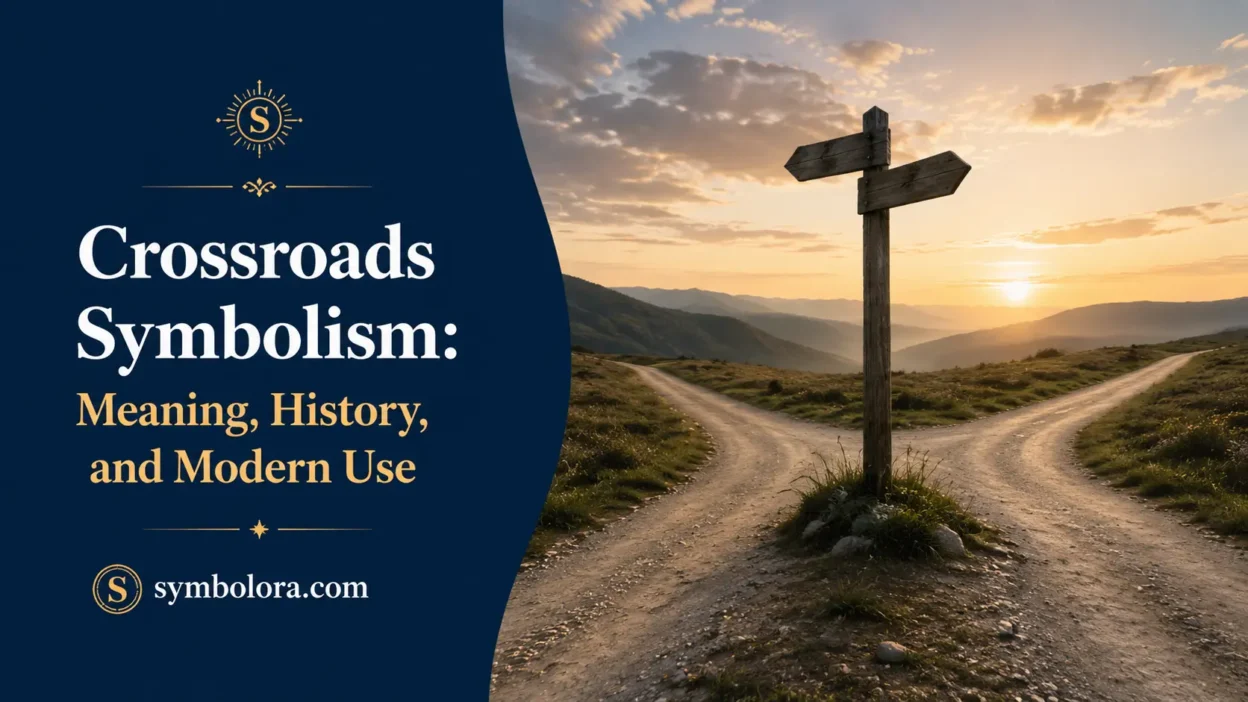
A crossroads is usually shown as two or more paths, roads, or trails meeting at a single point. The design may appear realistic, such as a rural road intersection, or symbolic, using simple lines that divide into different directions.
People encounter crossroads imagery in many places:
- Road signs and transportation designs
- Paintings and photography
- Literature and films
- Tattoos and jewelry
- Religious and spiritual artwork
- Home decorations
The physical structure creates the meaning. A single road suggests movement toward a destination, while multiple roads introduce uncertainty and possibility.
Because of this visual quality, crossroads naturally communicate the idea of standing between different choices.
What It Commonly Means in the United States
In the United States, crossroads are most often understood as symbols of decision-making and personal change. The phrase “at a crossroads” is commonly used when someone faces a major choice in life.
A person may describe being at a crossroads when deciding:
- Whether to change careers
- Whether to move to a new place
- Whether to begin or end a relationship
- How to handle a personal challenge
American culture often connects crossroads with independence and self-determination. The symbol suggests that people have the ability to choose their direction, even when the future is unclear.
Unlike symbols that represent a fixed outcome, crossroads emphasize the process of choosing.
Ancient Roots and Early Symbolism
The meaning of crossroads developed across many societies because intersections were unusual spaces. Unlike ordinary roads, crossroads represented places where different journeys met.
In ancient Greek tradition, crossroads were connected with Hecate, a figure often linked with boundaries, night, and choices. Shrines and offerings at crossroads reflected the belief that these locations had special importance.
Roman culture also recognized crossroads as meaningful places. Roads were essential parts of Roman society, and intersections represented connections between communities, travelers, and destinations.
In many traditions, crossroads became symbolic boundaries between the known and unknown. A traveler leaving one road and choosing another represented entering a new stage of life.
Crossroads Symbolism in American Culture
The United States has a strong connection with crossroads imagery because movement and exploration are central themes in American history.
From westward expansion to modern road trips, roads often represent freedom, discovery, and personal identity. The crossroads adds another layer by introducing a moment of reflection before continuing forward.
American music and storytelling frequently use crossroads as a symbol of struggle or transformation. Blues traditions, for example, often used crossroads imagery to express hardship, difficult choices, and searching for a better future.
In everyday American speech, the phrase remains practical rather than purely symbolic. Someone “at a crossroads” is usually facing a meaningful decision that may influence their future.
Religious and Spiritual Interpretations
Crossroads appear in several religious and spiritual traditions because they represent places where ordinary paths meet with larger questions about life.
Some interpretations connect crossroads with:
| Context | Meaning in the USA | Common Associations | Notes |
|---|---|---|---|
| Personal growth | Life decisions | Change, maturity | Common modern use |
| Spiritual traditions | Encounters and guidance | Protection, destiny | Varies by belief system |
| Literature | Turning points | Conflict, transformation | Common storytelling device |
| Tattoos | Individual journeys | Freedom, identity | Personal meaning differs |
In some spiritual traditions, crossroads are viewed as places where guidance may be sought. Other traditions see them as symbolic reminders that choices have consequences.
Modern Americans often interpret the symbol personally rather than following one specific religious meaning.
The Emotional and Psychological Meaning of Crossroads
Psychologically, crossroads represent uncertainty combined with possibility. They capture the emotional experience of knowing that a decision matters but not knowing exactly what will happen afterward.
The symbol can represent feelings such as:
- Hope about new opportunities
- Fear of making the wrong choice
- Curiosity about the future
- Confidence in personal judgment
A crossroads does not automatically suggest a negative situation. It can represent growth, independence, and the willingness to move beyond familiar circumstances.
For many people, the symbol reflects an important stage of self-discovery.
Crossroads in Literature, Film, and Storytelling
Writers and filmmakers frequently use crossroads because they create natural moments of tension. A character arriving at an intersection must decide what happens next.
Common storytelling themes include:
- Choosing between safety and adventure
- Leaving behind the past
- Facing moral decisions
- Discovering personal identity
The crossroads works well in stories because every audience member understands the feeling of making difficult choices.
It allows creators to show internal conflict through a simple physical image.
Why Crossroads Appear in Tattoos and Personal Style
Crossroads tattoos are popular because they allow people to represent personal experiences through a recognizable image.
Common meanings include:
- A major life transition
- A fresh beginning
- A reminder of an important decision
- Independence and self-direction
- A journey through challenges
Some designs include additional elements such as arrows, compasses, trees, mountains, or dates. These additions help personalize the meaning.
A crossroads tattoo does not have one universal interpretation. Its meaning depends on the person wearing it.
Crossroads Symbolism in Home Decor and Design
Crossroads imagery appears in artwork and interior design because it creates a feeling of movement and possibility.
A crossroads painting may suggest:
- Adventure
- Reflection
- Exploration
- Personal growth
Many people choose road imagery because it creates a connection with travel and memories. A long road leading toward a horizon often represents future possibilities.
In modern design, crossroads symbols are usually viewed as artistic expressions rather than strict spiritual objects.
Color and Visual Associations With Crossroads
Although crossroads do not have one required color, certain visual choices influence how people interpret the symbol.
Common associations include:
- Brown roads: stability and connection with nature
- Gray paths: uncertainty or neutral choices
- Golden light: hope and opportunity
- Dark backgrounds: mystery or difficult decisions
Artists often use lighting and atmosphere to shape the emotional message of a crossroads scene.
A bright crossroads may suggest optimism, while a darker image may emphasize struggle or reflection.
Crossroads in Folklore and Cultural Traditions
Folklore around crossroads often reflects the human desire to understand uncertain moments.
Many cultures developed stories about crossroads because travelers historically faced risks when entering unfamiliar areas. These locations became connected with meetings, warnings, and unexpected events.
Some legends portray crossroads as places where people encounter supernatural beings or receive guidance. These stories vary widely and should be understood as cultural traditions rather than universal beliefs.
The repeated appearance of crossroads in folklore shows how strongly humans connect physical journeys with personal decisions.
Controversies and Misunderstandings About Crossroads Symbols
Because crossroads appear in many traditions, some interpretations can become exaggerated or misunderstood.
One common misconception is that crossroads always represent dark or supernatural themes. While some folklore includes mysterious stories, the symbol has many ordinary meanings connected with choices and change.
Another misunderstanding is assuming every crossroads tattoo or artwork has the same message. Personal symbols often carry unique meanings based on someone’s experiences.
The historical and modern meanings of crossroads are broad, ranging from everyday decision-making to spiritual reflection.
How Crossroads Meaning Has Changed Over Time
The interpretation of crossroads has evolved as societies changed.
In earlier periods, crossroads were closely connected with travel, religion, and folklore because journeys involved greater uncertainty. Travelers depended on roads for survival and navigation.
Today, roads are familiar parts of daily life, but the symbolic meaning remains strong. Modern people often focus less on physical travel and more on personal direction.
The crossroads has shifted from a literal meeting point on a journey into a metaphor for important moments in life.
Modern Uses of Crossroads Symbolism
Today, crossroads imagery appears in many areas of American culture:
- Business branding to represent progress
- Personal artwork showing transformation
- Music and entertainment themes
- Social media posts about life changes
- Jewelry representing important choices
The symbol remains popular because it communicates a universal experience without requiring explanation.
Everyone faces moments when one path ends and another begins.
Common Questions About Crossroads Symbolism
What does crossroads symbolism usually mean?
Crossroads symbolism usually represents choices, transitions, and moments when a person must decide their next direction. It often reflects personal growth and important changes.
What does a crossroads tattoo symbolize?
A crossroads tattoo commonly represents a major life decision, transformation, or personal journey. The exact meaning depends on the individual’s experiences and design choices.
Are crossroads symbols religious?
Crossroads can have religious meanings in some traditions, but they are not limited to religion. Many people use the symbol for personal, cultural, or artistic reasons.
Why are crossroads important in folklore?
Crossroads became important in folklore because they were places where different journeys met. Many cultures associated them with decisions, encounters, and unknown possibilities.
Is a crossroads symbol positive or negative?
A crossroads symbol can represent both challenges and opportunities. It usually focuses on choice rather than a specific positive or negative outcome.
Why do writers use crossroads imagery?
Writers use crossroads because they visually represent moments of conflict, change, and decision. The symbol helps show a character’s internal struggle.
Conclusion
Crossroads symbolism represents one of the most recognizable images of human choice and transition. In American culture, it often reflects moments when people must evaluate their direction, accept change, and decide what comes next.
From ancient traditions to modern tattoos, stories, and artwork, crossroads continue to represent the meeting point between experience and possibility. The symbol remains meaningful because every person eventually reaches moments where a new path must be chosen.
Crossroads symbolism is ultimately about movement, reflection, and the choices that shape individual journeys.


