A Ferris wheel is more than a large amusement ride that carries passengers high above a fairground. Its circular movement, changing views, and repeated journey between the ground and sky have given it symbolic meanings connected with life cycles, memories, hope, perspective, and human connection. In modern culture, ferris wheel symbolism often represents personal growth, change, celebration, and the moments people share with others.
The Ferris wheel first appeared as a major engineering attraction at the 1893 World’s Columbian Exposition in Chicago. Since then, it has become a familiar part of amusement parks, festivals, city skylines, and popular culture. People often associate it with childhood experiences, romantic moments, family outings, and the feeling of seeing life from a new viewpoint.
Unlike many ancient symbols that developed through religion or mythology, the meaning of the Ferris wheel grew from modern experiences. Its symbolism comes from the emotions people attach to its movement, height, circular shape, and role in creating memorable moments.
Quick Answer
Ferris wheel symbolism commonly represents life’s cycles, new perspectives, joy, and personal growth in modern American culture, especially through experiences of celebration, relationships, and change. Historically, it has also been associated with human achievement, innovation, and the repeating rhythms of life.
TL;DR
- Ferris wheels symbolize cycles, change, and personal journeys.
- Their height represents perspective and seeing life differently.
- The circular motion reflects renewal and continuous movement.
- American culture connects them with fairs and shared memories.
- Modern designs use Ferris wheels for romance and identity.
- The symbol combines engineering, emotion, and entertainment.
What a Ferris Wheel Represents Physically
A Ferris wheel is a giant rotating wheel with passenger cabins attached around its outer edge. As the wheel turns, riders move slowly upward, reach a high point, and then return to the ground. This simple movement creates many symbolic interpretations.
The circular shape is one of the most important features behind its meaning. Circles often represent completeness, continuity, and repeated patterns. A Ferris wheel does not have a clear beginning or ending point. Instead, it moves through a constant cycle.
The height of the ride also influences its symbolism. When passengers reach the top, they temporarily experience a wider view of their surroundings. This physical change in perspective often connects with emotional ideas about gaining understanding, overcoming challenges, or looking at life from another angle.
The cabins themselves can represent individual experiences within a larger journey. Every passenger travels on the same wheel but may have a completely different emotional experience depending on their memories, relationships, and personal situation.
What It Commonly Means in the United States
In the United States, the Ferris wheel is strongly connected with entertainment, community events, and nostalgia. For many Americans, seeing a Ferris wheel brings memories of county fairs, amusement parks, summer festivals, and family traditions.
The symbol often represents happiness and temporary escape from everyday routines. A ride on a Ferris wheel creates a slow, peaceful experience compared with faster amusement rides. People have time to talk, observe the view, and enjoy the moment.
Romance is another common American association. Ferris wheels frequently appear in movies, wedding photography, and date-night settings because the private cabins create a sense of closeness. A ride together can symbolize trust, shared experiences, and emotional connection.
At the same time, the Ferris wheel can represent change. Each rotation brings riders back to familiar places while also moving them through a new position. This balance between repetition and movement reflects how people experience personal growth.
| Context | Meaning in the USA | Common Associations | Notes |
|---|---|---|---|
| Amusement parks | Fun and celebration | Family trips, vacations, festivals | Connected with shared memories |
| Romantic settings | Connection and intimacy | Dates, proposals, couples | Represents shared experiences |
| Personal growth | New viewpoints | Change, reflection, progress | Inspired by reaching higher views |
| City landmarks | Innovation and creativity | Architecture, tourism | Shows human achievement |
| Art and media | Emotional journeys | Nostalgia, dreams, transformation | Often used as a visual metaphor |
Ancient Ideas Behind the Circular Symbol
Although the Ferris wheel itself is a modern invention, its circular symbolism connects with much older human ideas. Across many cultures, circles have represented natural cycles such as seasons, the movement of celestial bodies, and the repeating patterns of life.
Ancient communities often observed circular movements in nature. The sun’s daily path, the changing moon phases, and seasonal cycles influenced many symbolic traditions. These patterns encouraged people to associate circles with renewal and continuation.
The Ferris wheel reflects this idea in a modern mechanical form. Its movement resembles natural cycles because it rises, falls, and repeats without a final destination.
However, the Ferris wheel does not carry the same religious importance as symbols created in ancient traditions. Its meanings developed mainly through human experience, entertainment, and cultural imagination.
The History of the Ferris Wheel and Its Changing Meaning
The first Ferris wheel was designed by American engineer George Washington Gale Ferris Jr. for the 1893 World’s Columbian Exposition in Chicago. The structure was created as a response to the Eiffel Tower, which had become the famous feature of the 1889 Paris World’s Fair.
The original Ferris wheel demonstrated American engineering ability and industrial creativity. It was not simply an amusement attraction; it was a statement about technological progress during the Industrial Age.
The wheel stood over 250 feet tall and allowed visitors to view the exposition grounds from above. For many people, this experience represented a new relationship between humans and technology. It showed that machines could create wonder as well as practical benefits.
Over time, the Ferris wheel moved away from being a symbol of industrial achievement alone. It became connected with entertainment, leisure, romance, and personal memories. The meaning shifted from national progress to individual experiences.
Today, Ferris wheels appear around the world in many forms, from traditional fairground rides to giant observation wheels in major cities. Their symbolism continues to evolve with changing cultural uses.
Why Height Gives the Ferris Wheel Symbolic Meaning
The upward movement of a Ferris wheel creates one of its strongest symbolic associations: gaining perspective.
When people reach the highest point of the ride, they temporarily see the world differently. Buildings appear smaller, landscapes become wider, and familiar places look new. This physical experience often becomes a metaphor for emotional or personal understanding.
Many cultures associate height with achievement, freedom, and expanded awareness. The Ferris wheel reflects these ideas without requiring a specific religious or spiritual interpretation.
In personal symbolism, reaching the top may represent overcoming difficulties or recognizing possibilities that were previously hidden. The journey upward can feel like progress, while the return downward can symbolize acceptance of everyday reality.
The ride reminds people that perspective changes depending on where they stand. A situation that feels overwhelming from the ground may appear manageable from a higher viewpoint.
Ferris Wheel Symbolism in Emotions and Psychology
The emotional meaning of a Ferris wheel often comes from the combination of excitement and calmness. Unlike many thrill rides designed around speed and fear, Ferris wheels create a slower experience that allows reflection.
The gradual movement can symbolize patience. Riders cannot rush to the top; they must experience each stage of the journey. This makes the Ferris wheel a natural metaphor for personal development, where growth happens over time.
The repeated motion can also represent emotional cycles. People experience periods of happiness, uncertainty, challenge, and renewal. The Ferris wheel’s movement reflects the idea that circumstances change but continue moving.
For some people, the symbol creates feelings of nostalgia. A Ferris wheel may remind them of childhood summers, family traditions, first dates, or important life moments.
Its meaning depends heavily on personal experience. Someone may see it as a symbol of joy, while another person may connect it with change or memories of the past.
Ferris Wheel Symbolism in American Culture and Traditions
In American culture, the Ferris wheel has become closely connected with public celebrations and shared experiences. Unlike symbols that appear mainly in religious or historical settings, the Ferris wheel lives in everyday places such as state fairs, amusement parks, carnivals, and community festivals.
The ride often represents the idea of gathering together. Families, friends, and couples usually experience it as a social activity rather than an individual achievement. A Ferris wheel ride creates a small shared moment where people talk, laugh, take photographs, and enjoy a view together.
County fairs have played an important role in shaping the American meaning of the Ferris wheel. These events combine agriculture, entertainment, food, music, and local traditions. The Ferris wheel often becomes a visual centerpiece, representing celebration and community connection.
For many Americans, the sight of a Ferris wheel creates a feeling of nostalgia. It can bring back memories of childhood summers, school trips, first dates, and family vacations. Because of this emotional connection, the Ferris wheel has become a symbol of remembering meaningful moments.
The symbol also appears in American city landscapes. Large observation wheels in places such as tourist districts and waterfront areas represent modern recreation, urban design, and the desire to experience familiar places from a new viewpoint.
The Meaning of the Ferris Wheel’s Circular Movement
The circular movement of a Ferris wheel is one of its most recognizable symbolic features. Every rotation follows the same path, yet each moment on the ride feels different because the view changes.
This movement is often compared with the natural cycles of life. People experience beginnings, growth, challenges, achievements, and transitions. Like a Ferris wheel, life contains repeated patterns while still creating new experiences.
The circle can also represent balance. A Ferris wheel does not remain permanently at the highest point or lowest point. It continues moving between different positions. This can reflect the idea that success, difficulty, happiness, and uncertainty are temporary parts of a larger journey.
In personal reflection, the Ferris wheel can remind people that difficult periods do not last forever. The wheel continues turning, creating opportunities for new moments.
However, this symbolism should not be understood as a fixed meaning. People interpret symbols differently based on their own experiences and cultural background.
Ferris Wheel Symbolism in Love and Relationships
Ferris wheels have a strong connection with romance, especially in American popular culture. Their slow movement and enclosed cabins create a setting where couples can spend quiet time together away from crowds.
Movies and television often use Ferris wheels as romantic locations because they naturally create emotional scenes. A couple reaching the top of the wheel is frequently shown as a moment of connection, honesty, or commitment.
The symbolism comes from several elements:
- The shared journey represents a relationship moving forward.
- The changing view represents seeing life together from different perspectives.
- The temporary pause at the top represents meaningful moments that people remember.
Ferris wheels are also common locations for proposals and anniversary celebrations. The symbolism is not because the ride itself has a universal romantic meaning, but because people have repeatedly used it to create personal memories.
For some couples, the Ferris wheel represents adventure and excitement. For others, it represents comfort, companionship, and enjoying simple experiences together.
Religious and Spiritual Interpretations of Ferris Wheels
The Ferris wheel does not belong to any major religious tradition, but some people connect its design with broader spiritual ideas. These interpretations usually come from the symbolism of circles, movement, and cycles rather than from religious teachings about the ride itself.
The circular shape may remind some people of ideas such as renewal, eternity, or the repeating patterns found in nature. The movement between the ground and sky can also inspire personal reflections about growth, perspective, and connection.
In some spiritual discussions, the upward journey is interpreted as a metaphor for seeking understanding or personal improvement. However, these meanings are personal interpretations rather than established religious symbolism.
Different cultures have their own traditions involving circles and cycles, but the Ferris wheel’s symbolism developed primarily through modern entertainment and human experiences.
Ferris Wheel Symbolism in Art, Photography, and Design
Artists and designers often use Ferris wheels because the shape immediately communicates movement, nostalgia, and emotion.
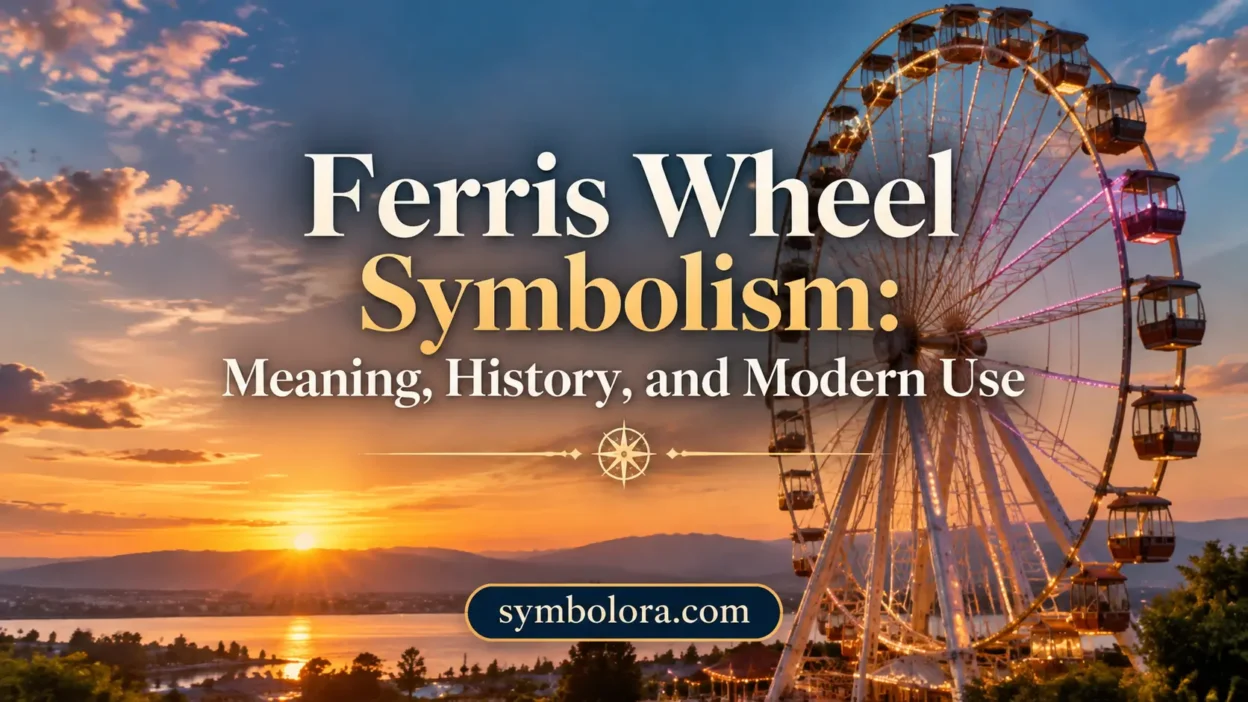
In photography, a Ferris wheel can create a strong visual element because of its circular structure and relationship with the surrounding environment. A wheel against a sunset may suggest memories, change, or peaceful reflection. A brightly lit wheel at night may suggest celebration and excitement.
Graphic designers often use Ferris wheel imagery for themes related to:
- travel
- childhood memories
- festivals
- entertainment
- creativity
- personal journeys
The symbol works well because viewers usually recognize it quickly. Even without explanation, a Ferris wheel image often creates associations with fun, community, and experiences.
In storytelling, writers and filmmakers may use a Ferris wheel as a setting where characters make decisions, reveal emotions, or experience a turning point. The physical movement of the ride supports themes of change and transition.
Why People Choose Ferris Wheel Tattoos
Ferris wheel tattoos often carry personal meanings connected with memories, growth, and emotional experiences. Unlike traditional symbols with fixed definitions, tattoo meanings depend heavily on the person wearing them.
Common interpretations include:
Life Changes
The rotating wheel can represent personal transformation. Someone may choose the symbol after a major life event, such as moving to a new place, beginning a new career, or overcoming a difficult period.
Childhood Memories
A Ferris wheel tattoo may preserve memories of family trips, summer festivals, or a meaningful place from childhood.
Adventure and Exploration
Because Ferris wheels provide a different view of the world, some people associate them with curiosity, travel, and discovering new experiences.
Relationships
Couples may choose matching Ferris wheel tattoos to represent a shared memory or important relationship moment.
The design style also changes the meaning. A colorful cartoon-style Ferris wheel may emphasize happiness and playfulness, while a simple black outline design may represent reflection or personal history.
Ferris Wheel Symbolism in Modern Digital Culture
In modern digital culture, Ferris wheel imagery continues to appear in social media, branding, and online storytelling. People often use Ferris wheel photographs to represent vacations, celebrations, and memorable experiences.
Social media platforms have strengthened the connection between Ferris wheels and personal storytelling. A picture from the top of a Ferris wheel often communicates more than a location; it shows a feeling or moment.
The symbol is also used by businesses connected with:
- tourism
- entertainment
- festivals
- family activities
- seasonal events
Its recognizable shape makes it useful for visual communication because many people immediately understand its association with enjoyment and experiences.
Digital culture has also expanded the meaning of the Ferris wheel. It can represent temporary moments, personal milestones, and the desire to appreciate experiences rather than possessions.
Common Misunderstandings About Ferris Wheel Symbolism
Because symbols often develop multiple meanings, the Ferris wheel can sometimes be interpreted in ways that are not connected to its original cultural development.
One common misunderstanding is that the Ferris wheel has a single universal meaning. In reality, its symbolism changes depending on context. A Ferris wheel at a wedding may suggest romance, while one in a childhood photograph may represent nostalgia.
Another misunderstanding is that every circular symbol automatically represents the same ideas. While circles often relate to cycles and continuity, the Ferris wheel also has specific meanings connected with entertainment, engineering, and human experiences.
Some people may also view the repeated movement as representing being stuck in a routine. This interpretation exists, especially in literature or personal reflection, but it is only one possible reading.
The symbol itself is generally associated with positive experiences, but individual interpretations depend on personal emotions and circumstances.
How Ferris Wheel Meaning Has Changed Over Time
The meaning of the Ferris wheel has changed significantly since its creation in the late nineteenth century.
During its early years, it represented engineering progress and industrial confidence. The original Chicago Ferris wheel demonstrated what modern technology could accomplish and became a symbol of innovation.
During the twentieth century, the Ferris wheel became more connected with amusement, family entertainment, and public celebrations. Its role shifted from demonstrating technology to creating emotional experiences.
Today, the Ferris wheel represents many ideas at once:
- personal memories
- relationships
- changing perspectives
- celebration
- creativity
- human curiosity
Its continued popularity comes from its ability to combine physical movement with emotional meaning. People do not only ride Ferris wheels; they attach stories and memories to them.
Frequently Asked Questions About Ferris Wheel Symbolism
What does a Ferris wheel symbolize?
A Ferris wheel commonly symbolizes life cycles, changing perspectives, celebration, and personal experiences. Its circular movement represents continuous change, while its height is often connected with gaining a broader view of life.
The meaning depends on the situation. In a fairground setting, it may represent happiness and community, while in personal artwork it may represent growth or memories.
What does a Ferris wheel tattoo symbolize?
A Ferris wheel tattoo often represents personal journeys, important memories, childhood experiences, or major life changes. Many people choose this design because the wheel’s movement reflects growth and the different stages of life.
Some people also use it as a reminder to appreciate meaningful moments rather than focusing only on future goals.
Why is a Ferris wheel associated with romance?
Ferris wheels are often linked with romance because couples can share a quiet experience while viewing the world from above. The slow movement and private cabins create a setting where people can talk and create memorable moments together.
Popular culture has also strengthened this connection by frequently showing Ferris wheels during romantic scenes.
Does a Ferris wheel have a spiritual meaning?
A Ferris wheel does not have a specific traditional religious meaning, but some people connect it with ideas such as cycles, renewal, and personal reflection. These interpretations come from the wheel’s circular shape and movement rather than from established religious teachings.
Different individuals may attach different spiritual meanings based on their beliefs and experiences.
What does a Ferris wheel symbolize in dreams?
In dream interpretation, a Ferris wheel may represent changes, emotional cycles, or a desire for a new perspective. Going upward may be viewed as seeking progress or understanding, while moving downward may represent returning to familiar situations.
Dream meanings are personal and can vary depending on the dreamer’s emotions and circumstances.
Why is the Ferris wheel important in American culture?
The Ferris wheel became an important American cultural symbol because of its connection with fairs, amusement parks, and public celebrations. The original Ferris wheel debuted at Chicago’s 1893 World’s Columbian Exposition and introduced millions of visitors to a new type of large-scale attraction.
Over time, it became associated with family traditions, vacations, romance, and shared memories.
Can a Ferris wheel symbolize negative ideas?
Although Ferris wheels are usually associated with positive experiences, some interpretations connect them with repetition, uncertainty, or feeling trapped in a cycle. These meanings appear mainly in personal reflection, literature, or artistic expression.
The symbol itself is not negative; its meaning depends on how it is used.
Conclusion
The Ferris wheel represents more than entertainment. Its circular movement, changing height, and connection with human experiences have allowed it to become a symbol of life’s transitions, personal growth, celebration, and shared memories. Since its introduction at the 1893 Chicago World’s Columbian Exposition, the Ferris wheel has evolved from a display of engineering achievement into a familiar cultural image connected with emotions and experiences.
Ferris wheel symbolism continues to appear in American culture because it reflects something people understand naturally: life changes, perspectives shift, and meaningful moments are often found during the journey itself. Whether seen at a fair, captured in artwork, or chosen as a personal symbol, the Ferris wheel remains a reminder that every stage of the journey offers a different view.


