
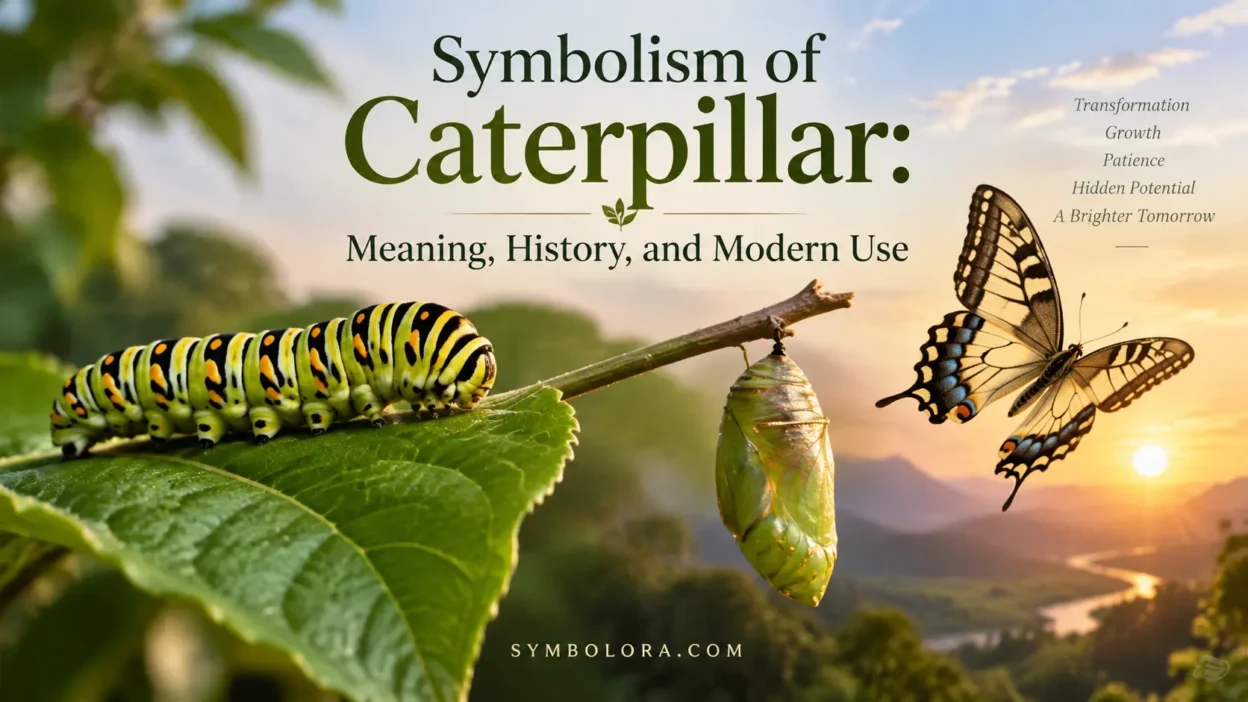
A caterpillar is often recognized as a symbol of transformation, growth, patience, and personal development. The symbolism of caterpillar appears in American culture through ideas of change, childhood learning, nature appreciation, and the belief that small beginnings can lead to significant outcomes.
Although a caterpillar may look like a simple insect moving slowly through leaves and plants, its life cycle gives it a strong symbolic connection to change. Because it eventually transforms into a butterfly or moth, many people view it as a representation of preparation, hidden potential, and the stages required before reaching a new phase of life.
In modern United States culture, the caterpillar is commonly used in children’s books, educational materials, tattoos, artwork, and personal designs to represent growth and becoming something new. Its meaning is usually connected with positive development rather than immediate success because the caterpillar represents the process that happens before transformation.
Quick Answer
Symbolism of caterpillar commonly represents transformation, growth, patience, and personal development in modern American culture, especially when connected with life changes and self-improvement. Historically, it has also represented renewal, hidden potential, and the natural cycle of change in various traditions.
TL;DR
- Caterpillars symbolize growth before major life changes.
- Their transformation connects them with renewal and possibility.
- Americans often use caterpillar imagery for personal journeys.
- Many cultures associate caterpillars with nature’s cycles.
- Tattoos use caterpillars to represent becoming stronger.
What a Caterpillar Represents in Nature
A caterpillar is the larval stage of butterflies and moths. It has a long, soft body divided into segments, multiple small legs, and a strong appetite that allows it to grow quickly before entering the next stage of its life cycle.
Unlike many symbols based on appearance alone, the caterpillar’s meaning comes mostly from what happens after this stage. A caterpillar does not remain in the same form forever. It changes through metamorphosis, eventually becoming a butterfly or moth.
This natural process makes the caterpillar an example of gradual development. It represents the idea that visible progress may happen slowly while important changes are occurring internally.
In everyday life, people often connect this process with:
- learning new skills
- recovering from difficult periods
- preparing for opportunities
- developing confidence
- moving from one life stage to another
The caterpillar’s symbolism focuses less on the final result and more on the journey required to reach it.
What It Commonly Means in the United States
In the United States, the caterpillar is most commonly associated with personal transformation and growth. This meaning appears frequently in education, parenting, self-development themes, and creative design.
Children’s education often uses caterpillars because they provide an easy way to explain change and development. Young learners can understand the connection between a small creature and the butterfly it becomes, making the caterpillar a familiar symbol of learning and progress.
Adults may interpret the caterpillar differently. For many people, it represents a period of preparation before achieving a goal. Someone starting a new career, recovering after a difficult experience, or building a new identity may see the caterpillar as a reminder that growth takes time.
Common American interpretations include:
| Context | Meaning in the USA | Common Associations | Notes |
|---|---|---|---|
| Personal growth | Becoming a better version of yourself | Change, progress, confidence | Often used in motivational themes |
| Education | Learning and development | Childhood, curiosity, discovery | Common in classrooms and books |
| Tattoos | Life transformation | New beginnings, resilience | Often paired with butterflies |
| Nature design | Connection with life cycles | Environment, renewal | Used in art and decor |
| Children’s media | Growth through experiences | Imagination, learning | Popular in stories and illustrations |
The caterpillar is generally viewed as an encouraging symbol because it represents movement toward something new.
Ancient Roots and Early Symbolism
The symbolic meaning of caterpillars developed from human observation of nature. Long before modern science explained metamorphosis, people noticed that certain insects disappeared into protective coverings and later emerged in completely different forms.
This unusual process created associations with renewal and change. Ancient communities often connected insects and seasonal cycles with ideas about life, death, and rebirth.
In many traditional interpretations, the transformation from caterpillar to butterfly represented:
- leaving behind an old identity
- entering a new stage of existence
- discovering hidden abilities
- adapting to changing circumstances
However, meanings were not identical across all cultures. Some societies focused on the butterfly’s beauty, while others paid more attention to the mysterious period of transformation.
The caterpillar itself was often viewed as the beginning stage of a larger process rather than the final symbol.
Caterpillar Symbolism in Mythology and Folklore
Caterpillars appear less frequently in mythology than butterflies, but their connection to transformation links them with broader folklore traditions about change and renewal.
Many cultures have stories involving creatures that undergo dramatic transformations. These stories often teach that appearances can be misleading and that a person’s current condition does not define their future.
The caterpillar fits this pattern because it appears ordinary before revealing a completely different form.
Folklore interpretations often connect caterpillars with:
- patience before reward
- hidden abilities
- preparation for change
- acceptance of natural cycles
Unlike symbols associated with strength or power, the caterpillar represents quiet development. Its message is usually about becoming rather than already being.
Emotional and Psychological Meaning of the Caterpillar
From a psychological perspective, the caterpillar represents the experience of being in transition. Many people go through periods where they feel unfinished, uncertain, or disconnected from their previous identity.
The caterpillar provides a positive way to view those periods. Instead of seeing change as a problem, the symbol suggests that development often happens gradually.
People may connect with caterpillar imagery when they are:
- starting over after a major life event
- learning something unfamiliar
- building self-confidence
- exploring personal identity
- waiting for long-term goals to develop
The symbol can offer reassurance that progress does not always appear immediately. Growth may happen quietly before others notice visible results.
For this reason, caterpillar imagery is common in motivational artwork, journals, and personal reminders about patience.
Caterpillar Symbolism in American Art and Culture
The caterpillar has become a familiar symbol in American art, storytelling, and popular culture because it represents a stage of becoming. Unlike symbols that focus on achievement or status, the caterpillar highlights the importance of development before success.
In children’s literature, caterpillars are often used to explain ideas about curiosity, change, and growing up. One of the most recognized examples is the caterpillar character in Alice’s Adventures in Wonderland, where the creature appears as a mysterious figure connected with questions of identity and self-understanding.
American culture often uses the caterpillar as a visual reminder that identity can change over time. A person’s current situation is not necessarily their final form, which makes the symbol popular in educational programs, personal development messages, and creative projects.
The symbol also appears in:
- children’s artwork and classroom decorations
- environmental education campaigns
- garden designs
- inspirational posters
- handmade crafts
- nature-themed home decor
Because caterpillars are easy for children to recognize, they often introduce larger ideas about patience, responsibility, and respect for nature.
Religious and Spiritual Interpretations of Caterpillar Symbolism
Caterpillar symbolism is not a central religious symbol in most major faith traditions, but its connection with transformation overlaps with many spiritual ideas about renewal and personal change.
The movement from caterpillar to butterfly is sometimes used as a metaphor for spiritual growth. People may interpret the process as representing a person leaving behind an old way of living and developing a more mature understanding of themselves.
Some spiritual interpretations connect the caterpillar with:
- inner development
- preparation before change
- acceptance of life transitions
- renewal after hardship
In Christian-inspired artwork and discussions, the butterfly is more commonly associated with resurrection and new life, while the caterpillar represents the earlier stage of preparation. The connection is symbolic rather than a formal religious teaching.
In broader spiritual communities, caterpillar imagery may appear in discussions about mindfulness, self-discovery, and personal evolution. These interpretations vary depending on individual beliefs.
Caterpillar Meanings Across Different Cultures
Although the caterpillar is not equally important in every culture, many societies recognize the transformation of insects as a symbol of change.
| Culture or Tradition | Caterpillar-Related Meaning | Main Idea |
|---|---|---|
| Western cultures | Growth and transformation | Becoming something new |
| Indigenous nature traditions | Connection with natural cycles | Respect for seasonal change |
| Asian symbolism | Transformation through life stages | Patience and renewal |
| Modern spiritual movements | Personal development | Inner growth and self-discovery |
In many cultures, the butterfly receives more symbolic attention than the caterpillar. However, the caterpillar remains important because it represents the beginning of transformation.
Its message is different from the butterfly’s message. The butterfly represents arrival, while the caterpillar represents the process of getting there.
Why Caterpillars Appear in Tattoos and Personal Style
Caterpillar tattoos are less common than butterfly tattoos, but they have a distinct meaning for people who choose them.
A caterpillar tattoo often represents a person’s ongoing journey rather than a completed transformation. Someone may choose this design to show that they are still growing, learning, or rebuilding their life.
Common meanings behind caterpillar tattoos include:
- personal change
- patience during difficult periods
- embracing imperfect stages
- hope for future development
- accepting one’s current identity
Some people choose a caterpillar instead of a butterfly because they connect more with the process of change rather than the final result.
Design choices also influence meaning. A colorful caterpillar may represent creativity and optimism, while a simple black outline may suggest reflection, resilience, or personal growth.
Caterpillar tattoos are sometimes combined with:
- leaves
- flowers
- mushrooms
- moons
- butterflies
- books
- natural landscapes
These additions create a more personal story around the transformation theme.
Color Symbolism Connected With Caterpillars
The color of a caterpillar in artwork can influence how people interpret its meaning. Real caterpillars appear in many colors, and artists often use color choices to create specific emotional associations.
| Color | Common Symbolic Meaning | Emotional Association |
|---|---|---|
| Green | Growth and nature | Balance, renewal, harmony |
| Yellow | Optimism and learning | Happiness, curiosity |
| Black | Change and mystery | Reflection, transition |
| Blue | Calm development | Peace, imagination |
| Red | Energy and courage | Motivation, action |
These meanings come from general color associations rather than fixed rules. The meaning of a caterpillar image depends on its cultural setting, personal connection, and design style.
In American design, green caterpillars are especially common because green naturally connects with plants, gardens, and the natural environment where caterpillars live.
Caterpillar Symbolism in Weddings, Gifts, and Celebrations
Caterpillar imagery is not a traditional wedding symbol in the United States, but its connection with growth can make it meaningful in certain personal celebrations.
Some couples may use caterpillar and butterfly themes to represent a relationship that continues to develop over time. The symbol can suggest that love grows through different stages rather than remaining unchanged.
Caterpillar designs may also appear in gifts for:
- children’s birthdays
- graduation celebrations
- new beginnings
- personal achievements
- educational milestones
The meaning usually focuses on encouragement and future possibilities.
For children, a caterpillar gift can represent curiosity and learning. For adults, it can represent patience and confidence during a period of transition.
Modern Uses of Caterpillar Symbolism
Today, caterpillar imagery appears in many areas of American culture because it communicates change in a simple visual form.
Fashion and Accessories
Caterpillar designs may appear on:
- necklaces
- bracelets
- clothing patterns
- handbags
- pins
- artistic accessories
These designs often appeal to people who enjoy nature-inspired fashion or symbols connected with personal growth.
Home Decor
Caterpillar artwork can create a natural and playful atmosphere. It is commonly used in:
- children’s rooms
- garden spaces
- nature-themed interiors
- educational environments
The symbol works well in decor because it combines natural imagery with a positive message.
Social Media and Digital Culture
Online, caterpillar imagery is often used alongside messages about:
- self-improvement
- personal journeys
- overcoming challenges
- starting new chapters
A caterpillar can communicate growth without needing many words. This makes it useful in digital posts, motivational graphics, and personal storytelling.
Common Misunderstandings About Caterpillar Symbolism
Although the caterpillar is usually viewed positively, its meaning can sometimes be misunderstood.
One common misunderstanding is assuming that every caterpillar symbol represents immediate transformation. In reality, the caterpillar represents the stage before transformation. It focuses on preparation, patience, and gradual development.
Another misunderstanding is treating the caterpillar as a symbol of weakness because it is small and vulnerable. Many interpretations view this vulnerability differently. The caterpillar shows that growth can happen even when a person appears ordinary or incomplete.
Some people also assume that caterpillar symbolism always has a spiritual meaning. While spiritual interpretations exist, many uses are simply connected with nature, education, creativity, or personal growth.
Understanding the context helps prevent overly broad interpretations.
How Caterpillar Meaning Has Changed Over Time
The meaning of the caterpillar has evolved as human understanding of nature has changed.
In earlier periods, people were often fascinated by the mysterious process of metamorphosis. The sudden appearance of a butterfly from a very different-looking creature encouraged ideas about hidden change and renewal.
As science explained the biological process, the symbol became less mysterious and more connected with natural development.
In modern America, the caterpillar is often used in practical and personal ways. It represents:
- learning instead of perfection
- progress instead of instant success
- preparation instead of immediate achievement
- growth through experience
The symbol has moved from a mystery of nature to a familiar image of personal development.
Controversies and Misuse of Caterpillar Symbolism
Although caterpillar imagery is usually connected with positive ideas, its meaning is not always limited to growth and transformation. In real life, caterpillars can have different associations depending on context.
For gardeners and farmers, some caterpillars are considered pests because they feed on leaves and can damage crops. In these situations, the caterpillar may represent something that consumes resources or creates challenges rather than something positive.
This difference shows why symbols should be understood within their setting. A caterpillar in a children’s book, a garden, and a personal tattoo may communicate completely different ideas.
Some common misunderstandings include:
- Assuming every caterpillar represents success: The symbol usually represents the process before achievement, not guaranteed results.
- Treating transformation as instant: A caterpillar’s meaning is based on gradual development, patience, and stages of growth.
- Giving it one fixed spiritual meaning: Interpretations vary among individuals, cultures, and belief systems.
- Ignoring its natural role: The caterpillar is both a symbol of change and a real creature that interacts with ecosystems.
Modern symbolism often highlights the inspiring side of the caterpillar, but its complete meaning includes both vulnerability and challenge.
Caterpillar Symbolism in Dreams and Personal Interpretation
Caterpillar dreams are often interpreted through the idea of change and development. Many people associate seeing a caterpillar in a dream with a period of preparation, learning, or personal transition.
A caterpillar appearing in a dream may represent:
- a new project that is still developing
- personal growth that others cannot yet see
- patience during uncertain times
- an identity that is still forming
However, dream symbolism is personal rather than universal. A person who loves gardening may interpret a caterpillar differently from someone who fears insects or has experienced crop damage.
The most meaningful interpretation often depends on the dreamer’s emotions and life circumstances.
For example:
- A calm caterpillar moving through a garden may suggest steady progress.
- A large number of caterpillars damaging plants may represent worries about resources or responsibilities.
- A caterpillar becoming a butterfly may reflect hopes for change or renewal.
The symbol provides a framework for reflection rather than a guaranteed prediction.
The Difference Between Caterpillar and Butterfly Symbolism
Caterpillars and butterflies are closely connected, but they communicate different symbolic ideas.
The butterfly often represents the visible result of transformation. It is associated with freedom, beauty, achievement, and a completed change.
The caterpillar represents the earlier stage. It focuses on preparation, learning, patience, and the work happening before transformation becomes visible.
| Symbol | Main Meaning | Life Stage Represented |
|---|---|---|
| Caterpillar | Growth and preparation | Change in progress |
| Chrysalis | Transition and uncertainty | Internal development |
| Butterfly | Completion and renewal | Visible transformation |
This difference explains why some people choose caterpillar imagery instead of butterfly designs. They may identify more with the journey than the destination.
The caterpillar acknowledges that unfinished stages are still valuable.
Why Caterpillar Symbolism Remains Relevant Today
The caterpillar continues to appear in modern culture because its message fits many common human experiences.
People often experience periods where they are learning, adapting, or rebuilding. Career changes, education, relationships, and personal goals all involve stages where progress is not immediately visible.
The caterpillar provides a simple image for those moments.
In the United States, it remains popular because it connects with cultural values such as:
- self-improvement
- creativity
- independence
- lifelong learning
- resilience
The symbol also fits modern conversations about personal identity. Many people recognize that becoming who they want to be requires time and experimentation.
A caterpillar does not apologize for being unfinished. Its natural role is to grow until it is ready for the next stage.
How Caterpillar Meaning Continues to Evolve
The meaning of the caterpillar has changed as society’s relationship with nature has developed.
Earlier interpretations often focused on the mystery of metamorphosis. Before modern biology explained insect life cycles, the change from caterpillar to butterfly seemed extraordinary and encouraged symbolic connections with renewal and rebirth.
Later, scientific understanding changed the focus. The caterpillar became an example of natural development rather than a mysterious transformation.
Today, the symbol combines scientific awareness with personal meaning. People understand the biological process while still using it as a metaphor for human experiences.
Modern interpretations emphasize:
- growth through experience
- accepting temporary stages
- developing before showing results
- finding possibility in ordinary beginnings
The caterpillar’s meaning has shifted from a symbol of mystery to a symbol of practical personal growth.
FAQs
What does a caterpillar symbolize spiritually?
A caterpillar may symbolize spiritual growth, personal development, and preparation for change. These interpretations are personal rather than universal religious teachings.
What does a caterpillar tattoo mean?
A caterpillar tattoo often represents transformation, patience, and the process of becoming a new version of yourself. Some people choose it to show that growth is still happening.
Is a caterpillar a positive symbol?
Yes, caterpillars are generally viewed as positive symbols because they represent growth, possibility, and natural change. However, the meaning can vary depending on cultural or personal context.
What is the difference between caterpillar and butterfly symbolism?
A caterpillar usually represents the journey toward change, while a butterfly often represents the result of transformation. One focuses on development, and the other focuses on completion.
What does a green caterpillar symbolize?
A green caterpillar commonly represents nature, renewal, growth, and balance. These meanings come from associations with plants and natural environments.
Why are caterpillars used in children’s education?
Caterpillars help children understand life cycles, patience, and growth because they visibly transform into butterflies. They are often used as simple examples of change and learning.
Conclusion
The symbolism of caterpillar centers on transformation, patience, growth, and the stage of life where change is still developing. In modern American culture, it represents the idea that progress does not always appear immediately and that every stage of development has value.
From children’s education to tattoos, artwork, and personal symbolism, the caterpillar remains meaningful because it reflects a common human experience: becoming something new over time.
A caterpillar does not begin with wings, but it carries the possibility of change within its natural process. Its symbolism reminds people that growth often happens quietly before it becomes visible.


