
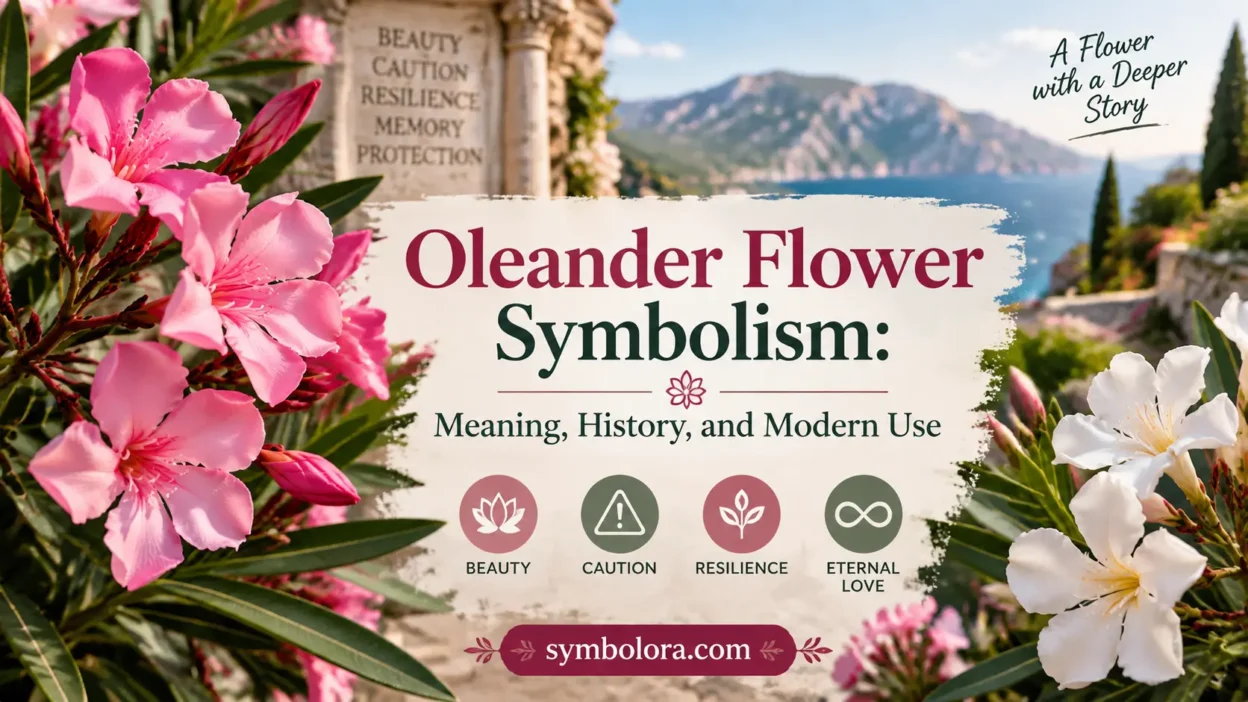
Oleander is a flowering shrub known for its colorful blossoms, evergreen leaves, and ability to grow in warm climates. The oleander flower symbolism is often connected with beauty, resilience, caution, and complex emotions because the plant combines attractive appearance with natural toxicity.
People have admired oleander for centuries in gardens, artwork, folklore, and cultural traditions. In the United States, the flower is commonly seen in landscapes across warmer regions, especially where its drought tolerance and bright blooms make it popular. At the same time, its poisonous nature has shaped many symbolic interpretations, giving it meanings that go beyond simple beauty.
Quick Answer
Oleander flower symbolism commonly represents beauty, resilience, and caution in modern American culture, especially in gardens, art, and personal symbolism. Historically, it has also been associated with protection, emotional complexity, and the contrast between outward beauty and hidden danger.
TL;DR
- Oleander symbolizes beauty mixed with caution.
- Ancient cultures linked oleander with protection and danger.
- Americans often view it as a resilient garden flower.
- Its toxicity influences modern interpretations.
- Tattoos use oleander for strength and complexity.
- The flower carries both positive and warning meanings.
What the Oleander Flower Looks Like and Where It Appears
Oleander is an evergreen flowering shrub scientifically known as Nerium oleander. It produces clusters of trumpet-shaped flowers that commonly appear in shades of pink, white, red, and sometimes yellow. The plant has long, narrow leaves and can survive in hot, dry conditions, which makes it popular in Mediterranean climates and parts of the southern United States.
In America, oleander is frequently found in California, Texas, Florida, and other warm regions. People plant it along roadsides, in gardens, and around properties because it grows quickly and provides colorful blooms with relatively little maintenance.
The physical contrast of oleander contributes strongly to its symbolism. Its delicate-looking flowers create an image of elegance, while its poisonous leaves and stems introduce themes of caution and hidden strength.
What Oleander Commonly Means in the United States
In modern American culture, oleander is often associated with beauty, endurance, and protection. Gardeners may appreciate the plant because it survives harsh environments and continues flowering during hot seasons when many other plants struggle.
The flower can represent resilience because of its ability to tolerate drought, heat, and difficult growing conditions. For some people, oleander represents the idea of remaining attractive and strong despite challenges.
However, the plant’s toxicity adds another layer. Unlike flowers that represent innocence or openness, oleander can symbolize boundaries, awareness, and the importance of recognizing what lies beneath the surface.
| Context | Meaning in the USA | Common Associations | Notes |
|---|---|---|---|
| Gardens | Resilience and beauty | Warm climates, endurance | Popular in southern landscapes |
| Tattoos | Strength and complexity | Survival, personal stories | Often chosen for layered meanings |
| Art and Design | Elegance with contrast | Beauty and caution | Uses visual symbolism |
| Folklore | Protection and warning | Hidden risks | Connected to plant traditions |
Ancient Roots and Early Symbolism of Oleander
Oleander has a long history in regions around the Mediterranean, where people used many plants for medicine, decoration, and cultural practices. Ancient communities recognized oleander’s attractive appearance but also understood that it could be harmful if consumed.
This combination of usefulness and danger shaped early interpretations. Plants that contained both beauty and risk often became symbols of careful judgment, respect for nature, and awareness.
In some traditional stories, oleander represented protection because people believed certain plants could guard spaces or create boundaries. However, these meanings varied between regions and were not universal beliefs.
Unlike flowers with one dominant historical meaning, oleander developed a complicated identity because different cultures focused on different aspects of the plant.
The Connection Between Beauty and Hidden Danger
One of the strongest symbolic ideas connected with oleander is the relationship between appearance and reality.
The flower looks gentle and decorative, but the plant contains toxic compounds. This contrast has made oleander a symbol of situations where something attractive may require careful attention.
In literature and visual art, flowers with dangerous qualities are sometimes used to explore themes such as:
- complicated relationships
- emotional boundaries
- temptation
- personal strength
- awareness of hidden risks
Oleander does not simply represent negativity. Instead, it often symbolizes the idea that beauty and caution can exist together.
Oleander Symbolism in American Gardens and Landscapes
In the United States, oleander’s strongest modern connection comes from gardening culture. Many homeowners choose it because it provides colorful flowers, privacy screening, and year-round greenery in suitable climates.
For gardeners, oleander can represent adaptability. The plant survives conditions that challenge many other flowering shrubs, making it a symbol of persistence and environmental toughness.
At the same time, responsible gardeners recognize that oleander requires care because of its toxicity. This practical awareness has reinforced the flower’s association with respect, responsibility, and boundaries.
The symbolism is therefore shaped not only by tradition but also by everyday experience.
Emotional and Psychological Meanings of Oleander
Flowers often communicate emotions through their appearance, history, and cultural associations. Oleander carries several emotional interpretations because of its unusual combination of attractiveness and danger.
Common emotional meanings include:
Resilience:
Oleander’s ability to survive difficult conditions connects it with perseverance and recovery.
Self-protection:
Because the plant can defend itself through natural toxicity, some people interpret it as a symbol of personal boundaries.
Complex emotions:
Oleander can represent feelings that are not simple, such as love mixed with caution or admiration combined with awareness.
Confidence:
Its bright flowers and strong growth pattern may symbolize independence and presence.
These meanings are personal interpretations rather than fixed rules. The meaning someone gives to oleander often depends on their experiences and cultural background.
Oleander in Folklore and Cultural Traditions
Across different regions, oleander has appeared in folklore, traditional plant knowledge, and decorative practices. Mediterranean communities have long recognized the plant as part of their natural environment.
Some traditions connected oleander with protection because plants with strong characteristics were sometimes viewed as guardians of spaces. Other interpretations focused on its danger and treated it as a reminder to respect natural forces.
Folklore surrounding oleander shows how humans often create symbolism from a plant’s physical qualities. A flower’s appearance, growth habits, and practical uses all influence the meanings people attach to it.
Religious and Spiritual Interpretations of Oleander
Oleander does not have one universally recognized religious meaning. Unlike flowers such as the lotus or lily, which have strong associations in specific religious traditions, oleander’s symbolism varies widely.
Some people may connect it spiritually with transformation, protection, or awareness because of its ability to represent both attraction and caution.
In personal spiritual practices, individuals sometimes use flowers as symbols of life experiences rather than following a formal tradition. Oleander may represent lessons about balance, respect, and understanding complexity.
These interpretations are personal and should not be presented as universal religious beliefs.
Why People Choose Oleander for Tattoos and Personal Style
Oleander tattoos have become popular among people who want floral designs with a more complex message. Many flower tattoos focus only on beauty, but oleander allows people to express multiple ideas at once.
Common tattoo meanings include:
- surviving difficult experiences
- personal growth
- emotional protection
- independence
- beauty with strength
- overcoming challenges
Someone may choose oleander because it represents a part of their identity that is both attractive and guarded.
The flower’s detailed petals and long leaves also make it visually appealing for tattoo designs, especially for botanical artwork.
Oleander in Fashion, Decor, and Modern Design
Today, oleander appears in decorative patterns, artwork, photography, and botanical-inspired designs. Its bright flowers make it suitable for tropical and Mediterranean styles.
Interior designers and artists may use oleander imagery to create feelings of warmth, elegance, and natural beauty. In fashion, floral patterns often use plants like oleander because they provide a distinctive visual style.
Unlike symbols with fixed meanings, decorative use often focuses more on appearance than cultural interpretation. A person choosing an oleander pattern may simply appreciate its color and shape.
Common Misunderstandings About Oleander Symbolism
Because oleander is poisonous, some people assume it only represents danger or negativity. This interpretation is incomplete.
The flower’s symbolism includes caution, but it also includes endurance, beauty, and adaptation. A symbol can contain opposing ideas without one meaning canceling out the other.
Another misunderstanding is that every culture assigns the same meaning to oleander. In reality, symbolic interpretations change depending on location, history, and personal experience.
Oleander is best understood as a symbol of contrast rather than a single message.
How Oleander Meaning Has Changed Over Time
Oleander’s symbolism has evolved as societies changed their relationship with plants.
Earlier traditions often focused on practical knowledge, including the plant’s benefits and risks. Modern interpretations are more likely to emphasize personal meaning, design, and emotional connections.
In contemporary America, oleander is usually understood through gardening, art, and personal symbolism rather than ancient folklore. Its meaning has shifted from shared cultural traditions toward individual interpretation.
This change reflects a broader trend in modern symbolism, where people often choose symbols based on personal experiences.
Oleander Symbolism Compared With Other Flowers
Oleander stands apart from many popular flowers because its symbolism includes both attraction and warning.
Roses are often linked with love and passion. Lilies frequently represent purity or remembrance. Sunflowers are commonly connected with optimism and warmth. Oleander occupies a different space because its beauty exists alongside a natural defense mechanism.
This contrast gives oleander a more complicated symbolic identity. It can represent admiration while also reminding people to approach certain things with awareness.
FAQ
What does oleander flower symbolism represent?
Oleander flower symbolism represents beauty, resilience, caution, and emotional complexity. Its meaning comes from the contrast between its attractive flowers and naturally toxic properties.
Is oleander a positive or negative symbol?
Oleander can represent both positive and cautionary ideas. It may symbolize strength and endurance while also reminding people about awareness and boundaries.
What does an oleander tattoo mean?
An oleander tattoo often represents resilience, protection, personal growth, or overcoming challenges. The meaning depends on the person’s experience and intention.
Is oleander connected to any religion?
Oleander does not have one universal religious meaning. Different cultures may interpret the plant differently based on local traditions and beliefs.
Why is oleander considered a symbol of caution?
Oleander is considered a symbol of caution because the plant’s beautiful appearance contrasts with its toxicity. This creates an association with hidden risks and careful judgment.
How do Americans usually view oleander today?
Americans often view oleander as a durable ornamental plant used in warm-climate landscaping. Its symbolic meanings usually focus on beauty, resilience, and awareness.
Conclusion
Oleander represents a unique combination of beauty, strength, and caution. Its flowers attract attention, while its natural defenses remind people that appearances do not always reveal the full story.
The meaning of oleander flower symbolism has changed across cultures and generations, moving from traditional plant knowledge toward modern uses in gardens, tattoos, art, and personal expression. Today, many people see oleander as a reminder that resilience and beauty can exist alongside responsibility and awareness.
Its lasting appeal comes from its complexity: oleander is not a symbol of only one emotion or idea, but a reflection of the balance between attraction, protection, and understanding.


