
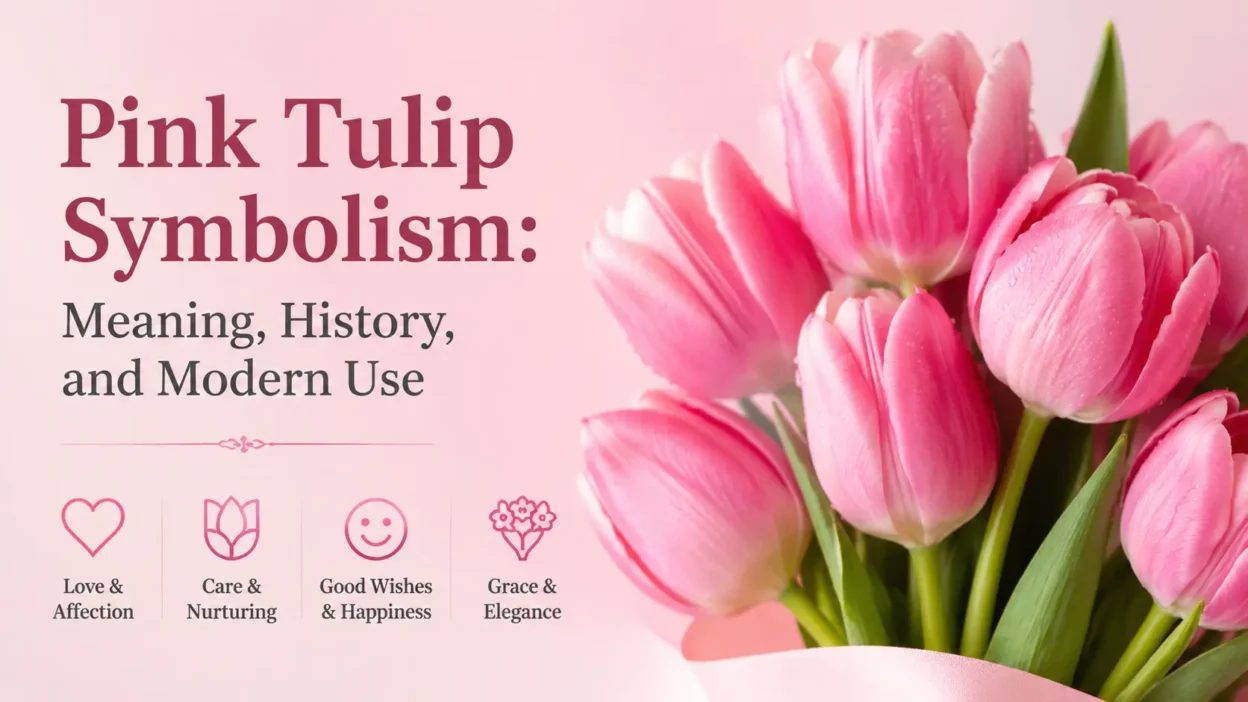
Flowers often communicate feelings that words cannot fully express. Among them, tulips are recognized for their simple shape, bright colors, and association with affection. The pink tulip symbolism commonly represents admiration, kindness, affection, and gentle appreciation. In modern American culture, pink tulips are often chosen for gifts, celebrations, weddings, and personal expressions of care.
Unlike some flowers that carry strong romantic or dramatic meanings, pink tulips usually communicate warmth in a softer way. They can express gratitude toward a friend, celebrate a new beginning, or show appreciation without creating the intensity often associated with traditional red roses.
Understanding the meaning behind pink tulips helps explain why this flower appears so often in bouquets, home decoration, seasonal events, and personal messages. Its symbolism comes from a combination of flower traditions, color associations, and changing cultural interpretations.
Quick Answer
Pink tulip symbolism commonly represents affection, admiration, happiness, and gentle love in modern American culture. Historically, pink tulips developed meanings connected with beauty, prosperity, and emotional appreciation as tulip traditions spread across different cultures.
TL;DR
- Pink tulips symbolize admiration, affection, and kindness.
- Tulip meanings grew from Ottoman and European traditions.
- Americans often use pink tulips for celebrations.
- Pink color adds warmth and emotional softness.
- They appear in gifts, weddings, and home decor.
What Pink Tulips Look Like and Where People Find Them
Pink tulips are flowering plants known for their smooth, cup-shaped blooms and upright stems. Their shades range from pale blush and soft pastel pink to brighter rose-colored varieties. Because of their clean appearance and seasonal availability, they are among the most recognizable spring flowers.
People commonly encounter pink tulips in gardens, flower shops, public parks, wedding arrangements, and seasonal displays. In the United States, they are especially popular during spring celebrations, including Easter events, Mother’s Day arrangements, and garden festivals.
The physical appearance of pink tulips contributes to their symbolic meaning. Their balanced shape and soft color often create an impression of friendliness, elegance, and calmness rather than intensity or drama.
What Pink Tulips Commonly Mean in the United States
In the United States, pink tulips are most often associated with appreciation and caring relationships. They are frequently given when someone wants to communicate warmth without making the message strongly romantic.
Common meanings include:
- Admiration for someone’s personality or achievements
- Appreciation and gratitude
- Friendship and affection
- Happiness and positive emotions
- Gentle romantic interest
A bouquet of pink tulips may be appropriate for a close friend, family member, coworker, or partner. Their meaning depends greatly on the relationship and the situation in which they are given.
Ancient Roots and Early Tulip Symbolism
Tulips originally grew in areas of Central Asia before becoming closely connected with Ottoman culture. In the Ottoman Empire, tulips became valued flowers associated with beauty, refinement, and artistic expression.
During the Ottoman period, tulips appeared in gardens, artwork, textiles, and decorative designs. The flower became so important that the eighteenth century in Ottoman history is sometimes called the “Tulip Era” because of its cultural popularity.
When tulips later spread into Europe, especially the Netherlands, their symbolism changed as different societies developed their own interpretations. The flower became connected with wealth, gardening, and personal taste.
Pink tulips gained their softer emotional associations gradually as flower gifting traditions developed.
How Tulip Traditions Changed in Europe and America
Tulips became widely known in Europe after being introduced from the Ottoman world during the sixteenth century. The Netherlands became one of the most important centers for tulip cultivation, developing many varieties and creating a strong connection between tulips and springtime beauty.
During the famous Dutch tulip craze of the seventeenth century, rare tulip bulbs became valuable commodities. Although that period focused more on economic value than symbolism, it helped establish the tulip as a culturally important flower.
In America, tulips became associated with gardens, seasonal renewal, and decorative beauty. Over time, different tulip colors developed informal meanings through floral traditions and popular culture.
The Role of Pink Color in Flower Symbolism
Color plays a major role in how people interpret flowers. Pink is often connected with softness, compassion, kindness, and emotional balance.
Compared with red, which is commonly linked with passion and intense romance, pink creates a gentler impression. Compared with white, which may suggest purity or simplicity, pink feels warmer and more personal.
In flower arrangements, pink tulips can communicate:
| Context | Meaning in the USA | Common Associations | Notes |
|---|---|---|---|
| Gifts | Appreciation and affection | Friendship, gratitude | Suitable for many relationships |
| Weddings | Happiness and tenderness | Love, celebration | Often used in spring ceremonies |
| Home Decor | Calm beauty | Comfort, freshness | Adds a soft seasonal feeling |
| Memorial Settings | Loving remembrance | Care and respect | Meaning depends on the family |
Pink Tulips in American Celebrations and Traditions
Americans often use pink tulips during events that celebrate relationships, growth, and appreciation. They appear frequently in spring holidays and personal milestones.
During Mother’s Day, pink tulips are popular because their meaning aligns with gratitude and affection. They are also common in birthday arrangements, graduation gifts, and “thank you” bouquets.
At weddings, pink tulips may represent happiness, partnership, and emotional connection. Their elegant appearance allows them to fit both traditional and modern floral styles.
Unlike flowers connected to specific ceremonies only, pink tulips remain flexible because their message is generally positive and welcoming.
Emotional and Psychological Meaning of Pink Tulips
People often respond emotionally to flowers because colors, shapes, and natural elements influence how spaces and experiences feel. Pink tulips are commonly perceived as cheerful, gentle, and comforting.
Their symbolism can communicate:
- A feeling of being appreciated
- Emotional support during difficult times
- Celebration of personal growth
- A reminder of kindness and connection
Psychologically, soft pink tones are often associated with calmness and friendliness. This does not mean flowers create specific emotions automatically, but cultural associations influence how people interpret them.
Religious and Cross-Cultural Interpretations
Tulips do not have one universal religious meaning, but different cultures have connected flowers with spiritual and emotional ideas.
In some traditions, flowers represent beauty, renewal, and the temporary nature of life. Tulips may appear in religious or cultural celebrations simply because they represent spring, growth, and hope.
In Islamic art and Ottoman culture, tulips held special artistic importance. In European Christian traditions, spring flowers often became associated with renewal and seasonal celebrations.
Modern interpretations of pink tulips are usually cultural rather than strictly religious.
Why Pink Tulips Appear in Weddings and Romantic Settings
Pink tulips are common in weddings because they combine elegance with emotional warmth. Couples often choose them when they want floral arrangements that feel romantic but not overly dramatic.
They may symbolize:
- Mutual appreciation
- Happiness in a relationship
- New beginnings
- Gentle affection
For couples who want a softer alternative to red roses, pink tulips offer a message of love that focuses more on companionship and care.
Pink Tulips in Tattoos, Art, and Personal Style
Although flower tattoos vary widely in meaning, pink tulips can represent personal growth, kindness, memories, or meaningful relationships.
Someone may choose a pink tulip tattoo to represent:
- A loved one
- A new chapter in life
- Emotional healing
- A personal connection to spring or nature
In fashion and home design, pink tulip imagery often creates a feeling of freshness and elegance. It appears in fabrics, artwork, wallpapers, and seasonal decorations.
Modern Uses of Pink Tulip Symbolism
Today, pink tulips appear in many everyday settings beyond traditional flower giving.
Common modern uses include:
- Social media posts celebrating spring or happiness
- Digital illustrations and greeting cards
- Interior decoration
- Wedding themes
- Personal gifts
- Garden planning
Their popularity continues because the meaning remains easy to understand. Pink tulips communicate positive emotions without requiring a complicated explanation.
Common Misunderstandings About Pink Tulip Meaning
One common misunderstanding is that every flower color has a fixed meaning everywhere. In reality, flower symbolism changes depending on culture, personal experience, and context.
Another misconception is that pink tulips always represent romantic love. While they can express romantic feelings, they are equally common as symbols of friendship, gratitude, and appreciation.
Some people also assume flower meanings come from ancient rules that never changed. In practice, many meanings developed through a mixture of history, art, commercial flower traditions, and modern social customs.
How Pink Tulip Symbolism Has Evolved Over Time
The meaning of pink tulips has shifted from broader ideas of beauty and refinement toward more personal emotional expressions.
Early tulip traditions focused heavily on rarity, gardens, and artistic value. Modern interpretations focus more on relationships, celebrations, and emotional communication.
In American culture today, pink tulips represent a balance between elegance and friendliness. They are meaningful because they allow people to express care in a simple and approachable way.
Positive and Negative Associations of Pink Tulips
Pink tulips are mostly connected with positive meanings, but symbolism can vary.
Positive associations include:
- Love and appreciation
- Friendship
- Beauty
- Celebration
- Hope
Possible misunderstandings include:
- Assuming the giver has romantic intentions
- Treating flower meanings as universal rules
- Ignoring personal or cultural differences
The meaning of a pink tulip arrangement depends on the sender, receiver, and situation.
Frequently Asked Questions
What does a pink tulip symbolize?
A pink tulip usually symbolizes admiration, affection, gratitude, and happiness. In the United States, it is often used to express caring feelings in both romantic and non-romantic relationships.
Are pink tulips romantic flowers?
Pink tulips can have romantic meanings, but they are not limited to romance. They are also popular for friendships, family appreciation, and celebrations.
What do pink tulips mean in a wedding?
At weddings, pink tulips often represent happiness, tenderness, and appreciation between partners. They are chosen for their elegant appearance and warm emotional tone.
Do pink tulips have a biblical meaning?
Pink tulips do not have a specific biblical meaning. However, flowers in general may symbolize beauty, creation, renewal, and seasonal change in some Christian interpretations.
What does a pink tulip tattoo symbolize?
A pink tulip tattoo may represent love, personal growth, kindness, memories, or a meaningful relationship. The exact meaning depends on the person wearing it.
Are pink tulips good sympathy flowers?
Pink tulips can be used as sympathy flowers because they communicate care, respect, and remembrance. The appropriateness depends on the preferences of the grieving family.
Conclusion
Pink tulips represent admiration, kindness, affection, and emotional warmth in many modern settings. Their meaning developed through centuries of flower traditions, changing from symbols of beauty and refinement into expressions of personal connection.
Today, pink tulip symbolism remains popular in American culture because the flower communicates care without being limited to one type of relationship. Whether used in gifts, weddings, gardens, or personal designs, pink tulips continue to represent thoughtful appreciation and gentle celebration.


