
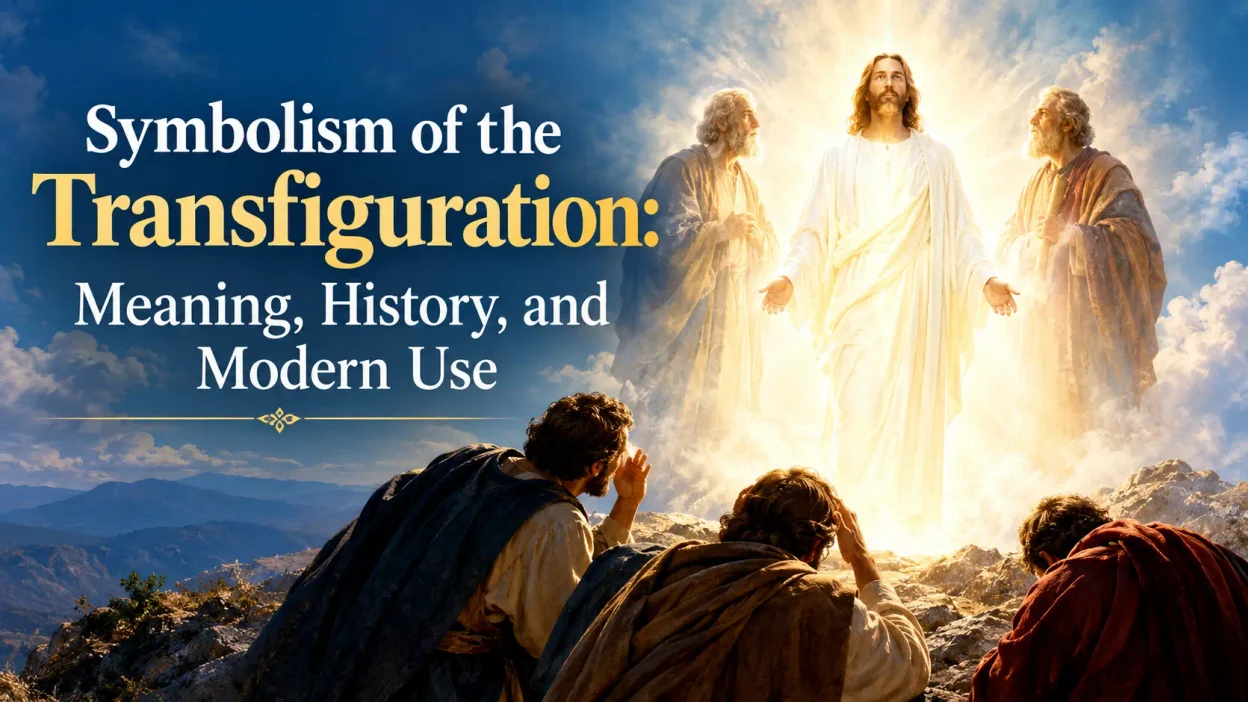
The symbolism of the Transfiguration centers on the revelation of Jesus Christ’s divine glory, his relationship with God the Father, and the connection between his earthly life and the glory of the resurrection. In the Christian Gospel accounts, Jesus takes three disciples up a mountain, where his appearance changes and his identity becomes clearer through a remarkable encounter involving Moses, Elijah, and a heavenly voice.
For Christians in the United States, the Transfiguration represents more than a miraculous change in appearance. It offers a way to understand Jesus’ divine identity, the importance of listening to his teaching, and the relationship between suffering and future glory. Churches commemorate the event through worship, Scripture readings, paintings, stained glass, and religious education.
The story also raises questions about spiritual understanding. Why does Jesus appear radiant? Why do Moses and Elijah stand beside him? And why does the voice from the cloud tell the disciples to listen to him? Each detail contributes to the event’s meaning within Christian theology.
Quick Answer
The symbolism of the Transfiguration most commonly represents Jesus Christ’s divine glory, his identity as God’s Son, and the promise of resurrection and eternal life. In Christian tradition, the appearance of Moses and Elijah and the voice from the cloud also connect Jesus with the Hebrew Scriptures and affirm his central place in God’s plan.
TL;DR
- Radiant light represents the revelation of Jesus’ divine glory.
- Moses and Elijah connect Jesus with the Law and the Prophets.
- The heavenly voice identifies Jesus as God’s beloved Son.
- The mountain setting suggests a place of revelation and encounter with God.
- The event prepares the disciples to understand Jesus’ coming suffering and resurrection.
- Christian churches commemorate the Transfiguration through worship, art, and Scripture readings.
What Is the Transfiguration in the Bible?
The Transfiguration is an event recorded in three New Testament Gospels: Matthew 17:1–8, Mark 9:2–8, and Luke 9:28–36. In each account, Jesus takes Peter, James, and John to a mountain, where his appearance changes before them.
His face shines or his appearance becomes radiant, and his clothing becomes brilliantly bright. Moses and Elijah appear and speak with him. A cloud then overshadows the group, and a voice identifies Jesus as God’s beloved Son, commanding the disciples to listen to him.
The details vary slightly among the Gospel accounts. Luke, for example, mentions that Moses and Elijah discuss Jesus’ coming departure, which he is to accomplish in Jerusalem. This detail connects the Transfiguration with the events leading toward Jesus’ crucifixion and resurrection.
The word Transfiguration comes from a term associated with a change in form or appearance. In Christian interpretation, the event does not mean that Jesus becomes divine for the first time. Instead, his glory is revealed to the disciples in a distinctive way.
That distinction is essential to understanding the symbolism. The story concerns the disclosure of Jesus’ identity, not a transformation from an ordinary human into a divine being.
What the Radiant Light Symbolizes
Light is one of the most recognizable elements of the Transfiguration. Jesus’ face shines, and his clothing becomes dazzling, making the scene visually different from an ordinary encounter between people.
In Christian theology, this radiance signifies divine glory. It provides a visible expression of something the disciples cannot fully understand through ordinary observation alone: the identity and majesty of Jesus.
Light also appears elsewhere in the Bible as an image of God’s presence, truth, holiness, and guidance. These associations help explain why Christian artists often depict the Transfiguration with a brilliant halo, a luminous figure, or rays spreading across a dark background.
The light should not be reduced to a generic symbol of positive thinking. Within the biblical narrative, it points specifically to Jesus and his relationship with God.
In Eastern Orthodox Christianity, the light of the Transfiguration receives particular theological attention. Orthodox teaching connects the event with the manifestation of divine glory, often discussed in relation to the uncreated light of God. Western Christian traditions also emphasize divine revelation, although their theological explanations may differ.
For modern believers, the light can serve as a reminder that Christian faith understands Jesus’ identity as extending beyond what the disciples initially recognized.
Why the Mountain Matters
Mountains frequently serve as places of revelation in the Bible. Moses encounters God on Mount Sinai, and other important biblical events take place in elevated settings associated with prayer, covenant, or divine instruction.
The Transfiguration follows this familiar pattern. Jesus leads three disciples away from their ordinary surroundings, and the mountain becomes the setting for a revelation that changes how they understand him.
The Gospel accounts do not all identify the mountain by name. Mount Tabor is a traditional location associated with the event, while some scholars have proposed other possibilities, including Mount Hermon. The precise historical location remains uncertain.
Its symbolic role, however, is clearer than its geography. The mountain separates the disciples temporarily from daily life and places them in a setting where divine revelation becomes visible.
For Christian readers, this can suggest that understanding sometimes requires attention, prayer, and a willingness to step away from distractions. Yet the story does not teach that God can be encountered only in mountains or secluded places.
The mountain provides the setting for the event; the central revelation remains the identity and glory of Jesus.
Moses and Elijah: The Law and the Prophets
Moses and Elijah are not incidental figures in the Transfiguration. Their appearance connects Jesus with important strands of Israel’s religious history.
Moses is associated with the Law and the covenant established between God and Israel. Elijah is a major prophet whose biblical story includes a dramatic encounter with God and a continuing place in Jewish expectation and Christian interpretation.
Their presence alongside Jesus indicates continuity between his mission and the Scriptures that came before him. Christianity reads the event as showing that Jesus stands in a significant relationship with the Law and the Prophets while occupying the central position in the scene.
The figures may also carry associations with divine revelation. Moses encounters God on Sinai, while Elijah experiences a distinctive encounter with God at Horeb. Their presence on the mountain therefore echoes earlier biblical experiences without making the events identical.
Luke adds that Moses and Elijah speak about Jesus’ coming exodus or departure in Jerusalem. This connects the scene with the suffering, death, and resurrection that lie ahead.
The symbolism is not that Christianity simply discards Israel’s Scriptures. Rather, the Gospel accounts present Jesus’ mission in continuity with the story of God’s dealings with Israel.
The Heavenly Voice and the Command to Listen
The voice from the cloud is among the most important details in the Transfiguration. In the Gospel accounts, it identifies Jesus as God’s beloved Son and directs the disciples to listen to him.
This declaration connects the Transfiguration with the account of Jesus’ baptism, where a heavenly voice also affirms his identity. At the Transfiguration, however, the disciples witness the declaration in the presence of Moses and Elijah, making the relationship between Jesus and the earlier biblical tradition especially prominent.
The command to listen carries practical significance. The disciples have seen something extraordinary, but the experience is not meant to remain a spectacle. They must take Jesus’ teaching seriously, including his warnings about suffering and his call to follow him.
The cloud also has biblical associations with God’s presence. In the Hebrew Scriptures, clouds appear in accounts of divine guidance and revelation, including Israel’s wilderness journey and the events surrounding Mount Sinai.
For Christians, the voice and cloud together communicate divine authority and revelation. The event asks believers not merely to admire Jesus’ glory but to respond to his teaching.
The Transfiguration and the Promise of Resurrection
The Transfiguration takes place as Jesus’ journey toward Jerusalem and his suffering becomes increasingly important in the Gospel narratives. This setting helps explain why Christians connect the event with the resurrection.
The disciples briefly see Jesus in glory before witnessing the humiliation and violence of his crucifixion. The contrast between these experiences creates an important theological relationship: suffering and death do not have the final word in the Christian understanding of Jesus.
The Transfiguration is not itself the resurrection. Jesus has not yet been crucified, and the disciples have not yet encountered the risen Christ. Instead, the event anticipates the glory associated with his victory over death.
For Christians, this connection can offer hope when suffering seems to contradict the goodness or purposes of God. The story does not promise that every painful experience will end quickly or that believers will avoid hardship. It presents Jesus’ coming suffering within a larger narrative that culminates in resurrection.
This interpretation is especially significant during Lent, Holy Week, and Easter, when churches reflect on the relationship between the crucifixion and the resurrection.
The Meaning of the Three Disciples’ Experience
Peter, James, and John witness the Transfiguration, but their responses reveal that seeing a remarkable event does not automatically produce complete understanding.
Peter proposes making three shelters for Jesus, Moses, and Elijah. The Gospel narratives present his reaction as part of the disciples’ struggle to comprehend what is happening. In Mark’s account, the narrator explicitly notes that Peter does not know what to say because the disciples are afraid.
The moment matters because Peter’s proposal does not capture the full significance of the scene. The heavenly voice redirects attention to Jesus rather than allowing the disciples to treat all three figures as equivalent.
Afterward, the disciples see Jesus alone. This ending reinforces his central place in the narrative.
For modern readers, the episode suggests a distinction between an emotional religious experience and a considered understanding of faith. Astonishment, enthusiasm, and uncertainty may accompany spiritual encounters, but Christian interpretation places importance on what the experience reveals and how it shapes subsequent choices.
The disciples eventually descend the mountain and return to the realities of ordinary life. The experience is significant partly because it prepares them for what comes next.
What the Transfiguration Means in American Christianity
In the United States, the Transfiguration appears across a wide range of Christian traditions, including Roman Catholic, Eastern Orthodox, Anglican, Lutheran, Methodist, Presbyterian, and other Protestant communities. The details of observance and theological emphasis vary.
For many Christians, the event affirms the divinity of Jesus and connects his earthly ministry with the glory of the resurrection. Churches may use the Gospel readings to teach about Christ’s identity, the relationship between the Old and New Testaments, and the importance of listening to Jesus.
The Transfiguration also appears in sermons and Bible studies addressing spiritual growth. The mountain scene offers a way to discuss moments of clarity or inspiration, while the disciples’ return to ordinary life emphasizes that faith must be lived beyond exceptional experiences.
Some American churches celebrate the Feast of the Transfiguration on August 6. Other Western liturgical traditions also observe the event on the Sunday before Ash Wednesday, connecting it with the beginning of Lent. Calendars and practices differ by denomination.
In a religiously diverse country, it is important not to assume that all Americans interpret the story in the same way. Christians may regard it as a central revelation of Jesus’ identity, while people from other religious backgrounds or those without religious commitments may approach it as a significant narrative in Christian history and art.
How Christian Traditions Interpret the Transfiguration
Although Christians generally recognize the Transfiguration as a revelation of Jesus’ glory, traditions emphasize different aspects of the event.
In Eastern Orthodox Christianity, the feast is closely connected with the revelation of divine glory and the possibility of human transformation through participation in God’s life. The event is celebrated as a disclosure of God’s presence, not simply as a miraculous change in Jesus’ appearance.
Roman Catholic teaching also connects the Transfiguration with Jesus’ divine identity, the apostles’ preparation for the Passion, and the future glory promised to believers. The event is understood within the broader movement from Jesus’ ministry through his death and resurrection.
Many Protestant traditions emphasize the biblical text, the confirmation of Jesus as God’s Son, and the relationship between the Law, the Prophets, and Christ. Protestant interpretations vary, however, and should not be treated as a single uniform position.
These differences do not erase the central elements shared by the Gospel accounts. Jesus appears in glory, Moses and Elijah are present, and the heavenly voice directs attention to him.
| Symbol or detail | Main Christian meaning | Common use in the United States |
|---|---|---|
| Radiant light | Jesus’ revealed glory | Sermons, paintings, stained glass |
| Mountain | Setting for divine revelation | Bible study and devotional reflection |
| Moses and Elijah | Connection with the Law and the Prophets | Teaching about biblical continuity |
| Heavenly cloud and voice | God’s presence and affirmation of Jesus | Worship and theological instruction |
| Three disciples | Witness, awe, and incomplete understanding | Lessons about faith and discipleship |
| Jesus appearing in glory | Anticipation of resurrection | Lenten, Easter, and Transfiguration services |
The Transfiguration in Christian Art and Church Architecture
Artists have depicted the Transfiguration for centuries, and visual details help communicate the story to people who may not know every part of the biblical account.
Traditional compositions often place Jesus at the center, elevated above the disciples, with Moses and Elijah standing on either side. Rays of light or a bright background distinguish Jesus from the other figures. Peter, James, and John may appear below, shielding their faces, kneeling, or reacting with astonishment.
These arrangements are not merely decorative. They guide the viewer’s attention toward Jesus and distinguish the revelation of his glory from the disciples’ limited understanding.
In American churches, the event may appear in stained-glass windows, altar paintings, icons, illustrated Bibles, and educational materials. Eastern Orthodox parishes may display a Transfiguration icon in connection with the August feast, while other churches may include the scene in broader depictions of Jesus’ life.
Artistic conventions vary. Icons generally follow established theological and visual traditions, while contemporary paintings may use modern color, composition, and lighting. Neither approach should be confused with a photograph-like record of the event.
For viewers, the artwork provides a visual interpretation of the biblical story. Its arrangement, light, and gestures communicate theological ideas that written descriptions express through words.
<WritingBlock id=”62482″ variant=”document”>## Emotional and Personal Meaning of the Transfiguration
The Transfiguration can carry personal meaning for Christians who are trying to understand moments of clarity, uncertainty, or change. Its story moves from revelation to fear, from wonder to renewed attention, and ultimately back to ordinary life.
The disciples see something extraordinary, yet they do not immediately understand its full significance. That tension can feel familiar to people whose beliefs develop gradually or whose experiences raise questions they cannot answer at once.
The event can also provide comfort during difficult periods. Because Christian tradition connects the Transfiguration with the coming resurrection, believers may interpret it as a reminder that suffering does not define the whole of human existence. This is a statement of Christian hope, not a guarantee that every hardship will resolve in a particular way.
Some people use the story to reflect on personal growth or a change in perspective. Such applications can be meaningful, provided they remain distinct from the passage’s original theological purpose: revealing Jesus’ glory and preparing the disciples for the events ahead.
Its emotional significance therefore comes from the relationship between revelation and uncertainty. The disciples witness something they cannot fully explain, but they are still called to listen, follow, and continue their journey.
How the Transfiguration Is Observed Today
The Feast of the Transfiguration remains an important occasion in several Christian traditions. In churches that follow the August 6 observance, worship may include readings from the Gospel accounts, prayers focused on Christ’s glory, and hymns or other music associated with the feast.
In Eastern Orthodox communities, the celebration may include special liturgical services and the blessing of fruit, particularly grapes where they are available and culturally customary. This practice is associated with the feast’s place in the agricultural calendar and the offering of first fruits in some Orthodox traditions; it is not a universal Christian custom.
In other American congregations, the Transfiguration may be observed through a Sunday service, a sermon, a Bible study, or a seasonal reading. Some churches give particular attention to the event immediately before Lent, when the story provides a transition toward reflection on Jesus’ suffering and death.
The event also appears in Christian education, devotional writing, and religious art shared online. Modern presentations may use photography, digital illustration, or animation to explain the story to children and adults.
These practices show how a biblical narrative can remain part of contemporary religious life while taking different forms across denominations and communities.
Common Misunderstandings About the Transfiguration
One frequent misunderstanding is that Jesus becomes divine during the Transfiguration. The Gospel accounts do not present the event as the moment when Jesus acquires divinity; they portray his glory as being revealed to the disciples.
Another mistake is to treat the appearance of Moses and Elijah as proof that they and Jesus occupy identical roles. Their presence connects Jesus with Israel’s Scriptures, but the heavenly voice directs the disciples to listen specifically to Jesus.
The Transfiguration is also sometimes described as a promise that believers will experience visible transformations or receive supernatural abilities. Christian traditions may discuss spiritual transformation in relation to the event, but the Gospel narratives do not promise that everyone will undergo a comparable physical experience.
A further misunderstanding is that the mountain’s exact location is known with certainty. Mount Tabor has a longstanding association with the event, but the Gospel accounts do not name the mountain, and alternative proposals exist.
Finally, the symbolism should not be separated from the larger narrative of Jesus’ suffering and resurrection. The radiant appearance is significant, but so are the disciples’ reactions, the heavenly command, and the journey that continues after they descend.
Understanding these distinctions preserves the event’s central Christian meaning without adding claims that the biblical accounts do not establish.
How the Meaning of the Transfiguration Has Developed
The Transfiguration began as an event recorded within the New Testament’s accounts of Jesus’ ministry. Early Christians interpreted it in relation to his identity, the testimony of the apostles, and the relationship between his earthly life and divine glory.
As Christian worship developed, the event became part of the church calendar and inspired theological reflection, hymns, icons, and paintings. Different communities developed distinctive ways of emphasizing its meaning, especially concerning divine glory, human transformation, and the promise of resurrection.
Over time, the story also became an accessible subject for teaching. Its clear visual elements—a mountain, radiant light, a cloud, and three disciples—make it useful in religious education and public presentations of Christian belief.
In contemporary American culture, the Transfiguration continues to appear in church services, devotional materials, and online discussions. Some modern reflections focus on spiritual clarity or personal change, while formal Christian teaching retains the event’s specific connection with Jesus’ identity.
These interpretations are not all interchangeable. Theological meanings grounded in the Gospel accounts differ from personal applications and artistic adaptations, even when they draw inspiration from the same story.
Recognizing that distinction allows the Transfiguration to remain meaningful without losing its historical and religious context.
Frequently Asked Questions
What is the main symbolism of the Transfiguration?
The main symbolism of the Transfiguration is the revelation of Jesus Christ’s divine glory and identity as God’s Son. The event also anticipates the resurrection and connects Jesus’ mission with the Law and the Prophets through the appearance of Moses and Elijah.
Why is the Transfiguration important to Christians?
The Transfiguration helps Christians understand who Jesus is and prepares the disciples for the suffering that precedes his resurrection. It also provides a foundation for reflection on divine glory, faith, and the relationship between Christ’s earthly ministry and his exalted status.
What does the light symbolize in the Transfiguration?
The radiant light represents the revelation of Jesus’ glory within the Gospel narratives. In Eastern Orthodox Christianity, the light also has a particular theological connection with the manifestation of God’s divine presence.
What do Moses and Elijah represent in the Transfiguration?
Moses is associated with the Law, while Elijah represents the prophetic tradition. Their appearance alongside Jesus connects his mission with Israel’s Scriptures and places the Transfiguration within the broader biblical story.
When is the Feast of the Transfiguration celebrated?
Many Christian churches celebrate the Feast of the Transfiguration on August 6. Some Western liturgical calendars also observe the event on the Sunday before Ash Wednesday, although practices differ among denominations.
Is the Transfiguration the same as the resurrection?
No. The Transfiguration occurs before Jesus’ crucifixion and resurrection and reveals his glory to three disciples. Christians interpret it as anticipating the resurrection rather than as the resurrection itself.
What does the Transfiguration symbolize in modern life?
For Christians today, the Transfiguration can serve as a reminder to listen to Jesus, remain faithful through uncertainty, and understand suffering within the hope of resurrection. Personal interpretations involving growth or renewed perspective can complement these themes without replacing the story’s central theological meaning.
Conclusion
The symbolism of the Transfiguration centers on the revelation of Jesus’ divine glory, the affirmation of his identity as God’s Son, and the connection between his mission, the Hebrew Scriptures, and the resurrection. The radiant light, mountain setting, appearance of Moses and Elijah, and heavenly voice each contribute to this message. Together, they present an event that changes how the disciples understand Jesus without removing the uncertainty and suffering that remain ahead.
For American Christians, the Transfiguration continues to shape worship, religious art, biblical education, and personal reflection. Its meaning extends beyond the image of a radiant figure on a mountain: it asks believers to recognize Jesus’ identity, listen to his teaching, and hold the promise of resurrection alongside the realities of everyday life. The story’s central message remains clear: the glory revealed on the mountain must be understood in the light of the journey that follows.