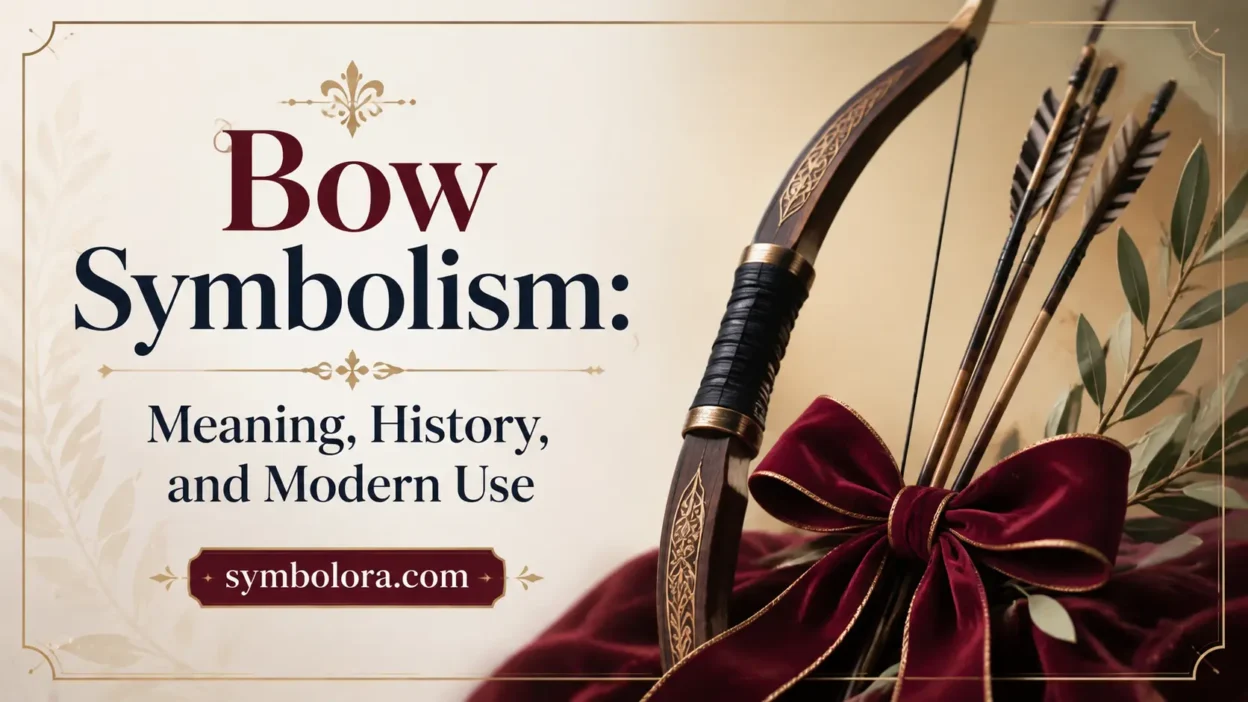
A bow is a simple object with many layers of meaning. From gift wrapping and wedding decorations to weapons, fashion, and personal expression, bow symbolism often represents connection, beauty, celebration, and intention. Its meaning changes depending on the context, because the same shape can suggest affection, achievement, protection, or even conflict.
People encounter bows in everyday life more often than they realize. A ribbon bow on a present communicates thoughtfulness, while a bow worn as an accessory can express personality and style. Understanding why this symbol appears in American traditions, art, and personal choices reveals how ordinary objects can carry cultural meaning.
The symbolism of a bow is not fixed. Its interpretation depends on history, location, and purpose. A decorative bow at a holiday gathering carries a different message from an archer’s bow in mythology or a bow used in a ceremonial setting.
Quick Answer
Bow symbolism commonly represents love, generosity, celebration, and connection in modern American culture, especially through gifts, weddings, holidays, and decorative design. Historically, bows have also symbolized protection, skill, honor, and strength through their connection with archery and ceremonial traditions.
TL;DR
- Bows often symbolize gifts, affection, and celebration.
- Ribbon bows became popular signs of beauty and presentation.
- Archery bows represent skill, courage, and protection.
- Americans use bows in holidays, weddings, and branding.
- Bow meanings change across cultures and traditions.
- Modern designs emphasize personality and emotional connection.
What a Bow Symbolically Represents
A bow is usually recognized as a folded or tied material that creates loops and a central knot. The decorative version is commonly made from ribbon, fabric, or paper, while the functional bow used in archery consists of a curved frame designed to launch arrows.
Because bows have different forms, their meanings vary. Decorative bows often communicate care, celebration, and elegance. They appear on presents because they transform an ordinary package into something that feels intentional and personal.
The archery bow carries a different message. It is associated with preparation, precision, discipline, and the ability to direct energy toward a goal. In many traditions, the bow represents both restraint and action because the archer must wait, focus, and release at the right moment.
What Bow Symbolism Means in the United States
In the United States, the most familiar meaning of a bow comes from everyday celebrations and gift culture. A ribbon bow placed on a package suggests generosity and the excitement of giving. It signals that something has been prepared with care.
Bows are especially common during American holidays. During Christmas, large red or gold bows decorate wreaths, trees, doors, and gifts. In these settings, the bow represents warmth, hospitality, and celebration.
Bows also appear in weddings, where they often represent unity, beauty, and a carefully planned occasion. They decorate chairs, bouquets, invitations, and venues, creating a visual connection between elegance and emotional commitment.
In American fashion and design, bows can communicate different identities. A small bow may suggest femininity, playfulness, or vintage style, while a bold artistic bow may represent creativity and individuality.
| Context | Meaning in the USA | Common Associations | Notes |
|---|---|---|---|
| Gifts | Care and generosity | Holidays, surprises, kindness | Often represents thoughtful giving |
| Weddings | Unity and beauty | Romance, commitment, celebration | Used in decorations and clothing |
| Archery | Skill and focus | Strength, discipline, protection | Connected to traditional weapons |
| Fashion | Personal style | Elegance, creativity, identity | Meaning depends on design |
| Holidays | Joy and tradition | Christmas, parties, gatherings | Creates a festive atmosphere |
Ancient Roots and Early Symbolism of the Bow
The bow has existed as a tool for thousands of years, especially as a hunting and defensive weapon. Early societies depended on bows for survival, which gave the object associations with skill, responsibility, and protection.
In ancient cultures, skilled archers were often respected because using a bow required patience, accuracy, and physical control. The ability to handle a bow represented preparation and competence.
Many mythological figures are connected with bows. In Greek mythology, figures such as Artemis and Apollo are often shown with bows, linking the object with hunting, independence, and divine skill.
The bow also appears in stories of heroes and warriors across different cultures. These stories often use the bow as a symbol of ability, courage, and the responsibility that comes with power.
The Symbolism of Ribbon Bows and Gift Giving
The decorative ribbon bow developed a strong connection with presentation and generosity. When placed on a gift, the bow transforms an object into a gesture. It tells the receiver that someone made an effort to prepare something meaningful.
This connection explains why bows remain common during birthdays, anniversaries, baby showers, and holidays. The bow is not valuable because of the material itself; its importance comes from what it represents.
A wrapped gift with a bow creates anticipation. The tied ribbon suggests that something special is waiting to be revealed. This emotional association has helped the bow become a universal sign of celebration.
In American culture, gift bows also communicate social values such as appreciation, kindness, and thoughtfulness.
Bow Symbolism in Weddings and Relationships
Bows frequently appear in wedding traditions because their shape suggests joining and harmony. Two loops connected at the center can be interpreted as two parts coming together.
Wedding bows decorate invitations, chairs, flowers, dresses, and ceremony spaces. They help create an atmosphere of elegance while reinforcing themes of partnership and celebration.
A bow on a wedding gift can symbolize support and goodwill toward a couple beginning a new chapter. In this context, the bow represents emotional connection rather than decoration alone.
Modern couples may choose different bow styles depending on their personality. Some prefer traditional satin bows, while others use natural fabrics, minimalist designs, or creative arrangements.
Bow Symbolism in Fashion and Personal Expression
In fashion, bows have often represented elegance, charm, and personal style. Designers use bows to create different impressions, from classic sophistication to youthful playfulness.
Historically, bows appeared in clothing as signs of refinement and status. Decorative details on garments could show craftsmanship and attention to appearance.
Today, bows appear in accessories, hairstyles, shoes, jewelry, and clothing. Their meaning depends on how they are used. A small hair bow may communicate nostalgia or sweetness, while a dramatic runway bow may represent artistic expression.
Some people choose bow designs because they connect with memories, traditions, or a personal sense of identity.
Bow Symbolism in Tattoos and Body Art
Bow tattoos are often chosen for their visual appeal and personal meaning. They may represent femininity, confidence, celebration, or a significant life event.
Some people choose ribbon bow tattoos as reminders of important relationships, personal milestones, or moments of transformation. Others simply appreciate the design’s decorative quality.
Unlike traditional symbols with fixed meanings, bow tattoos are highly personal. The meaning usually comes from the wearer’s experience rather than a universal interpretation.
A bow tattoo combined with other imagery can create additional meanings. For example, a bow with flowers may emphasize beauty and growth, while a bow with an arrow may connect the design to determination and direction.
The Bow and Arrow: Strength, Direction, and Purpose
The bow and arrow carries a different symbolism from the decorative ribbon bow. Together, they represent focus, movement, and the ability to pursue a goal.
The arrow requires direction, while the bow provides the force needed to send it forward. Because of this relationship, the image is often connected with ambition, confidence, and personal progress.
In modern American culture, bow-and-arrow imagery appears in sports, outdoor activities, logos, and tattoos. It can represent independence, adventure, and connection with nature.
The symbol is also associated with traditional archery, where patience and accuracy matter as much as physical strength.
Religious and Spiritual Interpretations of Bows
Bows appear in some religious and spiritual traditions, although meanings vary widely. One of the best-known examples is the rainbow-like bow mentioned in biblical tradition as a sign of a covenant between God and humanity.
In other traditions, archery imagery may represent discipline, protection, or spiritual focus. The symbolism usually depends on the specific belief system and cultural context.
It is important to separate traditional religious meanings from modern decorative uses. A bow used in holiday decoration may have no religious meaning at all, while the same shape in a sacred setting may carry deeper significance.
Cross-Cultural Meanings of the Bow
Across cultures, bows have developed different associations. In some societies, the archery bow represents survival, hunting ability, and warrior traditions. In others, decorative bows represent celebration, beauty, or social connection.
Japanese archery traditions, for example, emphasize discipline, concentration, and personal development. The bow is not viewed only as a weapon but also as part of a practice requiring mental control.
In European traditions, bows became strongly connected with decoration, fashion, and gift presentation. Over time, these meanings influenced modern Western celebrations.
These differences show that symbols are shaped by human experiences rather than having one universal definition.
Psychological and Emotional Meaning of Bow Symbols
People often respond emotionally to bows because they are connected with positive experiences. A wrapped present, a wedding decoration, or a childhood accessory can create feelings of happiness, nostalgia, or belonging.
The shape of a bow can also influence perception. Rounded loops and balanced forms often appear gentle and inviting, which helps explain why bows are commonly used in friendly or celebratory settings.
However, emotional meaning depends on personal experience. For one person, a bow may represent joy and affection. For another, it may simply be an attractive design without symbolic importance.
Modern Uses of Bow Symbolism in Design and Media
Today, bows appear in many areas of popular culture. They are used in product packaging, advertisements, clothing brands, home decor, and digital graphics.
Companies often use bows to communicate ideas such as luxury, care, celebration, or special occasions. Gift-related businesses especially rely on bow imagery because consumers immediately associate it with giving.
Social media has also influenced bow trends. Decorative bows appear in lifestyle photography, fashion content, holiday posts, and creative design communities.
Modern interpretations often combine traditional meanings with personal aesthetics, allowing people to use bows in new ways.
Common Misunderstandings About Bow Symbolism
One common misunderstanding is that every bow has the same meaning. A ribbon bow and an archery bow may share a name, but their symbolism comes from very different histories.
Another misconception is that bows are always associated with femininity. While bows are often used in traditionally feminine designs, they have broader meanings connected with celebration, craftsmanship, sport, and identity.
Some people also assume symbols have permanent meanings. In reality, cultural symbols change as societies change. The meaning of a bow depends on the setting, audience, and intention behind its use.
How Bow Symbolism Has Changed Over Time
The meaning of bows has evolved from practical tools of survival to decorative symbols of connection and celebration.
Ancient societies often viewed the bow through the lens of hunting and protection. Later cultures expanded its meaning through mythology, art, clothing, and ceremony.
In modern America, decorative bows are more commonly associated with gifts, holidays, and personal style than with weapons. However, the older meanings of skill, focus, and strength remain present in sports and symbolic artwork.
This evolution shows how everyday objects can gain new meanings while keeping traces of their original purpose.
Frequently Asked Questions
What does a bow symbolize in American culture?
In American culture, a bow most commonly symbolizes generosity, celebration, and care, especially when used on gifts or decorations. It can also represent elegance, personal style, and connection in fashion and events.
What does a bow tattoo symbolize?
A bow tattoo can symbolize beauty, confidence, personal milestones, or emotional connections. Its meaning depends largely on the person wearing it and the additional elements included in the design.
Does a bow have a religious meaning?
A bow can have religious meanings in certain traditions, such as the biblical rainbow-like bow representing a covenant. However, decorative bows used in everyday life usually carry cultural rather than religious meanings.
Is a bow symbol positive or negative?
A bow is generally viewed as a positive symbol associated with giving, celebration, and creativity. The meaning can change depending on context, especially when referring to the weapon form.
Why are bows common in wedding decorations?
Bows are popular in weddings because they visually represent connection, beauty, and celebration. They are often used to create an elegant atmosphere and highlight important moments.
What is the difference between a bow and a bow and arrow symbol?
A decorative bow usually represents gifts, beauty, and celebration, while a bow and arrow often represents focus, strength, and direction. Their meanings come from different cultural uses.
Conclusion
A bow can represent many ideas depending on how it appears and why it is used. In modern American culture, it is most often connected with generosity, celebration, relationships, and personal expression, while its older meanings include skill, protection, and discipline.
Understanding bow symbolism helps explain why this simple shape appears in so many parts of life, from holiday traditions and weddings to fashion, art, and personal designs. Its meaning continues to evolve because people keep giving ordinary objects new emotional and cultural value.


