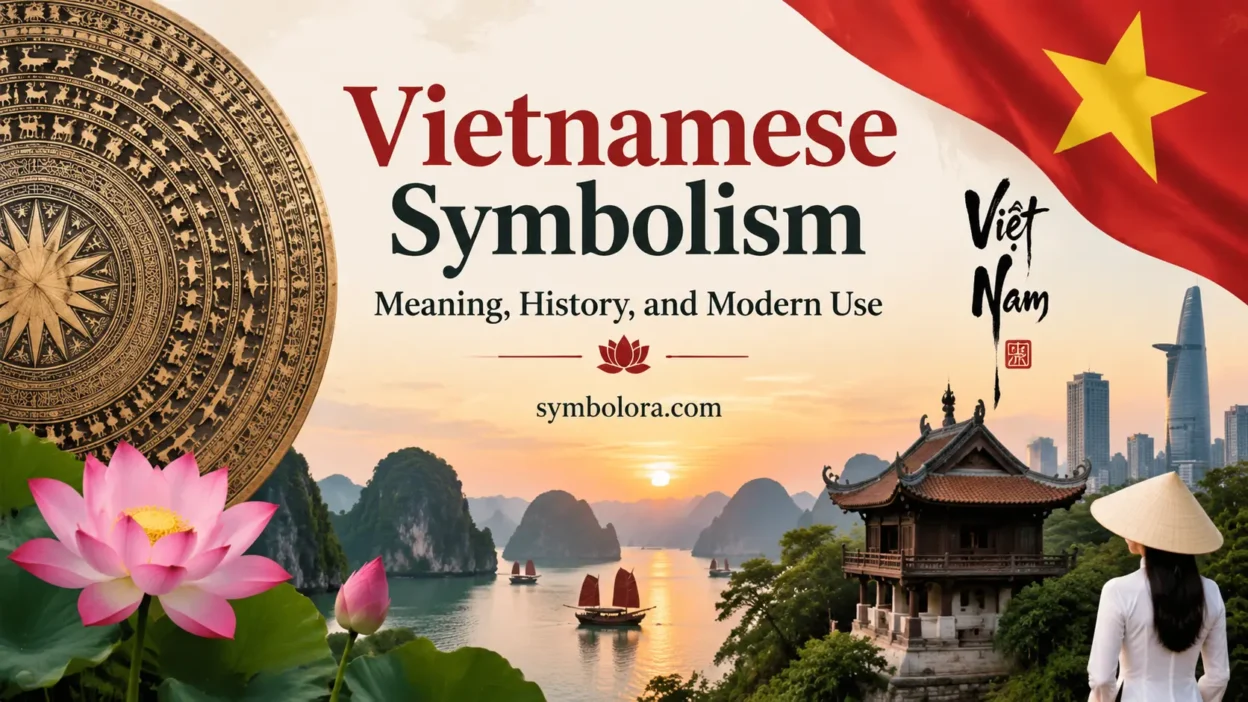
Vietnamese symbolism reflects a long cultural history shaped by family values, spirituality, nature, ancestry, and ideas of harmony. From the lotus flower and dragon to the colors red and yellow, Vietnamese symbols often express hopes for prosperity, protection, wisdom, and connection between generations. Understanding Vietnamese symbolism helps explain why these images continue to appear in art, celebrations, clothing, architecture, and personal identity.
For many Vietnamese Americans, traditional symbols serve as a bridge between heritage and everyday life. They appear during Lunar New Year celebrations, in homes, temples, jewelry, tattoos, and cultural events. These symbols are not simply decorative; they often carry stories about history, beliefs, family relationships, and national identity.
Vietnamese symbols developed through centuries of interaction between indigenous traditions, Buddhism, Confucian values, Chinese cultural influence, and local Vietnamese beliefs. While meanings can vary by region and family, many symbols share common themes: respect for ancestors, balance with nature, good fortune, and hope for the future.
Quick Answer
Vietnamese symbolism commonly represents family, prosperity, protection, harmony, and respect for tradition in modern American culture. Historically, Vietnamese symbols such as dragons, lotus flowers, and ancestral imagery have reflected spiritual beliefs, royal traditions, and cultural identity.
TL;DR
- Vietnamese symbols reflect family, luck, and cultural identity.
- Lotus flowers represent purity and resilience.
- Dragons symbolize power, ancestry, and protection.
- Lunar New Year uses symbols of renewal and prosperity.
- Vietnamese Americans preserve symbols through art and traditions.
What Vietnamese Symbols Represent in Modern American Culture
In the United States, Vietnamese symbols are often connected with heritage, belonging, and personal identity. Vietnamese Americans may use traditional imagery to celebrate their background while also expressing values that remain important across generations.
The most common meanings include:
| Symbol or Context | Meaning in the USA | Common Associations | Notes |
|---|---|---|---|
| Lotus flower | Growth and inner strength | Purity, renewal, resilience | Common in art and religious settings |
| Dragon | Protection and power | Ancestry, leadership, fortune | Connected to Vietnamese origin stories |
| Red color | Celebration and luck | Weddings, Lunar New Year, prosperity | Frequently used in festive designs |
| Ancestors | Family connection | Respect, memory, tradition | Important in many Vietnamese households |
| Bamboo | Flexibility and endurance | Strength, humility, survival | Represents adapting through challenges |
Unlike some Western symbols that may have one dominant meaning, Vietnamese symbols often carry several layers. A dragon may represent strength, but it can also represent national origins and a connection to legendary ancestors. A lotus may represent beauty, but it also reflects the idea of rising above difficulties.
Ancient Roots and Early Symbolism in Vietnam
Vietnamese symbolism developed from a combination of native traditions and outside cultural influences over thousands of years. Ancient Vietnamese communities formed strong connections with rivers, agriculture, animals, and seasonal cycles. These natural elements became important sources of symbolic meaning.
Early Vietnamese culture placed significant importance on ancestors and the relationship between humans and the natural world. Farming communities depended on water, weather, and fertile land, which helped shape symbols connected with growth, abundance, and protection.
The influence of Chinese civilization also affected Vietnamese writing, philosophy, government, and artistic traditions. Confucian ideas emphasized family responsibility, social harmony, and respect for elders, while Buddhist traditions introduced symbols connected with compassion, enlightenment, and spiritual discipline.
However, Vietnamese symbolism was not simply borrowed from neighboring cultures. Local traditions adapted outside influences and created meanings that reflected Vietnam’s own history, geography, and identity.
The Lotus Flower as a Symbol of Purity and Resilience
The lotus is one of the most recognizable Vietnamese symbols. It grows from muddy water but produces a clean and beautiful flower, making it a natural symbol of overcoming difficulties while maintaining dignity.
In Vietnamese culture, the lotus is associated with purity, calmness, and spiritual growth. Its connection with Buddhism is especially important because the lotus often represents enlightenment and the journey toward wisdom.
The flower also appears in everyday Vietnamese design. It can be found in paintings, architecture, clothing patterns, and decorative objects. In Vietnam and among Vietnamese communities in the United States, lotus imagery often communicates elegance and cultural pride.
For many people, the lotus has a personal meaning as well. It can represent perseverance through hardship, personal improvement, and the ability to remain strong despite challenging circumstances.
The Dragon Symbol and Vietnamese Identity
The dragon holds a special place in Vietnamese culture because it is connected with legends about the origins of the Vietnamese people. Traditional stories describe the Vietnamese ancestors as descendants of a dragon and a fairy, linking the dragon with national identity and ancestry.
Unlike the fire-breathing dragons common in some Western stories, Vietnamese dragons are often associated with water, rain, fertility, and protection. This connection reflects Vietnam’s agricultural history, where rainfall and rivers were essential for survival.
Historically, dragons were also associated with royalty and authority. They appeared in architecture, clothing, and artwork connected with rulers and important institutions.
Today, Vietnamese dragon imagery appears during festivals, cultural performances, tattoos, and decorative artwork. In American Vietnamese communities, it can represent pride in heritage, strength, and connection to ancestral stories.
Ancestral Symbols and the Importance of Family
Family is one of the strongest themes in Vietnamese symbolism. Many traditional practices emphasize honoring ancestors and maintaining connections between past and present generations.
Ancestral altars are an important example. In many Vietnamese homes, families create dedicated spaces where they honor deceased relatives through photographs, offerings, incense, and remembrance practices.
These traditions reflect the belief that family relationships continue beyond one generation. Respecting ancestors is not only a religious practice for some families but also a cultural expression of gratitude and responsibility.
Among Vietnamese Americans, ancestral traditions often continue as a way to preserve cultural identity. Families may maintain these customs while adapting them to life in the United States.
Vietnamese Colors and Their Cultural Meanings
Colors play an important role in Vietnamese celebrations, clothing, art, and design. Their meanings often depend on context, but several colors appear frequently in traditional symbolism.
Red is one of the most recognizable colors associated with celebration and good fortune. It is especially common during Lunar New Year, weddings, and other joyful events.
Yellow has historically been associated with royalty, prosperity, and respect. In some contexts, it also represents Vietnamese identity and cultural heritage.
White has multiple meanings depending on the situation. It can represent purity and simplicity, but it is also commonly associated with mourning traditions.
Black may symbolize seriousness, mystery, or strength, while green often connects with nature, growth, and renewal.
Color meanings are not fixed rules. Vietnamese families and communities may interpret colors differently depending on region, personal experience, and occasion.
Vietnamese Symbolism in Lunar New Year Celebrations
Lunar New Year, known as Tết in Vietnamese culture, is one of the most important occasions where traditional symbols appear. The celebration focuses on renewal, family gatherings, honoring ancestors, and welcoming good fortune for the coming year.
During Tết celebrations in Vietnamese American communities, symbolic decorations often include flowers, fruits, colors, and animals connected with luck and prosperity. The choices are not random; many represent hopes for health, success, harmony, and happiness.
The peach blossom, apricot blossom, and kumquat tree are especially common decorations. Their meanings differ by region, but they often represent growth, new beginnings, wealth, and the arrival of spring.
Red envelopes, known as lì xì, are another important symbol. They contain money given to children or younger family members as a gesture of blessing and good wishes. The red color represents celebration and positive hopes for the future.
Food also carries symbolic meaning during Tết. Certain dishes represent family unity, abundance, or respect for ancestors. Preparing and sharing traditional foods allows families to maintain connections with cultural traditions, even when living far from Vietnam.
Buddhist Influence on Vietnamese Symbolism
Buddhism has played an important role in Vietnamese culture for many centuries, influencing religious practices, art, architecture, and symbolic imagery.
The lotus is one of the clearest examples of Buddhist influence. Because it grows from muddy water while producing a beautiful flower, it became associated with spiritual development and the ability to rise above difficulties.
The Dharma wheel, Buddha images, incense, and temple designs also carry symbolic meanings within Vietnamese Buddhist communities. These symbols often communicate ideas of compassion, mindfulness, wisdom, and moral living.
However, Vietnamese symbolism is not limited to Buddhism. Vietnam’s cultural traditions also include ancestor respect, folk beliefs, Confucian values, and local practices. Many Vietnamese households combine several traditions in ways that reflect family history and personal beliefs.
In the United States, Vietnamese Buddhist symbols may appear in temples, community centers, artwork, and personal spaces. Their meaning often extends beyond religion, representing peace, heritage, and cultural connection.
Animals in Vietnamese Symbolism and Folklore
Animals play an important role in Vietnamese stories, artwork, festivals, and traditional beliefs. Many animal symbols represent qualities people admire or wish to attract into their lives.
The dragon is among the most significant, but other animals also hold important meanings.
The turtle is associated with longevity, wisdom, and stability. It appears in Vietnamese legends, including stories connected with national history and sacred objects.
The phoenix represents beauty, harmony, and renewal. It is often paired with the dragon in traditional art, especially in wedding and ceremonial designs. Together, the dragon and phoenix can symbolize balance between masculine and feminine qualities.
The tiger is often connected with strength, courage, and protection. Tiger imagery may appear in temples, folk art, and protective designs.
These meanings can vary depending on the setting. An animal appearing in a story, religious space, decorative object, or personal tattoo may communicate different ideas based on the person’s intention.
Nature Symbolism in Vietnamese Culture
Vietnamese symbolism has a strong relationship with nature. Mountains, rivers, plants, and seasonal changes have influenced cultural beliefs because Vietnam’s history developed around agriculture and natural landscapes.
Bamboo is a particularly meaningful symbol. Its ability to bend without breaking has made it associated with resilience, flexibility, and endurance. Bamboo also reflects humility because it grows tall while remaining simple in appearance.
Water is another important symbol. Rivers have shaped Vietnamese civilization through farming, transportation, and settlement. Water imagery may represent life, movement, prosperity, and renewal.
The moon also carries cultural importance, especially during festivals such as the Mid-Autumn Festival. It is connected with family gatherings, childhood memories, and togetherness.
These natural symbols continue to appear in Vietnamese American homes, gardens, artwork, and cultural celebrations because they connect modern life with traditional values.
Vietnamese Symbolism in Architecture and Decorative Art
Traditional Vietnamese architecture uses symbols to communicate protection, harmony, and respect. Temples, historical buildings, and cultural spaces often include carefully chosen designs with symbolic meanings.
Dragon carvings are common in temples and historic structures because they represent authority, protection, and connection to spiritual traditions.
Roof decorations, gates, and statues may include symbolic animals or patterns meant to create balance and honor cultural beliefs. These designs are not simply artistic choices; they often reflect ideas about proper relationships between humans, nature, and the spiritual world.
In Vietnamese American communities, symbolic architecture appears in temples, restaurants, cultural centers, and homes. Decorative choices can serve both practical and cultural purposes by creating spaces that feel connected to heritage.
Vietnamese Tattoos and Personal Symbolism
Vietnamese-inspired tattoos have become increasingly visible among people who want to express cultural identity, family connections, or personal values.
Common designs include dragons, lotus flowers, koi fish, calligraphy, and traditional patterns. The meaning usually depends on the individual rather than following one universal interpretation.
A lotus tattoo may represent personal growth or overcoming challenges. A dragon tattoo may communicate strength, ancestry, or pride in Vietnamese heritage. A family-related symbol may represent loyalty and connection across generations.
Among Vietnamese Americans, tattoos can serve as a way to preserve cultural identity in a modern setting. They may combine traditional imagery with contemporary artistic styles, creating a personal interpretation of heritage.
At the same time, cultural symbols should be approached respectfully. Understanding the history behind a symbol helps prevent reducing meaningful traditions into simple decoration.
Vietnamese Symbols in Fashion, Jewelry, and Modern Design
Traditional Vietnamese symbols have entered modern fashion and lifestyle design. They appear in clothing patterns, accessories, home decorations, and artwork.
Jewelry featuring lotus flowers, dragons, or Vietnamese characters is often chosen because of personal meaning rather than appearance alone. A piece may represent family history, cultural pride, protection, or a connection to Vietnamese roots.
Modern designers often combine traditional motifs with contemporary styles. This allows younger generations to engage with cultural symbols in ways that feel relevant to their lives.
In the United States, Vietnamese-inspired design is especially visible during cultural festivals, weddings, and heritage events. These settings allow symbols to function as expressions of identity and community.
Common Misunderstandings About Vietnamese Symbols
Some Vietnamese symbols are misunderstood when separated from their cultural background. A symbol that appears simple may have a much more specific historical meaning.
For example, dragons are sometimes interpreted only through Western fantasy traditions. Vietnamese dragons have their own cultural history connected with water, ancestry, and national identity.
Similarly, the lotus is sometimes described only as a general symbol of beauty. In Vietnamese contexts, it often carries connections to Buddhism, resilience, and personal development.
Another misunderstanding is assuming that all Vietnamese people interpret symbols in exactly the same way. Meanings can differ between regions, generations, religious backgrounds, and families.
Respectful understanding requires recognizing that symbols are living traditions. Their meanings continue to develop as communities change.
How Vietnamese Symbolism Has Changed Over Time
Vietnamese symbols have not remained frozen in the past. Their meanings have evolved as Vietnam experienced social changes, migration, globalization, and new cultural exchanges.
Traditional symbols once connected mainly with temples, royal traditions, agriculture, and village life now appear in global fashion, digital art, branding, and personal expression.
Vietnamese immigrants and their descendants in the United States have played an important role in this evolution. They often use symbols to maintain cultural connections while creating new interpretations that reflect their experiences.
A dragon displayed during a cultural festival, a lotus tattoo, or a traditional decoration in a home may carry both historical meaning and a modern personal story.
The continued use of these symbols shows how cultural traditions adapt while maintaining connections to their origins.
Vietnamese Symbolism in American Cultural Identity
For many Vietnamese Americans, traditional symbols represent more than cultural decoration. They provide a visual connection to family history, immigration stories, and shared experiences.
Symbols often appear during community celebrations, Vietnamese heritage events, weddings, and family gatherings. They help younger generations learn about traditions that may not always be taught through formal education.
Vietnamese symbols can also communicate a sense of belonging. A person may choose a traditional image because it reflects where their family came from, the values they respect, or the experiences that shaped their identity.
In multicultural America, these symbols contribute to a broader understanding of Vietnamese heritage and the many ways communities preserve their histories.
Frequently Asked Questions About Vietnamese Symbolism
What is the most important symbol in Vietnamese culture?
The dragon and lotus are among the most recognized Vietnamese symbols. The dragon represents ancestry, protection, and national identity, while the lotus represents purity, resilience, and spiritual growth.
What does a lotus symbolize in Vietnamese culture?
The lotus symbolizes purity, strength, and personal growth. Its ability to bloom from muddy water makes it a symbol of overcoming challenges while maintaining dignity.
What does the Vietnamese dragon represent?
The Vietnamese dragon represents protection, power, ancestry, and connection to legendary origins. It is also associated with water and prosperity because of Vietnam’s agricultural history.
Why are red colors important in Vietnamese traditions?
Red is commonly associated with celebration, luck, and positive beginnings. It frequently appears during Tết, weddings, and other joyful occasions.
Are Vietnamese symbols used differently in America?
Yes. Vietnamese Americans often use traditional symbols to express heritage, family connections, and cultural pride. Their meanings may combine traditional interpretations with modern personal experiences.
Is Vietnamese symbolism connected only to religion?
No. Vietnamese symbolism comes from many sources, including Buddhism, ancestor traditions, folklore, nature, history, and everyday cultural practices.
Conclusion
Vietnamese symbolism reflects the values, memories, and traditions that have shaped Vietnamese culture across generations. Symbols such as the lotus, dragon, bamboo, and ancestral imagery communicate ideas of resilience, family, protection, and connection.
In modern America, Vietnamese symbolism continues to evolve as Vietnamese communities preserve their heritage while creating new expressions of identity. These symbols remain meaningful because they connect personal experiences with larger cultural stories.
Rather than being simple decorations, Vietnamese symbols act as reminders of history, family bonds, and the values people choose to carry forward.