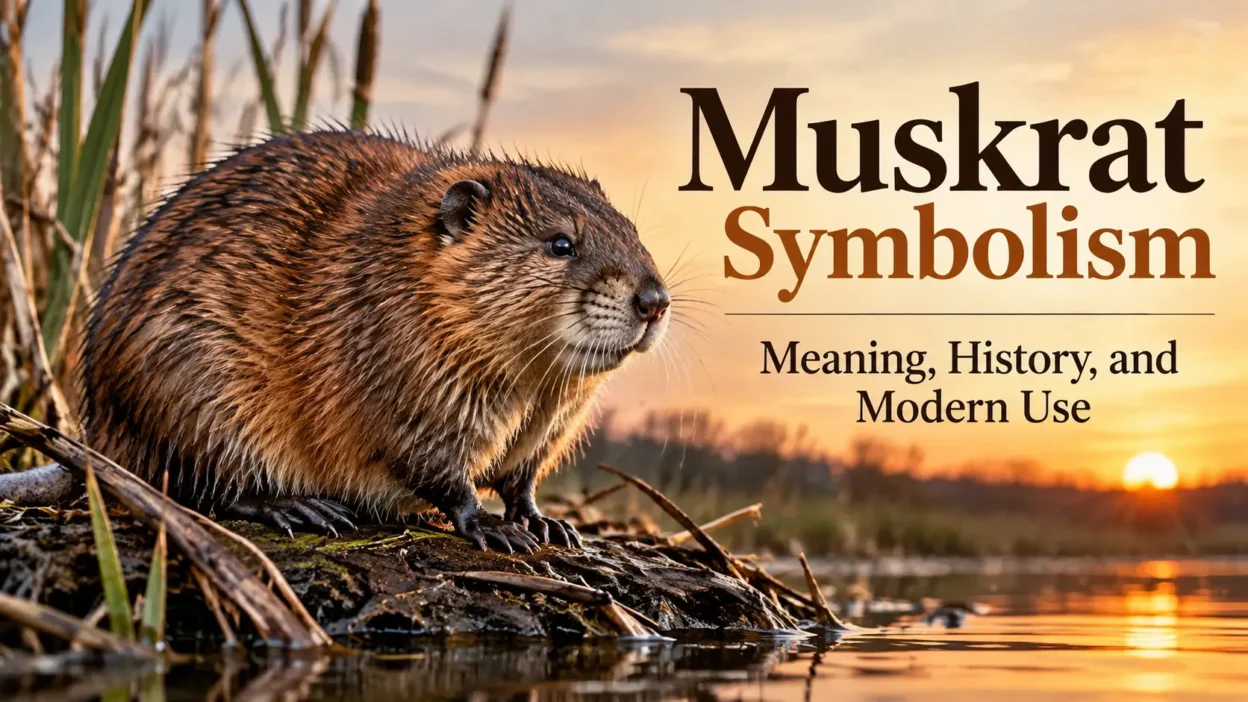
Animals often become symbols because people notice their behaviors, habitats, and relationships with the natural world. The muskrat symbolism represents adaptability, resourcefulness, emotional protection, and connection with water-based environments. Although this small aquatic rodent is sometimes overlooked, its role in ecosystems and Indigenous traditions has given it meaningful cultural associations.
In the United States, muskrats are familiar animals found near wetlands, ponds, rivers, and marshes. Their ability to build homes, survive changing conditions, and create stable environments has influenced how people interpret them symbolically. Some view the muskrat as a reminder of preparation and resilience, while others connect it with nature, family, and hidden strength.
Understanding the meaning of this animal requires looking beyond common stereotypes. Muskrats have appeared in folklore, environmental discussions, Indigenous stories, and modern creative expressions. Their symbolism reflects both their physical characteristics and the values humans attach to the natural world.
Quick Answer
Muskrat symbolism commonly represents adaptability, determination, and the ability to create security in changing environments. In modern American culture, it is also associated with resourcefulness, family protection, and a close relationship with nature.
TL;DR
- Muskrats symbolize adaptability and survival skills.
- Wetland habitats connect them with emotional balance.
- Indigenous traditions view them as important natural beings.
- Americans often associate them with resilience and preparation.
- Modern uses include art, storytelling, and nature symbolism.
What a Muskrat Represents as a Symbol
The muskrat is a small semi-aquatic mammal known for living near water and building dome-shaped homes called lodges. It has strong swimming abilities, thick fur, and behaviors that show careful planning and environmental awareness.
Symbolically, these traits are often connected with:
- Adaptability — Muskrats adjust to different wetland conditions and changing surroundings.
- Resourcefulness — They use available materials to build shelters and survive.
- Protection — Their lodges represent creating a safe space for family and survival.
- Persistence — Their daily activities require patience and consistent effort.
- Connection with nature — Their life depends closely on water ecosystems.
Unlike larger animals often used as symbols of strength, the muskrat represents a quieter form of power. Its symbolism focuses less on dominance and more on intelligence, preparation, and steady survival.
Ancient Roots and Early Symbolism of the Muskrat
The symbolic meaning of the muskrat developed from close observation of the animal’s behavior. People living near rivers and wetlands noticed that muskrats were skilled builders and survivors. These qualities naturally became connected with ideas of stability and endurance.
In many Indigenous cultures of North America, animals are viewed as relatives, teachers, and important parts of creation stories. The muskrat appears in some Indigenous traditions as a creature connected with water, renewal, and cooperation.
One well-known theme found in several Indigenous creation stories involves water animals helping restore land after a great flood. In some versions, the muskrat plays a role by attempting to reach the bottom of the water to bring back earth. Although details vary between nations, these stories reflect respect for even small creatures and highlight courage despite physical limitations.
The muskrat’s importance in these traditions is not based on size or appearance. Instead, its symbolic value comes from determination and willingness to contribute.
Muskrat Symbolism in Native American Traditions
Native American interpretations of animals are diverse because hundreds of Indigenous nations have their own languages, histories, and beliefs. There is no single universal meaning of the muskrat across all Indigenous cultures.
However, some traditions associate muskrats with themes such as:
- Cooperation
- Humility
- Persistence
- Renewal
- Respect for water
The muskrat’s connection to wetlands makes it especially meaningful in cultures where rivers, lakes, and animals play important spiritual and ecological roles.
Some stories emphasize that small creatures can accomplish important tasks. The muskrat can represent the idea that contribution does not depend on physical size or social status.
Modern interpretations should respect these traditions rather than treating Indigenous symbolism as one single belief system.
What Muskrat Symbolism Means in the United States Today
In contemporary American culture, the muskrat is mainly understood through nature, wildlife, and environmental perspectives. Many people encounter muskrats through outdoor activities such as fishing, hiking, wildlife observation, and wetland conservation.
Today, common symbolic meanings include:
| Context | Meaning in the USA | Common Associations |
|---|---|---|
| Nature | Adaptation and survival | Wetlands, ecosystems, wildlife |
| Personal identity | Quiet determination | Patience, independence |
| Family symbolism | Protection and shelter | Home-building, care |
| Environmental themes | Balance with nature | Conservation and habitats |
The muskrat rarely appears as a mainstream national symbol, but it carries meaning among people who appreciate wildlife, outdoor life, and ecological connections.
For many Americans, the muskrat represents the value of working with available resources instead of depending on ideal conditions. It reflects practical survival rather than dramatic transformation.
The Emotional and Psychological Meaning of the Muskrat
Animal symbols often connect with human emotions because people recognize familiar behaviors in nature. The muskrat’s symbolism can reflect several psychological themes.
Creating a Safe Space
Muskrats build protected homes where they can rest and raise their young. Because of this, they are sometimes associated with the human desire for comfort, privacy, and emotional security.
People who connect with muskrat symbolism may appreciate the idea of creating a personal sanctuary away from outside pressures.
Staying Flexible During Change
Muskrats live in environments where water levels, seasons, and food availability can change. Their survival depends on adjustment rather than resistance.
Symbolically, this can represent emotional flexibility and the ability to handle uncertain situations.
Finding Strength in Simplicity
The muskrat does not symbolize luxury or power. Instead, it represents practical intelligence and making the most of what is available.
This meaning can appeal to people who value simple living, patience, and steady progress.
Why Water Matters in Muskrat Symbolism
Water plays a central role in the meaning of the muskrat because the animal’s entire life depends on aquatic environments.
Across many cultures, water symbolism is connected with:
- renewal
- emotions
- movement
- cleansing
- transformation
Because muskrats live between land and water, they can symbolize balance between different environments or states of being.
Their ability to move comfortably through water and land may represent adaptability between different situations. In symbolic interpretations, this makes the muskrat a reminder that survival often requires knowing when to move, when to rest, and when to rebuild.
Muskrat Symbolism in Folklore and Storytelling
Folklore often uses animals to teach lessons about human behavior. The muskrat appears less frequently than animals such as wolves, bears, or eagles, but when it appears, the focus is usually on determination and usefulness.
A common storytelling theme is that small animals can make meaningful contributions. The muskrat challenges the idea that only powerful creatures matter.
This theme appears in many animal stories where intelligence, cooperation, and courage are more important than physical strength.
The muskrat’s role in storytelling reflects a broader lesson: overlooked individuals can have important impacts.
Why People Choose Muskrat Symbolism in Tattoos and Personal Style
Animal tattoos often represent personal values, memories, or connections with nature. While muskrat tattoos are less common than wolf, bear, or eagle designs, people who choose this animal usually connect with its quieter meanings.
A muskrat tattoo may symbolize:
- Adaptability during difficult periods
- Building a secure life
- Respect for nature and wildlife
- Patience and persistence
- Connection with waterways or outdoor experiences
For some people, the muskrat represents overcoming challenges without needing attention or recognition. The animal’s ability to survive through preparation and careful work can reflect a personal journey of growth.
A muskrat design may also have regional meaning. Someone who grew up near lakes, rivers, or marshlands may choose it as a reminder of a familiar landscape or childhood memories connected with nature.
Unlike symbols that communicate dominance or aggression, the muskrat often represents a calm and practical approach to life.
Muskrat Symbolism in Art, Decor, and Modern Culture
Muskrats appear in wildlife art, educational materials, environmental projects, and nature-inspired designs. Their symbolism is often connected with appreciation for ecosystems rather than popular entertainment.
In home decor, a muskrat image may represent:
- A connection with outdoor environments
- Appreciation for wetlands
- Simplicity and natural living
- Respect for local wildlife
Artists who include muskrats in their work often focus on themes such as habitat protection, seasonal change, and the relationship between humans and animals.
Modern environmental movements have also increased interest in animals that represent ecosystem health. Since muskrats depend on healthy wetlands, they can become symbols of the importance of protecting natural habitats.
Positive and Negative Interpretations of the Muskrat Symbol
Like many animal symbols, the muskrat has both positive associations and misunderstandings.
| Interpretation | Symbolic Meaning | Explanation |
|---|---|---|
| Positive | Resourcefulness | Muskrats use available materials to survive |
| Positive | Protection | Their lodges represent safe shelter |
| Positive | Adaptation | They adjust to environmental changes |
| Negative | Overlooked or ordinary | Some people dismiss smaller animals |
| Negative | Pest reputation | Conflicts with humans affect perceptions |
Positive interpretations focus on survival, intelligence, and ecological importance. However, some negative views come from situations where muskrats damage ponds, banks, or vegetation.
These practical conflicts can influence public attitudes, but they do not represent the full symbolic meaning of the animal.
Common Misunderstandings About Muskrat Symbolism
Because muskrats are not among the most widely recognized symbolic animals, several misunderstandings exist.
Muskrats Are Not Symbols of Weakness
Their small size sometimes causes people to underestimate them. However, symbolic interpretations often focus on their ability to survive despite limitations.
The muskrat represents effectiveness rather than physical dominance.
Muskrat Symbolism Is Not the Same Everywhere
Animal meanings depend on cultural background, personal experiences, and traditions. A meaning found in one community may not apply universally.
Especially with Indigenous traditions, interpretations should be understood within specific cultural contexts.
Muskrats Are Not Simply “Water Rats”
Although muskrats are rodents, they are distinct animals with unique behaviors and ecological roles. The common nickname can create negative assumptions that ignore their importance in wetland environments.
The Changing Meaning of the Muskrat Over Time
The symbolic image of the muskrat has changed as human relationships with nature have evolved.
In earlier periods, people living near wetlands often viewed muskrats through practical concerns. They were valued for fur and sometimes considered important resources. In other situations, they were viewed as animals that could interfere with human activities.
Over time, ecological awareness changed how many people understand the species. Modern conservation perspectives often highlight the muskrat’s role in wetland ecosystems.
Today, the muskrat is increasingly associated with:
- Environmental awareness
- Natural balance
- Survival skills
- Respect for overlooked species
This shift reflects a broader cultural change where smaller animals are recognized for their contributions to ecosystems.
Muskrat Symbolism Compared With Other Water Animals
The muskrat shares some symbolic themes with other aquatic animals, but its meaning is distinct.
| Animal | Common Symbolism | Difference From Muskrat |
|---|---|---|
| Beaver | Building and teamwork | More focused on large-scale construction |
| Otter | Playfulness and curiosity | More associated with joy and social behavior |
| Frog | Transformation and renewal | Often linked with life cycles |
| Turtle | Patience and wisdom | Represents slower movement and longevity |
| Muskrat | Adaptability and shelter | Focuses on practical survival |
The muskrat’s unique symbolism comes from its ability to create a stable home while living in changing environments.
How Muskrat Symbolism Appears in Modern Environmental Thinking
Today, many people understand animals through ecological awareness as much as folklore. The muskrat has become connected with conversations about wetlands, biodiversity, and habitat preservation.
Wetlands provide important environmental benefits, including:
- Supporting wildlife populations
- Filtering water naturally
- Reducing flooding impacts
- Maintaining biodiversity
Because muskrats depend on these environments, they can represent the relationship between individual species and larger ecosystems.
In this context, the muskrat symbolizes cooperation between living things and the importance of protecting natural spaces.
Common Questions About
What does muskrat symbolism mean?
Muskrat symbolism commonly represents adaptability, resourcefulness, protection, and survival. The animal is often connected with creating security and adjusting to changing surroundings.
Its meaning can vary depending on cultural background and personal interpretation.
What does a muskrat represent spiritually?
Some spiritual interpretations connect the muskrat with humility, determination, and respect for natural cycles. However, spiritual meanings differ between traditions and should not be treated as universal beliefs.
What does a muskrat tattoo symbolize?
A muskrat tattoo may represent resilience, connection with nature, personal memories of waterways, or the ability to create stability during uncertain times.
The meaning depends on the person’s individual experience.
Is the muskrat a positive symbol?
Yes, many interpretations view the muskrat positively because it represents preparation, adaptability, and survival. However, some people associate it negatively because of conflicts involving property damage or habitat issues.
What does the muskrat symbolize in Native American traditions?
Some Indigenous traditions connect muskrats with themes such as cooperation, courage, and contributions from small creatures. Meanings vary among different Indigenous nations and should be understood within specific cultural contexts.
Why is the muskrat connected with water symbolism?
The muskrat depends on wetlands and spends much of its life in aquatic environments. This connection links it symbolically with themes of adaptation, emotional balance, and environmental relationships.
Conclusion
The muskrat symbolism reflects qualities that are easy to overlook but important for survival: adaptability, preparation, patience, and connection with the natural world. Although the muskrat is a small animal, its behavior shows how careful planning and persistence can create stability.
In American culture, the muskrat is mainly understood through wildlife appreciation, environmental awareness, and personal connections with nature. Indigenous traditions and folklore have also contributed meaningful interpretations that highlight cooperation and respect for living creatures.
Rather than representing dramatic power, the muskrat symbolizes practical strength—the ability to adjust, build, and continue moving forward in changing conditions.